
Posts

Food Safe Training Guide to E. coli

Food Safe Training Guide to E. coli

Over the past few months, we’ve run a series of articles focusing on the most common causes of food-borne illnesses and product recalls. This month, we continue our series with a look at how E. coli and the related STEC bacteria strains are spread and how you can prevent your guests from consuming contaminated food.

Food Safe Training Guide to E. coli

Food Safe Training and E. coli

E. coli poisoning recently garnered national attention with a nationwide outbreak traced to Chipotle restaurants. Even with this high-profile case, E. coli is no longer ranked as a top-five cause of food-borne illness according to the CDC. It is, however, still very important to understand how to reduce the risk of spreading illness due to E. coli because according to this same study, this bacterium causes over 2,000 hospitalizations each year.

In order to control the spread of E. coli, we must first know where it comes from. The STEC strains may exist in:

  • Undercooked ground beef
  • Unpasteurized milk and cheese
  • Unpasteurized juices
  • Alfalfa sprouts
  • Unwashed vegetables

If you have worked in the food industry for a length of time, you know that you must cook ground beef thoroughly in order to kill E. coli, but some of the other causes might come as a surprise. We have discussed the dangers of serving raw milk products numerous times in the past, and we can now add the potential for E. coli poisoning to the list of risks involved with consuming unpasteurized dairy products.

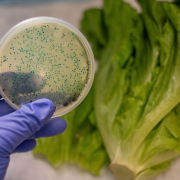
Raw fruits and vegetables pose a threat that often goes undetected. While the STEC bacterium does not naturally occur in raw produce, exposure to cross contamination is a real risk. E. coli naturally occurs in the digestive tract of livestock, and it spreads through contact with the animal, its feces or raw milk. Produce can be contaminated simply by a farmer walking through a cow pasture and transferring it to the soil raw vegetables grow in by wearing the same shoes. The same can happen with farm equipment on a much larger scale.

To keep your vegetables safe, especially leafy greens and sprouts, we urge you to wash all produce that you receive before serving it to guests or incorporating it into other menu items.

Next month, our series will continue as we tackle the number-one culprit of food-borne illness, the easily spread norovirus.

Alfalfa Sprouts and the MN Certified Food Manager

Alfalfa Sprouts and the MN Certified Food Manager

Alfalfa Sprouts and the MN Certified Food Manager

Photo credit: commons.wikimedia.org

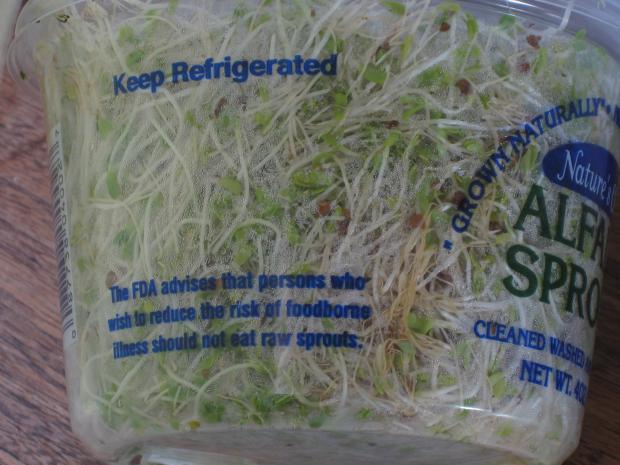
In the month of February, an E. coli outbreak linked to fresh sprouts struck the states of Minnesota and Wisconsin. Fresh alfalfa sprouts have been linked to several food-borne illness cases over the past several years, so we’d like to take the time to review how MN certified food managers can keep their customers from consuming tainted sprouts and other sensitive raw produce items.

Sensitive Produce Items and the MN Certified Food Manager

The recent E. coli outbreak in our state wasn’t merely an isolated incident. In a completely unrelated outbreak this year, sprouts grown in Kansas have been found to be the cause of illnesses as far away as Pennsylvania. When something like this happens, we like to take the time to have a discussion on how food service professionals can prevent these types of incidents from affecting their guests.

It is never safe to assume that raw sprouts, or any other raw produce items, are safe to consume right out of its packaging. All produce should be thoroughly rinsed and dried before it is made available to your customers.

Secondly, you should always throw away or return recalled produce items to your supplier. In this most recent case, the health department has warned that there may still be recalled alfalfa sprouts on retail store shelves or in food preparation facilities. On our blog page, we’ve incorporated a widget that will help you stay current on any recall information, and we suggest you check it regularly to make sure that you do not have recalled items in your inventory.

Finally, you should never serve raw sprouts of any kind if your regular customer base includes individuals that are susceptible to food-borne illness. The FDA recommends that alfalfa sprouts never be served to the elderly, children or those who have depleted immune systems. If you are in charge of food service for a school, assisted living home or medical facility, we strongly urge you to keep raw sprouts off of the menu.

At Safe Food Training, we like to hear how our readers deal with these types of situations. Do you serve raw alfalfa sprouts in your facility, or would you rather not take the risk and keep them off of your menu entirely?