
Protected: Ultimate Tips On Menu Advisories For Food Safety Managers
There is no excerpt because this is a protected post.

There is no excerpt because this is a protected post.

ServSafe food managers should be on the lookout for any type of hazard that could cause foodborne illness in their guests. While bacteria is one of the most common causes of illness spread in food, pesticides and chemical residues on fresh produce can also pose a hidden hazard. Is there a guide for Servsafe food managers to identify pesticides on produce, and what steps can a ServSafe food manager take to ensure their finished product is uncontaminated?
While the potential exists for some pesticide contamination on all produce that arrives at your restaurant, there are some fruits and vegetables that are more prone to residual pesticides and chemicals than others. Each year, the Environmental Working Group (EWG) identifies their top 15 dirty and clean produce items as far as pesticides are concerned. The 2021 dirt list includes:
If you notice the grouping of these dirty items, you’ll see there’s no common theme as to how each of these potentially contaminated ingredients is grown. We have greens grown in the ground, berries on vines, vegetables and tree fruits. With such a wide variety of fresh produce making the list, how can a ServSafe food manager ensure his produce is clean?
The first step for a ServSafe food manager is to never assume that your fresh produce is free of pesticides just because of the way it’s been packaged, especially when dealing with greens. Some greens come loose and obviously need rinsing in order to prepare for service, but even clean-looking produce in sealed bags may still be contaminated. An extra rinse won’t damage most greens, so even if the package claims to contain prewashed produce, it’s prudent to rinse before service.
This should hold true for most fresh produce, not just leafy greens. All fruits, vegetables and berries should be properly rinsed before preparation or offered fresh to customers.
The EWG also released a top 15 list of clean produce that has the lowest risk of pesticide contamination, however, low risk does not equal no risk. So wash these fruits and vegetables before service as well.
Do you take steps to reduce the risk of pesticides reaching your guests dining room table?

Finding suppliers with high-quality ingredients is the first step in keeping your guests safe from foodborne illnesses. In fact, it’s such an important stage in the foodborne illness prevention process, that the Minnesota food code has outlined rules defining exactly what approved food sources look like. The code outlines a few different rules based on the type of ingredient you’re bringing in to your establishment, so let’s take a closer look at how food safety managers can identify approved food sources in the state of Minnesota.
Food safety managers should source their inventory from approved commercial sources under the jurisdiction of some sort of regulatory control. These sources generally fall into three categories:
Most restaurants and other eating establishments use nationally or regionally recognized distributors. As a food safety manager, you can be fairly confident that these distribution services are relying on regulated suppliers to fill their warehouses. However, some confusion can come into play when purchasing ingredients from smaller providers. If you’re dealing with suppliers directly rather than using a major distributor, how can you tell if it’s an approved source?
The Minnesota food code outlines a few special requirements for specific scenarios to be used by food safety managers.
This may seem like a lot of different rules to follow, but with some common sense food safety managers should be able to source any ingredient from an appropriate source. If you’re buying wild game out of the back of a pickup truck, purchasing fish from hobbyist fishermen or sourcing wild mushrooms out of the trunk of a car in a back alley, you may not be getting your ingredients from an approved source.
Don’t be afraid to ask for proof of regulatory standards when purchasing products from smaller suppliers. Many of them will gladly share the appropriate certifications and in many cases make you aware of them on their order sheets or product guides.
Do you source all of your ingredients from approved sources?
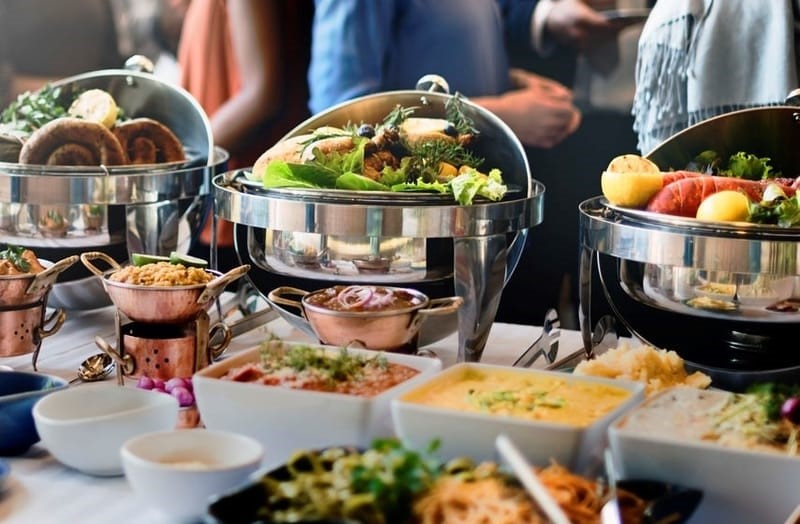
The food and beverage industry has suffered greatly over the past year, but the catering industry has taken a substantial hit due to the limits on social gatherings. Now that the StaySafe MN guidance is beginning to allow more participants at social events, the demand for catering services is beginning to increase. With the pressure to maintain COVID-19 prevention protocols and adhere to food safety training in order to keep guests safe at catered events, it may be useful to take a look at the safe way to cater an off-site event.
Coronavirus occupancy rules cause the biggest confusion for caterers providing services away from their kitchen. The proprietor of the venue should be accountable for capacity limits, but your catering staff must also be included in the numbers in order to remain in compliance. At the time of writing, there are two capacity standards; indoor and outdoor. Up to 50 attendees can occupy an outdoor event, while indoor events are limited to 15. This means that you may be required to limit the staff on hand in order for the venue to meet these numbers. When planning a catering event, make sure that you consult current StaySafeMN guidelines and coordinate with the venue to ensure you can adequately schedule your staff.
Besides COVID protocols, caterers must follow proper catering food safety guidelines. Many of these guidelines line up with what you’ve learned during food safety training. All food at catered events must:
Time and temperature control go a long way to preventing a foodborne illness outbreak, so make sure that you check your equipment to make sure it is capable of keeping hot foods hot and cold foods cold. Also, take the time to check the internal temperature of all cooked foods to verify they’ve been cooked properly.
There may be times when an off-site catering client suggests they will supply the food product for the event as a cost-saving measure. Unfortunately, you may not be able to verify whether or not they are purchasing ingredients from an approved source. We suggest working with catering clients to purchase all ingredients from your normal suppliers.
Do you have a catering business that’s finally starting to see more clients? Have you taken time to refresh your staff food safety training for off-site catering?