

Easter food safety guide

Farm-Fresh vs. Store-Bought Eggs: An Easter Food Safety Guide

 Easter food safety guide

How should you store your eggs?

Whether you’re grabbing eggs from a local Minnesota farm or a St. Paul grocery store this Easter, safety comes down to one thing: keeping them at 41°F or below. Farm-fresh eggs have a natural coating called the “bloom” that protects them, but once they’re washed or refrigerated, they’ve got to stay cold. This isn’t just a good idea—it’s how you keep your Minnesota kitchen compliant and your guests safe from Salmonella.

Easter in Minnesota usually means a hectic kitchen and plenty of eggs for decorating and brunch. If you’re managing a restaurant in Minneapolis or a catering business in Duluth, you know that spring brings plenty of options for where those eggs come from. But the rules for a farm-fresh egg aren’t exactly the same as those in the carton you grab from the grocery store.

The Shell Game: Store-Bought vs. Farm-Fresh

Commercial eggs from the store are power-washed and sanitized before they ever hit the shelf. This process removes dirt but also strips away the “bloom” layer that keeps bacteria out. Because that layer is gone, store-bought eggs have to stay refrigerated from the moment they’re processed until they hit your frying pan.

Farm-fresh eggs are different. Many local farmers leave the bloom intact. In a home kitchen, these can sometimes sit on the counter. But here’s the catch for pros: once a farm egg enters refrigeration, it must remain there. If a cold egg sits out and starts to “sweat,” that moisture can actually pull bacteria through the porous shell and right into the egg.

Feature

Store-Bought (Commercial)

Farm-Fresh (Local)

Processing

Sanitized and power-washed.

Often unwashed to keep the “bloom.”

Storage

Must be refrigerated immediately.

Can stay at room temp only if unwashed.

Safety Risk

Porous shells can absorb bacteria if sweating.

Higher risk of external dirt or fecal matter.

MN Regulation

Must come from approved sources for CFPM.

Requires specific labeling for retail sale.

Hard-Boiled Safety for Easter

Farm fresh vs. store-bought eggs

Farm fresh versus store-bought eggs, how do you store them?

If you’re boiling eggs for the kids to dye or for a Sunday brunch salad, don’t forget that the cooking process also removes that protective bloom. Hard-boiled eggs actually spoil faster than raw ones. You shouldn’t ever leave them out of the fridge for more than two hours. If you’re hosting a big outdoor event and it happens to be a warm Minnesota spring day, that window drops to just one hour.

The shells of hard-boiled eggs are actually more porous after they’re cooked. This makes it a lot easier for smells and bacteria to get inside. It’s best to store them in a sealed container in the middle of the fridge. Avoid the door, where the temperature jumps every time someone opens it to grab the milk.

Your Training, Your Choice

Staying on top of these details is what keeps your doors open. Minnesota has specific food safety standards that go beyond knowing how to cook an egg. When it comes to getting your CFPM, you’ve got a choice to make.

Our in-person training in the Twin Cities is a great way to get out of the kitchen for a day. It’s distraction-free, and we see much higher pass rates because we can talk through these scenarios face-to-face. If you’re tied to the kitchen and can’t get away, our online courses offer the flexibility you need to study between shifts. Both options will get you exactly where you need to be.

Register for an upcoming in-person course or start your online training today to stay compliant with Minnesota food safety laws.

Frequently Asked Questions

Some of the most common questions we get include:

What specific topics are covered in the 8-hour Certified Food Protection Manager course?

Our course covers the prevention of foodborne illness, proper time and temperature controls, preventing cross-contamination, personal hygiene, and cleaning procedures.

Is the CFPM exam included with the course?

Yes, the cost of our 8-hour licensing course includes the certification exam in one convenient session.

How often must I complete continuing education to maintain my certification in Minnesota?

In Minnesota, you’ve got to renew your CFPM license by completing continuing education every three years.

I just need continuing education credits. Do I have to take the full 8-hour course?

No, you don’t. We offer dedicated continuing education training specifically for professionals who just need to fulfill the renewal requirements.

eggnog

Is Your Eggnog a Health Hazard? Critical Checks for Safe Holiday Beverages

eggnogAs the holiday season approaches, festive beverages like eggnog, mulled cider, and hot chocolate become top-sellers. But for a foodservice operation, these seemingly harmless drinks—especially eggnog—can represent one of the most significant food safety risks of the year. Providing safe holiday beverages is a non-negotiable part of your holiday service and a key responsibility for every Certified Food Protection Manager (CFPM).

A single contaminated batch can have serious consequences. Recent CDC investigations into Salmonella outbreaks have identified a strong link to eggs. In one such outbreak, 92% of people interviewed reported eating eggs before becoming ill. This is a stark reminder that high-risk ingredients demand a higher standard of care.

Let’s look at the three critical checkpoints for ensuring your holiday beverages are safe and compliant.

The Primary Culprit: Salmonella and Raw Eggs

eggnog

Is your eggnog safe?

The classic “homemade” eggnog recipe is a food-safety nightmare. It calls for raw, unpasteurized eggs mixed with milk, cream, and sugar. This mixture creates an ideal environment for Salmonella Enteritidis. This bacterium can live inside normal-looking eggs.

The Risk is Real:

Salmonella can cause severe gastrointestinal illness. For vulnerable populations—including older adults, young children, and immunocompromised individuals—an infection can lead to hospitalization or worse.

The Non-Negotiable Solution:

Always use pasteurized eggs. Liquid, pasteurized eggs are the gold standard for any recipe you won’t cook to 165°F. This step eliminates the primary bacterial threat from the start.

Labeling is Key:

If you make a “cooked” eggnog base (heating the egg-milk mixture to 160°F), you must cool it properly. However, using pasteurized eggs from the beginning is the simplest and most foolproof method to ensure safety.

The Alcohol Myth: Why "Spiking" Isn't a Safety Step

A common belief is that adding alcohol (like brandy, rum, or whiskey) to eggnog “sterilizes” it and kills any harmful bacteria. This is a dangerously false assumption.

Alcohol is Not a Sanitizer:

While high-proof alcohol can have antimicrobial properties, it requires specific concentrations and significant time to be effective. The dilution in a thick, fatty beverage like eggnog renders it ineffective as a food safety control point.

Fat Protects Bacteria:

The high fat and protein content of the eggnog can act as a shield, insulating bacteria from the alcohol and allowing them to survive and multiply.

The Real Danger:

Relying on alcohol for safety can create a false sense of security. This may cause staff to become complacent about the real control: temperature.

Temperature Control: A CFPM's Best Defense

Once you prepare your eggnog (using pasteurized eggs), the game is not over. Like any dairy-based, high-protein food, eggnog is a Time/Temperature Control for Safety (TCS) food. You must keep it out of the temperature danger zone (41°F to 135°F).

Cold Holding:

If serving eggnog cold, you must hold it at 41°F or below at all times. This includes the walk-in, the prep cooler, and the service line. Use an ice bath for buffet service and check the temperature with a calibrated thermometer frequently.

Time as a Control:

If you cannot guarantee a temperature below 41°F on a buffet, you must use Time as a Public Health Control (TAPHc). This means you must mark the eggnog with a 4-hour discard time and throw it away after that period.

Hot Beverages:

The same rules apply to hot drinks like mulled cider or hot chocolate. If you are hot-holding them for service, you must maintain a temperature of 135°F or higher. Never let them sit “lukewarm” in a pot on the stove.

As a CFPM, your team looks to you to set the standard. These festive beverages are high-risk, but you can manage them safely with the right protocols and a well-trained staff.

Protect Your Patrons with Expert Training

eggnog

Keep your beverages safe.

Don’t let a food safety mistake ruin a customer’s holiday. Ensuring your entire team understands the “why” behind these rules is the best way to guarantee you serve safe holiday beverages.

Safe Food Training provides the expert-led courses you need. Jeff Webster offers personalized, instructor-led options for the full 8-hour Certified Food Protection Manager course or the 3-year continuing education renewal. We make complex food safety principles clear and practical for your Minnesota-based team.

Visit our website today to book your upcoming training and keep your holiday service safe and successful.
Turkey

More Than Turkey: Why a 1621 Thanksgiving Would Be a Certified Food Protection Manager’s Nightmare

Certified Food Protection Manager and the first Thanksgiving.

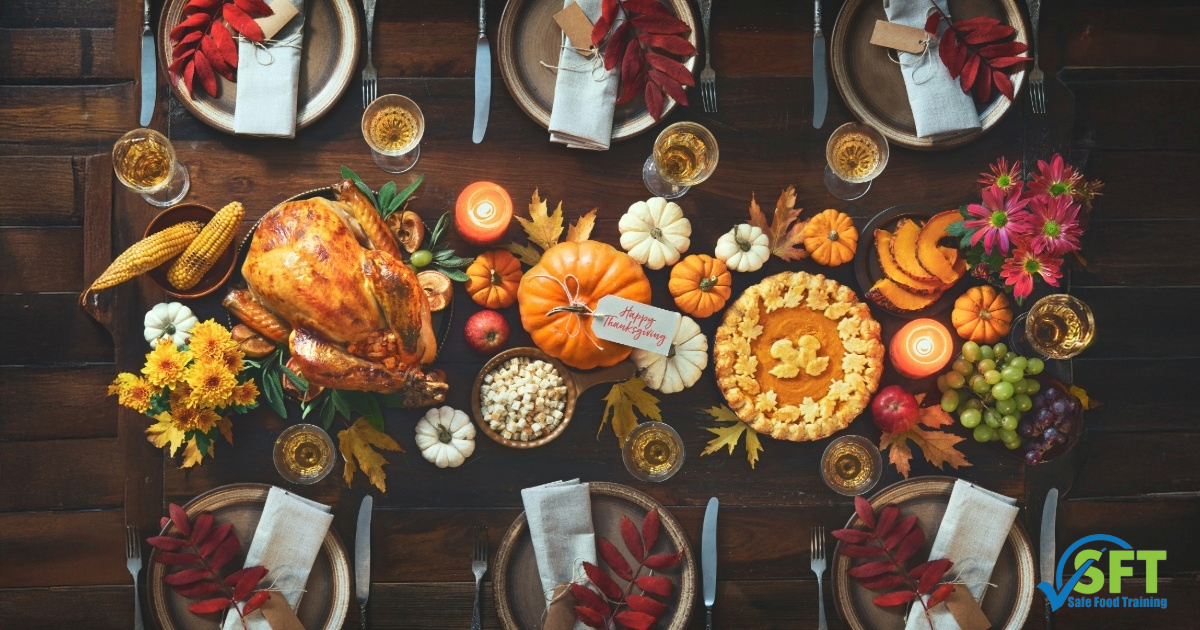
Certified food protection managers across Minnesota are deep in planning for the modern Thanksgiving feast. In our last post, we covered the critical safety checks for this meal, from thawing the turkey to cooling the leftovers. This high-pressure, high-risk meal is a true test of any food service operation.

But it begs the question: is this complex meal we serve today the same one the Pilgrims and Wampanoag shared in 1621? The classic painting of a perfect, golden-brown turkey on a platter is a staple of American history. Or is it?

Let’s look at what history tells us, and what it means for today’s food safety professionals.
The Myth: What We Think They Ate

When we plan a “traditional” Thanksgiving menu, we’re thinking of a very specific set of items:

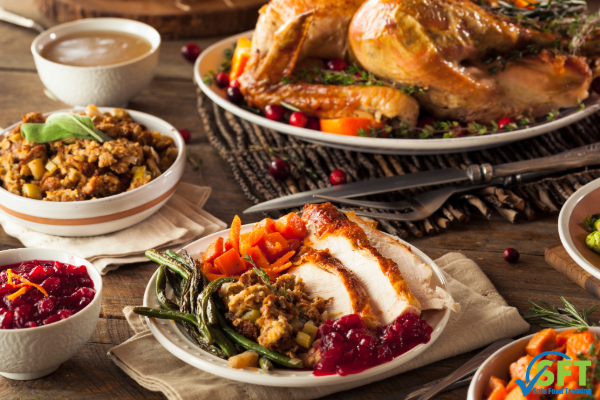
  • Roast Turkey with Gravy

  • Bread-based Stuffing

  • Mashed Potatoes

  • Cranberry Sauce

  • Candied Yams or Sweet Potatoes

  • Pumpkin Pie

For a CFPM, this menu lists Time/Temperature Control for Safety (TCS) foods. You must cook the turkey to 165°F, the stuffing (if cooked separately) to 165°F, and hot-hold everything above 135°F or cool it using the two-stage method.

This menu poses a major safety challenge. But it’s nothing compared to what was actually served.

The Reality: The Real 1621 Menu

According to the two surviving accounts of the 1621 harvest feast, the menu was far more rustic and varied. It was a true hunter-gatherer’s meal, heavily influenced by what the Wampanoag guests brought.

  • Wild Fowl and Venison: Turkey was present, but it wasn’t the star. Accounts mention a “great store of wild turkeys” as well as geese and ducks. The Wampanoag also contributed five deer, making venison a centerpiece of the meal.

  • Seafood: Being a coastal New England settlement, the feast was heavy on seafood. This likely included mussels, clams, oysters, lobster, and eel—all staples of the local diet.

  • Native produce: Potatoes and yams were unknown to the Pilgrims. Instead, they would have eaten native New England produce like pumpkin and other squashes (roasted in the fire, not baked in a pie) and corn, which was likely served as a “mush” or cornbread.

  • Missing in Action: Cranberry sauce? Not for another 50 years. Butter and wheat flour for pie crusts? The Pilgrims had no ovens and limited supplies.

A CFPM’s Nightmare: The 1621 Food Safety Challenge

Today’s Thanksgiving is a challenge of process. The 1621 feast would have been a challenge because of limited ingredients and the risk of cross-contamination.

Imagine you’re the certified food protection manager for this 1621 feast. Your top concerns wouldn’t just be one turkey; they would be:

  • Massive Cross-Contamination Risk: You aren’t just prepping one type of raw protein. You are butchering and cooking wild-caught venison, multiple types of waterfowl, and prepping raw seafood. The risk of spreading pathogens from the field-dressed deer to the mussels or roasted squash would be astronomical without separate, color-coded prep areas.

  • High-Risk Seafood: Mussels, clams, and oysters are some of the high-risk foods we handle. They are filter feeders that can harbor Vibrio bacteria or norovirus. Without modern refrigeration, these would have to be harvested and cooked immediately—any delay would be a public health disaster.

  • No “Danger Zone” Control: The entire concept of hot-holding at 135°F or cold-holding at 41°F was nonexistent. Someone cooked and served the food over an open fire. This single-service event is actually safer in one way: there were no leftovers. The modern challenge of rapidly cooling leftover gravy and stuffing (a process that, when done wrong, is a leading cause of Clostridium perfringens) wasn’t a problem.

What Today's Thanksgiving Teaches Us

What’s your Thanksgiving safety plan?

The first Thanksgiving was a rugged, single-service event based on immediate consumption. The modern Thanksgiving, in contrast, is a complex test of a food safety system.

The Pilgrims’ menu was varied, but our modern meal truly tests a Certified Food Protection Manager’s training. We manage a high-volume, multi-step process of thawing, cooking, hot-holding, serving, and (most importantly) cooling.

This modern complex process is where your training becomes critical. As you complete your Thanksgiving prep, make sure your certification is up to date. Safe Food Training offers the expert-led 8-hour Certified Food Protection Manager course and 3-year continuing education for you and your team in Minnesota.

Visit our website to book your training and head into the holidays with confidence.

holiday food safety

Two Weeks to Thanksgiving: A Certified Food Protection Manager’s Guide to Holiday Food Safety Blunders

holiday food safety

Holiday food safety is essential for your success!

With Thanksgiving just two weeks away, kitchens across Minnesota are gearing up for the busiest day of food service of the year. For a certified food protection manager, the holiday rush presents the single greatest challenge to maintaining food safety standards. The combination of complex menus, high-volume orders, temporary staff, and the sheer chaos of the day creates a perfect storm for critical errors.

According to the CDC, about 48 million Americans get sick from foodborne illnesses each year. The Thanksgiving holiday, centered on a high-risk food like turkey, is a notorious contributor to these statistics.

As food professionals, it’s our job to protect public health. Let’s review the three most common—and most dangerous—food safety blunders that happen during the holiday rush.

Blunder #1: The Great Turkey Thaw Catastrophe

This is a very frequent mistake, and it starts days before the holiday. A frozen turkey is essentially a block of ice, and thawing it improperly is a direct invitation for bacterial growth.

The primary culprit is thawing the bird on the kitchen counter. While convenient, this method is incredibly dangerous. As the turkey’s outer layers thaw, they quickly enter the temperature danger zone (41°F to 135°F). Meanwhile, the center remains frozen solid. In this danger zone, bacteria like Salmonella can double in as little as 20 minutes. The USDA is unequivocal: never thaw a turkey at room temperature.

Here are the only safe methods your team should use:

  • Refrigerator Thawing (Recommended): This is the safest, most controlled method. Place the turkey in a pan or on a tray (to catch drips) on the bottom shelf of the refrigerator. You must budget adequate time: allow one full day (24 hours) for every 4-5 pounds of turkey. A 20-pound bird will take 4 to 5 days to thaw completely.

  • Cold Water Thawing (Active): This method is faster but requires constant attention. Submerge the leak-proof packaged turkey in cold tap water. You must change the water every 30 minutes to ensure it stays cold. This method takes approximately 30 minutes per pound. This process requires your active participation.

Blunder #2: A Certified Food Protection Manager’s Blind Spot—Cross-Contamination

When the kitchen is in overdrive, basic protocols are the first to fall by the wayside. Cross-contamination from raw poultry is a massive risk that managers must expect. Raw turkey juice contains pathogens, and even a tiny amount can contaminate ready-to-eat (RTE) foods like salads or desserts.

This goes far beyond just cutting boards. Holiday prep involves dozens of high-touch surfaces and multitasking staff.

  • Improper Handwashing: This is the #1 vector. A cook handles the raw turkey, rinses their hands quickly (or just wipes them on an apron), and then grabs a refrigerator handle, a spice container, or a spatula. That surface is now contaminated. Solution: Emphasize thorough 20-second handwashing after touching raw poultry and schedule frequent sanitizing of all high-touch surfaces.

  • Cutting Board Control: Staff must use separate, color-coded cutting boards for raw poultry and RTE foods (such as vegetables for a relish tray). If you see a cook slice raw turkey and then just “wipe” the board before chopping celery, that is a critical violation.

  • Storage and Prep: In packed walk-in coolers, it’s tempting to shuffle things around. Always store raw turkey on the bottom shelf, below all other foods, especially RTE items. This prevents any potential drips from contaminating food below.

Blunder #3: Failing the Holding and Reheating Test

Getting the food cooked is only half the battle. Thanksgiving meals are often buffet-style or served for extended periods. This final stage is where many operations fail.

  • Improper Hot-Holding: Food on a buffet line or steam table must be held at 135°F or higher. As a manager, you must ensure staff check temperatures with a calibrated thermometer at least every 2 hours (or more frequently, depending on your HACCP plan). Discard any food that falls into the temperature danger zone.

  • The Cooling Catastrophe: You can’t just put a 5-gallon pot of hot gravy or a deep pan of stuffing directly into the walk-in cooler. This raises the ambient temperature of the cooler, putting other foods at risk, and the food itself will not cool fast enough. Solution: Use the two-stage cooling method (135°F to 70°F within 2 hours, then 70°F to 41°F within the next 4 hours). This requires active cooling with ice paddles or ice baths, or by dividing food into shallow pans.

  • Reheating Right: You must reheat leftovers correctly. You cannot simply “warm up” gravy on a steam table. You must rapidly reheat all leftovers to 165°F for 15 seconds before serving or placing them in hot-holding equipment.

The Thanksgiving rush is the ultimate test of your systems and your team’s training. As a Certified Food Protection Manager, your leadership in these critical moments protects your customers and your business’s reputation.

Stay Compliant and Confident This Holiday Season

Do you have your two-week plan started?

Don’t let the holiday rush expose a gap in your team’s knowledge. Whether you need your initial certification or it’s time for your three-year renewal, Safe Food Training is here to help.

Jeff Webster provides personalized, expert-led training designed specifically for Minnesota food professionals. We offer our comprehensive 8-hour Certified Food Protection Manager course and dedicated continuing education sessions.

Visit our website to register yourself or your team for an upcoming course today.