Keep your MN kitchen running smoothly. We’re sharing real-world ServSafe & NEHA Best Practices to help you train staff and ace your next health inspection.

The Truth About Food Safety Managers And Fingernail Hygiene In The Kitchen

When discussing handwashing station setups with our students, we’ve noticed since finger nail brushes are no longer required, fingernail hygiene training has been often neglected . Even if you wash your hands properly dirt and bacteria can remain trapped under the fingernails creating the risk of pathogens transferring to food that is handled with bare hands. While fingernail maintenance only has two lines in the Minnesota food code, there are some important reasons that food safety managers should not overlook risks poor fingernail hygiene can cause.

Food Safety Managers And Fingernail Hygiene In The Kitchen
Image credit: denisfilm via 123rf

Food Safety Managers and Fingernail Maintenance

Food safety managers should provide fingernail hygiene training concerning:

  • Trimming Fingernails
  • Wearing Gloves over Painted Fingernails
  • Artificial Fingernails

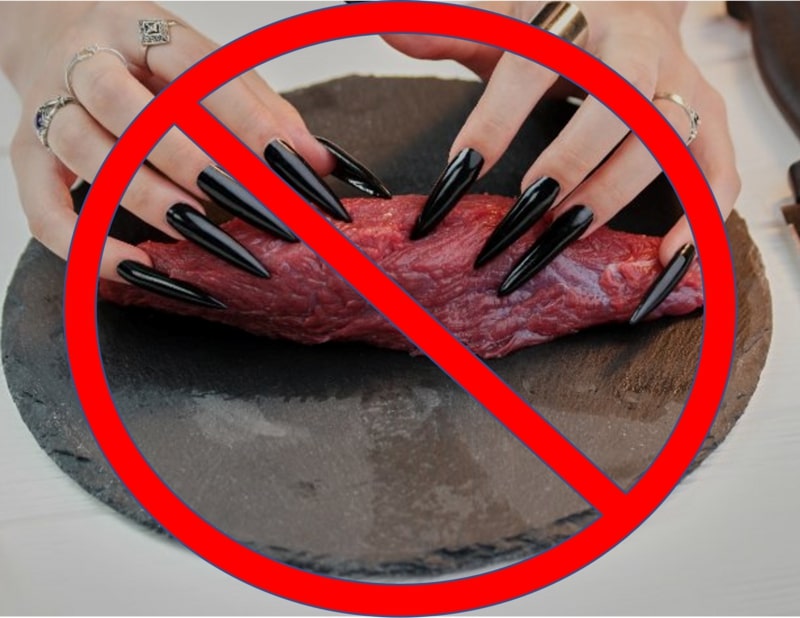
Fingernails must be trimmed and filed so that they are easily cleanable. Rough fingernail tips can become caught in food product and potentially break off into food or onto preparation surfaces. Rough fingernails can also harbor bacteria in the frayed edges, even with proper handwashing, so maintaining smooth nails is much more than a grooming aesthetic. Long fingernails also pose the risk of breakage, even if carefully filed, so make sure nails are an appropriate length.

Food safety managers should enforce good fingernail hygiene by making it clear that painted or artificial fingernails should never come into contact with any type of food product. Managers should make note of poor fingernail hygiene and instruct employees with painted or artificial nails to cover them with gloves at all times in the kitchen.

Have you taken the time to review fingernail maintenance with your kitchen staff?

When Can ServSafe Managers Expect the Surprise Health Inspector

When Can ServSafe Managers Expect the Surprise Health Inspector

Every so often, we get asked by prospective ServSafe food managers if they’ll receive a warning before the health inspector shows up at their food business. Well, if you’re doing everything right, reinforce a proper food safety culture in your establishment; does it really matter when the health inspector walks into your door? While there are no flashing lights, alarms or signs from above for Servsafe managers, there is an expected frequency for when your establishment requires a visit from a health department inspector.

When Can ServSafe Managers Expect the Surprise Health Inspector

How Often Can ServSafe Food Managers Expect a Health Department Inspection?

Your local health department commissioner schedules inspections during specific intervals depending on the risk category of your food establishment. The food code breaks down the food establishment inspection frequency into three categories:

  • High-Risk: Once at Least Every 12 Months
  • Medium-Risk: Once at Least Every 18 Months
  • Low-Risk: Once at Least Every 24 Months

While you won’t know exactly when they’ll show up, you can expect a visit within a regular time frame, but how do you know which type of food business you operate? Most restaurants, resorts, hotels with pools, catering companies and other establishments that prepare products in advance and cool and reheat products will be considered high-risk. A majority of food establishments fall into this category.

Medium-risk food establishments serve some potentially hazardous foods but with little time between preparation and service. These businesses usually only serve items such as pizza, fryer foods and sandwiches that are prepared and served immediately with minimal holding and limited time between preparation and service.

A low-risk food establishment offers food with very limited preparation. These can be coffee stands with prepackaged pastries, hotels with minimal food offerings or certain grab-and-go food services. These businesses will only see the inspector every two years and most may not require a ServSafe food manager for operation.

Regardless of what type of business you operate, your ServSafe food manager or designated person in charge in their absence should make themselves available when the inspector shows up. You don’t necessarily need to guide them throughout the facility, but it’s a good idea to be around them. Never make an attempt to stall the process, misdirect inspectors from certain areas of your facility or hinder the inspection in any way. This will help speed the process and allow them to ensure your food is being served in a safe manner. Remember, these inspectors aren’t there to find fault with your establishment or punish food business owners, they are there to ensure the safety of your product. Don’t be offended if issues arise, rather ask questions and find solutions to any violation before the inspector leaves your business.

Tested Approach to food service utensils for ServSafe managers

Tested Approach To Food Service Utensils For ServSafe Managers

Keeping food out of the danger zone and utilizing proper temperature and time control keeps bacteria from growing in food and greatly reduces foodborne illness. When we take about the danger zone, we usually focus on food product, but can serving utensils left in the danger zone after touching product pose a food safety risk? ServSafe managers should take steps to ensure that food poisoning hazards don’t develop with mishandled food service utensils.

Tested Approach To Food Service Utensils For ServSafe Managers
Image credit: Helder Ribeiro via Wikimedia

ServSafe Managers Guide to Temperature Control of Food Service Utensils

You may never think about it, but some service items should be treated like food to prevent foodborne illness. We’re not suggesting storing your utensils outside the danger zone, but once you begin using them for service you should make sure they follow nearly the same protocols as the food they touch. Some items to be wary of include:

  • Salad Bowls and Tongs
  • Ladles
  • Spatulas
  • Cold Preparation Utensils

ServSafe managers wouldn’t leave a Caesar salad on a counter top for hours and then serve it to a guest, so why leave a used bowl and set of tongs at the same temperature. Salad remnants will decay in a danger zone environment over time increasing risk. Washing every mixing bowl after every use just simply isn’t an option, but there are solutions. Keep mixing bowls for cold items in a reach-in refrigerator or rotate out of service regularly. Time as public health control rules allow for up to four hours, but quality of product will greatly suffer even over a short period of time, so we suggest more frequent rotation of these cold service items. The same should go for any other item used to prepare cold items for service. Tongs, spatulas and ladles could be the most overlooked offenders.

Hot items may be easier to maintain than cold items due to the nature of food served. Soup and sauce ladles can potentially remain in heated sauces and metal tongs and other serving utensils can remain with hot foods if stored properly. Some items such as grill tools, should follow time control procedures as they may not always be out of danger zone temperatures.

Have you thought about risks coming from the temperatures of your regular use utensils?

Minnesota Food Community At The Astonishing 2022 State Fair

Our Astonishing MN Food Community At The State Fair

The end of Summer Break is nearly here, and that means it’s time for our annual trip to the Minnesota State Fair. Whether it’s surveying prize-winning livestock, taking in a show at the Grandstands or simply wandering and sightseeing, there’s something for everyone; making it one of the most looked forward to events of the summer. One thing Safe Food Training is really excited about is what the Minnesota food community comes up with. Each year talented chefs seem to push the envelope further and further.

Minnesota Food Community At The Astonishing 2022 State Fair
Image Credit: Joe Passe via Flickr

A Preview of the Minnesota Food Community at this Year’s State Fair

Judging from a preview of Minnesota food community vendors, we’ll have quite the challenge of deciding which new foods from the mn food community to sample. With everything from Venezuelan pulled pork to breakfast gnocchi, we may actually need to take several days off of teaching food safety training classes to get our fill. Some highlights we’ve seen include:

  • Pickle Pizza
  • Tandoori Rolls
  • French Vegan Sliders
  • Sweet Potato Poutine

And that’s just a brief drive-by. We’re definitely going to have to loosen our belts this year. We’re also looking forward to all of the standard fair desserts from the Minnesota food Community. Deep fried ice cream, cotton candy floats and many more selections will tempt fair goers even further.

JUST RELEASED – “The Minnesota State Fair announces 47 brand-new beverages premiering or found only at the 2022 fair. In addition, there will be 43 returning beverages found only at the Great Minnesota Get-Together. In all, the fair features 300+ brews and beverages”. We’re sure that Minnesotan craft brewers will be bringing their best to compliment all of the great foods as we wander from vendor to vendor.

Are you planning on taking in the sights, sound and cuisine of this year’s Minnesota State Fair? We hope we see you there either in front or behind the counter!