Keep your MN kitchen running smoothly. We’re sharing real-world ServSafe & NEHA Best Practices to help you train staff and ace your next health inspection.

smarter food safety product traceability

Applying Product Traceability Software for Smarter Food Safety

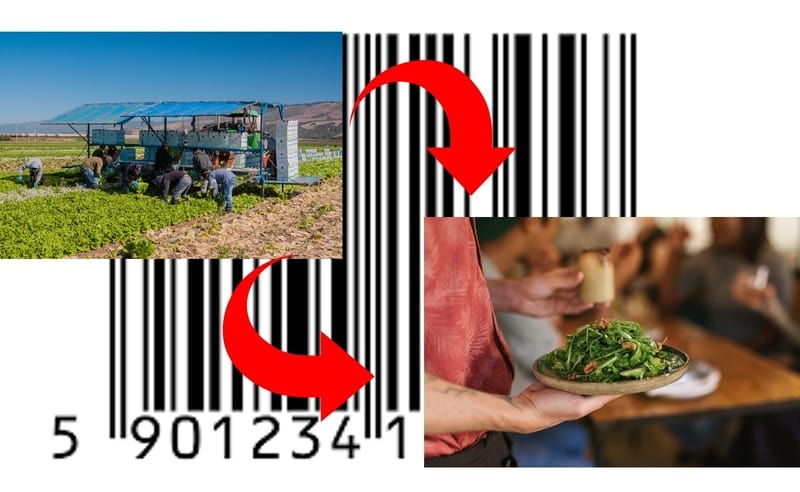
Back in October, we covered a public forum put on by the FDA concerning the future of food safety. Just recently, the FDA has released the transcripts from nearly every session, giving those of us in the food safety training industry plenty of material to dig through concerning their vision for the future of food safety in our country. This week we’d like to take a look at a few of the ideas presented at the New Ara of Smarter Food Safety meeting involving the use of product traceability technology to quickly find the source of foodborne illness outbreaks.

Smarter Food Safety product traceability
Image credit:
mavoimage via 123.rf and United States Department of Agri via Flickr

Achieving Smarter Food Safety in the Supply Chain Using product Traceability Software

When it comes to foodborne illness tracing, it would be ideal if the FDA and CDC could immediately identify the source of contamination. For example, if someone consumes tainted lettuce in Minnesota and becomes ill, the FDA could find out the source of the contaminated product in New Mexico and take immediate action. This isn’t exactly possible with the way the supply chain works today.

Raw food products come from many different parts of the country, and certified food managers may receive a shipment of greens from California one week and Arizona the next. In fact, there are many occasions where the warehouse run by your food supplier has very little information about where your product originated. In the case of an outbreak, it takes some time to figure out exactly where the tainted product came from, potentially leaving the door open for the further spread of illness.

The big question is; How can we solve this?

During a Smarter Food Safetypresentation on product traceability, a spokesperson from the software company FoodLogiq suggested that advanced software could be used to create a roadmap for the entire supply chain. This would mean that software could be used at all levels of the supply chain from growers and farmers to individual food service facilities such as restaurants and retail producers to instantly tell you the travel history of any given product from farm to fork. But is this feasible?

We think this is a great idea, but it would take time to implement. As it stands now, there is no one high-tech method being endorsed for product traceability. That means one shipper could use a different system than another, and along the way product can’t be traced due to conflicting systems. There also appears to be little incentive for smaller operations to use this software. Small one outlet restaurants and independent farmers have enough on their plate without having to research, purchase and maintain tracking software.

If the FDA Era of Smarter Food Safety vision can come up with a product traceability standard to track nearly every single ingredient, foodborne illness outbreaks can be easily contained. Do you think an overarching tracing system could be implemented to track product and stop outbreaks before they become widespread?

Food Manager in Walkin Freezer

Why do ServSafe Food Managers Set Freezers to Zero Degrees?

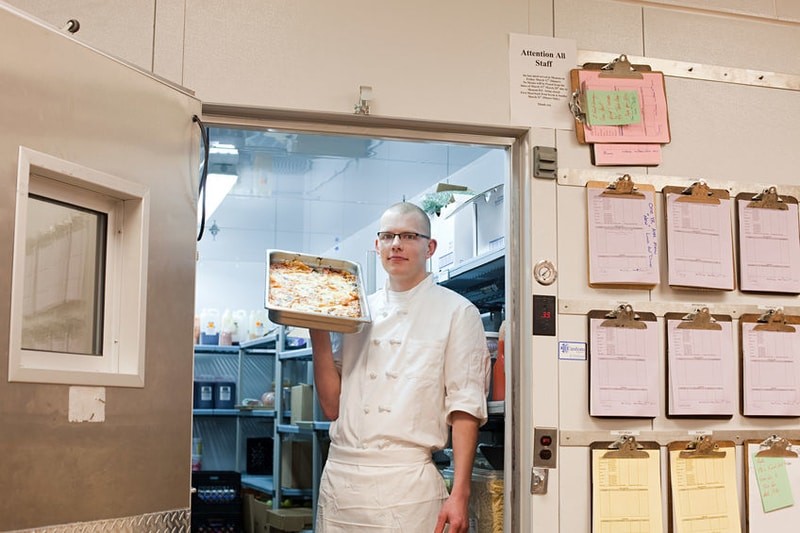
According to the Minnesota Food Code, all frozen food must remain frozen until ready to use and the USDA recommends setting freezers to zero degrees Fahrenheit. This got us wondering; why zero? Is zero a scientifically determined number, or is it in the correct temperature range and just happens to be a good round number? Will two degrees work just as well? Or maybe -12.5? This week we’ll take a good look at freezer temperatures and how zero degrees became the standard for ServSafe Food Managers.

Food manager in walk-in freezer
Image credit: 123rf

ServSafe Food Managers and Freezer Temperatures

The history of the standard of zero degrees goes back to the 1930s when the American Fruit and Vegetable Coalition advocated zero degree temperatures because it was, in fact, a round number. Prior to this, freezing recommendations had been set at 14 degrees Fahrenheit. Science didn’t even come into the conversation until much later.

According to the laws of thermodynamics and the use of a mathematical logarithm known as the Van’t-Hoff equation, scientists much smarter than us were able to show that there is a uniform lowering of the velocity of chemical reactions in any substance as temperatures decrease. To break it down in terms those of us without PhDs in chemistry and physics can understand, once the temperature reaches zero degrees, the molecules and atoms in frozen product slow to the point where there is little perceptible movement. This means that bacteria cease to grow and there is very little loss of nutrition in foods frozen below zero degrees. Using this method, it has been determined that the ideal range of freezer temperatures is between zero and -22 degrees Fahrenheit.

So now that we know why ServSafe food manager training tells us to keep freezers at zero degrees, why don’t we go further and freeze product closer to the low end of the range?

First, while bacteria are held at bay indefinitely, that doesn’t mean that there isn’t a risk of freezer burn. Freezer burnt product may still be safe to eat from a food safety standpoint, but it sure isn’t pleasant from a taste and texture standpoint. Long exposure to extremely low temperatures will keep your food safe to eat but will tarnish its quality.

Finally, it’s unwise from an efficiency and energy use standpoint. Keeping your freezer at the upper end of the freezing range and closer to zero degrees will use a lot less electricity and keep utility costs down.

As a ServSafe food manager, what temperature do you set your freezer?

food safety managers plastic reduction

Certified Food Safety Managers and Plastic Reduction

Over the past few years, some jurisdictions have sought to reduce the amount of plastic used in the foodservice industry, and while some businesses have been hesitant to make the change, many have embraced it. Eliminating plastic appeals to a wide selection of environmentally conscious consumers and can also potentially reduce the amount of waste your business produces. This week, we’ll cover a few plastic reduction alternatives certified food safety managers can utilize in their establishments.

food safety managers plastic reduction
Image credit: maxpixel.net -Coffeetogo

Plastic Reduction Alternatives for Certified Food Safety Managers

If you were to take a quick tour of any restaurant, you’d find a number of plastic items. To-go boxes, bags, straws, utensils and take-out serving dishes are all commonly made from plastic. Whether you’re voluntarily reducing your plastic usage or your local jurisdiction has passed codes and laws preventing plastic use, your certified food manager will have to find alternatives for these types of items. Here are a few solutions that you can employ to replace plastic necessities in your facility:

  • Paper and compostable boxes and bags
  • Reusable takeout containers
  • Biodegradable utensils and straws

In the past, plastic bags and Styrofoam to-go containers have been go-to packaging for guests looking for take-out or a way to bring leftovers home. With current trends, many different manufacturers have started producing paper bags and compostable boxes that are either easily recyclable or will break down over time rather than take up space in a landfill. These items may cost a little bit extra, but as more companies produce these products costs should begin to decline.

With the latest update to the Minnesota Food Code, the rules concerning reusable containers have been updated and more clearly outlined. Reusable containers not only reduce plastic waste, they give you the opportunity to sell or provide your guests with reusable take-out containers with your logo and branding on them. This can not only help to conform to local plastic reduction codes but provide a valuable marketing tool for certified food managers to draw repeat business from loyal guests.

Straws and utensils such as forks, spoons and knives present unique challenges since many consumers prefer a sturdy utensil that won’t break during use. The good news is that many companies are now producing durable wood alternatives and great advances have been made to produce robust biodegradable utensils that can easily replace plastic.

Are you making an effort to reduce plastic waste in your facility?

FDA Requesting ServSafe Managers Input For Food Safety Blue Print

FDA Requesting ServSafe Managers Input For Food Safety Changes

The FDA recently issued a public statement offering ServSafe food managers and other professionals in the food industry the chance to participate and comment on a meeting titled “A New Era of Smarter Food Safety.” We think this is an incredible opportunity to learn about the FDA’s blueprint for the future of food safety.

FDA Requesting ServSafe Managers Input For Food Safety Blue Print
Image Credit: US Food and Drug Administration

FDA Smarter Food Safety Forum and ServSafe Manager Input

The FDA’s public meeting is scheduled to take place in Maryland on October 21st. If you’re interested in attending but unable to travel to MD with only a week’s notice, the FDA has set up a method for the public to attend via online webcast. This webcast will be free to view, all you have to do is submit your registration via an online form.

According to the release, the FDA plans on discussing:

  • The role of digital technology in tracing the origin of contamination
  • Making preventative controls more effective and efficient
  • Food safety challenges of evolving business models
  • Leveraging proven organizational models to enhance compliance with food safety practices

While a lot of the issues that are being discussed appear to be with what happens with food before it reaches the restaurant and food production sector, it’s quite interesting to see where the FDA plans on taking food safety in the future. All four of these major topics could change inspection procedures and stop outbreaks before they start by quickly finding the source of contamination and preventing it from even happening in the first place.

Once the seminar has been completed, a full transcript of the event will be made available on an updated events page. After the transcripts have been released, ServSafe food managers and the public will have a month to comment electronically or by mail. For more information on agendas for these events and how to provide comments and feedback once the meeting has concluded, check out the FDA’s official request for public comment.

We’ll provide an update on topics covered and explore the commenting process once more information is available.

For quick reference, here are links to important information:

Do you like the idea of the FDA being more open and allowing the ServSafe managers and the public to view and comment on these food safety related sessions?