
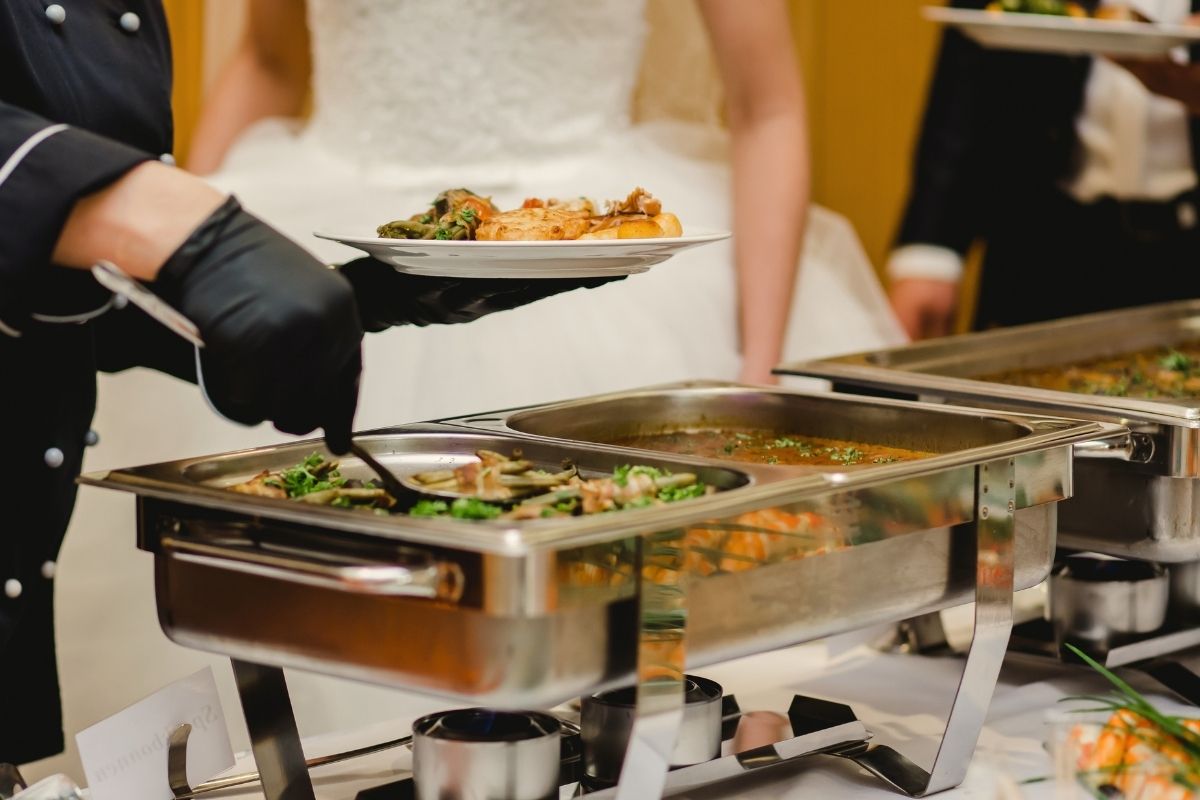
Is your staff prepared for catering weddings?
Wedding catering in Minnesota can mean feeding 200 guests at a venue with no real kitchen. Food safety certification gives you the rules, and a barn near Northfield or a lakeside lawn near Nisswa puts them to the test. Most problems come down to food sitting too long or touching bare hands, and both get harder to control outdoors. Plan for them before the first toast.
Get to Know the Venue
Walk the space early, the way your crew will on event day. Find out whether that barn has more than one outlet for warmers, and pick your handwashing spot before anyone unloads. Ask where the truck parks, since a long gravel walk adds minutes to every trip. Our off-site catering guide covers the basics.
Keep Bare Hands Off Ready-to-Eat Food
State code doesn’t allow bare-hand contact with ready-to-eat food, which includes most of what’s on a wedding buffet. Stock gloves, tongs, and deli tissue at every station, with separate utensils for each dish.
For handwashing, MDH’s rules for special event food stands make a good benchmark: running water, soap, disposable towels, and a trash container, set up before food prep begins.
Hot Food, Cold Food, and the Long Toast
Wedding timelines slip. The toasts run long, and the photographer wants one more round of dock photos, so the buffet waits. Build the delay into your temperature plan.
Hot Holding
Hot food has to stay at 135°F or above, and the walleye won’t wait for the bridal party. Chafing dishes and warmers work, but only if someone checks them.
Cold Displays
Keep the shrimp cocktail and cut fruit at 41°F or below. Nest pans in ice instead of setting them on top, and drain meltwater as you replenish.
Passed Appetizers and Time Limits
The one-hour rule doesn’t apply to appetizers that have been passed. Minnesota allows time as a public health control, letting hot food sit for up to four hours without temperature control. You’ll need written procedures and a discard time marked on every container. If the late-night sliders leave the warmer at 9:30, the four-hour clock starts then.
Plan for the Weather and the Mosquitoes
A July heat wave, a pop-up thunderstorm, and Minnesota’s unofficial state bird, the mosquito, can all reach an outdoor buffet. Keep dishes covered and, when you can, keep stations under a tent. If rain or wind gets into the food, pull it and stop serving from that table.
Label Allergens on the Buffet
Place a placard in front of each dish listing major allergens, and brief servers so they can answer ingredient questions. MDH expects the person in charge to train employees in food allergy awareness, and somebody’s aunt will ask whether the wild rice salad has nuts.
Food Safety Certification for Your Wedding Crew
Winter is the slow season for wedding caterers, so it’s time to train. Most Minnesota food establishments need a Certified Food Protection Manager (CFPM) to oversee food safety. Safe Food Training has trained food protection managers across Minnesota for over 30 years.
As a ServSafe Instructor and NEHA Registered Trainer, I’d rather see crews train in January than scramble in June. Our Minnesota Department of Health-approved in-person classes run in the metro and in towns like St. Cloud, Mankato, and Rochester, and they carry a 90%+ pass rate. Online training is self-paced and available in English and Spanish, and group training is designed for whole teams.
Wedding Catering FAQs

Is your staff prepared with food safety certification for wedding catering?
Caterers ask us these every spring.
Can Grandma bring her lefse or a homemade cake?
Not as part of your catering. State code bars food prepared or stored in a private home from being served by a food establishment, with narrow exceptions.
What counts as a major food allergen?
The FDA’s list of nine major allergens includes milk, eggs, peanuts, and sesame (added in 2023).
What happens to appetizers held under time control?
Serve or toss them by the marked time. They can’t go back under temperature control.
How often should I check buffet temperatures?
Set a schedule, such as hourly, and log each reading.
Does cool fall weather help keep food cold?
Don’t count on it. October evenings swing too much to replace ice and coolers.
Lock In a Class Before Spring
Grab a seat in an upcoming class at safefoodtraining.com, or reach me at (952) 210-0195 or info@safefoodtraining.com to book a session for your staff. If you’re renewing your CFPM, finish the 4-hour online recertification before it expires to skip the exam, and use code SFT10 for $10 off.

