A severe Cyclospora outbreak that started in Michigan has exploded, and just as we warned in our initial alert on this fast-moving threat, supply chains move incredibly fast. We are now looking at over 22,000 reported cases nationwide, and tragically, this wave has already resulted in two deaths. When you’re managing a busy kitchen, it’s easy to assume an out-of-state alert won’t affect your daily prep.
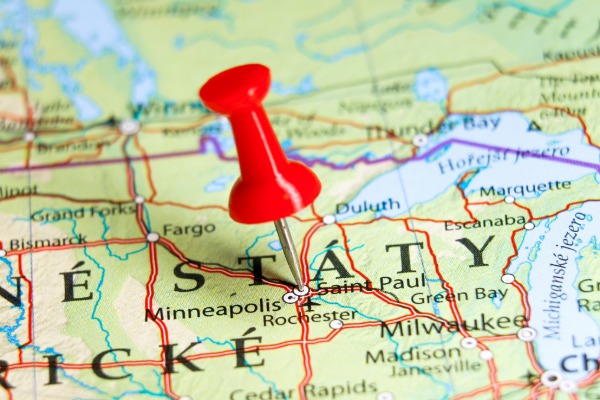
But contaminated greens can travel over 600 miles and reach a Minnesota prep table in under 48 hours. A bad batch of produce harvested on a Monday can easily sit in your St. Paul walk-in cooler by Wednesday morning. Kitchen managers must strictly verify their sourcing and enforce rigorous receiving protocols immediately to protect customers from these microscopic threats.
The Reality of Interconnected Supply Chains
Supply chains cross state lines overnight, transforming a localized issue into a national crisis involving tens of thousands of people. This microscopic parasite is notoriously difficult to wash off delicate leafy greens and fresh herbs. This makes cross-contamination a massive risk during a Friday rush.
As an experienced kitchen manager, I know how easily prep cooks can rush their washing routines when tickets are printing non-stop. You can’t let that happen. You must treat incoming produce with the exact same caution you apply to raw poultry. If a massive supplier experiences a contamination event hundreds of miles away, that ripple effect hits local distributors across the country within days.
Why Minnesota Consistently Stays Safe
There’s a very clear reason Minnesota consistently records one of the lowest levels of foodborne illness outbreaks in the country. We rarely see our local restaurants caught up in these massive, multi-state alerts. Even with 22,000 cases nationwide, our state remains highly protected and largely untouched by this specific wave.
Help keep Minnesota safe!
That success isn’t an accident. It’s the direct result of our state’s rigorous certification standards and mandatory continuing education requirements. The hard work you put into training your staff actually works. As a NEHA Registered Trainer and an Always Food Safe Instructor & Proctor, I see firsthand how dedicated local managers are to keeping their dining rooms safe.
Keeping Your Certification Current
Professionals must complete continuous education to stay updated on specific, fast-moving threats. Don’t forget that Minnesota professionals who take our 4-hour recertification refresher before their current 3-year certification expires get to skip the exam completely. Letting your license lapse means you’re stuck retaking the entire 8-hour exam. Taking that short refresher is the absolute easiest way to keep your team informed. I teach Minnesota Department of Health-approved courses that tackle real-world issues exactly like this outbreak.
Here are a few common questions we’re hearing from local kitchen managers regarding safe produce handling right now.
What exactly is Cyclospora?
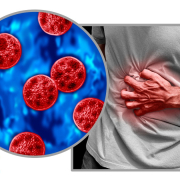
Cyclospora is a microscopic parasite that causes a severe intestinal infection called cyclosporiasis. People generally get sick by consuming food or water contaminated with infected feces, which often happens in agricultural fields where fresh produce grows.
Does washing produce remove the parasite?
Washing helps remove dirt and some surface contaminants, but it’s very hard to wash Cyclospora completely off leafy greens or berries. This is why purchasing from reputable, transparent suppliers and paying close attention to national alerts acts as your primary line of defense.
Can hand sanitizer kill Cyclospora on the prep line?
No, standard alcohol-based hand sanitizers do not effectively kill parasites like Cyclospora. Your staff must wash their hands thoroughly with soap and warm water after handling unwashed produce to prevent spreading the parasite to other ready-to-eat foods.
Protect Your Customers Today
You can’t control the national supply chain, but you can control how your team handles incoming produce. Give us a call at (952) 210-0195 or register to get your staff up to speed by visiting our upcoming course schedule. Register for your next class today to keep your kitchen compliantand your dining room safe.
https://minnesota.safefoodtraining.com/wp-content/uploads/2026/08/Cyclospora-Outbreak-Protecting-Your-Minnesota-Kitchen-from-Fast-Moving-Produce-Threats-1.jpeg630930Jeff Websterhttps://minnesota.safefoodtraining.com/wp-content/uploads/2025/06/Remove-background-project-1024x614.pngJeff Webster2026-08-06 07:32:282026-08-09 17:01:02Cyclospora Outbreak: Protecting Your Minnesota Kitchen from Fast-Moving Produce Threats
Avoid serving crispy Romaine lettuce and E. Coli at your event with these tips!
In the ever-evolving landscape of food safety, staying informed about current risks is a critical responsibility for every Certified Food Protection Manager. As we navigate 2025, it’s crucial to understand the ongoing concerns surrounding romaine lettuce and E. coli contamination. Recent events have underscored the need for heightened diligence in our sourcing and handling procedures to protect public health effectively.
The persistence of pathogens in leafy greens requires that we, as industry leaders, remain proactive. This means we must be exceptionally thorough in our safety protocols. However, you’re in luck! This guide provides an overview of the current situation, highlights specific risks, and offers actionable steps for your establishment.
Understanding the Recent Romaine Lettuce and E. coli Outbreak
A significant, though not widely publicized, E. coli O157:H7 outbreak linked to romaine lettuce occurred in late 2024.
The incident led to:
Nearly 100 illnesses across 15 states
36 hospitalizations
Tragically, one death
While federal agencies concluded their investigation in early 2025, the lack of a broad public announcement has left many food safety professionals seeking clarity. Specifically, this event serves as a powerful reminder that leafy greens remain a high-risk food category. Additionally, the CDC has previously estimated that over half of all E. coli O157:H7 illnesses originated from vegetable row crops, such as lettuce.
Why it matters: Undisclosed outbreaks mean that contaminated products could have been handled in facilities without staff being aware of the specific risk, reinforcing the need for consistent, universal precautions.
Lack of transparency: The decision not to name the specific producer involved in the 2024 outbreak makes complete traceability challenging for on-the-ground managers.
The Elevated Risk of Pre-Cut and Processed Lettuce
However, as a CFSM, it’s vital to recognize that the risk is not uniform across all types of lettuce. Health experts and scientific studies indicate an increased risk associated with pre-bagged and chopped lettuce products. The physical act of chopping or tearing leaves creates more entry points for pathogens and releases plant juices that can act as a nutrient source for bacteria.
Cellular Damage: Research has shown that E. coli populations can multiply significantly more on damaged or cut lettuce leaves compared to intact ones. One study found pathogen growth was over 10 times higher on shredded lettuce than on whole leaves.
Regulatory Classification: Because of these risks, the FDA classifies pre-cut, washed, and packaged leafy greens as a “Potentially Hazardous Food (PHF)” that requires strict time and temperature control for safety (TCS).
Cross-Contamination Potential: Centralized washing and processing of large batches of lettuce means that if one head is contaminated, the pathogens can easily spread to the entire lot.
Proactive Safety Measures for Your Establishment
Don’t serve romaine lettuce and E. coli for your appetizer.
Given the current concerns, every food service establishment must reinforce its safety protocols for leafy greens. Complacency is the enemy of food safety. As a manager, you are the first line of defense in preventing foodborne illness. Implement and rigorously enforce the following procedures. Here are some tips to reduce romaine lettuce and E. coli outbreaks:
Verify Your Source and Inspect Deliveries: Work closely with your suppliers to understand their safety protocols and procedures. Upon delivery, meticulously inspect all leafy greens. Reject any shipments that are not properly refrigerated. This means cut greens must be 41°F or below. Additionally, it includes lettuce with signs of damage, wilting, or decay.
Enforce Strict Handling and Preparation Rules:
Washing: Wash whole heads of lettuce thoroughly under clean, running water before they are cut. Do not re-wash products that are packaged and labeled as “ready-to-eat.“
Cross-Contamination: Use dedicated, sanitized cutting boards, knives, and utensils for all produce to prevent contact with raw meat or other contaminants.
Hygiene: Ensure all staff follow impeccable handwashing procedures before and after handling produce.
Prioritize Temperature Control: The moment lettuce is chopped or cut, it must be maintained at or below 41°F to inhibit bacterial growth. Regularly monitor and log temperatures in your storage units to ensure compliance and safety.
The role of a Certified Food Protection Manager extends beyond daily operations. It’s about creating a culture of safety and vigilance. These recent outbreaks with romaine lettuce and E. coli are a clear signal that we must continuously refine our standards.
Protect your customers and your reputation. If you and your team need to renew your credentials or achieve initial certification, consider our personalized 8-hour food manager courses. Safe Food Training offers expert, instructor-led options tailored to the specific needs of professionals in Minnesota. Book your continuing education or initial certification training now.
https://minnesota.safefoodtraining.com/wp-content/uploads/2025/05/Minnesota-certified-food-manager-CFM-3.png9001200Jeff Websterhttps://minnesota.safefoodtraining.com/wp-content/uploads/2025/06/Remove-background-project-1024x614.pngJeff Webster2025-05-19 07:26:002026-05-30 14:13:57A CFMs Guide to the 2025 Romaine Lettuce and E. Coli
Recent major recalls of romaine lettuce have increased the concern certified food protection managers have for putting romaine on their menus and calls into question the future of this crispy green lettuce as a staple in the industry. In mid-February, the FDA report on romaine lettuce concluded its research into the latest recall of E.coli contaminated lettuce and was able to not only trace the source of the contaminated romaine, but also the likely method of contamination.
Image credit : Wikimedia Commons
FDA Report on Romaine Lettuce Linked to E.coli Contamination
The FDA has traced the origin of contaminated lettuce to a farm in Santa Barbara County, CA. More specifically, the FDA report on romaine lettuce has discovered an unsanitized water reservoir with traces of the same strain of E.coli that was used by several ranches in the community. The water from this reservoir is the mostly likely cause of contamination causing food-borne illness across the nation. E.coli can into contact with lettuce during rinsing after harvest or during harvest by coming into contacted with harvesting equipment that had been washed with contaminated water.
Now that we have this information from the FDA report on romaine lettuce, it brings up two questions:
Why such a massive recall if the outbreak can be traced back to one specific growing area?
How can certified food protection managers use this information to keep their product safe?
The answer to the first one is simple; there is no efficient method to trace the source of contaminated produce. There are numerous farms and ranches that produce romaine lettuce, and with so many major producers and buyers, the process of tracing back a single head, case or major supply can often take time. Restaurant suppliers purchase their lettuce from numerous sources, so the romaine you receive on a Tuesday can come from one part of California while Friday’s shipment originates in another or even New Mexico. The CDC and FDA simply have to err on the side of caution when it comes to issuing warnings and recalls for any major product.
Finally, and unfortunately, when it comes to E.coli and lettuce, the only recourse food safety managers have is to throw out recalled product and alter their menus in the event of an outbreak. Rinsing lettuce will not one-hundred percent remove E.coli from any produce product.
With such a large amount of lettuce suppliers, do you think any tracking system of contaminated product is possible, or will major nationwide recalls become the norm?
https://minnesota.safefoodtraining.com/wp-content/uploads/2025/06/Remove-background-project-1024x614.png00Christine Dantzhttps://minnesota.safefoodtraining.com/wp-content/uploads/2025/06/Remove-background-project-1024x614.pngChristine Dantz2019-03-18 09:38:462026-05-30 10:09:11Findings of FDA Report on Romaine Lettuce Recalls