Posts

Going Beyond Unbelievably Simple Food Safety Storage Regulations

Proper storage of all types of food products, whether raw meats, dairy, produce, or fully prepared foods, is essential in any segment of the food service industry. Improperly stored food can lead to loss of profits due to waste, and wasted time while employees search for product. Food safety training addresses the storage regulations issue, we’ll explore other storage solutions as well.

Going Beyond Unbelievably Simple Food Safety Storage Regulations

Image credit: stu_spivack via Flickr

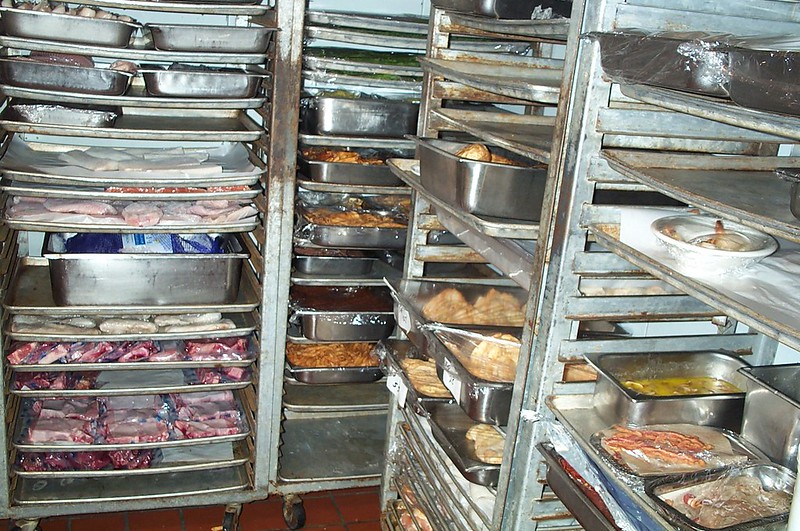
Meat storage tends to be the most misunderstood and poorly implemented procedure when it comes to food storage. We know that raw meat should always be stored below cooked product, but according to MN food safety certification regulations, raw meats should be separated during storage and production. One way to safely store raw products and prevent cross-contamination is to make sure that products with the highest cooking temperatures are stored on lower shelves than those with lower temperatures. If raw meats were to be stored on the same rack, a properly organized refrigerator should look like this in descending order.

  • Raw steaks and full cuts of beef (145 degrees minimum)
  • Raw ground beef (155 degrees)
  • Raw poultry (165 degrees)

You will notice that we have not included seafood on our list. Even though seafood has a minimum cooking temperature of 145 degrees, we recommend separating it further from all other product. We feel that this is an important safety precaution to protect those who have allergies to seafood and shellfish.

The optimal way to achieve proper storage is to have dedicated areas for meat, dairy, and produce. Larger outlets such as large-scale food manufacturing plants can easily achieve this by using multiple refrigeration units. Many restaurants, hotels, and smaller institutional facilities do not have this luxury, so diligence is important.

Tips for Food Safety Managers Streamlining Food Storage

The first tip to ensure proper food storage is to label everything. Food should be labeled and dated when received or prepared. This is the obvious first step and is required to know for food safety certification in MN, but it is helpful to take labeling one step further than the minimum storage regulations.

Label the sections, shelves, and empty spaces in your refrigerators. This will ensure that employees will be able to see where each type of product is allowed to be stored, and will prevent the confusion of a constantly changing storage system.

Another tip is to store produce and meat as far away from each other as possible. In many cases, this can be achieved by splitting refrigeration space in half. One side of a walk-in refrigerator will contain produce, the other meat products. Two separate refrigerators would be the ideal storage solution, but this is not always achievable. In cramped quarters, the labeling of all available space will streamline your storage process.

Implementing proper food safety storage regulations appear simple on paper, but implementing an organized system is well worth the vigilance.

CFPMs Take Advantage Of The New Meal Kit Market

CFPMs Take Advantage Of The New Meal Kit Market

Restaurant patrons have taken to cooking at home more over the past few years, and this gives food businesses and restaurants the opportunity to take advantage of this new market. If you’re looking for a way to reach new customers and give them a chance to cook their favorite menu items at home, you may want to consider offering meal kits with everything they need to prepare their favorite dish. Since you’re not cooking these meals in-house, there’s a different set of challenges involved. Let’s consider what Certified Food Managers ( CFPMs ) should consider when preparing meal kits for customers to cook at home.

CFPMs Take Advantage Of The New Meal Kit Market
Image credit: 123rf

CFPMs Food Safety Challenges for Take Home Meal Kits

Meal kits can help boost your business, but certified food protection managers must make your staff aware of the unique food safety hazards is the key to doing it safely. Your kit can include raw protein ingredients, fresh vegetables, cooked products and dried spices, so there are several different food handling rules you have to consider.

The biggest concern will be cross-contamination during preparation and packaging. Make sure all fresh ingredients are stored away from raw products at all times. If you sell these kits at high volume, have your certified food protection manager designate space in your walk-in refrigeration so there can be no risk of cross-contamination during storage.

The highest risk of cross-contamination may occur during packaging. Many of these meal kits fit into one large box, so keeping raw food separated from fresh ingredients can create some difficulties. If you do use one large box for these kits, we suggest tightly sealed and separate containers for raw ingredients. We’d also recommend taking it a step further and placing these sealed containers in a separate box within the larger crate for dual-layer protection. It’s also important to consider some sort of cold pack or ice bag to keep cold foods cold during transport.

Since you’re not cooking these items in your establishment, temperature control is left up to the consumer, but that doesn’t mean you can’t take steps to give them the information they need to cook every ingredient properly. Include incredibly detailed recipe cards that list proper cooking temperatures. You can experiment with cooking times of meal kit ingredients in your restaurant and include that information, but CFPMs should remember not every oven will cook at precisely the same rate. Include warnings that will indicate the properly cooked temperature for each ingredient. You may even wish to go so far as to offer probe thermometers at an additional cost.

Are you using meal kits as a way to reach new customers?

How to Food Safety Training for Pathogen Free Marinades

How to Food Safety Training for Pathogen Free Marinades

Marinades infuse meats, poultry and even vegetables with great flavors, but if you’re not careful they may also infuse your food with pathogens, bacteria and other contaminants that could sicken guests. As the saying goes, so it’s important to make sure that your extra flavor doesn’t come with a dose of illness. Let’s explore food safety training for pathogen-free marinades.

How to Food Safety Training for Pathogen Free Marinades
Image credit: pxfuel

Food Safety Training to Prevent Tainted Marinades from Causing Foodborne Illness

There are three major concerns when it comes to food safety training for bacteria-free marinades:

  • Cross-contamination
  • Spoiled Fresh Ingredients
  • Temperature Control

If you’re using the same marinade for multiple purposes, you run the risk of mixing two ingredients that may be required to be cooked to different temperatures. You’ll inevitably contaminate some ingredients if you mix multiple items in the same container. Meats and vegetables cook at different temperatures, and poultry requires a much higher final cooking temperature than most other raw foods. To avoid any type of cross-contamination, use a separate container to marinate different ingredients. It’s also a good food safety procedure to throw out marinades used for raw ingredients and start over each time you marinade new ingredients regardless of type.

If you make your own marinades in-house and make more than you need for any given day, make sure you take note of the shelf life of any fresh ingredients involved. Fresh ingredients spoil over time naturally and adding them to liquids can accelerate the process. Use proper labeling techniques to date all marinades and have a defined expiration date on all marinades and marinated product.

Temperature control can also sometimes be an issue with large batches of marinades. When soaking raw proteins, make sure that all ingredients are out of the danger zone, and don’t soak any protein at room temperature.

Finally, if you utilize dry rubs or marinades, you should still follow the same food safety procedures as wet marinades.

What’s the favorite marinade you use in your restaurant?