



A Food Manager’s Guide to Preventing Buffet Cross-Contamination

Buffet Cross Contamination-Buffet

As a food manager in Minnesota, you understand the unique appeal of a buffet service. It offers variety and abundance that customers love. However, that same open-service style presents significant food safety challenges, with the primary risk being buffet cross-contamination. A single misstep can compromise an entire food line, potentially leading to a foodborne illness outbreak that could harm your customers and your reputation. Implementing a robust, multi-layered strategy is not just good practice—it’s essential for protecting everyone.

The nature of a self-service line means dozens of people interact with the serving utensils and food, creating numerous opportunities for germs to spread. Therefore, your prevention plan must be comprehensive, covering everything from staff hygiene to the layout of the buffet itself.

Build a Foundation of Impeccable Hygiene

Prevent cross contamination at the buffet table!- Buffet table
Prevent cross contamination at the buffet table!

The first line of defense against foodborne illness is always your team. Pathogens are most commonly transferred by hands, making strict hygiene protocols the cornerstone of buffet safety. These standards must be non-negotiable for every person working in your establishment.

  • Implement Proper Handwashing: This is the single most critical habit. Staff must wash their hands with soap and warm water for at least 20 seconds before their shift, after using the restroom, after handling raw meat, and any time they switching tasks.
  • Train on Correct Glove Use: Disposable gloves can provide a significant barrier, but only when used correctly. Staff should wash their hands before putting on gloves and change them frequently, especially after handling allergens or raw foods. A glove is only as clean as the last thing it touched.
  • Maintain High Personal Hygiene Standards: This includes wearing clean uniforms, using effective hair restraints like hairnets or hats, and removing jewelry that could harbor bacteria or fall into food.

Master Food Handling to Stop Buffet Cross-Contamination

How food is held, stored, and served is critical. Even with clean hands, improper food handling can quickly turn a beautiful buffet into a high-risk zone. Your strategy must focus on controlling temperature and preventing contact between different food types.

  • Monitor Temperatures Vigilantly: Bacteria multiply rapidly in the “temperature danger zonebetween 41°F and 135°F. Use calibrated food thermometers to ensure hot foods stay at or above 135°F and cold foods stay at or below 41°F.
  • Separate Raw and Ready-to-Eat Foods: This rule is absolute, from the walk-in cooler to the serving line. Store raw meats, poultry, and seafood below and away from ready-to-eat items to prevent juices from dripping and contaminating them. Use color-coded cutting boards and utensils for preparation.
  • Enforce the First-In, First-Out (FIFO) Rule: Always use the oldest stock before the newest stock. Using this method ensures the freshest food is served and reduces the risk of using expired or unsafe products.

Control the Point of Service

Buffet Cross Contamination
Stop buffet cross contamination with these tips!

The buffet line itself is where your staff, your food, and your customers all interact. Managing this environment is crucial for preventing the direct and indirect spread of contaminants. Small, consistent actions in this area can make a significant difference.

  • Provide a Utensil for Every Dish: Never allow a single spoon or pair of tongs to be used for more than one dish. This prevents the transfer of allergens and germs between food items. Keep a stock of clean utensils ready and replace any that are dropped or mishandled immediately.
  • Use Protective Sneeze Guards: Sneeze guards are a physical barrier required by health codes for a reason. They protect food from respiratory droplets and other physical contaminants that may come into contact with customers. Ensure they are clean and properly positioned.
  • Encourage Clean Plates for Refills: Politely ask customers to use a fresh plate each time they return to the buffet. This simple step prevents a used plate, which has come into contact with a customer’s hands and saliva, from contaminating the serving utensils and, subsequently, the entire dish.

Preventing buffet cross-contamination requires continuous effort and a well-trained team. These systems are your best defense against foodborne illness and are essential to running a safe and successful buffet service.

Are you confident your team understands every risk, from the temperature danger zone to allergen management? Safe Food Training provides personalized, instructor-led food safety courses for Minnesota food managers and their staff.

Book your initial certification or continuing education session today and build a culture of safety in your establishment.
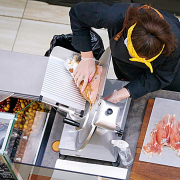
Food Safety Training Uncovers The Truth About Commercial Food Slicers

Food Certification MN and Keeping a Clean Slicer

Food safety certification training recommends keeping your food slicer clean to prevent cross-contamination and spoiling products from creating a health hazard. You’ve learned in your food safety certification MN training that cross-contamination is a common cause of foodborne illness. The industrial meat slicer can be a breeding ground for many bacteria that can make your customers sick, and we feel that the commercial slicer requires extra care when cleaning and should never be neglected during your daily routine.

Food Safety Training Uncovers The Truth About Commercial Food Slicers

Food Safety Certification Training Focused On Keeping The Commercial Slicer Clean

It is essential to thoroughly clean and sanitize your slicer after each use. This can be a time-consuming process, but it is necessary. We’ve noticed that many busy outlets that use their slicer constantly, such as delicatessens, do not thoroughly sanitize them during the day. Simply wiping the slicer down with a damp cloth is not suffient Ensure to thoroughly clean the blade, slicing tray, and handles regularly. To ensure thorough cleaning of the slicer, it may take some time and require removing several parts. This thorough process is essential. For the safety of employees, it is imperative to turn the slicer off and unplug it prior to cleaning.

There are ways to reduce the number of times you must take your slicer apart to clean it during normal activities. Plan your slicing routine according to the types of food you are slicing. Slice all of your cheeses simultaneously, then move on to cooked sandwich meats and finish with any raw proteins, ensuring that your slicer is cleaned and sanitized between each step.

Always clean and sanitize the slicer immediately after use, if it will be inactive for any length of time. Small particles of cheese or meat can fester in unseen places and create a cross-contamination nightmare. Just because your slicer looks clean doesn’t necessarily mean it is. “Before each use, inspect your blade for any leftover debris.”

To maintain the safety of the food you serve your guests, it is crucial to properly care for all the equipment, including the slicer, as recommended by food certification training. Do you have a piece of equipment in your facility that you feel needs more attention than it currently gets?

Food Sampling Procedures You Need To Know In Food Manager Training

Tasting According to Food Manager Certification MN Training

We discuss product sampling in depth at Safe Food Training during food manager certification MN training. To consistently deliver high-quality food to your guests, it is crucial to taste or sample every dish, sauce, or prepared product to ensure that it meets your high standards. We must emphasize the importance of following the correct procedures when sampling your food product.

Food Sampling According to Food Manager Certification MN Training

 Food Sampling According to Food Manager Certification Training 

Food on the line must be tasted numerous times per shift to ensure each guest receives a quality meal. It is important to understand that something as simple as tasting can create a food risk. There are a few things that you should never do when tasting your cuisine in the kitchen.

  • Never use your fingers
  • Never double-dip a tasting spoon
  • Never use a stirring spoon to taste
  • Never lean over a pan or plate while tasting

This ” don’ts” list should be self-explanatory to the experienced food service worker. Touching a guest’s food with a bare hand, reusing a tasting spoon, and creating a scenario where food can drip from your mouth into a prepared product generate the potential for contamination. If you’re a food manager, you need to make sure your staff clearly understands the right and wrong way to taste the food they produce and give them the tools to do it safely.

Sampling Spoon Accessibility

To comply with the MN food code, we recommend that food managers supply your staff with ample food-tasting spoons stored above the food production line. Store them in a clean container to prevent contact with food or potential contaminants before use. Many restaurant workers store tasting spoons in their jacket or apron pockets to be close at hand when needed. We recommend that you train your employees not to store tasting spoons in their pockets. They risk coming into contact with food product or bare hands, and an increased potential of cross-contamination can result.

If you’re preparing a sample of a daily special or new menu food item, your staff should taste it away from the production area. This practice falls under the category of eating in the kitchen in the Minnesota Health Code. The food protection manager should move this process away from the production line.

Going Beyond Unbelievably Simple Food Safety Storage Regulations

Proper storage of all types of food products, whether raw meats, dairy, produce, or fully prepared foods, is essential in any segment of the food service industry. Improperly stored food can lead to loss of profits due to waste, and wasted time while employees search for product. Food safety training addresses the storage regulations issue, we’ll explore other storage solutions as well.

Going Beyond Unbelievably Simple Food Safety Storage Regulations

Image credit: stu_spivack via Flickr

Meat storage tends to be the most misunderstood and poorly implemented procedure when it comes to food storage. We know that raw meat should always be stored below cooked product, but according to MN food safety certification regulations, raw meats should be separated during storage and production. One way to safely store raw products and prevent cross-contamination is to make sure that products with the highest cooking temperatures are stored on lower shelves than those with lower temperatures. If raw meats were to be stored on the same rack, a properly organized refrigerator should look like this in descending order.

  • Raw steaks and full cuts of beef (145 degrees minimum)
  • Raw ground beef (155 degrees)
  • Raw poultry (165 degrees)

You will notice that we have not included seafood on our list. Even though seafood has a minimum cooking temperature of 145 degrees, we recommend separating it further from all other product. We feel that this is an important safety precaution to protect those who have allergies to seafood and shellfish.

The optimal way to achieve proper storage is to have dedicated areas for meat, dairy, and produce. Larger outlets such as large-scale food manufacturing plants can easily achieve this by using multiple refrigeration units. Many restaurants, hotels, and smaller institutional facilities do not have this luxury, so diligence is important.

Tips for Food Safety Managers Streamlining Food Storage

The first tip to ensure proper food storage is to label everything. Food should be labeled and dated when received or prepared. This is the obvious first step and is required to know for food safety certification in MN, but it is helpful to take labeling one step further than the minimum storage regulations.

Label the sections, shelves, and empty spaces in your refrigerators. This will ensure that employees will be able to see where each type of product is allowed to be stored, and will prevent the confusion of a constantly changing storage system.

Another tip is to store produce and meat as far away from each other as possible. In many cases, this can be achieved by splitting refrigeration space in half. One side of a walk-in refrigerator will contain produce, the other meat products. Two separate refrigerators would be the ideal storage solution, but this is not always achievable. In cramped quarters, the labeling of all available space will streamline your storage process.

Implementing proper food safety storage regulations appear simple on paper, but implementing an organized system is well worth the vigilance.