food safety Manager Training for Your Delivery service

Proven Food Safety Manager Training For Your Delivery Service

Over the past two years, many restaurant patrons have changed the way they order their meals giving food safety managers the challenge of adapting to foodservice beyond in-person dining. With COVID-19 numbers fluctuating and regional regulations impacting food service, many patrons have taken to delivery services to order from their favorite eating establishment. Delivery provides a whole new set of food safety hazards that don’t exist within the confines of a dining room, so it’s important for every food safety manager to look at how to keep your food safe during the delivery service process.

Proven Food Safety Manager Training For Your Delivery Service
Image credit: belchonock via 123rf

How Food Safety Managers Can Keep Food Safe During Delivery Service

There are very limited regulations in the MN food code regarding what happens to food after it leaves your restaurant for delivery, so food safety managers have to use common sense to create their own procedures to keep food safe during the delivery process.

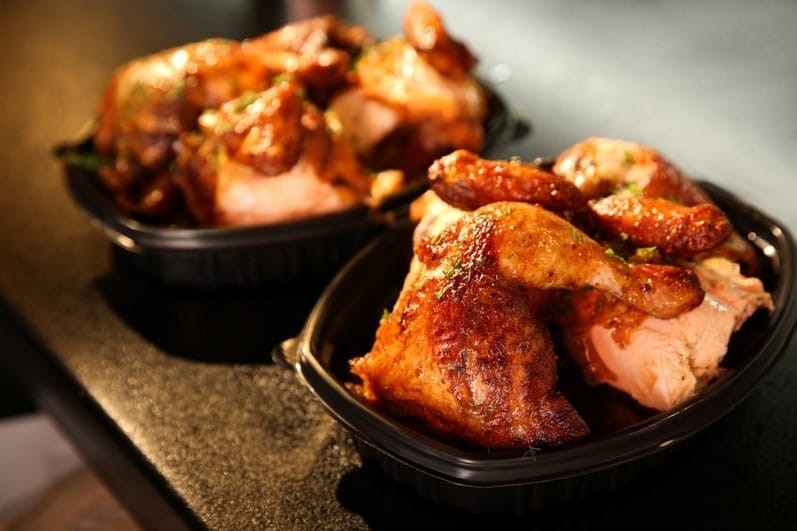
If you don’t have your own delivery drivers, your restaurant may rely on Postmates, GrubHub and Uber Eats for delivery service. Unfortunately, since these drivers are not members of your staff you’ll have no control over what happens to your meal once the driver leaves your establishment. The good news is, the drivers of these outside services are professionals, and many will take precautions to keep food warm and reduce contamination risks, but you can still take precautions to help keep food safe. When preparing food for delivery, make sure you:

  • Keep food hot until pick up
  • Prepare food as close to pick up time as possible
  • Use appropriate to go containers to prevent spillage

Rather than leaving to-go and delivery orders at the bar or hostess stand, we recommend you keep it in a warmer or under a heat lamp until it’s ready to leave the building. This will reduce the amount of time your food is a risk of falling into danger zone temperatures. It’s also a good idea to have the food prepared as close to the pickup deadline as possible and stored in sealed containers that won’t spill during transport. We all love a warm bowl of soup as a side dish with sandwiches or burgers, but we’ve yet to see a creamy chicken noodle club sandwich at any of our favorite restaurants, so make sure containers are sealed before leaving the restaurant.

Establishments that do employ a delivery driver can have much more control over the safety of your product during delivery. Make sure to stock up on insulated delivery bags in order to ensure freshness upon delivery.

What steps does your food safety manager take to keep your food safe during deliveries?
A Valuable Certified Food Protection Manager Refresher On Cooling Procedures

A Valuable Certified Food Protection Manager Refresher On Cooling Procedures

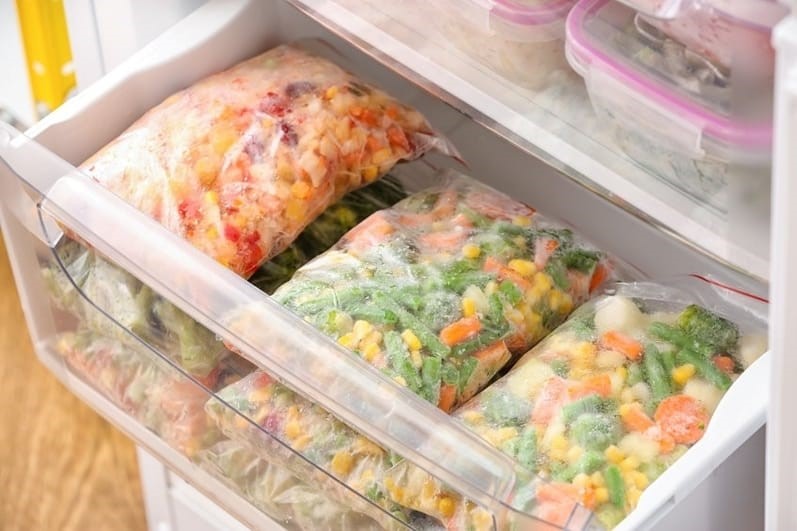
Having product prepared ahead of time can make for smooth service during the dinner rush and gives certified food protection managers time to concentrate on menu items that need to be prepared at the moment. If you rely on cooking hot foods in advance to be ready to reheat, it may be a good time for your certified food protection manager to review proper cooling procedures with your staff.

A Valuable Certified Food Protection Manager Refresher On Cooling Procedures
Image credit: serezniy via123rf

Cooling Times and Temperature Review for Certified Food Protection Managers

The key to making sure that cooling foods are kept safe from foodborne illness is to chill it as fast as possible so that it doesn’t stay in the danger zone for an extended period of time. Food that sits between 41 degrees and 135 degrees has an elevated risk of growing bacteria, especially if left at that temperature for over longer than is reasonable. If your food was prepared at room temperature, you have four hours for your product to reach 41 degrees. If foods are prepared at temperatures over 135 degrees, they must reach 70 degrees within two hours and 41 or below within six total hours from the start of the process.

MN food code and certified food protection manager training reinforces that this chilling process should happen as quickly as possible, so make sure you utilize the following methods:

  • Ice water baths
  • Separating liquid product into shallow hotel pans
  • Slicing solid product to portions four inches thick or less
  • Sanitized cooling wands
  • Rapid cooling equipment such as blast chillers
  • Adding ice as a final ingredient

If you don’t have access to a blast chiller, the fastest way to cool hot product is by reducing portion size and cooling it in your walk-in in shallow pans. If you want to expedite the process for soups, sauces and other liquids, you can add ice as the last ingredient of your recipe. This is quite effective for menu items that have a water or stock base, to begin with.

Ice water baths are also incredibly effective, and when combined with a frozen cooling wand, can bring your chilling product below 41 degrees rapidly.

Has your certified food protection manager taken the time to evaluate cooling procedures in your facility?

Free Look At Food Safety Training For Salad Bars

Free Look At Food Safety Training For Salad Bars

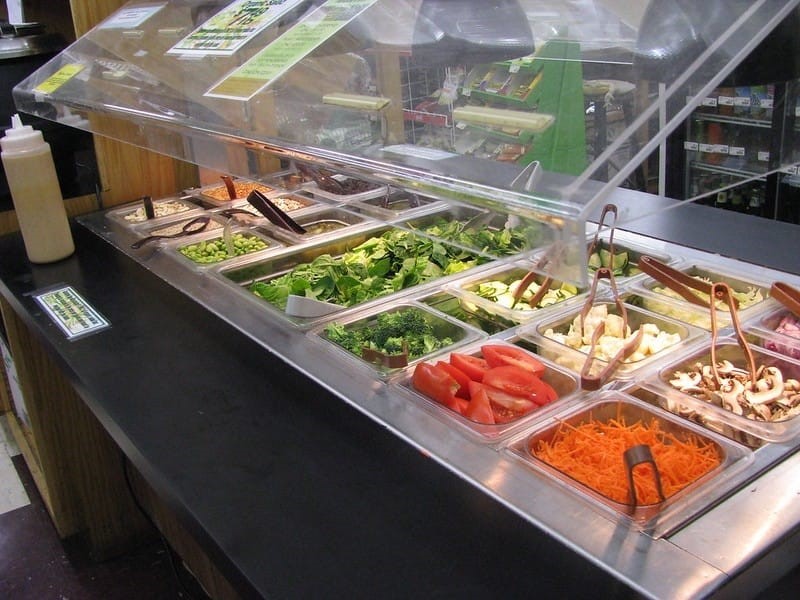
Salad bars are popular options for guests who enjoy customizing their salads or like to peruse options before choosing their ingredients. Whether in a restaurant, school, hospital or other location that offers a salad bar service, certain food safety training measures must be taken in order to keep the fresh ingredients safe to eat. Let’s take a look at a few basic food safety training steps you should take if you operate a facility with a fresh salad bar.

Free Look At Food Safety Training For Salad Bars
Image credit: NatalieMaynor via flickr

Food Safety Training Tips to Salad Bars Free from Foodborne Illness Risks

When considering a salad bar, the first thing you must examine is the equipment that will be used when in operation. Salad bars should be contained within a refrigerated unit, or a stainless steel bin capable of holding enough ice to keep ingredients cold. These bins or countertop inserts should have adequate drainage for ice melt and be certified by appropriate restaurant equipment standards. Make sure your product is completely contained and submerged deep enough in the ice to keep food below ice level and that no product is directly stored in the ice bins themselves.

Once you have the proper equipment, steps must be taken to keep food cold. Whether you have a refrigerated unit or product stored in ice, frequent temperature checks should be made to ensure that all ingredients are stored at less than 41 degrees.

Finally, make sure that all product is properly rotated so that old product and new product are kept separated. Even if it’s one sad, lonely hunk of feta cheese left behind with new product, contamination could spread. Every time a container is emptied or refreshed, we strongly recommend exchanging it for a clean one.

Do you have any tips on how to keep salad bars fresh?

How ServSafe Managers Can Apply New COVID Vaccination Proof Mandates

How ServSafe Managers Can Apply New COVID Vaccination Proof Mandates

Like many major cities across the United States, Minneapolis and St. Paul have joined municipalities requiring proof of vaccination or a negative COVID test in order to participate in certain indoor activities. This mandate has the potential to have an impact on the restaurant industry since indoor dining is among activities requiring proof of a negative test or a vaccine card. How can ServSafe managers put in place procedures to follow these new COVID mandates and keep their restaurants flourishing?

How ServSafe Managers Can Apply New COVID Vaccination Proof Mandates
Image credit: Hans-Petter Fjeld via Wikimedia

Minnesota ServSafe Food Managers And COVID Vaccination Regulations

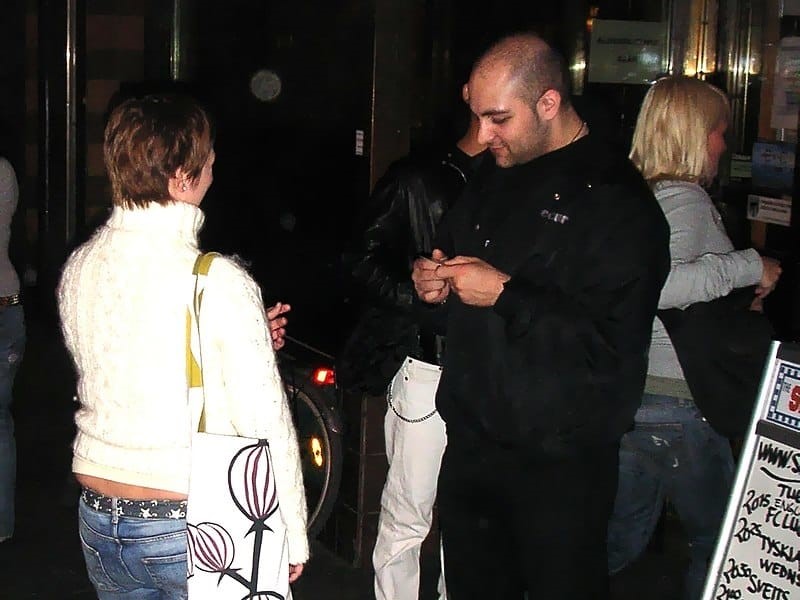
As long as these rules are in place, the biggest challenge is to keep business flowing while making sure patrons have the proper paperwork. It may be a good idea to have an extra host at the front door during busy times in order to speed up the process without forcing your guests to wait too long before being seated. It may add to your labor costs, but it also may reduce the amount of guests who choose to go elsewhere if the wait time to be seated is unreasonable.

When checking proof of vaccination, make sure you look for these three different types of proof:

  • The original vaccination card
  • A photo of the card on a smartphone
  • Proof through the Docket app

While these new COVID vaccination mandates have been put in place to stop the surge of the newest variant, ServSafe managers will still want to find ways to reach guests who cannot show proof of a negative test or a vaccine. Make sure that you have takeout options, curbside pickup or delivery available for guests who still wish to order from your menu. This will show that you still value all of your customers and are willing to make accommodations to serve them.

While these COVID mandates affect food businesses in the Twin Cities, it might be prudent to have your ServSafe food managers lay out a plan should your municipality enact similar rules.

Do you have a plan in place should your guests be required to show proof of vaccination?