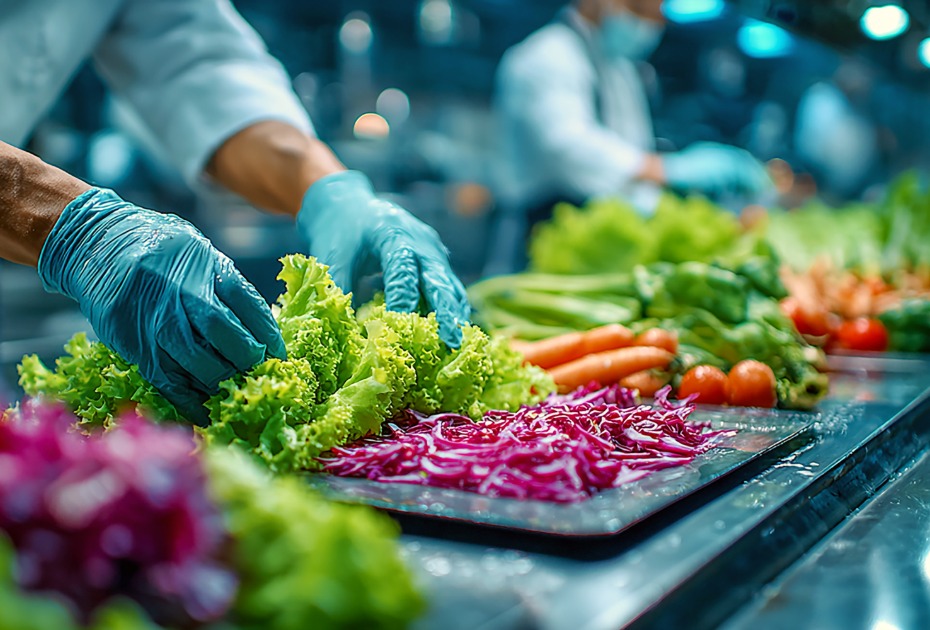
Are you washing your produce properly?
A solid food safety evaluation checklist catches problems before a health inspector does, and it can save your kitchen from fines, a critical review, or worse. It covers the basics, hygiene, storage temperatures, cleaning, and allergens, plus contamination prevention, pest control, documentation, and where technology fits in. It also covers keeping your own CFPM current, since a checklist and a certification can go stale together. Here’s what belongs on that list, and how a busy Minnesota kitchen can put it to work in 2026.
Start With the Legal Groundwork
Before you write a single line on a checklist, start with the Minnesota food-safety requirements that apply to your license type and menu. Every operation follows the state’s food code, though the specifics shift depending on whether you’re running a full-service restaurant, a food truck, or a fair booth. If your menu includes a specialized process, like curing, smoking as a preservation method, or vacuum packaging, your license may call for a formal HACCP plan. That document spells out where food safety can break down in the process and how your team controls the risk.
Most Minnesota food establishments need at least one Certified Food Protection Manager, or CFPM, on staff, though some mobile or temporary operations are exempt. Every operation still has to follow the food-safety requirements tied to its license and menu, whether or not it needs a CFPM. Minnesota Department of Health-approved training programs are built to cover exactly that, and a NEHA (National Environmental Health Association) Registered Trainer can help you sort out which pieces apply to your setup.
None of this needs to live in a binder nobody opens. Print the food code sections relevant to your license type, and note which HACCP principles apply to your menu, if any. Then name one person, not a committee, who’s accountable for keeping the whole thing current.
Four Categories to Build Into Every Shift
Once the legal groundwork’s in place, your checklist needs to cover what happens on the floor every shift.
Personal Hygiene and Staff Training
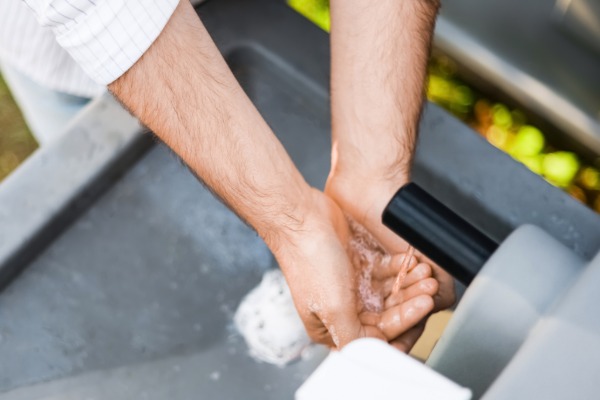
Proper hand washing is vital to food safety!
Your team is the first line of defense, but good habits erode fast once a Friday dinner rush hits. Build hygiene rules that hold up under pressure, not just ones that look good in a manual.
- Set handwashing and glove-change rules that apply the same way at 6 p.m. as they do at open
- Train new hires before their first solo shift, then retrain everyone at least once a year
- Keep hand sinks stocked with soap and paper towels, and make sure staff know your illness-reporting policy
Food Storage and Temperature Control
Temperature control is where a good kitchen and a cited kitchen part ways. Walk the cooler and freezer at the same time every shift, and treat any drift as worth investigating right away, not at the end of the day.
- Log cooler and freezer temps at set times, not whenever someone remembers
- Rotate stock first-in, first-out (FIFO), so the oldest product gets used before anything newer
- Check internal temperatures on cooked TCS foods (Time/Temperature Control for Safety foods, meaning foods that need time and temperature control to stay safe, whether they’re cold-held, hot-held, cooled, or reheated) before they leave the line
- Calibrate thermometers on a regular schedule and check hot-holding units with the same discipline you check the cooler
Cleaning and Sanitization
A cleaning schedule only means something once your team runs it without being told. Post it where people will see it, not tucked away in an office nobody enters. Match your sanitizer to the surface it’s meant for; a quat sanitizer and a bleach solution aren’t interchangeable.
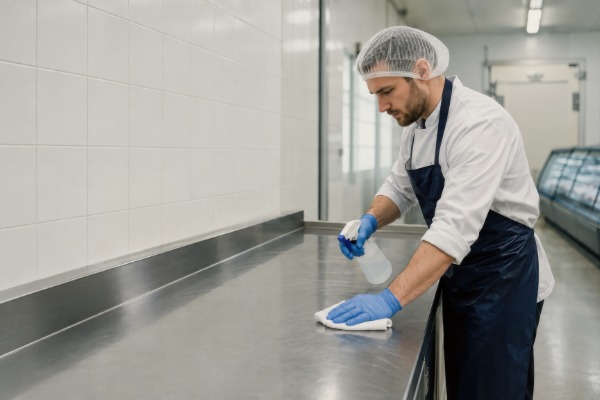
Food safety checklist! Sanitizing is a priority.
Whether your operation uses a three-compartment sink or a dish machine, staff need to follow the correct wash, rinse, sanitize, and air-dry process every time. Check sanitizer concentration with test strips instead of guessing by eye. Contact time matters too, so wiping a surface dry too soon leaves it just as unsafe as skipping the sanitizing step altogether.
Allergen Management
Allergen mistakes carry different stakes than a temperature miss. There’s no margin for error, so the information must be right every time.
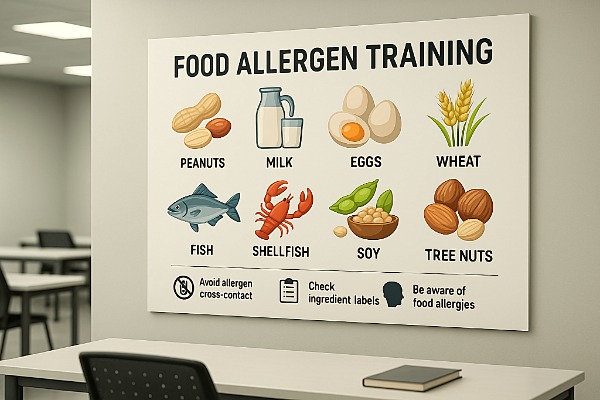
Make sure your staff is well trained in food allergen safety.
Keep a current list of the top allergens present in every dish, and make sure that list is easy for staff to find mid-shift, not buried in a binder in the office. Train staff to answer allergen questions honestly instead of guessing, and walk through cross-contact steps with the team before service, not after a guest has already asked. Separate prep tools and surfaces for orders where a guest reports an allergy whenever your kitchen handles both kinds of orders.
Preventing Contamination Before It Happens
Most contamination problems trace back to something ordinary: a delivery that sat too long on a loading dock, a cutting board used for raw chicken and then for salad greens. Equipment causes the same kind of trouble; a poorly cleaned commercial slicer can carry bacteria from one order to the next just as easily as a dirty cutting board. Catching these problems before food reaches a plate is the whole point of a checklist.
- Inspect deliveries on arrival, not after they’ve already gone into the walk-in
- Keep raw and ready-to-eat prep separated, by station if you have the room, by timing if you don’t
- Log delivery temperatures at the door, and note anything you reject or correct; that record matters as much as the fix
Waste and Pest Management
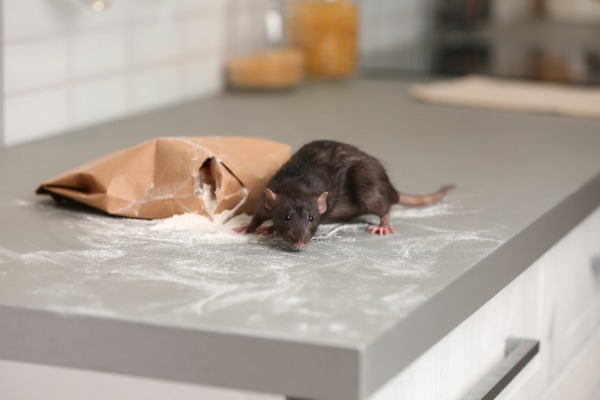
Is your kitchen safe? Learn more about pest control in Minnesota!
Pests show up wherever food, water, and shelter overlap, so a kitchen without a waste plan is doing half the work of pest prevention for free. Keep a documented pest control schedule with a licensed provider, and store waste in sealed containers away from prep and storage areas. Walk your kitchen’s perimeter now and then, looking for the small stuff: a gap under a door, a torn screen, before it turns into the reason for a callback inspection. Our guide to restaurant pest control in Minnesota walks through what an inspector checks room by room.
Documentation That Actually Holds Up
A log nobody can find during an inspection might as well not exist. Keep records organized enough that any shift lead can pull up last Tuesday’s cooler temps in under a minute, not after digging through a drawer.
| Record | How Often | Who Owns It |
| Temperature logs | Every shift | Kitchen manager or designated lead |
| Cleaning and sanitizing logs | Daily | Closing shift lead |
| Staff training records | At hiring, then annually | CFPM |
| Approved-source and vendor records, when applicable | On file, reviewed yearly | CFPM |
Bringing Technology into a 2026 Kitchen
Digital logs can help a kitchen spot repeat temperature issues or pull up records quickly during an inspection. A connected sensor may alert the team when a walk-in moves out of range, while a paper log only captures the temperature at the scheduled check. None of this replaces a trained set of eyes, though.
Software can flag that a fridge is running warm; it can’t tell you why your dish pit smells like it needs attention. Treat technology as backup for your checklist, not a replacement for someone walking the kitchen and looking.
Review Your Checklist as Often as Your Certification
A food safety evaluation checklist isn’t something you finish once. Update it whenever regulations change or you bring in new equipment. A self-assessment that turns up a gap you didn’t expect is reason enough. Update it whenever regulations change or you bring in new equipment. A self-assessment that turns up a gap you didn’t expect is reason enough on its own. The same logic applies to your own Minnesota Food Protection Manager certification, better known as your CFPM. If you take the four-hour refresher before your current three-year certification expires, you skip the eight-hour exam entirely. If you let it lapse, you start over.
Don’t let your three-year renewal slip by!
Safe Food Training has trained food protection managers across Minnesota for over 30 years. Kitchens that put checklist reviews and certification renewal dates on the same calendar are less likely to get caught off guard by a missed log or an expired certificate.
Frequently Asked Questions About Food Safety Evaluation Checklists
Here are the questions Minnesota kitchen managers bring up most when they’re building or updating their own checklists. A few of these come up again and again, no matter the size of the operation.
How often should I update my food safety evaluation checklist?
Twice a year is a reasonable baseline, with an update any time state or local food code changes. Adding a new menu item or a new piece of equipment is worth an update right away, not at the next scheduled review. The same goes for a citation on your last inspection.
Who should own the checklist in a small restaurant?
One person, even in a minor operation. Spread that ownership across a few people, and nobody usually checks it until something goes wrong.
Do I need a CFPM to run my food safety checklist?
Not technically, but it helps a lot. A CFPM, or Certified Food Protection Manager, has already covered HACCP, allergen protocols, and Minnesota’s food code as part of earning that certification. Most Minnesota operations are required to have at least one on staff anyway, so it makes sense for that person to own the checklist too.
What’s the difference between HACCP and a general food safety checklist?
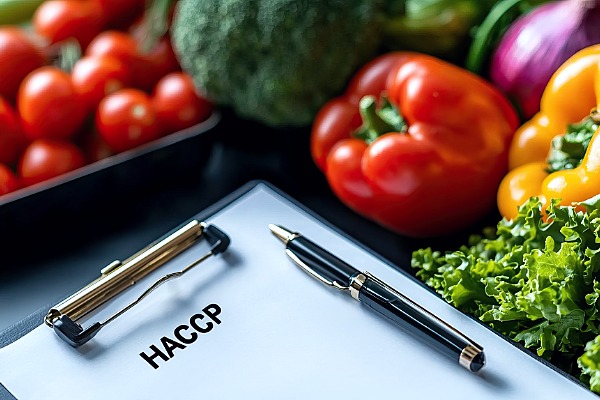
Hazard analysis critical control points are vital for food safety training.
HACCP identifies the specific points in your process where contamination risk is highest and builds controls into those exact steps. Your broader checklist is wider than that. It’s where hygiene, cleaning, documentation, and staff training all live- everything that supports the HACCP plan without technically being part of it.
Do digital checklists actually catch more problems than paper ones?
They’re better at spotting patterns, like a cooler that keeps drifting warm on Tuesdays, because the data’s time-stamped and searchable. Paper works fine too, as long as someone reviews it on a set schedule instead of filing it away.
Does my checklist need to cover allergens separately from general food safety?
Yes. Allergen management involves different failure points, cross-contact instead of temperature or time. That’s why it deserves its own section and its own staff training, rather than a single bullet buried under “food quality.”
Get Your Team Certified and Ready
Ready to make sure your entire team is certified and ready for review? Call Minnesota’s top-rated Food Protection Manager instructor, Jeff, at (952) 210-0195 or email info@safefoodtraining.com, and register for in-person or online training at safefoodtraining.com. If your CFPM is coming due, complete the four-hour refresher before it expires so you won’t need to repeat the full eight-hour course and exam, and use code SFT10 for $10 off Safe Food Training’s online recertification course.