
Protected: Certified Food Manager Training For Multiple Employees
There is no excerpt because this is a protected post.
There is no excerpt because this is a protected post.
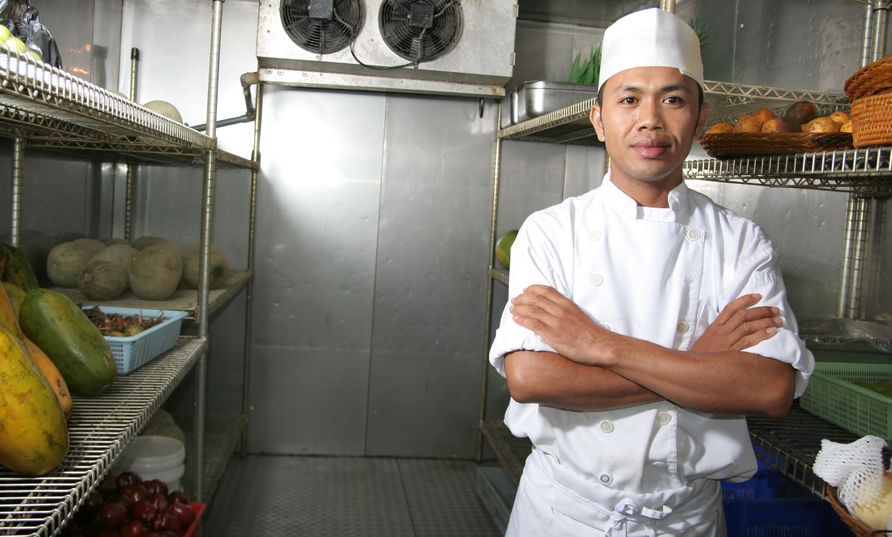
It’s September, and we’re in the midst of National Food Safety Month. National Food Safety Month gives us the opportunity to look at some of the most important rules that keep our food safe. It also gives restaurateurs and food service supervisors the chance to pass on the knowledge they’ve learned during food safe training to their customers.
Copyright: erwinova / 123RF Stock Photo
Before we talk about ways to introduce food safe cooking practices to your guests, it’s important to quickly review proper temperature control procedures. All food must spend as little time in the danger zone as possible. This means all hot foods must remain over 140 degrees and all chilled foods must remain below 41 degrees. Raw proteins and reheated foods must be fully cooked before serving.
When we talk to people who have never worked in the food industry, we find some interesting misconceptions about how temperature affects food safety. Many people know the common pathogens that cause food-borne illness due to media coverage of outbreaks, but they don’t consider how their cooking habits at home can have the same consequences on a smaller scale. While food business operators are not responsible for how their patrons handle food at home, Food Safety Month offers a way to share food safe training practices with their guests.
Including an insert in your menu that explains what Food Safety Month is about is an easy way to pass on food safe training practices. Educating your patrons on proper cooking temperatures for proteins can give them an at home guide to doing it themselves. The Minnesota Food Code provides fact sheets that can be easily adapted to produce a simple instruction guide to enlighten your guests on this key food safety issue.
We think it’s a great idea to pass on food safety tips to those not in the industry. Do you have any ways that you educate your guests?

As food safety professionals, we often play Monday morning quarterback whenever we read a news story about a major food-borne illness outbreak. We wonder what NFSRP standards were violated or if the certified food manager neglected some aspect of safe food training when bringing on new staff. Fortunately, the CDC tracks the vital statistics of an outbreak to bring a clearer picture of how they get started.
Image credit: Wikimedia Commons
One glaring statistic in the CDC’s collection of data that drew our attention is that 88-percent of outbreaks begin at a restaurant rather than a food packaging facility. This means that restaurant supervisors must implement quality food training methods that will enforce the importance of diligence in sanitation, prevention of cross contamination and proper temperature control. There is a very slim margin of error when it comes to keeping food safe, and in the fast paced atmosphere of a restaurant kitchen, the consequences multiply when food handling mistakes occur.
A second statistic that jumps out at us is the method of contamination. The top factors for food becoming contaminated are attributed to an employee handling food in some manner while infected with an illness. We think that this speaks volumes as to what a restaurant’s policy should be about working sick. Employees must not handle food while infectious.
The last statistic we’d like to point out is that over 45-percent of food poisoning outbreaks come from multi-ingredient dishes. Second and third place weren’t even close with vine vegetables at eight-percent and fish at seven-percent. There is no real trend to point to one protein or vegetable that is more likely to cause an outbreak than another. This means that all food needs to be handled with care, no matter what type of cuisine in on your menu.
If you’re a restaurateur, do these statistics surprise you? Let us know in the comments section.
Gaining your ServSafe food manager certification qualifies you to oversee food preparation in a restaurant or production facility and it comes with an obligation to ensure that your product is safe for the consumption of the public. This responsibility to the health of your customers is unique to the food industry and at many times requires supervisors and food service workers to make sacrifices that adversely affect them in order to protect public health.
Image credit: Wikipedia
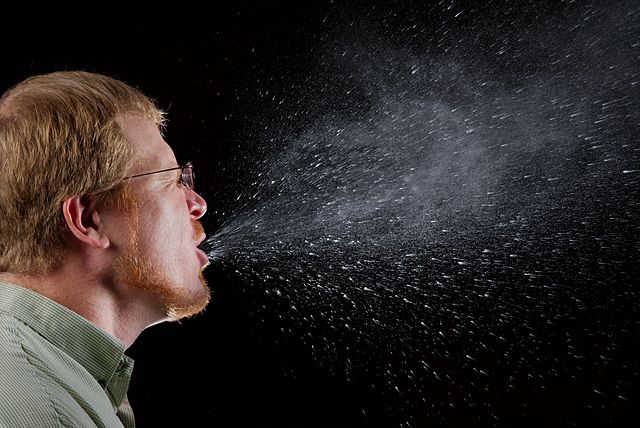
The requirement to stay home from work when sick often puts food service workers in a bind. Many other professions don’t have this restriction, allowing professionals outside of the food industry to go to work when under the weather. Food service employees must use up sick days, vacation time or forgo a day or two of pay to prevent the spread of their illness.
Evidence of food workers ignoring their health symptoms and working anyway becomes evident in news reports of Norovirus outbreaks. The Norovirus is easily spread by infected workers or exposed workers who fail to wash their hands properly. Whether it’s only one guest or several, diners who contract the Norovirus take that out into the world once they leave the eating establishment. This results in putting their friends, family and co-workers at risk of second-hand contamination.
The good news is that most supervisors take pride in their responsibilities and follow what they’ve learned during ServSafe food manager certification training. Many of them sacrifice for the greater good and stay home when ill and even days after to recover. An important key is to take care of yourself in order to reduce the chances of becoming ill and staying healthy enough to work every day.
Working with food comes with many challenges that don’t exist for most of the workforce. Are there any issues you’d like us to discuss in the future?