Food Safety Certified Procedures for Produce

Food Safety Certified Procedures for Produce

In ServSafe training, food safety certified professionals learn that washing raw fruits and vegetables before serving helps prevent the spread of food borne-illness. We all know that plants grow in the dirt, and dirt contains bacteria that can be harmful if consumed. Some farms utilize fertilizers and pesticides to yield a larger crop, and residues of these compounds may still exist on the surface of fruits and vegetables. We’d like to suggest that restaurants develop standards that require all produce to be washed before any use.

Food Safety Certified Procedures for Produce
Copyright: denisfilm / 123RF Stock Photo

Washing of Produce and Food Safety Certified Standards

Even if you plan to cook your fruits or vegetables, there may be a chance that pathogens on their surface can spread. During preparation, they will inevitably come into contact with knives, prep surfaces and hands that will then go on to touch other items in your kitchen.

Produce ingredients that often go unwashed include fruits and vegetables with peels or rinds. Some examples of these include:

  • Carrots, beets and other root vegetables
  • Avocados
  • Melons
  • Oranges, pineapples and other tree fruits
  • Thick-skinned squash such as pumpkins and butternut squash

During classes prepared for food safety certified managers, we’ve often been asked why we feel it’s necessary to wash these items before preparation; the customer will never eat the peels. Your knives and peelers can come into contact with contaminates on the surface of these ingredients and then become infected. The grooved surface of a cantaloupe, for example, contains many nooks and crevices for bacteria and remnants of fertilizer to reside. As you slice through the surface, your knife can pick up these microscopic particles and spread them to the meat of the fruit as your knife passes through. The same theory can be applied to a peeler that picks up contaminates while root vegetables are being prepared.

Washing all produce is just one small way to prevent food-borne illness, and should never be overlooked. Can you think of any small, but necessary, procedures you feel gets forgotten far too often.

Food Manager Training And When To Recall Products

Food Manager Training And When To Recall Products

Nothing completes a freshly toasted bagel like cream cheese, but in the month of January, Panera Bread customers had to settle for a substitute. After a sample from a single batch of one of their flavored cream cheeses tested positive for Listeria, Panera Bread made the decision to recall all cream cheese products in their restaurants, regardless of production date. This week, we’d like to explore Panera’s recent decision from a food manager training perspective. Bearing in mind their efforts to keep customers safe, especially considering the number of high-profile food-borne illness outbreaks we’ve seen over the past few years.

Food Manager Training And When To Recall Products

Recalls and Food Manager Training

Panera’s press release is very clear that only one batch of flavored cream cheese produced on a single date contained a tainted sample and that no cases of food poisoning have been reported. So was recalling product already shipped and produced on different dates really necessary?

When studying bacteria in food manager training classes, we learn that Listeria is a potentially deadly pathogen, especially to the elderly, children and those with weakened immune systems. Extreme caution should always be taken when there is even the remote possibility of releasing food tainted with Listeria into the food supply. In this current case, we support Panera Bread’s decision to exercise an abundance of caution. Even one unnecessary death from food poisoning is too many.

While only one batch tested positive, there is always the remote possibility that tainted product may have snuck its way into the restaurant chain’s distribution system. In a past blog, we explored the potential fiscal repercussions of ignoring food safety protocols. Taking aggressive steps when it comes to preventing food-borne illness not only makes a great deal of sense from a safety standpoint, but from a financial standpoint as well. While Panera may have decided to take a short term loss by disposing of more product than just the batch that had been confirmed contaminated, they may have saved themselves a massive loss in the long run with their caution.

We applaud Panera’s procedures in this case. Considering what you have learned during online food manager training courses and instructor led ServSafe classes, do you agree?

Spanish Online Food Safety Certification Courses

Spanish Online Food Safety Certification Courses

For a great number of innovative restaurateurs, food service managers and employees that work in food production, English is not their first spoken language. This often leads to challenges when it comes time to become food safety certified. Many courses are led by a talented instructor who may have a rudimentary knowledge of the Spanish language, but might not be fully able to converse with a native Spanish speaker. If you have a Spanish speaking employee in need of certification, a Spanish online food safety certification course can help them gain the knowledge they need and take the test in a familiar language.

Spanish Online Food Safety Certification Courses

Copyright: ximagination / 123RF Stock Photo

Benefits of Online Food Safety Certification Courses for Spanish Speakers

Even if a student has a good grip on the English language, they may be more comfortable studying in the language that comes naturally to them. There are certain nuances in both English and Spanish that could cause a teacher to have trouble explaining a concept to a Spanish speaker and have the student misunderstand the information. This can be especially true for food service workers who recently immigrated to the United States.

An online food safety certification course will also help by placing a non-English speaker in a comfortable environment. Online classes can be taken from the student’s home at their own pace. After the student has finished their online training, all that will be left for them is to register for a testing date. Many times this test must be taken at a specific location away from home where they have the advantage of taking it in their own language.

At Safe Food Training, we can set up online courses in both English and Spanish, as well as provide any specialized training you may require.

When Certified Food Managers Should Return From the Flu?

When Should Certified Food Managers Return From the Flu

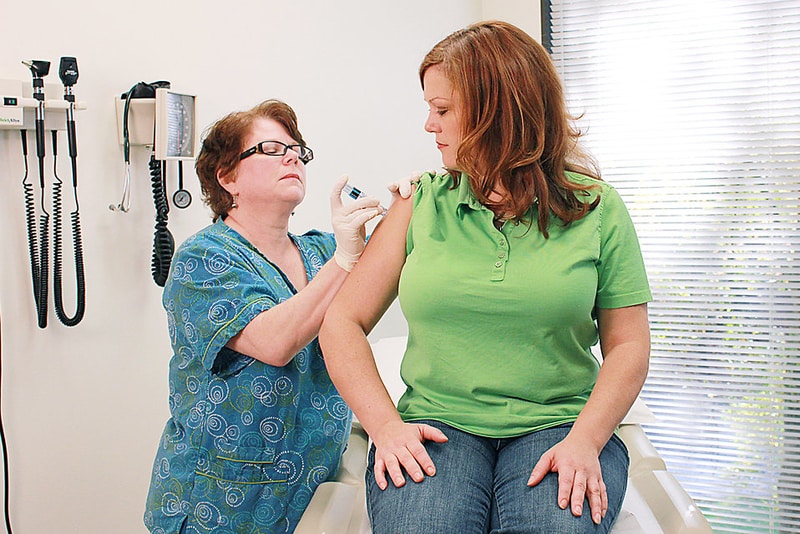
With flu season in full swing, it’s important that certified food managers recognize the symptoms in themselves and their staff, as well as make tough decisions as to whether they should be at work with or without symptoms. Influenza can easily be spread to guests and co-workers even after symptoms have passed.

When Should Certified Food Managers Return From the Flu
Image credit: PXhere under Creative Commons CC0

Taking Precautions Against Influenza

While monitoring the CDC’s flu data, we note that this illness is something that affects the entire country and currently poses an elevated risk. This means that the possibility exists that your establishment will have staff that misses time due to the flu.

The flu has the potential to be more than an annoyance, it has the potential to be deadly, especially in the food service industry where it can be spread to those that are susceptible. If you or a member of your staff even suspects they are infected, we strongly urge that you do not work.

One dilemma that arises is the timetable for returning to work after the flu. In some cases, a worker infected with the flu may still be contagious once symptoms begin to dissipate. Taking a day or two off after symptoms disappear may be advisable. Just because symptoms have lessened or that you feel as if you could make it through your shift does not mean you are ready to return to work. To put it simply, we feel that certified food managers and food service workers should take extra time before returning to work, even if they feel well enough to perform their duties.

The certified food manager should take steps to stay healthy during this season and recover fully if they become ill. We’d recommend visiting your physician if you are concerned about your health and not returning to work until they confirm you are no longer contagious.

If you are not ill, remember to wash your hands frequently, even when not at work. While it’s common food safety procedure to wash your hands frequently, it will also prevent illnesses like the flu from spreading outside of the kitchen environment. Keeping hydrated is also key. Kitchens are hot and restaurant workers often risk dehydration. Drinking plenty of water will help keep illness at bay.

Does your facility have any precautions to prevent illnesses like the flu from spreading to your guests?