
Certified Food Managers and January Marketing Ideas

Certified Food Managers and January Marketing Ideas- Vegetarian

With the holiday rush over and the new year beginning, January can be one of the slowest months of the year for food service businesses, restaurants in particular. Many potential diners swear off eating out in favor of healthier options and others attempt to conserve their finances to make up for over spending on Christmas presents and December activities. While business declines, it does not necessarily halt completely and there are ways certified food managers can cater to guests looking to start a new diet or stick to a budget.

Certified Food Managers and January Marketing Ideas- Vegetarian
Image credit: 1283603-pxhere.com

How to Bring in Guests After the Christmas Season

When the clock strikes 12 on December 31st, many people resolve to eat healthier in the new year. Certified food managers can capitalize on these resolutions by providing new, healthier options on their menus or as rotating specials. Some popular diet choices include:

  • Gluten-free
  • Vegetarian
  • Zero sugar
  • Low-carb

Your creative kitchen staff should be able to come up with dishes that appeal to those seeking to lose weight via one of these popular diets, the only challenge is getting the word out that you have these items available. Social media is a great outlet to draw attention to your new menu choices. Posting pictures and highlighting the dietary benefits of these new dishes will grab the attention of your possible guests searching for healthy dining outlets.

Reaching people with a limited budget presents both a challenge and an opportunity. Restaurateurs need to go further than offering discounted menu item or distributing coupons. Offering visitors to your establishment something special at an affordable rate will appeal to a wider range of patrons than a simple coupon. Three course meals are a popular choice. You can offer guests smaller portions and give them a full meal experience that fits in their budget. Just make sure that you’re presenting them with a creative option rather than a scaled down version of regular menu items. Your creativity will be rewarded.

If you have any other tips for generating business during the January lull, please feel free to share them in the comments section below.

Food Safety Training Advances for Specialty Crop Farmers

Food Safety Training Advances for Specialty Crop Farmers

At Safe Food Training, we focus on keeping food preparers and certified food managers informed and up to date on food handling procedures. We also spend a significant amount of time keeping an eye on where our food comes from. Recently, the USDA has funded grants for specialty crop farmers in an effort to help modernize food safety training on farms and keep our food supply safe.

Food Safety Training Advances for Specialty Crop Farmers
Photo credit: Flickr/U.S. Department of Agriculture

Innovations in Food Safety Training on Farms

Farmers of major crops such as corn, soybeans and rice receive their share of approximately 25 billion dollars in subsidies from the US government, but, up until recently, specialty crop farmers received very little. A specialty crop farm ranges from large producers of unique produce to small family farms. Many of these growers don’t have the resources necessary to use more modern and technologically advanced techniques to battle food-borne illness carriers such as insects, amphibians and other influences.

Much of the money from these new grants will be spent on education to help underfunded farms receive training on how to comply with the Food Safety Modernization Act. These workshops teach farmers how to update their sanitation procedures to prevent potential contaminates such as E.coli, listeria or chemical products from spreading from sources such as manure or farming equipment to product that is ready to be shipped.

One of the largest issues these grants are looking to tackle is the issue of water quality control. Microorganisms and pathogens are easily spread through water, whether it’s the water in irrigation systems, drinking water for animals or water used to clean equipment. With better water-quality standards and practices, the chances of contaminated produce reaching restaurants and other food preparers will greatly decrease.

Beyond training and water-quality modernization, there are many other food safety training goals for specialty farmers that come along with this funding, including:

  • Advanced washing and storing solutions for leafy greens to extend shelf life
  • Water temperature control during the washing of fruits and vegetables
  • The establishment of clear guidelines on how to follow the FSMA

We think that funding food safety training at all levels will go a long way to reduce product recalls due to contamination and keep the food supply safe for food preparers and consumers in general. Are there any other aspects of the food supply chain before it reaches your facility you’d like us to explore?

The Certified Food Manager and the Preparation of Large Roasts

The Certified Food Manager and the Preparation of Large Roasts

Roasts and turkeys are common items served on holiday buffets and catered parties. These items bring with them a unique food-borne illness potential, and certified food managers should take steps to ensure that their roasted meat is safe for their guests.

The Certified Food Manager and the Preparation of Large Roasts
Image credit: commons.wikimedia.org

How Certified Food Managers Can Prevent the Spread of C. perfringens

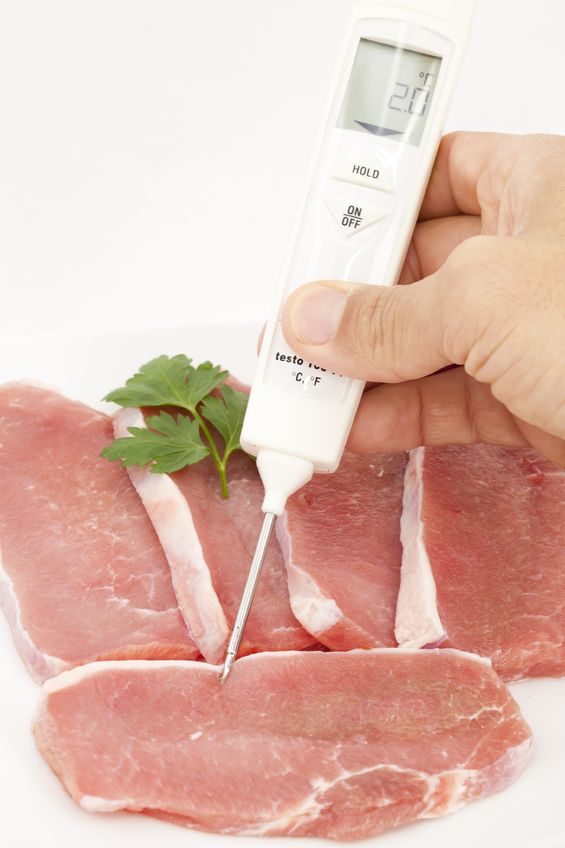
C. perfringens ranks as one of the most common food-borne illness culprits. This bacterium exists in raw meat and poultry, and it historically causes outbreaks in facilities such as nursing homes and schools and at catered events where large quantities of food consist of roasted meat. To reduce the risk of the spread of illness, it’s important that all poultry is cooked thoroughly and to and internal temperature of 165 degrees, and meat roasts must reach an internal temperature of 145.

Larger portions of meat pose a second hazard when it comes time to cool and refrigerate them. Big chunks of poultry, beef and pork cannot simply be placed in the refrigerator whole. The Minnesota Food Code outlines proper cooling procedures for this type of product.

  • All product must be cooled from 140 degrees to 70 degrees within two hours and to 41 degrees after reaching 70 within four hours
  • Large portions must be sliced or cut into smaller sections
  • Meat should be placed into shallow pans
  • If necessary, an ice bath should be used to bring cooling foods down to 41 degrees as soon as possible

While it’s important to be diligent throughout the rest of the year, the holiday season brings out many guests who may not often frequent your establishment, so proper cooking and cooling procedures are a must. If your outlet serves children, the elderly or other high-risk groups, make sure that your staff is fully trained on these procedures.

We’d like to know what your favorite holiday meals are. Leave your go-to dishes in the comments section below.

ServSafe Online Certification During Busy Times of the Year

ServSafe Online Certification During Busy Times of the Year

During the holiday season, many restaurants are busy and need their staff fully trained and ready to work. There could be times during this hectic time of the year when your establishment needs to bring in a new food safety manager or have other staff members who still require their food safety training. Online certification may be the best option in this scenario.

ServSafe Online Certification During Busy Times of the Year
Image credit: Wonderval via Pixabay

ServSafe Online Training

While an instructor led course gives students the experience of learning in a classroom environment from an engaging teacher who is ready to answer any questions that arise, occasions do occur where your business cannot be without a fully trained manager while you await the next scheduled training session. If you have a situation where you’ve just hired a new employee and need certification right away, the benefits of a ServSafe online certification course include:

  • Online courses do not adhere to a specific schedule, they can be taken day or night.
  • There is no need or travel to take the training. Online courses can be taken from your place of business or a student’s home.
  • Online training is perfect for experienced food safety managers who may only need a refresher course before testing.

Taking a test online not only speeds up the process during your busier times, but can also be a handy tool when it comes time to renew your certifications. We always suggest to keep a copy of your training materials after you have finished your training courses so that you’ll have a guide when it comes time to review for recertification testing.

At Safe Food Training, we’ll gladly meet your online food safety training needs if you have employees who need certification right away and cannot make one of our scheduled instructor led classes.

Do you enjoy the convenience of online testing, or would you prefer to send your staff to an instructor led course?