
Food Safety Training for Cooking Whole Turkeys

Online Food Safety Training for Cooking Whole Turkeys

Thanksgiving is here and that means it’s time to overindulge on turkey, mashed potatoes, gravy and pumpkin pie, but the last thing you want to include in your festivities is a salmonella outbreak. Whole turkeys can take quite some time to cook and it may be difficult to achieve safe temperatures while keeping the meat moist and flavorful. This week, we’ll look into what food safety training recommends to cook a tasty turkey without a side of foodborne illness.
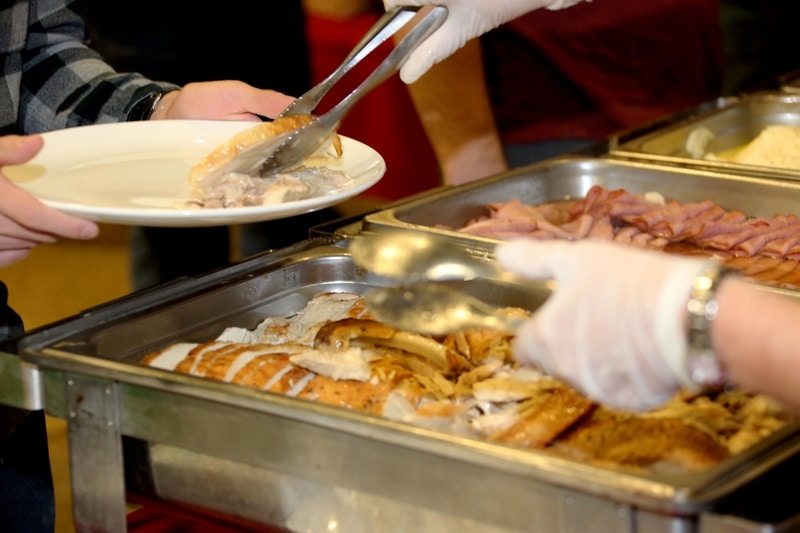
Food Safety Training for Cooking Whole Turkeys
Image credit: US Marine Corps Air Station Cherry Point

Food Safety Training tips for Properly Cooking Whole Turkeys

Whole turkeys can be tricky to cook properly because of the thickness of the breast. One part of the turkey can be cooked perfectly, but the center can be left an undercooked breeding ground for bacteria. In order to prevent this scenario, we have three food safety training tips for a properly cooked turkey:

  • Use fresh or fully thawed birds
  • Check internal temperature properly
  • Prepare stuffing separately

Partially thawed turkeys are a food safety nightmare. While the outer layers may feel thawed and ready to cook, the center of the thickest parts of the bird may still be frozen. This can add to the cooking time of larger turkeys. It can also result in vastly overcooked outer layers while still leaving the thickest section undercooked. Half-thawed birds may also cause complications when attempting to gauge the internal temperature. Outer layers may reach the proper temperature of 165-degrees well before the center, throwing off your thermometer’s readings for the innermost layers.

Many commercially sold turkeys come with a small probe that will supposedly let you know when your bird has reached a safe serving temperature. Our advice to you would be to remove this probe before cooking and place in the nearest garbage receptacle. The only accurate way to assess the internal temperature of large turkeys is to use a bi-metallic stem thermometer. Insert your probe thermometer into the thickest part of the turkey breast as deep as possible without touching any bones. If your thermometer reads 165 degrees for at least 15 seconds, you can be confident that your turkey has been fully cooked.

One final note concerning food safety training for turkey stuffing. Stuffing your turkey before cooking will increase the amount of time that it takes to fully cook your turkey and pose a salmonella risk. There is a very real possibility that your stuffing will not reach a high enough temperature to kill any bacteria at the same time as the rest of your turkey, so we strongly suggest you cook your stuffing separately.

Happy Thanksgiving from all of us at !
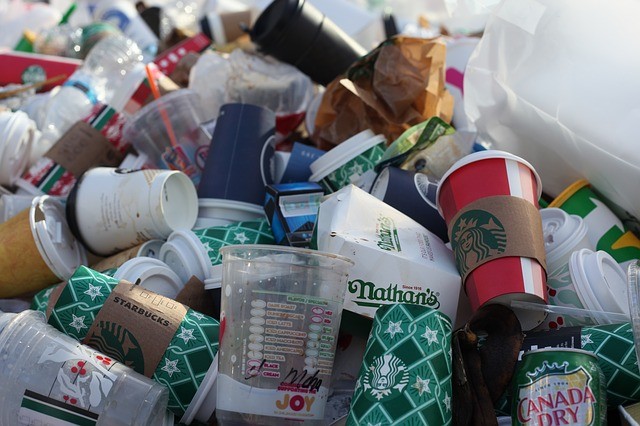
food safety managers plastic reduction

Certified Food Safety Managers and Plastic Reduction

Over the past few years, some jurisdictions have sought to reduce the amount of plastic used in the foodservice industry, and while some businesses have been hesitant to make the change, many have embraced it. Eliminating plastic appeals to a wide selection of environmentally conscious consumers and can also potentially reduce the amount of waste your business produces. This week, we’ll cover a few plastic reduction alternatives certified food safety managers can utilize in their establishments.

food safety managers plastic reduction
Image credit: maxpixel.net -Coffeetogo

Plastic Reduction Alternatives for Certified Food Safety Managers

If you were to take a quick tour of any restaurant, you’d find a number of plastic items. To-go boxes, bags, straws, utensils and take-out serving dishes are all commonly made from plastic. Whether you’re voluntarily reducing your plastic usage or your local jurisdiction has passed codes and laws preventing plastic use, your certified food manager will have to find alternatives for these types of items. Here are a few solutions that you can employ to replace plastic necessities in your facility:

  • Paper and compostable boxes and bags
  • Reusable takeout containers
  • Biodegradable utensils and straws

In the past, plastic bags and Styrofoam to-go containers have been go-to packaging for guests looking for take-out or a way to bring leftovers home. With current trends, many different manufacturers have started producing paper bags and compostable boxes that are either easily recyclable or will break down over time rather than take up space in a landfill. These items may cost a little bit extra, but as more companies produce these products costs should begin to decline.

With the latest update to the Minnesota Food Code, the rules concerning reusable containers have been updated and more clearly outlined. Reusable containers not only reduce plastic waste, they give you the opportunity to sell or provide your guests with reusable take-out containers with your logo and branding on them. This can not only help to conform to local plastic reduction codes but provide a valuable marketing tool for certified food managers to draw repeat business from loyal guests.

Straws and utensils such as forks, spoons and knives present unique challenges since many consumers prefer a sturdy utensil that won’t break during use. The good news is that many companies are now producing durable wood alternatives and great advances have been made to produce robust biodegradable utensils that can easily replace plastic.

Are you making an effort to reduce plastic waste in your facility?

Becoming Certified Food Protection Manager

Steps to Becoming a Certified Food Protection Manager

According to the Minnesota Food Code, all facilities that prepare food for the public must employ a certified food protection manager (CFPM). The role of any CFPM in Minnesota is to ensure that all food is being stored, prepared and served in a safe manner. They are required to train staff, inspect their facility for safety hazards and correct procedures as necessary to keep food safe. How does one become a certified food protection manager? This week, we’ll clearly outline all the steps for becoming a Certified Food Protection Manager in Minnesota.

Becoming Minnesota Certified Food Protection Manager Registration

The first step to becoming a CFPM in Minnesota is taking a qualifying food safety course and passing the exam. There are a few ways this can be done:

  • Instructor-led training
  • Online courses
  • Group training at your facility
  • Customized classes

There are benefits to each of these options, and there’s enough flexibility to choose which course works best for you and your business. Instructor-led training offers the opportunity to delve deeper into food safety topics and ask questions, while online food safety certification courses can be taken at your leisure. If the standard training at an offsite location isn’t convenient, and you’d prefer a real-life food safety expert over an online course, Safe Food Training can come to you and offer group training or customized training that fits your specific needs.

So you’ve passed your food safety training course exam. Congratulations! Does that mean you’re ready to go and officially a Minnesota CFPM? Not quite yet. Just passing the exam doesn’t officially make you a certified food protection manager in Minnesota. There’s one more step, and fortunately it’s an easy one. After passing your food safety certification exam, you must fill out an application in order to register with the state.

To find information concerning current fees and the appropriate mailing address to submit an application, the Minnesota Department of Health CFPM website will have the most up-to-date information.

Do you need assistance with training options? At Safe Food Training, we can provide the perfect food safety training course for your needs.

Safely Serving shellfish

Certified Food Manager’s Guide to Safely Serving Shellfish

The waters in the Atlantic and Pacific are getting colder, and that makes it the prime time to eat and serve shellfish. Before the shellfish season begins, let’s take a moment to review food procedures for safely serving shellfish.

FDA testing shellfish is the first step in safely serving shellfish
Image credit: US Food and Drug Administration

Serving Shellfish Safety

There are a few types of potentially hazardous foods that certified food managers need to take extra care with when processing, molluscan shellfish is one of them. If handled improperly, they can cause catastrophic foodborne illness and pose a life-threatening situation to any guest who may be allergic. Food safety procedures for safely serving shellfish should begin the second they are received at your facility.

All shellfish must come from an approved source. Your local seafood provider should have more information on where your shellfish come from, and chances are most shellfish shipped to Minnesota come from approved waters. You shouldn’t simply accept this, however. All shipments of shellfish must include a tag or label that signifies where it came from and when they were harvested. Each batch must also be stored on its own. Shellfish from one container cannot co-mingle with shellfish from another batch until it’s time to prepare and serve. This helps to keep any bacteria from spreading from one batch to another and also helps identify the source of any batch that may have caused illness. Once these containers are empty, their labels must be stored for 90 days.

To prevent the growth of bacteria and safely serve shellfish, certified food managers should be very careful to keep all raw shellfish stored at 41 degrees or below. Shellfish are sensitive to bacteria growth, so extended times over 41 degrees greatly increase foodborne illness risk.

Shellfish allergies can be severe. We recommend that you designate a specific station in your facility for shellfish preparation. This will greatly reduce the risk that cross-contamination occurs. It’s also important to store shellfish as far away from other product as possible. Another key to safely serving shellfish is never store raw shellfish over ready-to-eat foods or other items in your refrigerated storage.

Finally, it’s important to warn your guests who may be allergic that shellfish are processed in your kitchen. Some allergy sufferers can’t take any chances. A simple disclaimer on your menu should suffice.

Do you serve or prepare shellfish? If so, what steps do you take to serve them safely?