CFPMs Use Freezing

How CFPMs Use Freezing to Slow Bacteria

In one of our Certified Food Protection Manager training classes during our recent record breaking cold snap, a student asked “whether CFPMs use freezing or refreezing foods to kill bacteria in meat products and ready-to-eat foods? If we store our product outside in the snow at negative 30 degrees, it should be too cold for bacteria to survive, right?”

CFPMs Use Freezing
Image credit: US Department of Agriculture (Flickr Photostream

Freezing product properly does in fact promote food safety and reduce the risk of food-borne illness, but simply freezing everything potentially increases the risk of food-borne illness and gives a false sense of security as to how safe the food we serve really is.

CFPMs Use Freezing for Food Safety

Before we get into our discussion, it’s important to answer the question, “Does freezing proteins kill bacteria?”

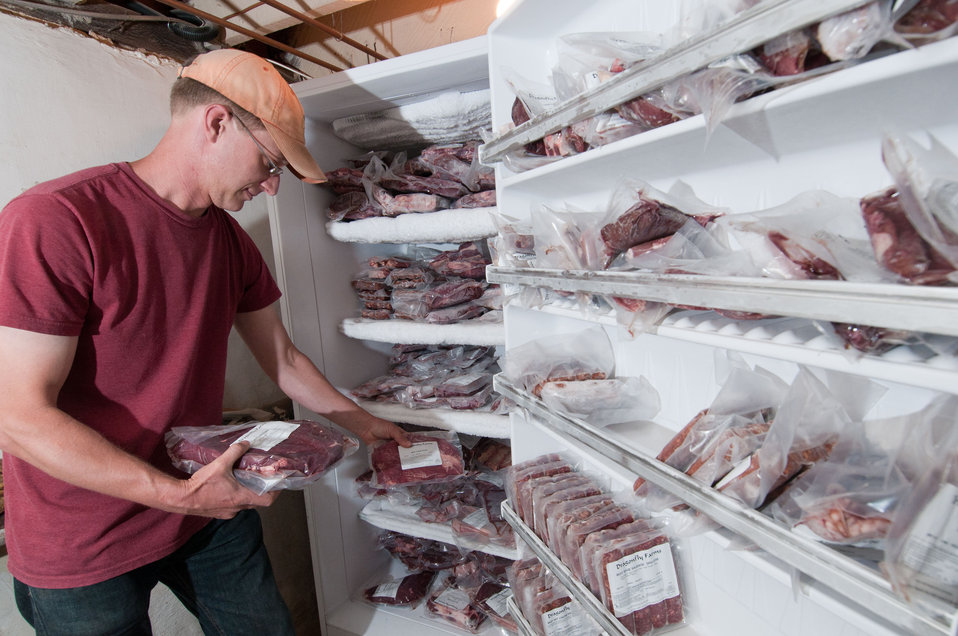
There’s a lot of misinformation out there concerning how germs and bacteria react to sub-zero temperatures, but we learn in online Certified Food Protection Manager training, freezing food does not kill bacteria. Freezing food stops the growth of germs and bacteria, so effective use of your freezer to store product that isn’t intended for immediate use keeps bacteria at bay while preserving food for later use. Cooking meats, ready-to-eat foods and other products to the proper temperatures is the only way to actually kill bacteria. Freezing solidly for at least a week will kill parasites but not bacteria.

So, when can CFPMs use freezing to safely store product?

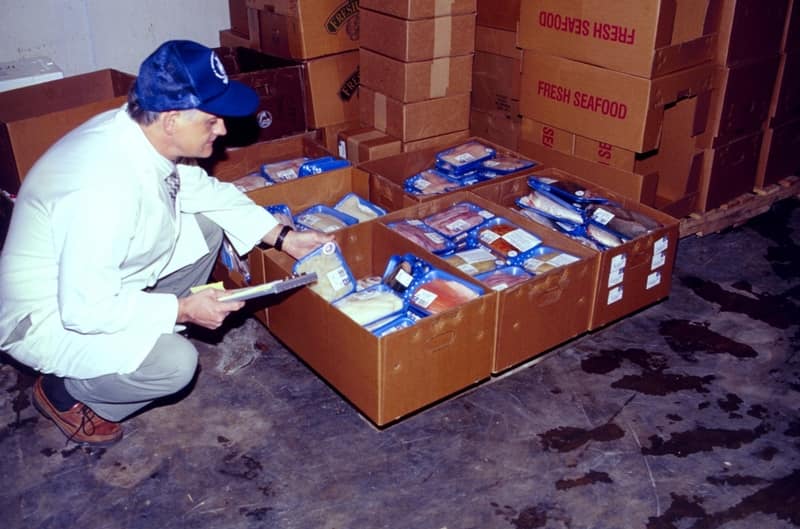
If you don’t plan on using incoming product soon, freeze it as soon as possible. This will add life to your product, and prevent the slow growth of bacteria. Letting your meats sit under refrigeration for a few days and then deciding you’re not going to use it can pose a bacteria risk, depending on what type of product it is. Fish and seafood have a limited shelf life, so while freezing it will slow the growth of contaminates, it will still contain those harmful bacteria when thawed.

Cooked foods need to be cooled properly before freezing them. Cooked product must be chilled in an ice bath or in small portions. For example, a large, warm pot of soup cannot be simply put into a freezer in a large bucket. Bacteria will grow as the soup sits in the danger zone while freezing and wake up when the soup is eventually thawed. The same goes for cooked roasts and large amounts of meat.

Finally, a caution against freezing thawed product. Product thawed in the microwave or under running water cannot be re-frozen. Food properly thawed under refrigeration may be re-frozen if done so in a reasonable time frame, but we recommend against this as thawing and re-freezing can cause quality issues with your product.

Do you have a regulated method to control freezing and thawing of your product?
MN Food Code Fact Sheet

A Guide to the Proper Use of MN Food Code Fact Sheets

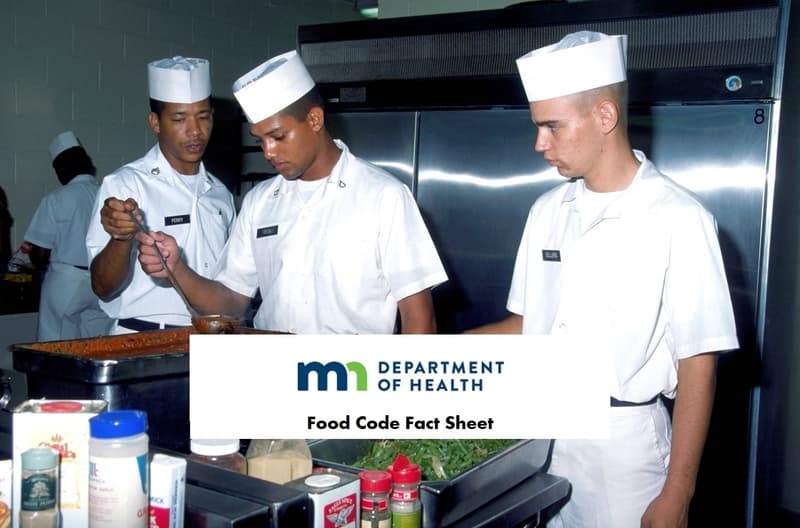
The MN Food Code Fact sheets provided by the health department are a free and easy-to-use guide to nearly any food safety issue. The ServSafe Food Manager controls food safety in their establishment, but there are many training tools available to help them educate their staff, monitor procedures and go the extra mile to keep their guests safe.

MN Food Code Fact Sheet
Image credit: The U.S. National Archives

Using MN Fact Sheets to Promote Food Safety

Fact sheets should be readily accessible to all employees. Our best suggestion is to have them posted visibly in stations where they are relevant. For example, a fact sheet on cooling should be posted near sinks used for ice baths, cooking temperatures should be kept on the line and proper handwashing signage should be posted at all handwashing stations.

There are many different fact sheets, and some of them may be important for your day-to-day operations, but some only need referencing occasionally. For example, a fact sheet on equipment guidelines may be useless posted in your facility, but it’s still valuable information. We recommend keeping an accessible binder with all fact sheets relevant to your operation whether you post them visibly or not. This resource gives ServSafe food managers easy access for training and review of information that isn’t required on a daily basis.

Finally, many of the fact sheets have changed with the recent update of the Minnesota Food Code, we strongly urge you to remove any fact sheets dated before January 1, 2019, and replace them with the most recent updates.

Have you taken the time to review the newest MN food code fact sheets available and print out and post ones that help keep your employees informed on the latest food-safety rules?

Fish Labeling Fraud

MN Food Safety Managers and Fish Labeling Fraud

According to a recent report out of New York state, fish labeling fraud is becoming fairly rampant, with many species of fish being substituted with cheaper, lower quality seafood. If this is such a widespread problem, how can MN food safety managers actually know if their seafood is actually what the supplier says it is?

Fish Labeling Fraud

Image credit: NOAA Photo Library

How to Avoid Becoming a Fish Labeling Fraud Victim

While this study concerned fish sold in New York state, we can assume that seafood sold in Minnesota at least has the potential of being mislabeled. Here’s a few ideas that we’ve come up with to help you avoid bringing in mislabeled fish:

  • Use reputable seafood suppliers rather than large restaurant supply services
  • Ask your supplier for a precise label that includes your seafood’s source
  • If you order wild fish, reject any shipment that is not labeled as wild caught
  • If a supplier’s cost is much lower than market price, be wary

Large food suppliers are great for basic items, but the seafood market is so specialized that it’s probably a good idea to find a supplier that specializes in seafood, especially ocean caught fish. With our state far away from both oceans, food safety managers should put their trust in companies with seafood shipping experience to ensure freshness, quality and authenticity.

Most seafood, especially wild caught species such as salmon, should be labeled accordingly. Look out for generic labels on fish species such as salmon, cod or snapper. These three species of fish are susceptible to labeling fraud, especially if you are expecting wild caught or a specific variety of these popular seafood items. Ask your supplier for an accurate and specific label that includes a harvest location.

Finally, be wary of deals that look too good to be true, because they probably are. It’s not uncommon for more disreputable suppliers to mask a cheap, low quality fish as a desirable product and advertise an unbelievable price. Once cleaned and fileted, a generic white fish may resemble cod, but your customers will taste the difference.

Do you take steps to make sure that you’re receiving the seafood that you actually ordered?

Menu streamlining

Guide to Menu Streamlining

When evaluating the food cost of any given menu, waste creates a major impact and hurts profit margins, especially during typically slow late winter months. Besides ordering less product, menu streamlining options can help reduce waste and leave more money in your budget. This week, we’ll offer some tips on menu streamlining menu that can prevent excess waste and improve profits.

Menu streamlining

Image credit: 123RF – 29640973

Reducing Waste By Streamlining Your Menu

Most chefs and food managers resist the urge to trim their menu during lean months, but we feel the benefits outweigh giving your customers a wide range of choices. When evaluating your menu during traditionally slow periods, look for a few of the following options to menu streamlining :

  • Remove Rarely Ordered Items
  • Alter Dishes to Share Ingredients
  • Find Substitutes for Expensive Ingredients
  • Consider Special Menus Early in the Week

If you keep sales reports, take a look at which items are most frequently ordered and which are rarely ordered. If you have a low percentage of any menu item, consider removing it during slow times. Even at a low order rate, you may sell enough to keep ingredients on hand during peak months, but that low order rate will turn into waste when business drops off.

Side dishes can often be a source of waste. Consider using more cost effective ingredients and rewriting your menu so that more than one dish shares a side. While providing a unique ingredients and side dishes for every item gives customers options, it also increases waste. Temporarily finding ways to include the same ingredient in more than one menu item will reduce waste and lower food cost.

Some restaurants offer a special menu on slower days, typically early in the week. Weekend business usually stays steady, so running a typical menu works for busy days, but offering a more cost effective or “weekday menu” is a common solution to waste reduction.

As a food manager, do you feel altering your menu to reduce waste during the off-season is a solution for controlling food cost?