
Jill Anderson

Timely ServSafe Food Manager Guide To Preventing A Halloween Nightmare

Vampires, goblins, zombies, the ghost under the bed, and peanuts: Halloween is coming, and these terrifying evils will be everywhere. We all love a good scare this time of year, but no costumed ghoul frightens parents more than hidden allergens in Halloween treats. Let’s do a ServSafe food manager review for lurking Halloween allergens.

 ServSafe Food Manager Guide to Preventing a Halloween Nightmare
Image credit: Jill Anderson via Flickr

ServSafe Food Manager Tips For Allergy-Safe Halloween Activities

Parents are picky when it comes to where their kids trick or treat—especially those parents with children with severe food allergies. Halloween is one of the biggest holidays for ServSafe food managers to attract children and families to their facilities. Halloween parties are frequently held in school cafeterias or banquet halls. Our challenge is ensuring we don’t inadvertently serve items that could cause a reaction. Here are a few ideas:

  • Identify potential allergens used in your facility
  • Provide an ingredient list for all treats
  • Serve only pre-packaged food from reliable sources

It helps to ease parent’s minds when they know what their kids are putting in their bodies. If you have food allergies, have kids with food allergies, or know someone who does, then you probably have felt that sense of panic when someone you know could have a severe allergic reaction. The feeling is incredibly intense when ingesting something with unknown ingredients is possible. Knowledge and full disclosure help ensure little goblins choose allergen-free Halloween snacks.

The first step for a ServSafe food manager considering a Halloween event should be to post if your facility processes or uses common allergens such as peanuts, shellfish, wheat, and dairy. Following this up with posted ingredients for each item served will allow parents to make good choices in finding allergen-free Halloween treats. You don’t necessarily have to give away all your recipes and baking secrets. Simply informing party attendees of the ingredients used prevents accidental ingestion of allergens during a ServSafe food manager Halloween event.

The Safest Option

Finally, serving prepackaged Halloween treats from reliable sources with clearly labeled ingredients can be the safest way to host a Halloween event and minimize the risk of guests coming into contact with allergens. We know that many restaurants and other outlets use Halloween to expose as many people as possible to their product or menu items, but sometimes playing it safe and providing prewrapped candy and allergen-safe Halloween treats will show parents that you’re looking out for their children’s health. They may return to sample your cuisine another time.

Do you host Halloween events, and if so, what steps do you, as a ServSafe food manager, take to serve items free from allergens?
MN Certified Food Manager Preventing Injuries

Certified Food Manager Advice: How To Prevent Hazardous Slip Injuries

Not only is it essential to keep the food you supply to your customers safe, but it’s also vital to ensure that your staff has a safe environment to work in. Slip-and-fall injuries are one of the most common reasons food service workers miss time, so we’d like to discuss how a certified food manager can prevent these painful slip injuries.

MN Certified Food Manager Preventing Injuries

The Certified Food Manager’s Role in Preventing Slip Injuries

The manager must make it abundantly clear to the staff that their safety is a priority. Staff and certified food managers must work together to effectively prevent injuries from slips and falls. Providing the necessary tools and comprehensive training is a non-negotiable priority to ensure everyone can perform their duties safely.

One common factor in many slip-and-fall injuries is the use of the wrong kind of shoes. Food service workers should wear non-slip shoes specifically designed for the food industry. Many non-slip shoes are available, but we recommend that your staff wear shoes explicitly designed to give the wearer good traction on wet and greasy surfaces.

Just wearing good, non-slip shoes does not entirely prevent a slip accident. A kitchen supervisor must create an environment where these events are rare. A good start is to provide a perforated rubber surface for employees to stand on. These floor mats are readily available through most food service industry providers. We feel that these mats must be perforated in some way to allow grease to slip through to the floor beneath in the event of a spill. This will prevent liquids from pooling on the floor mats, creating a slipping hazard.

Clean Mats For Safety

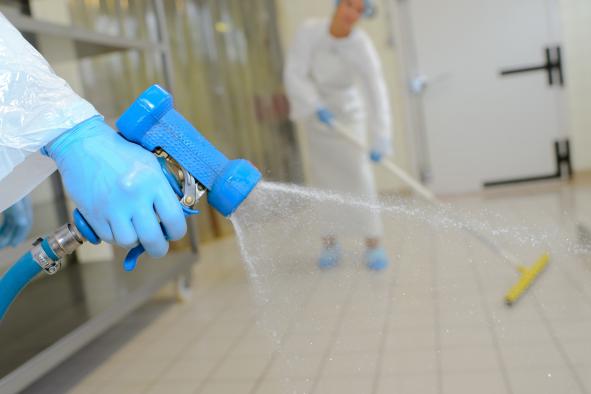
Another critical step certified food managers must take to reduce slip injuries is to clean the mats and floors beneath daily. Grease and liquids can accumulate on your floor mats, making them nearly as slippery as the hard flooring underneath. Clean the kitchen floors daily with a degreasing agent to prevent mats from slipping. Before replacing the mats after cleaning the floor, we strongly recommend that the floors dry. Water and soap can take longer to dry if covered by your floor mats, increasing the likelihood that they will slide during everyday use.

Finally, clean every spill immediately. Don’t trust your floor mats to prevent a slip after spilling liquid. Being complacent could lead to a painful injury and lost work for one of your valued employees.

Serve Safe Certification Guide to Listeria

Latest ServSafe Guidelines For Disastrous Listeria

When we prepare for ServSafe certification classes, we monitor food product recalls and FDA warnings concerning food-borne illness outbreaks. In the last three months, nine people have died, and nearly 60 patients have been hospitalized with Listeria. The source of this outbreak was tracked to meats sliced at delis, including Boar’s Head brand liverwurst, which was contaminated with Listeria and sickened people. With Listeria impacting food safety and being prevalent in the news, ServSafe managers must understand this bacterium, how it spreads, and how to prevent it from sickening customers who consume your food products.

ServSafe Certification Guide to Listeria
Image Credit: by jpalinsad360 thru www.flickr.com

ServSafe Certification Guide to Listeria

Listeria is a unique case for food-borne illness suspects because, unlike many other bacteria, it grows and multiplies at much colder temperatures than other contaminants. This means that any product contaminated with Listeria can be dangerous, even if stored in the refrigerator. Listeria bacteria can remain active at temperatures that approach and dip below freezing.

The low breeding temperature of Listeria makes it vital that ServSafe managers handle food properly. Ensure you rinse raw produce thoroughly, cook all prepared foods to the proper temperatures, and always clean and sanitize prep surfaces after preparing raw foods. Some of the most common foods that are responsible for Listeria outbreaks include:

  • Raw dairy and soft cheeses
  • Raw sprouts
  • Hot dogs and deli meats
  • Smoked or cold-cured seafood

Even though these are the most common sources of Listeria, we have noticed an increase in recalls and outbreaks traced back to frozen vegetables and fruits. We urge you to monitor FDA recalls. You can easily do this by viewing the FDA widget on the right-hand side of our blog page.

While ServSafe managers cringe at discussing the effect of Listeria poisoning, it is vital to understand the symptoms to identify the cause of a foodborne illness. Listeria poisoning incubates between a few days to a few months, so symptoms can arise long after tainted food has been consumed. Symptoms can include:

  • Fever
  • Soreness in the neck
  • Disorientation
  • Reduced strength
  • Vomiting

A quick read of Listeria poisoning symptoms closely resembles a list of flu symptoms with a few exceptions. Listeria attacks the nervous system as well as the digestive system. When you hear about these symptoms, there is a chance that Listeria is the culprit.

What to Do If You Have A Listeria Outbreak


If you do have an unfortunate incident involving Listeria at your establishment, it is essential to cooperate with your local health department. The bacteria could have originated from one of your suppliers, so giving the health department all your information can help prevent further cases.

If you want to learn more about Listeria and other bacteria, we offer ServSafe certification classes online or led by a qualified instructor.

Food Safety Certification MN Test Tips in Mounds View

Latest Tips That Will Help With MN Food Safety Certification Exams

While administering MN food safety certification exams, we’ve noticed some students struggle with the final tests. We understand that everyone learns differently and have tips to help during test time.

Food Safety Certification MN Test Tips in Mounds View

Test-taking Tips for MN Food Safety Certification Exams

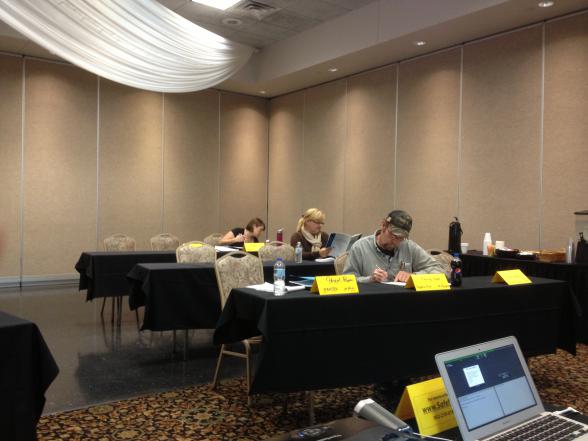
The first key to succeeding on any test begins in the classroom or online training sessions. One critical step to retaining knowledge in any instructional setting is to take quality notes. Although participants cannot use notes during the exam, taking notes does help commit things to memory.

Taking notes helps you pay attention. To maintain focus and capture valuable information, ensure your mind does not wander during training sessions. We have observed that students who come into class prepared to learn do better on the MN food safety certification exam than those who feel that they already know the material and are simply waiting for the session to be over so that they can take their exams.

Some rules change occasionally, and even if you are a seasoned industry professional, you may encounter information that has changed since your last training session or that you had forgotten. Taking notes is an excellent way to ensure you know the most up-to-date regulations.

After finishing your training session and reviewing your notes, it is time to take the test to gain your certification. If you have gone through our classes, we will have given you the information you need to succeed on any certification test we offer. If you have paid attention, asked questions throughout the class, and taken quality notes, there is no reason to be worried. Remain confident, and you will succeed.

Take Your Time/Multiple Choice with One Right Answer

We all need that extra boost from a cup of coffee now and then, but too much caffeine can raise stress levels, create a false sense of urgency, and force you to rush through the test. Try to limit your caffeinated beverages before taking any test.

Finally, all of the questions will be multiple-choice with one correct answer. Read each question and set of answers entirely before selecting your answer. If you are unsure of the answer to any question, remember that your first instinct is often right, and questioning yourself too much can lead to elevated stress levels that will hinder your performance.

If you have any tips to help our readers succeed on their MN food safety certification exam, please leave them in the comments section below.