
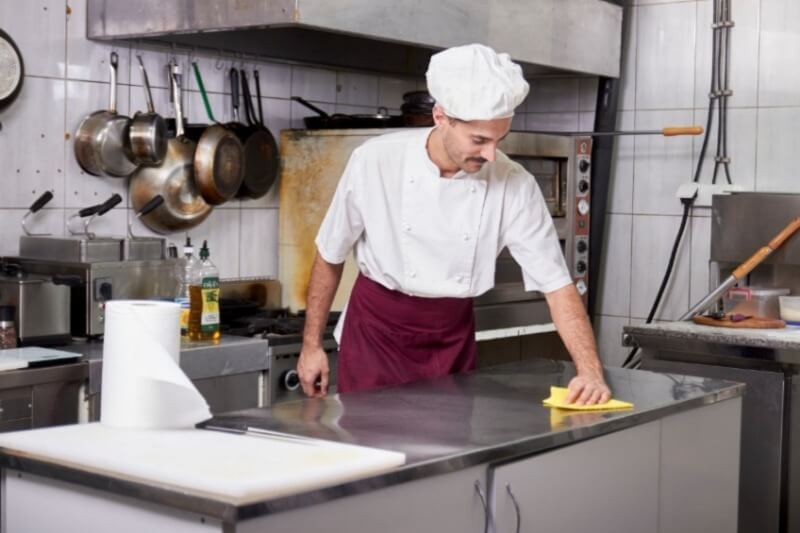
ServSafe food managers using towels

The Truth About ServSafe Managers Using Dry Vs Sanitized Towels

Cloth towels are an essential part of food safety. ServSafe food managers should stock their establishment with an abundance of clean towels to ensure plenty are available at all times. However, there are times when a wet sanitized towel is appropriate and times when a clean dry cloth may be better for food safety.

The Truth About ServSafe Managers Using Dry Vs Sanitized Towels
Image credit: mmiixx via 123rf

Tips for ServSafe Food Managers on Cloth Towel Use in Food Preparation Areas

Sanitizer cloths are essential for stopping the spread of bacteria and other pathogens. They should be used to clean up any possible contamination on surfaces that cannot be run through your dishwashing machine. ServSafe food managers should stress the importance of using sanitized cloth towels on:

  • Soiled cutting boards
  • Stainless steel surfaces in preparation areas
  • Large preparation equipment
  • Dry clean surfaces to promote cleanliness

The use of proper sanitation should be enforced by ServSafe food managers, and it’s important to make sure that your sanitizer solution is rotated often and mixed to appropriate potency.

There are times, however, when a dry towel is appropriate and a wet sanitizer cloth could cause a foodborne illness risk rather than preventing one.

Water and grease do not mix using a wet rag to clean up grease can spread grease to other areas of your establishment. A wet, oily cloth will lose all effectiveness when it comes to sanitation. Grease can spread to hands, preparation surfaces, and even food when a soiled rag makes contact. ServSafe food managers should keep dry cloth towels near:

  • Deep fryers
  • Flat top grills
  • Sandwich presses
  • Other equipment that uses grease or oil

When was the last time your ServSafe food manager discussed using dry towels vs wet sanitized towels?

The Truth About Food Protection Managers Moving Product Safely

The Truth About Food Protection Managers Moving Product Safely

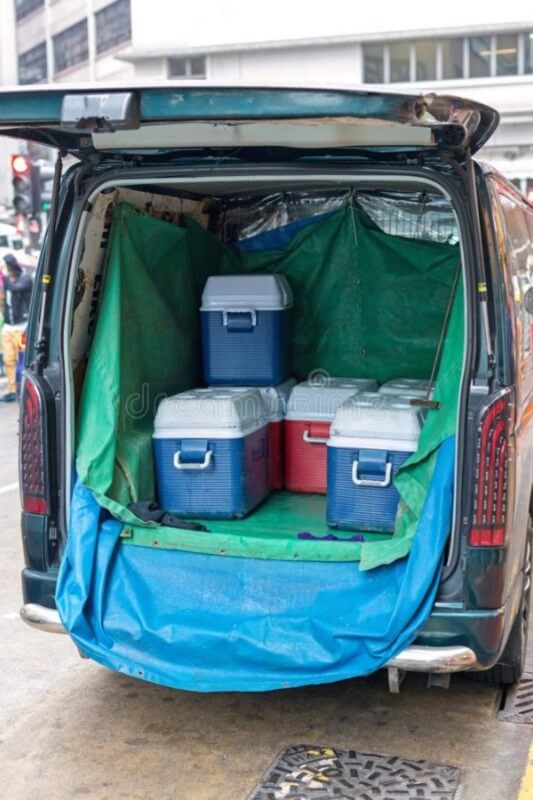
In food businesses with multiple locations, there are often situations when one location runs out of a certain product and must borrow some from another outlet some distance away. Foodborne illness risks result if food protection managers don’t take the appropriate steps to ensure food is transported safely. To keep food safe when moving ingredients from one location to another, let’s outline the steps that food protection managers must take to keep food safe in transit.

The Truth About Food Protection Managers Moving Product Safely
Image credit: Baloncici via Dreamstime.com

Food Protection Manager Tips for Transporting Product to Secondary Facilities

When we’re talking about food or ingredients that are at risk during transport, we’re mostly discussing raw ingredients or chilled ready-to-eat foods. Ingredients that come in cans, plastic containers or in sealed boxes that are shelf-stable at room temperature pose little to no risk at all when moved from one facility to another. If any of these products are open, however, pathogens and debris could enter the containers and cause a risk, so it’s a good idea for the food protection manager to ensure all shelf-stable products remain sealed during transit.

The real risk comes from moving raw food from one place to another. Items such as fish, meats, dairy and cut fruits and vegetables need to remain out of the danger zone during transportation. Smaller items can be kept in a cold storage bag or even a cooler with plenty of ice to ensure that product remains under 41 degrees.

Larger items, however, pose more of a challenge. Let’s say a location 45 minutes away runs out of fresh halibut. Transporting a whole fish may not be possible. It’s hard to find a sealed storage vessel large enough, and the size makes it much harder to keep cool. One solution would be to keep the windows down on an exceptionally cold morning and keep the inside vehicle under 41 degrees, but the resulting pneumonia may not be worth the tradeoff. In these cases, food protection managers should find a solution to prepare the product in manageable portions before packing.

Frozen food should be assessed based on distance and whether or not it will start to thaw before reaching its destination. Partially thawed product poses a quality and food safety risk, and in these cases, food protection managers must use their best judgment to make sure the trip won’t cause the product to thaw during delivery.

Do you have a solution for moving raw ingredients from one restaurant to another?

certified food protection manager training styles

Certified Food Protection Manager Training Made For Selected Learning Styles

Education systems have been studied for ages, and one thing that has come to light in modern times is that not every student learns the same way. The same can be said about certified food manager candidates. That’s why we have a few different options for certified food manager training that can appeal to multiple learning styles. Let’s take a look at ways you can find the certified food protection manager training that is most effective for your learning style.

Approved Styles for Certified Food Protection Manager Training

There are three styles of ways candidates can take the certified food protection manager training:

  • In Person
  • Online
  • Private Group Training

Many students crave interaction with a knowledgeable instructor. Some candidates love the experience of sitting in a room of their peers and having camaraderie with fellow food service managers, and these circumstances increase their chances of retaining knowledge. If you’re one of those types of learners, you may take a look at the schedule and find a class and a time near you to schedule your certification training.

Certified Food Protection Manager Training Made For Instructor Led Learning Styles

There are some students, however, that are self-driven or may become easily distracted in a large classroom environment. Their mind may wander to other topics while the instructor is talking, or they simply might have a tune stuck in their head preventing the absorption of knowledge. These folks often like to research topics they have questions on rather than engage in discussions, or study better with music in the background in a solitary setting. Online certified food protection manager training may be the best option in these cases.

Certified Food Protection Manager Training Made For Online Learning Styles
Image credit: Christina Morillo via pexels

The third option would require the support of your business, but private group training can offer a much better tailored certification training session since the instructor can focus on the food safety training needs of your unique facility. If you run a food business and would like to train multiple candidates, this choice will provide numerous benefits over leaving your staff on their own to find their certification training.

Finally, be aware that no matter which certified food manager course you choose, the exam must be taken in person in order to gain your certificate. These must be scheduled at announced times and be overseen by a food safety training instructor.

Do you find that your learning style relates better to online learning or in-person classes?

Food Manager's Training Guide To Hand Drying

It’s Here- Proven Online Food Manager’s Training Guide To Hand Drying

Food safety training is pretty specific on how handwashing should be done, it’s one of the most effective weapons we have to prevent foodborne illness, yet many food managers are unaware of the options when it comes to appropriate drying implements. Since you may not be aware of all the alternatives, let’s talk about the appropriate food manager’s training on ways to dry your hands after washing them.

Food Manager’s Training for Drying Tools after Hand Washing

The standard food manager’s training tool for hand drying is a simple paper towel dispenser. These are generally the most common due to their ease of use and cost effectiveness, but there are a few alternatives that meet health code requirements and may serve your handwashing stations better. Other approved methods include:

  • Powered air dryers
  • A continuous towel system

Some food managers may wish to look into one of these two options as there is less waste than paper towels, and each of these options don’t require as much product to remain operational. With paper towel dispensers, there’s always the need to order paper towels and a good portion of these towels may not go towards their intended purpose.

Food Manager's Training Guide To Hand Drying
Image credit: asawinklabma via 123rf

Another food manager’s training option for hand drying, a powered air dryer. It can be cost effective after the initial investment. Once set up, you simply need to keep the power on for it to do its job. There may be a filter to change occasionally, but other than that no product is needed week in and week out. The one draw back to the air dryer is that they can be powerful enough to blow water droplets onto items in the nearby vicinity, so they are best used away from preparation and storage areas.

A continuous towel system consists of a long towel on a roll that has a clean portion pulled out with each use while soiled portions are spooled inside the housing. This system creates less waste, but the towel must be washed and replaced once it reaches the end of the roll. A continuous towel system also runs the risk of having multiple staff members dry their hands on the same portion if it is not rotated correctly.

Food manager’s training also recommends preventing as much contact with surfaces during the hand washing/ hand drying process. Motion sensor activated paper towel dispensers and blow dryers offer a decreased chance of contaminating hands between washing and drying

What type of drying system do you use in your facility