
Certified Food Protection Manager Approved Snow Removal Hack

Certified Food Protection Manager Approved Snow Removal Hack

As most Minnesotans are aware, it frequently snows in our state. Businesses need to take steps to clean the snow on their properties in order to allow guests to visit. While businesses that don’t serve food have numerous options. Food businesses need to be extra careful when cleaning the snow around their buildings. Let’s take a quick look at how a certified food protection manager can prevent foodborne illness hazards that might arise from snow cleanup.

Certified Food Protection Manager Approved Snow Removal Hack
Image credit: rilueda via 123rf

The Connection Between Snow Removal and a Certified Food Protection Manager

Food protection managers should recognize that the potential for contamination in their facility may not come from the snow itself. It comes from the methods used to remove it. Salt, sand, chemical deicers and other non-shovel methods have the potential to make their way back into your facility after use on sidewalks and parking lots. Shoes, pants, long coats and even on staffs’ hands after building a snowman on their lunch break track in these snow removal contaminants. So how can we keep these chemicals out? The answer is, we can’t, at least not 100 percent of the time, but we can reduce the risks associated with them when it comes to food.

Non-Mechanical Snow Removal Solutions

Most snow removal techniques leave a residue that sticks to the bottom of shoes. Food protection managers should focus on items that are stored near ground level. Food product, utensils, plates or production implements should be stored in racks off the floor. Even boxes of to-go containers should at least be on a bottom shelf.

Deliveries can be a problem, since many food service suppliers simply drop off their shipments in a loading area in the back of the kitchen. If this is the case with your supplier, designate a place away from foot traffic and store all items as soon as possible.

If you have the opportunity to designate an employee entrance that does not open into the kitchen itself, you may wish to ask kitchen staff to use a different entrance to prevent tracking in sand or salt.

Do not wait until the end of the night to sweep and mop up high-trafficked areas. After the snow removal product has been tracked in to take care of it all at once. Direct staff to mop frequently to prevent buildup, create safer walkways and keep food safe.

How to you clear your parking lot and sidewalks for your guests in the winter?

food protection manager fundamentals make serving wild mushrooms safe

Food Protection Manager Fundamentals That Make Serving Wild Mushrooms Safe

We are well into fall, and that means that wild mushroom season is in full swing. Many certified food protection managers love adding fresh, local ingredients to their menus, and mushrooms are no exception, but with wild mushrooms come some unique food poisoning risks. If you plan on serving wild mushrooms this fall, reviewing these food protection manager fundamentals could prevent serious illness.

Food Protection Manager Fundamentals Make Serving Wild Mushrooms Safe
Image credit: yuliadavidovich via 123rf

Food Protection Managers and Wild Mushrooms

For food protection managers to understand why wild mushrooms present such a high risk, we should look at the symptoms of mushroom poisoning. Unlike in cartoons, poisonous mushroom won’t just make you see funny shapes and colors for a few minutes, eating them poses a real threat to your health. Consuming poisonous mushrooms can result in:

  • Vomiting
  • Fever
  • Kidney failure
  • Irregular Heartbeat
  • Seizures
  • Death

As you can see, the consequences of eating poisonous mushrooms range from mild to the ultimate consequence. So how can certified food managers reduce the risk of accidentally serving bad mushrooms to guests?

The first, and probably most important, step is to only purchase wild mushrooms that have been harvested and inspected by a certified wild mushroom harvester. Certified harvesters receive the training necessary to understand the difference between good and bad wild mushrooms and help ensure that only the edible mushrooms make their way into your food business.

Secondly, food protection managers must make sure that wild mushrooms are washed just before use. Washing mushrooms will remove dirt and contaminants that could sicken guests. However, make sure that you wash them as close to use as possible. Being a fungus, wet mushrooms pose an enormous risk for mold, mildew and other bacteria when wet, so make sure the time between washing and cooking is kept as short as possible.

As with all questionable product, food protection managers must should use your best judgement when serving wild mushrooms. If your wild mushrooms don’t look, smell or feel right, don’t use them. It’s better to lose a little bit of product than sicken your guests.

Do you serve wild mushrooms in your business?

ServSafe food managers using towels

The Truth About ServSafe Managers Using Dry Vs Sanitized Towels

Cloth towels are an essential part of food safety. ServSafe food managers should stock their establishment with an abundance of clean towels to ensure plenty are available at all times. However, there are times when a wet sanitized towel is appropriate and times when a clean dry cloth may be better for food safety.

The Truth About ServSafe Managers Using Dry Vs Sanitized Towels
Image credit: mmiixx via 123rf

Tips for ServSafe Food Managers on Cloth Towel Use in Food Preparation Areas

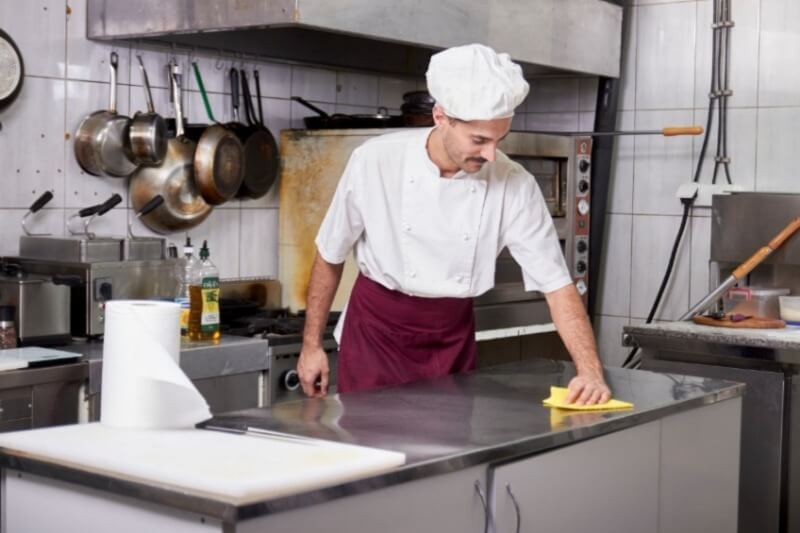
Sanitizer cloths are essential for stopping the spread of bacteria and other pathogens. They should be used to clean up any possible contamination on surfaces that cannot be run through your dishwashing machine. ServSafe food managers should stress the importance of using sanitized cloth towels on:

  • Soiled cutting boards
  • Stainless steel surfaces in preparation areas
  • Large preparation equipment
  • Dry clean surfaces to promote cleanliness

The use of proper sanitation should be enforced by ServSafe food managers, and it’s important to make sure that your sanitizer solution is rotated often and mixed to appropriate potency.

There are times, however, when a dry towel is appropriate and a wet sanitizer cloth could cause a foodborne illness risk rather than preventing one.

Water and grease do not mix using a wet rag to clean up grease can spread grease to other areas of your establishment. A wet, oily cloth will lose all effectiveness when it comes to sanitation. Grease can spread to hands, preparation surfaces, and even food when a soiled rag makes contact. ServSafe food managers should keep dry cloth towels near:

  • Deep fryers
  • Flat top grills
  • Sandwich presses
  • Other equipment that uses grease or oil

When was the last time your ServSafe food manager discussed using dry towels vs wet sanitized towels?

The Truth About Food Protection Managers Moving Product Safely

The Truth About Food Protection Managers Moving Product Safely

In food businesses with multiple locations, there are often situations when one location runs out of a certain product and must borrow some from another outlet some distance away. Foodborne illness risks result if food protection managers don’t take the appropriate steps to ensure food is transported safely. To keep food safe when moving ingredients from one location to another, let’s outline the steps that food protection managers must take to keep food safe in transit.

The Truth About Food Protection Managers Moving Product Safely
Image credit: Baloncici via Dreamstime.com

Food Protection Manager Tips for Transporting Product to Secondary Facilities

When we’re talking about food or ingredients that are at risk during transport, we’re mostly discussing raw ingredients or chilled ready-to-eat foods. Ingredients that come in cans, plastic containers or in sealed boxes that are shelf-stable at room temperature pose little to no risk at all when moved from one facility to another. If any of these products are open, however, pathogens and debris could enter the containers and cause a risk, so it’s a good idea for the food protection manager to ensure all shelf-stable products remain sealed during transit.

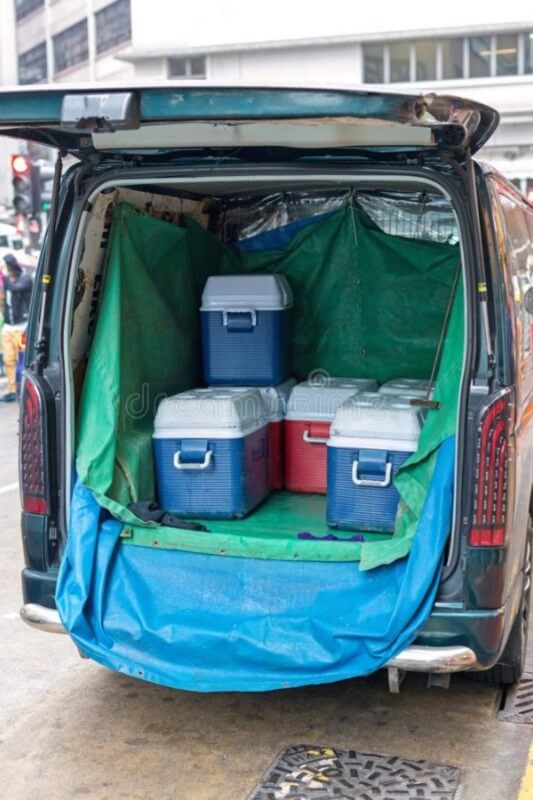
The real risk comes from moving raw food from one place to another. Items such as fish, meats, dairy and cut fruits and vegetables need to remain out of the danger zone during transportation. Smaller items can be kept in a cold storage bag or even a cooler with plenty of ice to ensure that product remains under 41 degrees.

Larger items, however, pose more of a challenge. Let’s say a location 45 minutes away runs out of fresh halibut. Transporting a whole fish may not be possible. It’s hard to find a sealed storage vessel large enough, and the size makes it much harder to keep cool. One solution would be to keep the windows down on an exceptionally cold morning and keep the inside vehicle under 41 degrees, but the resulting pneumonia may not be worth the tradeoff. In these cases, food protection managers should find a solution to prepare the product in manageable portions before packing.

Frozen food should be assessed based on distance and whether or not it will start to thaw before reaching its destination. Partially thawed product poses a quality and food safety risk, and in these cases, food protection managers must use their best judgment to make sure the trip won’t cause the product to thaw during delivery.

Do you have a solution for moving raw ingredients from one restaurant to another?