
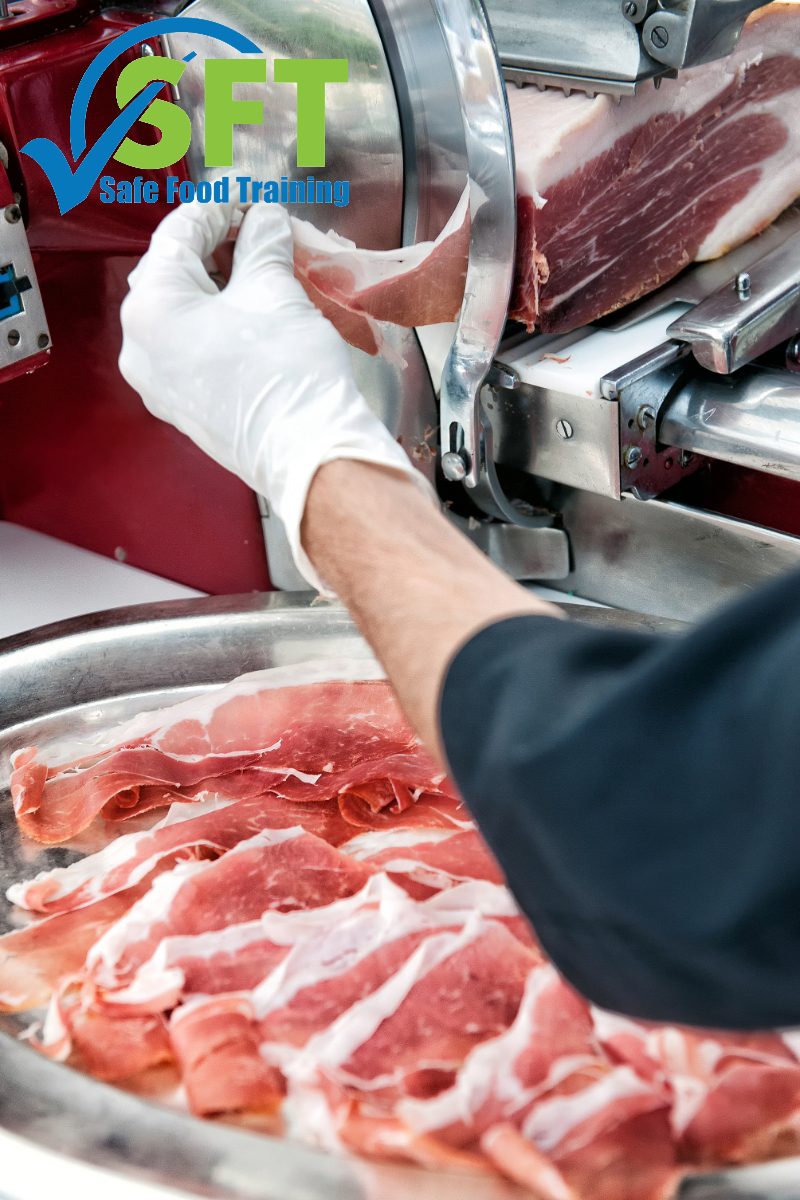
slicer contamination

Commercial Food Slicer Safety: Preventing Cross-Contamination
Prevent food slicer cross-contamination with a strict sanitation schedule!

In a professional Minnesota kitchen, the commercial food slicer is a cornerstone of efficiency. While its blade poses a clear physical risk, a more subtle and widespread danger is the cross-contamination that leads to foodborne illness. For a Certified Food Protection Manager, mastering commercial food slicer safety is less about the blade and more about controlling the microscopic world of bacteria, viruses, and allergens.

This guide focuses on the core sanitation principles that truly protect your customers: creating and enforcing a bulletproof system to prevent your slicer from becoming a vector for dangerous pathogens.

1. Why Slicers are a High-Risk Zone for Pathogens

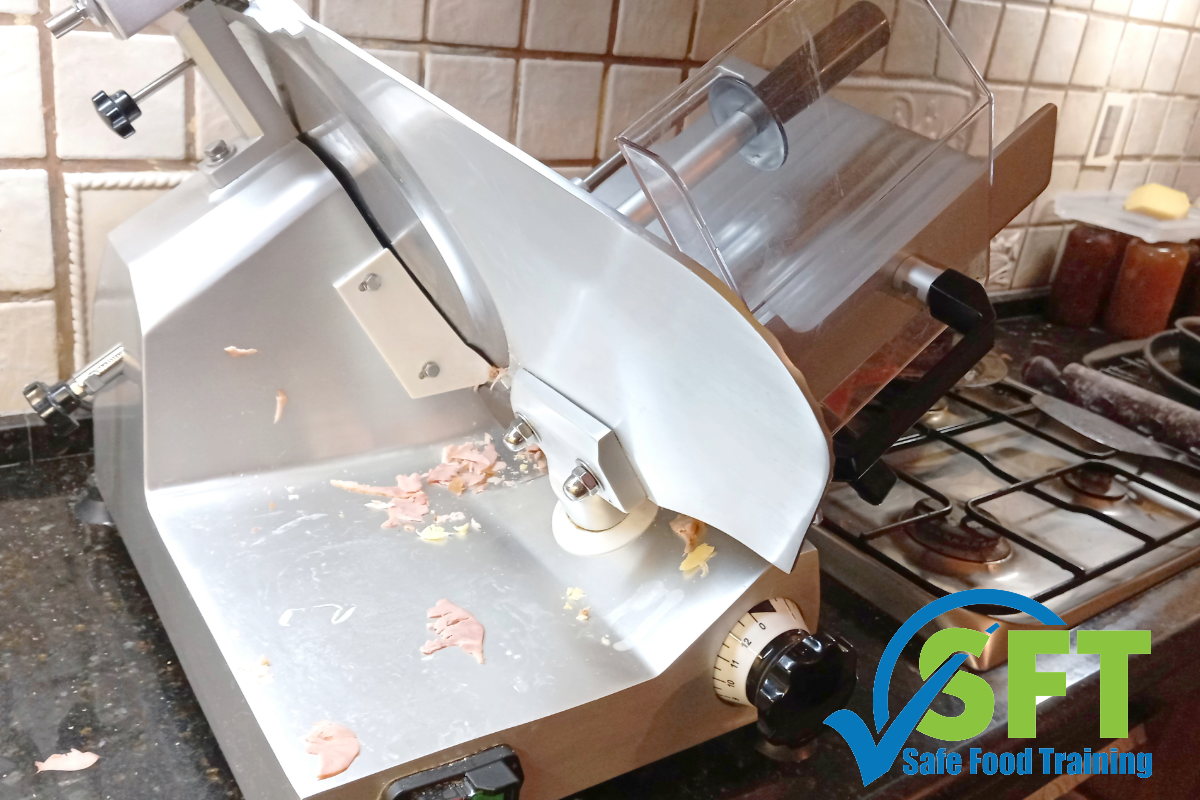
A slicer’s complex design, with its guards, gears, and seams, creates numerous harbor points where food particles accumulate. This debris provides the perfect breeding ground for bacteria. When not meticulously cleaned, a slicer will transfer pathogens from one food to another—for instance, from raw meats to ready-to-eat cheeses.

  • The Danger of Biofilm: Over time, bacteria can form a slimy, protective layer known as a biofilm on equipment. This layer shields pathogens like Listeria monocytogenes, a bacterium frequently linked to deli slicers, making them resistant to standard sanitizers.
  • Allergen Cross-Contact: Beyond pathogens, slicers are a primary source of allergen cross-contact. Trace amounts of cheese (a dairy allergen) or deli meats containing gluten can easily contaminate foods intended to be free from allergens.
  • Molds and Spoilage: Even tiny food particles left behind can develop mold, which then transfers to fresh products, accelerating spoilage and creating a risk of customer illness.

2. The Four-Hour Rule: A Non-Negotiable Standard

The FDA Food Code is unambiguous about cleaning frequency. must be broken down, cleaned, and sanitized at least once every four hours. This is a critical control point, not a suggestion. It is based on the speed at which harmful bacteria multiply to dangerous levels inside the temperature danger zone (41°F to 135°F). For any busy operation, this means a full sanitation procedure is mandatory during each shift, not just at the end of the shift.

3. The Step-by-Step Slicer Sanitation Process

A quick wipe-down is ineffective and dangerous. A compliant sanitation procedure is a detailed, multi-step process that must be followed precisely and accurately.

  1. Prepare for a Safe Cleaning: First, disconnect the power source by unplugging the slicer from the wall. Turn the blade dial to zero. Ensure you are wearing the required Personal Protective Equipment (PPE), especially cut-resistant gloves.
  2. Disassemble the Slicer: Follow the manufacturer’s directions to carefully remove all cleanable parts, including the food chute, blade guard, and product tray. This is the only way to access all food-contact surfaces.
  3. Wash, Rinse, and Sanitize: Use a three-compartment sink setup. In the first sink, wash parts with hot, soapy water and a brush to remove all physical debris. In the second step, rinse them thoroughly with clean, hot water. In the third step, sanitize the parts by submerging them in a properly concentrated, food-safe chemical solution for the required contact time.
  4. Air Dry Completely: Place all sanitized parts on a clean surface and allow them to air dry. Using a cloth to dry can re-contaminate the surfaces you have just cleaned. Once dry, reassemble the slicer.

Your Leadership Role in Preventing Contamination
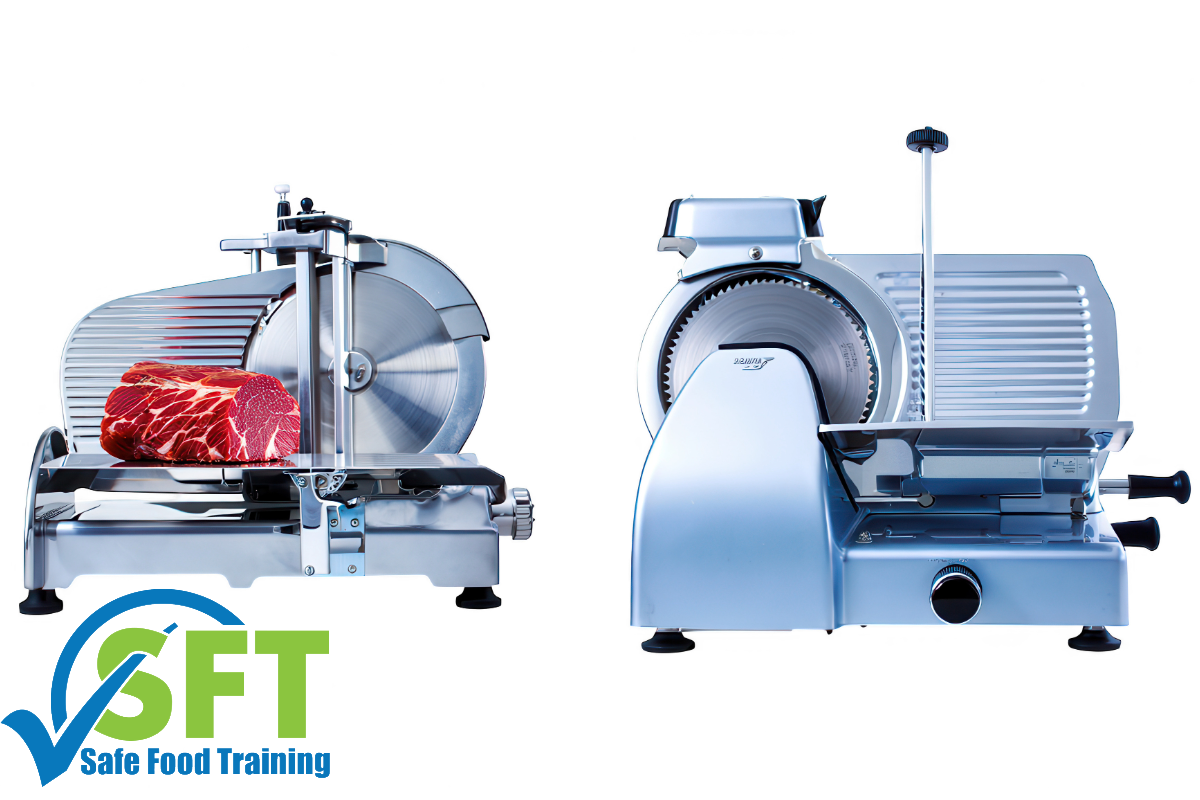
slicer contamination.
Prevent slicer contamination with these tips!

As a Certified Food Protection Manager, your responsibility extends beyond simply knowing these steps. You must effectively train your team on the importance of each step, provide the necessary tools and time to perform the job correctly, and establish a system to ensure that these procedures are followed consistently. Your leadership is what transforms knowledge into a lasting culture of food safety.

Mastering these commercial food slicer safety protocols is a non-negotiable part of running a professional and reputable food establishment. These procedures are a core competency taught in our Certified Food Protection Manager course, where we empower you with the knowledge to protect your customers from the hidden dangers of contamination.

Contact Safe Food Training today to book a session for your team or follow the link to our upcoming courses!
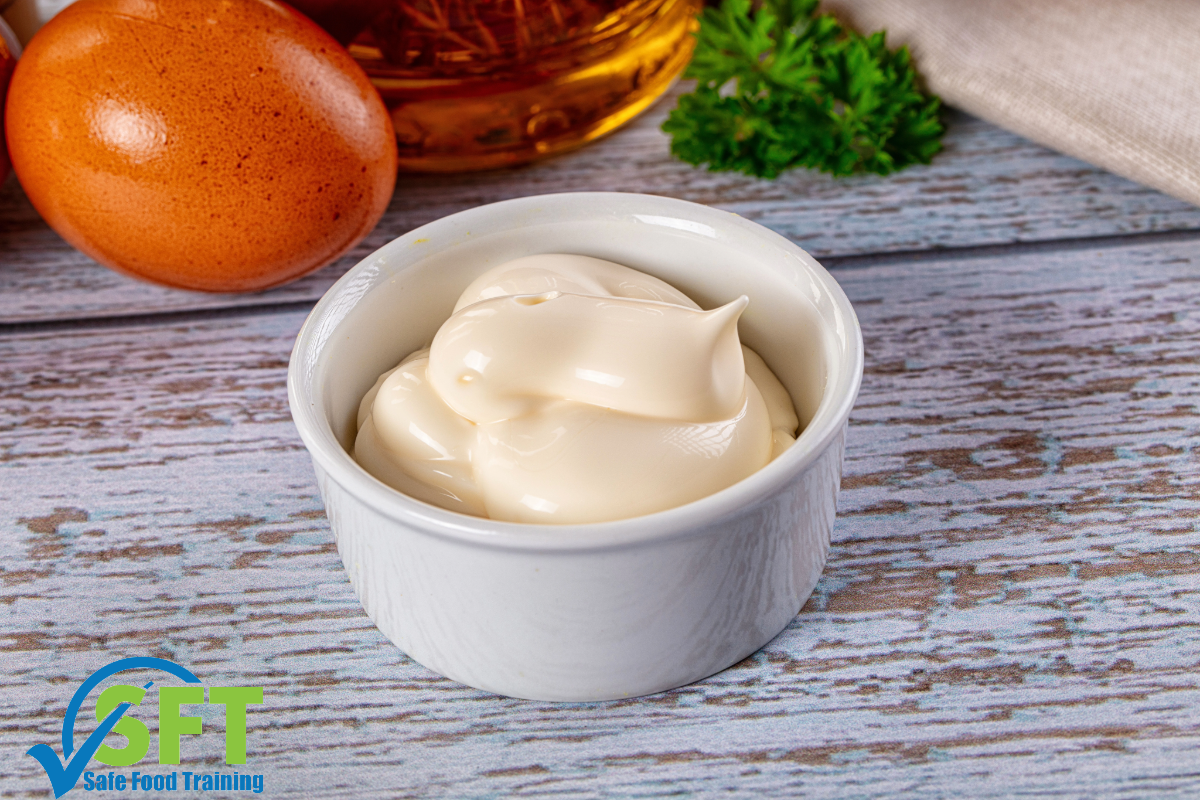

Mayonnaise Food Safety

The Mayonnaise Food Safety Myth: What Every Certified Food Protection Manager in Minnesota Needs to Know

As a Certified Food Protection Manager (CFPM) in Minnesota, you have likely heard a classic food safety myth: mayonnaise causes most food poisoning in potato salad, sandwiches, and other common dishes. For years, people widely believed the condiment was highly perishable and blamed it for a host of foodborne illnesses. This enduring mayonnaise food safety myth is so pervasive, it’s often the first thing people think of when a summer picnic or buffet goes wrong. However, the science behind this belief reveals a more nuanced truth.

The real culprits are almost always other ingredients that people have not prepared or handled properly to food safety standards. The myth’s enduring power is rooted in a misunderstanding of how mayonnaise is made and the critical importance of avoiding cross-contamination.

The Science of the "Mayonnaise Myth"

Mayonnaise Food Safety

Do you know your mayonnaise food safety?

Commercially produced mayonnaise is a highly stable food product, primarily because of its ingredients. Manufacturers load it with acids, like vinegar and lemon juice, and preservatives that create a low pH environment. This acidic nature is hostile to the growth of most foodborne bacteria, including Salmonella.

  • Low pH as a preservative: The low pH of store-bought mayonnaise acts as a natural safeguard. While you should refrigerate it for optimal taste and quality, the product’s acidity makes it far less susceptible to spoilage than many other ingredients. Some sources even suggest that adding commercially produced mayonnaise to certain dressings and sauces can extend their shelf life because of this preserving effect.

Pasteurized ingredients: The raw eggs traditionally used in mayonnaise are a common source of Salmonella contamination. However, commercial mayonnaise manufacturers use pasteurized eggs, which eliminates this risk. This key difference makes store-bought mayonnaise a much safer ingredient to work with.

The Real Culprits: Time and Temperature Control

If mayonnaise doesn’t cause food poisoning, why do popular dishes that contain it make people ill? The answer lies in the other ingredients. Dishes like potato salad, pasta salad, and tuna salad become a potentially hazardous food (PHF)—now more commonly referred to as a time/temperature control for safety (TCS) food—once you combine them. These foods are a perfect breeding ground for bacteria if they remain in the temperature danger zone (TDZ) for an extended period.

A significant portion of foodborne illnesses, including those attributed to Salmonella, results from improper temperature control. The Minnesota Food Code requires that all TCS foods be kept at or below 41°F or above 135°F to prevent bacteria from multiplying to dangerous levels.

  • Susceptible ingredients: Cooked potatoes, pasta, cooked eggs, and meats are highly susceptible to bacterial growth once they are cooked and cooled. Leaving a potato or pasta salad out at room temperature for even a short time can create a significant health hazard.
  • Preventing cross-contamination: Many food safety incidents at events like buffets directly result from cross-contamination. This occurs when someone uses a utensil to serve one dish and then uses it in another, or when a spreader comes into contact with raw meat proteins and then returns to the mayonnaise container. In these cases, bacteria are highly likely to contaminate the mayonnaise.

Maintaining Food Safety Standards in Minnesota


Mayonnaise Food Safety

Mayonnaise food safety issues usually revolve around time and temperature.


For any food professional, a strong understanding of food safety principles is essential. Relying on myths can lead to dangerous oversights in your establishment. It is crucial to always avoid cross-contamination, practice excellent personal hygiene, and ensure you handle every ingredient correctly.

Staying up-to-date with your knowledge is also a requirement of the Minnesota Food Code, which mandates that most food establishments have a full-time certified food manager on staff. These regulations protect public health and ensure professionals like you have the expertise to operate safely.

This is why proper, in-depth food safety training is so vital. It’s not just about passing an exam—it’s about understanding the “why” behind the rules. You are responsible for the health of your customers, and a sound foundation in food safety principles is the best way to uphold that responsibility. You also need to renew your certification every three years by completing continuing education.

At Safe Food Training, we offer convenient and personalized Certified Food Protection Manager courses designed specifically to help you and your team effectively meet these standards in Minnesota. We provide everything you need to become certified in one simple session, including the exam itself. Book your continuing education training or register for a full certification course on our website today.