
Hints For Food Managers Considering A Special Bar Menu

Hints For Food Managers Considering A Special Bar Menu

In our food manager certification courses, experienced restaurant pros often exchange ideas and discuss strategies. During a recent session, some students debated creating a bar or lounge menu for casual diners with low food costs. We decided to contribute our insights, which food managers might find useful for special menus in bar, lounge, or patio dining areas.

Hints For Food Managers Considering A Special Bar Menu
Image credit: sofiiashunkina via rf123

The Ideal Bar Menu for Food Mangers Considering Something Different

Visiting local restaurants, we often notice a mismatch between the bar menu and dining floor dishes. Crafting a bar menu for regular patrons with your establishment’s theme offers many benefits for food managers.

  • Ingredients should already be in your inventory
  • Eases the stress on the kitchen staff
  • Offers an alternative dining option for guests on busy nights

Food managers designing your bar menu with ingredients from your regular menu can cut food costs. This approach leads to less waste and a lower risk of food spoilage. However, don’t merely serve smaller portions of your dinner menu. For instance, a steak house can offer steak sliders made from steak trimmings or other casual dishes, using available ingredients. Be creative while maintaining the same ambiance for returning guests who dined in the main area previously.

This streamlined concept also aids production during service. Line cooks get frustrated when one or two menu items differ significantly from the rest. This issue slows down service and consumes valuable line storage space. Simplifying and maintaining familiarity helps the kitchen staff serve food to guests promptly.

Offer Options To Retain Customers

Finally, a well-designed bar menu attracts guests unwilling to wait for a full-tabled restaurant. Informing guests of unique lounge or patio options can save them from long waits or trying competitor venues.

What strategies do you use for bar menu planning? Is it necessary to offer special lounge selections, or are regular offerings enough?

MN certified food protection manager CFPM

Simplified Reasons For MN Certified Food Protection Manager Training

Minnesota law requires most food establishments to employ a Certified Food Protection Manager (CFPM) to prevent foodborne illness and ensure public safety. Safe Food Training offers both personalized 8-hour initial certification courses and 4-hour continuing education renewals to help you meet these state standards. Whether you choose our 

distraction-free in-person classes or flexible online options, we ensure your MN food license remains compliant.

What are the worst messages you could get when opening your kitchen for the Thursday lunch shift? You could be dealing with a broken walk-in cooler or a supplier who shorted your produce order. But the absolute worst message is multiple customers calling to report they’re doing the “Pepto Bismol dance” after eating your Wednesday daily special.

Beyond the immediate panic and guilt, a single foodborne illness incident can devastate your business’s reputation. To prevent these embarrassing and costly situations, the Minnesota Department of Health (MDH) and the Minnesota Department of Agriculture (MDA) mandate that most food establishments employ a Certified Food Protection Manager (CFPM).

The Real Cost of Food Safety Lapses

illness reporting in MN

Do you know the rules for illness reporting?

Food safety isn’t just about passing your routine health inspection; it’s about protecting your community and your financial investment. In a recent study by the USDA Economic Research Service, the total cost of the leading U.S. foodborne illnesses was estimated at over $17.6 billion annually.


For a local Minnesota business—whether you’re running a busy diner in St. Paul or a school cafeteria in Duluth—the costs of an outbreak include:

  • Severe Revenue Loss: A “closed by health department” sign stops traffic instantly, and bad online reviews linger for years.
  • Legal and Insurance Costs: Potential lawsuits from affected customers will immediately spike your liability insurance premiums.
  • Licensing Risks: Failure to have a CFPM on staff can result in state-issued citations, fines, or a complete license suspension.

Minnesota CFPM Requirements at a Glance

certification

Choose how you learn best.

Navigating state regulations doesn’t have to be a headache. Here’s exactly what Minnesota requires for your certification:


Requirement

Details

Initial Certification

Must complete an approved 8-hour course and pass an accredited exam.

Renewal Cycle

Your Minnesota CFPM certificate expires every three years.

Continuing Education

4 hours of approved continuing education (CE) training is required for renewal prior to expiration.

State Registry Application

After passing your exam or completing CE, you must submit an application and fee to the MN Department of Health to get your official state certificate.

The "Choice" Narrative: In-Person vs. Online Training

At Safe Food Training, we know that food safety shouldn’t be a generic, one-size-fits-all experience. Restaurant managers have different learning styles and schedules, which is why we emphasize your choice in how you train.

The In-Person Advantage: We highly recommend our in-person training. Stepping out of your restaurant into a distraction-free environment drastically increases your focus and your exam pass rate. It allows for direct interaction, letting you ask specific questions about cooling a 5-gallon batch of chili or calibrating bimetallic stemmed thermometers.

The Online Flexibility: If you’re managing multiple locations or simply can’t leave the kitchen for a full day, our online training options provide the critical flexibility you need to learn on your own schedule while still meeting state requirements.

The Backend is Serious Business

Designers set the mood in the front of the house with lighting, furniture, and music. But the back of the house is serious business. Led by Jeff Webster, Safe Food Training brings years of real-world industry experience to the classroom. We cover vital, tangible best practices, including:

Training for you and your team-salad prep

Training for you and your team.

  • Temperature Control: Mastering the “Danger Zone” and Safe Cooling Parameters.
  • Cross-Contamination: Strict protocols for separating raw poultry from ready-to-eat foods during prep.
  • Employee Hygiene: Enforcing strict handwashing and health reporting policies for sick employees.

Requiring your kitchen managers to get and maintain their food safety certification is one of the best investments an owner can make.

Frequently Asked Questions (Q&A)

Navigating state regulations can sometimes feel overwhelming, so I’ve put together answers to some of the most common questions we get from Minnesota kitchen managers.

Q: How often must I complete continuing education to maintain my food safety certification in Minnesota?

A: In Minnesota, you must renew your certified food protection manager license by completing 4 hours of continuing education every three years.

Q: How will I know when it's time to renew my certification?

A: As a valued client of Safe Food Training, you don’t have to worry about tracking your renewal date. We provide timely reminders for the three-year renewal cycle to ensure you complete your required continuing education before your certification expires.

Q: I just need continuing education credits. Do I have to take the full 8-hour course?

A: No, you don’t. We offer dedicated continuing education training specifically for professionals who need to fulfill Minnesota’s renewal requirements.

Q: What happens if I don't pass the Certified Food Protection Manager exam on my first attempt?

A: We’re dedicated to your success. If you don’t pass the exam on your first try, we offer a retake of the course and exam at one of our regularly scheduled sessions.

Q: What does "personalized training" actually mean?

A: We focus on creating a convenient and effective learning experience that fits your specific needs. Led by Jeff Webster, we discuss the food safety challenges relevant to your unique operation—whether you’re in a school cafeteria, a large restaurant, or a catering business.

Protect Your Kitchen, Protect Your Business

commercial kitchen

Sign up for the next available class today!

Don’t leave your restaurant’s reputation to chance or wait until a health inspector knocks on your door to check your credentials. Whether you need your initial certification or it’s simply time for your three-year renewal, we’re here to make the process straightforward and stress-free.

Ready to secure your Minnesota food license? Register for an upcoming course today!

Shows several products a Certified Food Manager may encounter with Product Recalls

A Confidential Certified Food Manager Perspective On Product Recalls

If you’ve gained your food manager certification, you know that there are many ways that food-borne illness can spread. Even if you’re diligent with your safety procedures, there may be times when tainted product is delivered to your establishment and can cause a safety issue that you are unaware of. This week, we’ll discuss how a certified food manager can keep up to date on product recalls. Equally important, we will advise on handling potentially compromised product.

Confidential Certified Food Manager Perspective On Product Recalls

How Certified Food Managers Keep Informed About Recalled Food Products

One of the easiest ways to stay informed is to talk with your suppliers. Nowadays, most managers order their supplies online and may only see your supplier’s representatives on rare occasions. Taking the time to have to a regular conversation with your supplier is important for several reasons. And it’s especially helpful to keep you updated on recalls and safety issues with product that you regularly use.

With information readily available on the internet, online sources can be a great resource when researching product recalls. There are, however, numerous sources that may be unreliable. So we’d like to share a few on-line sites that can help keep you up to date:

First, the Minnesota Department of Health is a great resource a certified food manager can use for local product recalls and food safety alerts. This page offers links to local information and external sources for recall alerts. Second, the FDA’s recall site provides an easy to use chart. It defines:

  • The company involved with the recall
  • The recall reason
  • Detailed information concerning the FDA’s action concerning the issue

Finally, Food Safety News is not a government or officially moderated site. But they provide a wealth of information concerning food safety hazards and recalls. Consequently, they cover news that may not be reported by mainstream news outlets.

Handling Potentially Compromised Product

When a certified food manager suspects they have received tainted or recalled product, the first they should notify your supplier. If you received it from a food service supplier, then their representatives will be able to retrieve the product and make sure that you’re reimbursed or a safe product is substituted. If you picked up your potentially contaminated food product directly from the source, it’s generally a good idea to return it to the outlet where you purchased it. In either case, if there are any complications or you’re concerned that this may be a serious issue, you may wish to contact your local health department.

We’d like to know how you keep up to date on food safety issues. Is there a resource or web-site that we may have missed?

Maple Grove Schools Group Food Safety Certification MN Training

The Truth About Custom Food Safety Certification Training

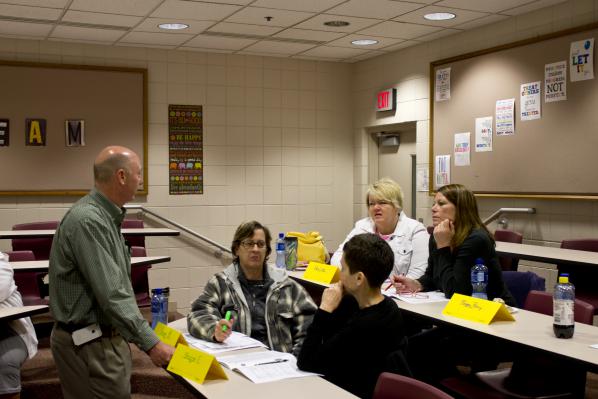
If you’re a restaurateur who owns or manages multiple locations, then you know what a hassle it can be to manage all of the required food safety certifications. In contrast,our trainers make it easy to get all of your team’s certifications/re-certifications up to date. We come to you and deliver a custom group food safety certification training session for all of your employees, and we can administer the testing for new food safety managers who require it.

Maple Grove Schools Group Food Safety Certification MN Training

The Benefits of Custom Group Food Safety Certification Training

By having our trainers come to your facility to provide customized food safety certification training, you can enjoy three significant benefits:

  • Convenience
  • Cost
  • Customizable training

Basically, our on-site options eliminate the need to worry about coordinating the schedules of all staff members who require certification. We are able to work around your unique schedule, ensuring that every staff member that needs certification is able to attend. Additionally, scheduling group training at your restaurant may be more cost-effective. Rather than paying individual fees for each staff member, we are able to offer a group rate that keeps the expense of training all of your staff to a minimum.

Built to Address Your Unique Business Needs

At Safe Food Training MN, we offer customized food safety certification training sessions that are tailored to your unique business needs. Unlike online food safety courses or regularly scheduled classes, our trainers come to your facility and work with you to identify and address any issues specific to your operation. During the training session, we cover unique aspects of your business that are not normally addressed in basic training courses.

Additionally, we can design either a ServSafe or NRFSP training course according to your needs. Then we include any information in your sessions that you feel you or your employees could use more training on. Our knowledgeable trainers will make sure that you’re aware of the most current rules and procedures for any situation.

Our custom food safety certification training sessions are not just for restaurants. We can design a course aimed at:

  • school lunch programs
  • retirement facilities
  • food production outlets
  • or any other type of business that requires unique food safety training in MN

Our training sessions cover unique aspects of your business that are not normally addressed in basic training courses.

Our custom food safety certification training sessions are not just for restaurants. We can design a course aimed at:

  • school lunch programs
  • retirement facilities
  • food production outlets
  • or any other type of business that requires unique food safety training in MN

Our training sessions cover unique aspects of your business that are not normally addressed in basic training courses.

Do Group Training Sessions Work?

Colleen Fairbanks, Lead Food Services Specialist at Osseo Area Schools, had this to say about our group training services: “We had Safe Food Training come in and do our training because they were able to come to us and tailor the training to what our managers needed in order to get their MN food managers license. I would recommend anyone use Safe Food Training because they will tailor the training to what you specifically need in your department.”