
How food managers prepare for employee turnover-now hiring sign

How MN Certified Food Managers Prepare For The Employee Turnover Challenge

Employee turnover is inevitable in any business, but it is especially high in the hospitality, restaurant, and industrial food processing industries. How should the MN certified food managers prepare for employee turnover scenarios such as, surprise labor shortages, employees moving away, or vacancies due to promotions or transfers?

How MN Certified Food Managers Prepare For The Employee Turnover Challenge

Image credit: jackf via 123rf

Tips for Certified Food Managers Dealing with Employee Turnover

A business should not turn away resumes when they are not currently hiring. Current human resource practices tend to still collect unsolicited resumes from potential job seekers. Applicants can submit their resumes at any time, regardless of whether your business is currently hiring or not. This way, you’ll have a roster of potential candidates in case any unexpected vacancies arise. Rather, the MN certified food manager should look at an unsolicited resume as an opportunity to build a roster of candidates that would be qualified for future employment.

Recognizing Potential Employees

Not all submitted resumes need to be saved. A quick review can determine which ones to keep and which to discard.

It is not uncommon for a manager to contact an applicant, even if they are not hiring. Certified food managers should be on the look-out for stellar staff even when their employment roster is already full. If an applicant submits a resume with extensive industry experience, certified food protection manager, and unique skills, save and highlight their resume as having potential.

Even if there are no available positions, the company may offer an interview to a highly qualified candidate. During the interview, they can be informed that no job openings are available at the present, but the company is interested in considering them in the future. If the candidate is exceptionally good, the company may even create a position for them.

As a certified food manager keeping an open outlook on your staffing, even when there are no current needs, is a good preventative measure against labor shortages and will streamline the hiring process should you need to fill any vacant positions.

Hair restraint demo for ServSafe work wardrobe

3 Fantastic Insider Wardrobe Considerations For ServSafe Trained Employees

Whether your uniform accessories are there to add style, provide convenience or a celebrity TV chef makes it look cool, there are several uniform quirks that every ServSafe MN trained employee should avoid. The list of uniform components that pose as food safety hazards can be quite extensive. However, we would like to focus on three components that ServSafe-approved kitchen attire should never include.

Three ServSafe Wardrobe Components to Kick Out of the Kitchen

Anything that you add to your work dress instantly becomes susceptible to the same contamination risks as the rest of your uniform. We believe that a ServSafe based uniform policy should not allow the following three things:

  • Dry towels attached to uniform
  • Arm and hand jewelry
  • Baseball caps as head coverings

Many food workers feel that it’s convenient to loop a dry towel around apron strings or sling it over a shoulder. It keeps your towel handy and readily available when a plate or cutting board needs a quick wipe. Unfortunately, the apron is a common collector of dirt, grease, and debris in the kitchen. The shoulder of your uniform can become contaminated with sweat and other bacteria. Keep your dry towels stored in a clean place that will allow them to be easily accessible when needed.

The regulations concerning jewelry in food preparation facilities are often overlooked. The food code prohibits wearing anything other than simple wedding bands and plain rings. Arm and wrist bands, rings, and other accessories can often go unnoticed, particularly by front-of-the-house staff in restaurants. If an employee requires a medical alert bracelet, they can replace it with a necklace or anklet. Management should also be informed about employees wearing such jewelry. It can be quickly located in the event of a medical emergency.

A shelter dog demonstrating hair and beard restraint approved by ServSafe kitchen dress code
ServSafe approved kitchen wardrobe. Image credit: Babylon Animal Shelter

Baseball Cap Safety Issues

While the Minnesota Food Code concerning head coverings doesn’t disallow baseball caps, we feel that there may be a few ServSafe based contamination concerns with incorporating them into your dress code. Most ball caps are crafted from absorbent cloth, and the bills are generally constructed from cardboard lined with soft material. Over time this cloth and cardboard can become saturated with sweat, steam and other substances. This creates a potential breeding ground for bacteria. We recommend keeping paper head coverings or hair nets as they are ideal. However, we understand that baseball caps are more comfortable and familiar, so if they are part of your dress code, please keep them clean and replace them regularly.

These three items seem like they are simply providing style, comfort and convenience in the work place, but unfortunately they also create contamination dangers. By making it policy to eliminate them, you can make the cleanest kitchen even safer.

Safe Food Training provides ServSafe MN training and exams, but we source our regularly scheduled courses from NRFSP. We rely on their expertise to ensure the highest quality training for our clients. Minnesota Department of Health, Environmental Services accepts both ServSafe and NRFSP exams for Food Protection Manager Certification in MN. Click this link for more information on ServSafe MN.

Going Beyond Unbelievably Simple Food Safety Storage Regulations

Proper storage of all types of food products, whether raw meats, dairy, produce, or fully prepared foods, is essential in any segment of the food service industry. Improperly stored food can lead to loss of profits due to waste, and wasted time while employees search for product. Food safety training addresses the storage regulations issue, we’ll explore other storage solutions as well.

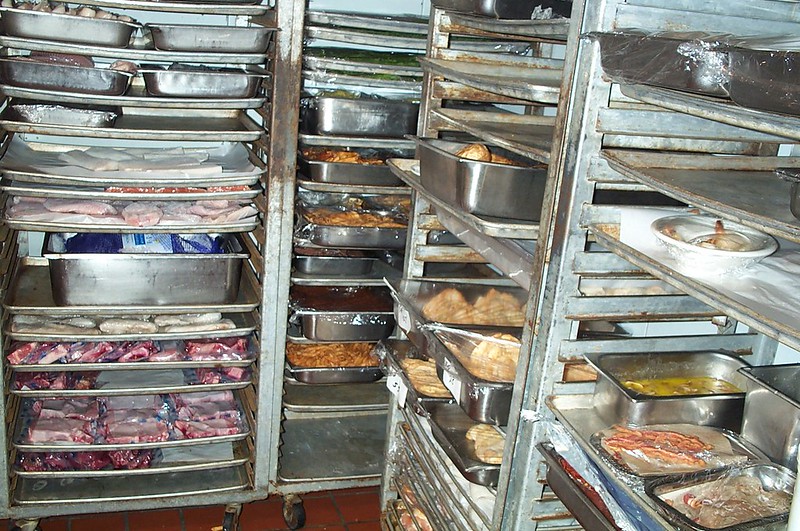
Going Beyond Unbelievably Simple Food Safety Storage Regulations

Image credit: stu_spivack via Flickr

Meat storage tends to be the most misunderstood and poorly implemented procedure when it comes to food storage. We know that raw meat should always be stored below cooked product, but according to MN food safety certification regulations, raw meats should be separated during storage and production. One way to safely store raw products and prevent cross-contamination is to make sure that products with the highest cooking temperatures are stored on lower shelves than those with lower temperatures. If raw meats were to be stored on the same rack, a properly organized refrigerator should look like this in descending order.

  • Raw steaks and full cuts of beef (145 degrees minimum)
  • Raw ground beef (155 degrees)
  • Raw poultry (165 degrees)

You will notice that we have not included seafood on our list. Even though seafood has a minimum cooking temperature of 145 degrees, we recommend separating it further from all other product. We feel that this is an important safety precaution to protect those who have allergies to seafood and shellfish.

The optimal way to achieve proper storage is to have dedicated areas for meat, dairy, and produce. Larger outlets such as large-scale food manufacturing plants can easily achieve this by using multiple refrigeration units. Many restaurants, hotels, and smaller institutional facilities do not have this luxury, so diligence is important.

Tips for Food Safety Managers Streamlining Food Storage

The first tip to ensure proper food storage is to label everything. Food should be labeled and dated when received or prepared. This is the obvious first step and is required to know for food safety certification in MN, but it is helpful to take labeling one step further than the minimum storage regulations.

Label the sections, shelves, and empty spaces in your refrigerators. This will ensure that employees will be able to see where each type of product is allowed to be stored, and will prevent the confusion of a constantly changing storage system.

Another tip is to store produce and meat as far away from each other as possible. In many cases, this can be achieved by splitting refrigeration space in half. One side of a walk-in refrigerator will contain produce, the other meat products. Two separate refrigerators would be the ideal storage solution, but this is not always achievable. In cramped quarters, the labeling of all available space will streamline your storage process.

Implementing proper food safety storage regulations appear simple on paper, but implementing an organized system is well worth the vigilance.

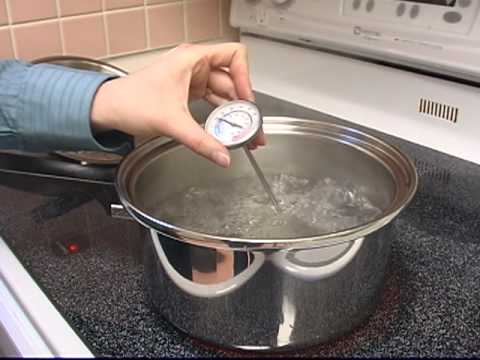
Temperature Control For Food Safety Certification Boiling Water Method

The Truth About Temperature Control For Food Safety Certification MN

Temperature Control and Food Safety Certification MN

In order to obtain Food Safety Certification in MN, one key is to understand how to control the temperature of cooked foods, and the proper cooking temperatures for raw foods. Grasping these concepts is not only necessary in order to gain your food manager certification, but also to prevent foodborne illness and ensure quality.

Proper Temperature Checking Technique

Simply inserting your probe thermometer into a cooked meat item will not always give you an accurate temperature result. There are certain things that you should be aware of to ensure proper control when checking the temperature of prepared food items:

  • To check the temperature of beef, lamb, and pork roasts, you need to check the thickest portion.
  • Avoid contact between your probe thermometer and any bones
  • To check the chicken, probe on the thickest part of the breast.
  • It is recommended that thin food be checked with a thermocouple-style thermometer
  • Stir hot and cold soups, sauces, and other liquids before checking them.

Food Safety Certification Tips For Calibrating Your Probe Thermometer

No matter how often you check the temperature of your temperature-controlled items, you will not receive accurate results if you are using a probe thermometer that is not properly calibrated. Health inspectors will calibrate their thermometers before every inspection. Likewise, food safety certification-aware kitchen staff should also recalibrate often to assure accurate temperature control. Thermometers should be calibrated before their first use after they have been dropped, or after they have gone from one temperature extreme to the other. There are two methods to properly calibrate a probe thermometer.

Boiling method

  • Bring water to a boil
  • Once your water has reached a boil, insert your thermometer
  • Adjust your probe to read 32 degrees Fahrenheit.
  • Ice-water method
  • Fill a container with crushed ice and then add water
  • Wait five minutes in order for your ice water’s temperature to stabilize
  • Insert your thermometer into the center of your ice water, making sure the probe does not touch the side or bottom of your container
  • Adjust the probe to read 32 degrees Fahrenheit.

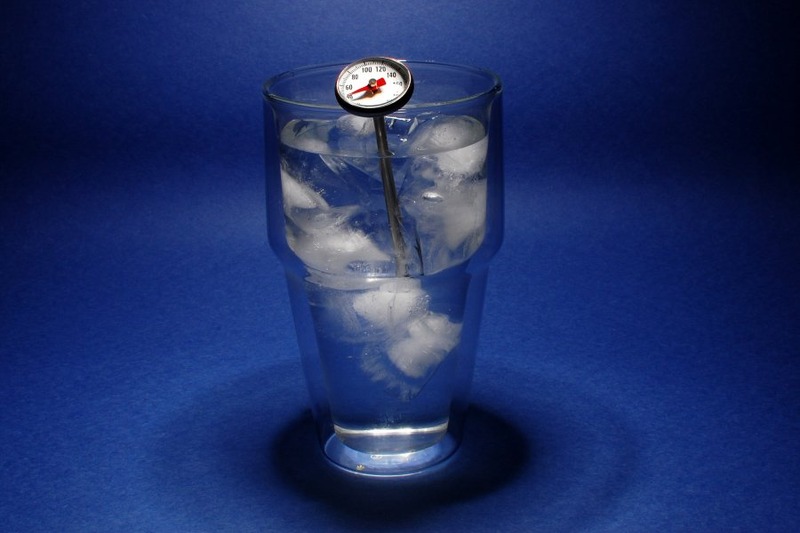
Ice Water Method

Temperature Control For Food Safety Certification Ice Water Method
Image credit: Flickr
  • Ice-water method
  • Fill a container with crushed ice and then add water
  • Wait five minutes in order for your ice water’s temperature to stabilize
  • Insert your thermometer into the center of your ice water, making sure the probe does not touch the side or bottom of your container
  • Adjust the probe to read 32 degrees Fahrenheit

    The ice-water method is the safest and most accurate method.  The Food Safety Certification MN training should cover these tips and other temperature control information in depth to ensure understanding.