New Year’s Eve is coming, and that means that most restaurants, ballrooms, and catering companies will be at their busiest. The certified food manager must be extra vigilant in keeping every item served safe for their New Year’s Eve guests.
MN Certified Food Manager’s Guide to Surviving New Year’s Eve
As a certified food manager of any outlet, it’s essential to remain in control during a busy day like New Year’s Eve. Three crucial steps must be taken to guarantee that the food you serve is safe and of the highest possible quality.
Be prepared
Take time to monitor food production
Remain calm
Our first tip will help keep the food at your New Year’s Eve party safe and delicious. Ensure you have your line refrigerators fully stocked before service even begins. Most New Year’s events will last long into the night. Change hot-held sauces and buffet items after a maximum of four hours at 140 degrees. Adhering to this guideline is essential for ensuring food safety. Have your backup items staged and prepared for reheating before service to optimize efficiency. Having extra cold items ready can be a lifesaver during busy evenings. Change hot-held sauces and buffet items after a maximum of four hours at 140 degrees.
Proper temperature control is crucial during holiday events and should always be a priority. For buffet service, consider having your front-of-house manager or server monitor the temperatures of hot and cold items. Set a timer alert for every hour to check the temperatures of hot-held sauces and sides from your kitchen.
Remain Calm And In Control
Finally, stay calm and in control at all times. Mistakes happen when you’re in a hurry, and when it comes to food production, not taking the time to wash your hands or sanitize a cutting board properly can lead to dire consequences. Take the time to ensure that you cook all foods to the proper temperature, change your disposable gloves after every use, and follow all health code regulations throughout the night.
While days like New Year’s Eve can be stressful, they can also be fun with the right mindset and a lot of preparation. Remember to thank your staff for a job well done at the end of the night and reward them for their hard work. At Safe Food Training, we’d like to take this opportunity to thank you for following us throughout 2024 and wish you the best in the upcoming year.
https://minnesota.safefoodtraining.com/2026/wp-content/uploads/2015/12/MN-Certified-Food-Managers-Guide-to-Surviving-New-Years-Eve.jpg360639Christine Dantzhttps://minnesota.safefoodtraining.com/2026/wp-content/uploads/2025/06/Remove-background-project-1024x614.pngChristine Dantz2024-12-16 08:03:002024-12-15 16:35:40Certified Food Manager’s Guide to Surviving New Year’s Eve
In the last few months, we’ve seen numerous media reports on foodborne outbreaks caused by everything from baby carrots to McDonald’s Quarter Pounder. This publicity does not benefit the food and beverage industry. It can have a chilling effect and discourage customers from visiting your establishment. This week, we will begin a series of blogs that provide information on how CFPMs can meet the foodborne illness outbreak challenge.
First, let’s take a look at the problem. According to the CDC:
Over 45 million Americans get sick from foodborne illness each year
128,000 are hospitalized
3,000 die from foodborne disease
Foodborne outbreaks in the US have increased by 43% since 2013
Over 1/2 of the foodborne illness outbreaks reported to CDC are associated with eating establishments or delicatessens
There’s no debate that foodborne illness is a challenge that CFPMs need to address!
Tips On Preventing Foodborne Illness for Certified Food Protection Managers
Foodborne illness outbreaks are not a new issue for CFPMs, but they have recently become more acute because of all the media coverage. Let’s review the basics from a high level. There are a few essential components of a safely operating Food establishment.
Sick employees will be sent home
Provide a clean work environment
Ennforce personal hygiene among production and service staff
Stay up-to-date about recent food recalls
Choose suppliers with a proven track record for food safety and check all incoming supplies
Educate staff and enforce proper handling of food during storage, preparation, and presentation processes
Employees should be encouraged to call in sick if they have respiratory, stomach, or flu-like symptoms. If someone develops symptoms during their shift or comes in with symptoms, the CFPM or PIC should send them home before they contaminate customers and staff.
Certified food protection managers must ensure a clean work environment to deliver safe food products to their customers. Environment broadly means physical structure, equipment, and personal hygiene. Staff should wear clean uniforms and have an ample supply of gloves where appropriate. The kitchen staff should clean all production equipment after every use. Workstations, storage areas, and floors must be cleaned regularly. Don’t forget a clean and accessible bathroom.
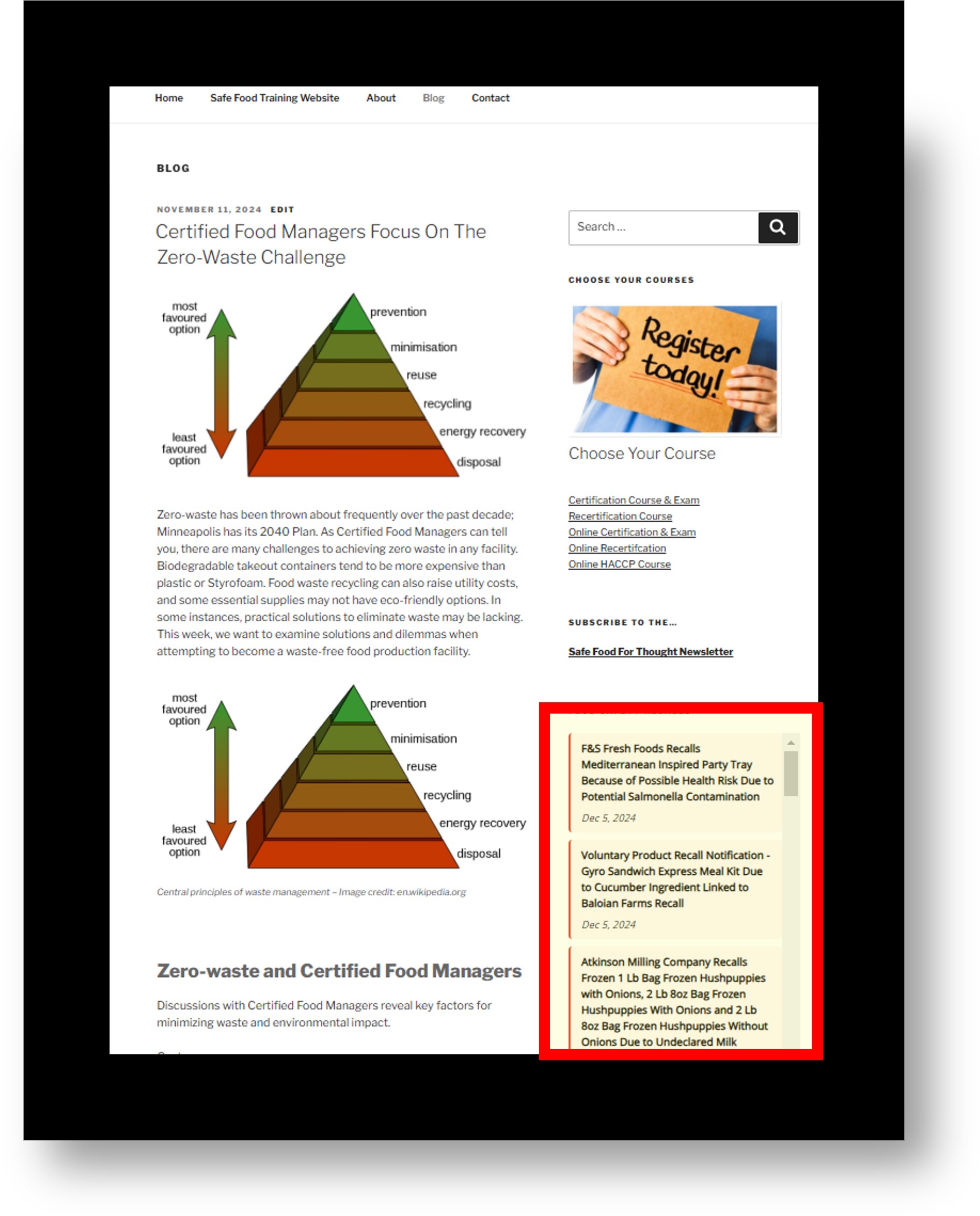
Can you imagine how horrible you would feel if one of your customers became ill because you served a recently recalled product? CFPMs can quickly and easily check for recently recalled food products that could cause a foodborne illness outbreak in several ways. You can sign up for recall alerts from the Food & Drug Administration. CFPMs can also go to the “Safe Food For Thought” blog site and look in the right-hand column for the CDC Food Safety Recall (highlighted in red below).
Maintaining a High-quality Product
To minimize potential foodborne illness outbreaks, CFPMs should be very picky about food product suppliers, whether national suppliers or local farmers. All should inspect the product before delivery, monitor upstream suppliers, and have a system to identify and alert any questionable products. However, it is up to the CFPM to do a final inspection of the delivered products.
Finally, certified food protection managers should have regular team education meetings to reduce the possibility of an outbreak by emphasizing the clean, separate, cook, and chill processes. Safe Food For Thought will help you with this task. We will be posting a series of blogs that focus on how to identify the most common foodborne diseases and tips for cleaning techniques and equipment maintenance that will help prevent the spread of foodborne outbreaks.