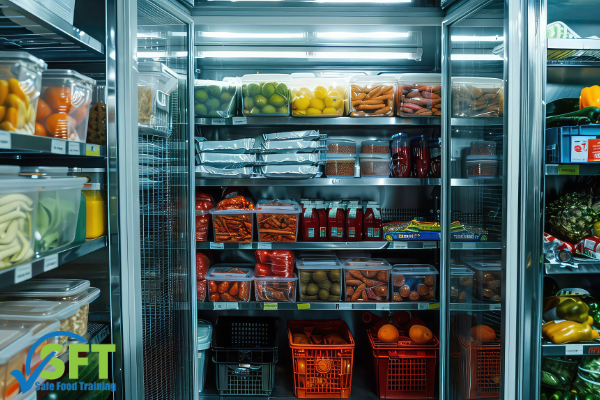
Whether you’re grabbing eggs from a local Minnesota farm or a St. Paul grocery store this Easter, safety comes down to one thing: keeping them at 41°F or below. Farm-fresh eggs have a natural coating called the “bloom” that protects them, but once they’re washed or refrigerated, they’ve got to stay cold. This isn’t just a good idea—it’s how you keep your Minnesota kitchen compliant and your guests safe from Salmonella.
Easter in Minnesota usually means a hectic kitchen and plenty of eggs for decorating and brunch. If you’re managing a restaurant in Minneapolis or a catering business in Duluth, you know that spring brings plenty of options for where those eggs come from. But the rules for a farm-fresh egg aren’t exactly the same as those in the carton you grab from the grocery store.
The Shell Game: Store-Bought vs. Farm-Fresh
Commercial eggs from the store are power-washed and sanitized before they ever hit the shelf. This process removes dirt but also strips away the “bloom” layer that keeps bacteria out. Because that layer is gone, store-bought eggs have to stay refrigeratedfrom the moment they’re processed until they hit your frying pan.
Farm-fresh eggs are different. Many local farmers leave the bloom intact. In a home kitchen, these can sometimes sit on the counter. But here’s the catch for pros: once a farm egg enters refrigeration, it must remain there. If a cold egg sits out and starts to “sweat,” that moisture can actually pull bacteria through the porous shell and right into the egg.
Feature
Store-Bought (Commercial)
Farm-Fresh (Local)
Processing
Sanitized and power-washed.
Often unwashed to keep the “bloom.”
Storage
Must be refrigerated immediately.
Can stay at room temp only if unwashed.
Safety Risk
Porous shells can absorb bacteria if sweating.
Higher risk of external dirt or fecal matter.
MN Regulation
Must come from approved sources for CFPM.
Requires specific labeling for retail sale.
Hard-Boiled Safety for Easter
Farm fresh versus store-bought eggs, how do you store them?
If you’re boiling eggs for the kids to dye or for a Sunday brunch salad, don’t forget that the cooking process also removes that protective bloom. Hard-boiled eggs actually spoil faster than raw ones. You shouldn’t ever leave them out of the fridge for more than two hours. If you’re hosting a big outdoor event and it happens to be a warm Minnesota spring day, that window drops to just one hour.
The shells of hard-boiled eggs are actually more porous after they’re cooked. This makes it a lot easier for smells and bacteria to get inside. It’s best to store them in a sealed container in the middle of the fridge. Avoid the door, where the temperature jumps every time someone opens it to grab the milk.
Your Training, Your Choice
Staying on top of these details is what keeps your doors open. Minnesota has specific food safety standards that go beyond knowing how to cook an egg. When it comes to getting your CFPM, you’ve got a choice to make.
Our in-person training in the Twin Cities is a great way to get out of the kitchen for a day. It’s distraction-free, and we see much higher pass rates because we can talk through these scenarios face-to-face. If you’re tied to the kitchen and can’t get away, our online courses offer the flexibility you need to study between shifts. Both options will get you exactly where you need to be.
What specific topics are covered in the 8-hour Certified Food Protection Manager course?
Our course covers the prevention of foodborne illness, proper time and temperature controls, preventing cross-contamination, personal hygiene, and cleaning procedures.
Is the CFPM exam included with the course?
Yes, the cost of our 8-hour licensing course includes the certification exam in one convenient session.
How often must I complete continuing education to maintain my certification in Minnesota?
In Minnesota, you’ve got to renew your CFPM license by completing continuing education every three years.
I just need continuing education credits. Do I have to take the full 8-hour course?
No, you don’t. We offer dedicated continuing education training specifically for professionals who just need to fulfill the renewal requirements.
https://minnesota.safefoodtraining.com/2026/wp-content/uploads/2026/03/Farm-Fresh-vs.-Store-Bought-Eggs-An-Easter-Food-Safety-Guide-1.png630930Christine Dantzhttps://minnesota.safefoodtraining.com/2026/wp-content/uploads/2025/06/Remove-background-project-1024x614.pngChristine Dantz2026-03-29 17:07:382026-03-29 17:07:42Farm-Fresh vs. Store-Bought Eggs: An Easter Food Safety Guide
In Minnesota, operating a food truck or mobile food unit requires having at least one Certified Food Protection Manager (CFPM) on staff to ensure public safety and state compliance. Whether you opt for the self-paced flexibility of an online course or the distraction-free environment of our high-pass-rate in-person training, getting your certification is a mandatory and foundational step before you hit the road with your mobile food business.
Imagine running a bustling taco truck near the Stone Arch Bridge or managing a busy mobile BBQ pit in downtown St. Paul. It takes incredible hustle, early mornings, and a whole lot of passion. With over 250 active food trucks operating in the Minneapolis area alone, the competition is fierce, but the community is strong. You are constantly juggling prep work, location scouting, equipment maintenance, and customer service. But before you can hit the streets and serve your first customer, you must ensure your mobile kitchen meets Minnesota’s strict food safety standards.
Just like traditional brick-and-mortar restaurants, mobile food units in Minnesota are legally required to employ a Certified Food Protection Manager. This state rule ensures that the person steering the ship (or truck, in this case) has the comprehensive knowledge needed to keep every single customer safe from foodborne hazards.
Understanding these regulations is about much more than just checking one box for the local health inspector. It is about building a safe, sustainable, and respected food truck business.
Is your food truck meeting the CFPM requirements in Minnesota?
Legal Operation: The Minnesota Department of Health and local city jurisdictions require a CFPM for most food establishments, including mobile food units. You simply cannot secure your licensing or operate legally without one.
Preventing Illness: Certification ensures you and your staff master the critical daily procedures, including preventing foodborne illness, maintaining proper time and temperature controls, and preventing cross-contamination.
Building Trust: Customers want to know their food is safe. A certified food truck shows a professional commitment to public health and protects your hard-earned reputation.
The Choice: In-Person vs. Online CFPM Training
When you are ready to get certified, you have one crucial choice to make regarding your training format. AtSafe Food Training, we offer two primary options to fit your unique lifestyle, but it is important to understand the distinctive benefits of each path.
Feature
In-Person Training
Online Training
Learning Environment
Distraction-free, classroom setting
Flexible, location-independent
Focus & Success
Historically high pass rate
Requires high self-discipline
Instructor Access
Direct, face-to-face interaction
Independent study
Scheduling
Set date and time
Learn at your own pace
For food truck operators who are constantly on the go, the online route offers undeniable flexibility. However, stepping away from the chaotic daily grind of your business to attend an in-person class provides a focused, distraction-free environment. This immersive approach allows you to fully engage with the material alongside our expert instructors, leading to a much higher pass rate and a deeper, more practical understanding of food safety.
Frequently Asked Questions
Some of the common questions we get include:
Q: What is the primary service that Safe Food Training offers?
Start on the computer or learn in person, whichever works best for you.
A: We specialize in providing personalized, 8-hourcertified food protection managerlicensing courses tailored for food professionals across Minnesota. We also offer dedicated continuing education training alongside our full certification course.
Q: What does "personalized training" mean?
A: We focus on creating a convenient and effective learning experience that fits your specific needs. Led by our expert Jeff Webster, we can focus on the food safety challenges relevant to your unique operation—whether you’re in a school cafeteria, a large restaurant, or a mobile food business. This tailored approach makes the training more relevant and impactful for your team.
Q: How will I know when it's time to renew my certification?
A: As a valued client of Safe Food Training, you don’t have to worry about tracking your renewal date. We provide timely reminders for the three-year renewal cycle to ensure you complete your required continuing education before your certification expires, helping you stay compliant with Minnesota law.
Q: What happens if I do not pass the Certified Food Protection Manager exam on my first attempt?
A: We are dedicated to your success. If you do not pass the exam on your first try, we offer a retake of the course and exam at a future regularly scheduled session. Our goal is to provide the support you need to earn your Certified Food Protection Manager certification.
Ready to Hit the Road?
Get your food truck off to the right start with CFPM training and safe food training in Minnesota!
Don’t let certification requirements keep your mobile kitchen parked. Whether you learn best in our distraction-free In-Person classes or need the ultimate flexibility of our online training, we are here to equip you with the knowledge you need to succeed.
Are you meeting the hair requirements for your kitchen?
If you’re managing a busy kitchen in Minneapolis or anywhere across MN, you’ve likely heard the term “properly restrained” hair, but do you know what the state actually requires? It’s not just about looking tidy. In Minnesota, “properly restrained” effectively means fully covered. It isn’t enough to just pull it back in a ponytail; if there are loose strands peeking out from under a ball cap or visor, or if a long braid is swinging free, you aren’t following the state’s safety rules.
The Long and Short of It: The "Tie & Tuck" Method
We know you don’t have time for fluff when you’re on a shift, and neither do your line cooks. But when the health inspector walks in, or worse, a customer finds a hair in their hot dish, it becomes a major problem.
For anyone with long hair, simply throwing on a hat will not cut it. You’ve got to follow two simple steps to stay compliant:
Tie it back securely: Use a hair tie to keep it in place while you’re working. This is the foundation.
Tuck it in: This is the step most people miss. Make sure you completely tuck the ponytail, bun, or braid into your hair covering.
Pro Tip: If you’re using a visor, you’re likely not compliant unless you’re wearing a hairnet underneath it. Visors leave the crown of the head exposed, and they rarely keep long hair in place.
Why Does This Actually Matter? (Beyond the "Yuck" Factor)
Keep it wrapped and maintain a food safe kitchen in Minnesota.
Sure, finding a hair in your food is gross, and it’s the fastest way to kill a customer’s appetite and your restaurant’s reputation on Yelp. But as Certified Food Protection Managers, we know the risk goes deeper than optics.
Physical Contamination: Hair is a physical contaminant. It can choke an infant or cause a gag reflex in adults.
Biological Contamination: This is the big one. Human hair and scalps are prime real estate for Staphylococcus aureus (Staph). When staff members touch their hair to fix a loose strand and then touch food without washing their hands, they’re transferring bacteria directly to the plate.
By insisting on “fully covered,” you aren’t just being a stickler for the dress code; you’re breaking the chain of infection.
How to Enforce It Without Being a Nag
At Safe Food Training, Jeff Webster emphasizes that knowledge is useless if your team can’t use it. Enforcing hair restraints can feel awkward, but it doesn’t have to be.
Stock the Supply: Don’t make staff hunt for gear. Keep a box of high-quality hair ties and hairnets right by the time clock.
Lead by Example: If the manager walks into the kitchen with loose hair “just for a second,” the standard is gone.
Make it “Non-Negotiable”: Treat hair restraints like non-slip shoes. You wouldn’t let a cook work in flip-flops; don’t let them work with loose hair.
Comparison: Training Options for Your Team
We’re here to help you get certified in the way that fits your life. Whether you want to knock it out in one day or chip away at it online, we’ve got you covered.
Feature
In-Person Training
Online Training
Best For
Getting it done in one shot
Busy, unpredictable schedules
Pass Rates
Higher because of direct interaction
Self-paced, requires discipline
Feedback
Immediate from Jeff Webster
Automated through the platform
Focus
Distraction-free learning environment
Learn from your couch or office
Location
Local MN classrooms
Anywhere with an internet connection
Frequently Asked Questions
Certified food protection manager license application help from Safe Food Training!
We’ve rounded up some of the most common questions we get from Minnesota food pros to help you stay ahead of the curve.
What's the Main Goal of Your Training?
Our core mission is to help you and your business effectively meet Minnesota’s essential food safety standards through high-quality, convenient training. We don’t just read the codebook to you; we explain how to apply it.
Do You Offer Both Online and In-Person Training?
Yes. Safe Food Training provides both in-person and online learning opportunities. We offer personalized, private, on-site staff training, ideal for aligning your team on topics such as hair restraints.
What Happens if I Don't Pass the Exam on My First Attempt?
Don’t panic. We’re dedicated to your success. If you don’t pass the Certified Food Protection Manager exam on your first try, we offer a retake of the course and exam at one of our future regularly scheduled sessions. Our goal is to provide the support you need to pass.
How Often Must I Complete Continuing Education in Minnesota?
In Minnesota, you’ve got to renew your certified food protection manager license by completing continuing education every three years. We send out reminders so you never accidentally let it lapse.
https://minnesota.safefoodtraining.com/2026/wp-content/uploads/2026/02/Keep-it-Under-Wraps-The-Truth-About-Hair-Restraints-in-MN-1.png630930Jeff Websterhttps://minnesota.safefoodtraining.com/2026/wp-content/uploads/2025/06/Remove-background-project-1024x614.pngJeff Webster2026-02-27 20:08:172026-02-27 20:09:49Keep it Under Wraps: The Truth About Hair Restraints in MN
In Minnesota, the “Danger Zone” is the temperature range between 41°F and 135°F where bacteria grow most rapidly. To stay compliant with the Minnesota Food Code, Time/Temperature Control for Safety (TCS) foods must be kept outside this range—either held hot above 135°F or maintained cold at 41°F or below.
If you are managing a busy kitchen during a rush, it is easy to trust the thermometer on the outside of the walk-in cooler or assume the steam table is “hot enough.” However, after years of training food professionals across Minnesota, I’ve seen that relying on guesswork is the fastest way to land a correction order from the health department—or worse, cause a foodborne illness outbreak.
Do you know the rules?
Here is your guide to mastering precision temperature control and keeping your kitchen safe.
Why Minutes Matter in the Danger Zone
Bacteria need little time to become dangerous. In the Danger Zone (41°F – 135°F), bacteria can double in number every 20 minutes. This means a pan of soup left on a prep table for just a couple of hours can turn from safe to hazardous before you even notice.
In a professional kitchen, we aren’t just concerned with “spoiled” food; we are concerned with pathogens such as Salmonella and E. coli that don’t change the appearance, smell, or taste of the food. The only way to prevent this is to control how long food spends in this temperature range.
The 3 Critical Temperature Rules for MN Kitchens
Are your temperature control regulations accurate?
To keep your food safe and your inspection report clean, your staff needs to memorize these three critical thresholds:
1. Cold Holding: 41°F or Below
The Rule: Cold foods (like cut melons, dairy, raw meats, and cut leafy greens) must be kept at an internal temperature of 41°F or lower.
Common Mistake: Overfilling the prep table. If you stack pans too high, the food on top isn’t getting the cold air it needs.
Jeff’s Pro Tip: Don’t rely on the built-in thermometer in your cooler. Place a separate thermometer in the warmest part of the unit (usually near the door) to get the real story.
2. Hot Holding: 135°F or Above
The Rule: Hot foods (such as soups, rice, and cooked meats) must be maintained at 135°F or higher.
Common Mistake: Reheating food in a steam table. Steam tables maintain temperature; they don’t bring food through the danger zone quickly enough.
Jeff’s Pro Tip: Always reheat food to 165°F (for 15 seconds) first, then transfer it to the hot-holding unit.
3. Cooling: The Two-Stage Process
What procedures do you use for cooling?
Cooling is where most kitchens get into trouble. You cannot just place a 5-gallon pot of hot chili in the walk-in; it will remain in the Danger Zone for hours and raise the temperature of everything else in the fridge. You must follow the Two-Stage Cooling Process:
Stage
Temperature Drop
Time Limit
Stage 1
135°F down to 70°F
Within 2 Hours
Stage 2
70°F down to 41°F
Within the next 4 Hours
Total
135°F to 41°F
6 Hours Max
Why 70°F? Bacteria grows even faster between 125°F and 70°F. If you don’t reach 70°F within the first two hours, you must reheat it to 165°F and start over—or discard it.
How to Speed Up Cooling
To stay compliant, I recommend using one of these three methods:
Ice Baths: Place the food container in a larger prep sink filled with ice and water.
Shallow Pans: Transfer hot liquids into shallow metal pans (2 inches deep or less) to increase surface area.
Ice Wands: Use frozen plastic paddles to stir liquids and cool them from the inside out.
The “Ice Water” Calibration Test
A thermometer is only useful if it’s accurate. If you drop your thermometer, it can easily lose its calibration. We recommend testing your thermometers at least once a week:
Fill a glass with crushed ice and add water (more ice than water).
Stir the mixture and let it sit for 3 minutes.
Insert the probe into the center of the glass (don’t touch the sides or bottom).
The reading should be 32°F (0°C).
If it reads differently, adjust the nut under the dial until it hits 32°F.
Frequently Asked Questions
Common questions we get about temperature control.
What is the temperature danger zone in Minnesota?
The specific danger zone defined by the Minnesota Food Code is 41°F to 135°F.
How long can food sit out before I have to discard it?
Generally, TCS food should not remain in the Danger Zone for over 4 hours. If you aren’t using a specific “Time as a Public Health Control” (TPHC) plan, you must discard it once it reaches the 4-hour mark.
Can I use a laser (infrared) thermometer for everything?
No. Laser thermometers only measure surface temperature. To determine whether a chicken breast or a pot of soup is safe, use a probe thermometer to check the internal temperature.
Get Certified with Safe Food Training
Understanding these rules is just the beginning. To truly protect your business and your customers, you need a deep dive into the Minnesota Food Code. We offer two ways to get your Certified Food Protection Manager (CFPM) license:
https://minnesota.safefoodtraining.com/2026/wp-content/uploads/2026/02/Is-Your-Kitchen-in-the-Danger-Zone-A-Guide-to-Precision-Temperature-Control-1-1.png630930Jeff Websterhttps://minnesota.safefoodtraining.com/2026/wp-content/uploads/2025/06/Remove-background-project-1024x614.pngJeff Webster2026-02-27 13:45:102026-03-19 08:55:48Is Your Kitchen in the Danger Zone? A Guide to Precision Temperature Control