
Certified Food Managers and Customer Rewards

Certified Food Managers and Customer Rewards

Repeat customers keep restaurants and other food producers in business. During a break at one of our certified food manager exam sessions, we engaged in an interesting conversation with the supervisor at a small restaurant about the challenges of utilizing a customer reward program similar to the ones that larger companies use.  We thought that it would be interesting to explore some options that smaller companies have to give their returning guests a little something extra.

Certified Food Managers and Customer Rewards


Certified Food Managers and Customer Loyalty Programs

There are definitely some difficulties involved when trying to compete with major franchises customer loyalty programs. The biggest obstacle being that big corporations have the infrastructure, the manpower and the finances to hire employees dedicated to the process of keeping customers returning to their stores and restaurants. Small business owners have no need to despair, however, there are numerous things that they can do to keep guests coming back.

A small business’ biggest advantage over large corporations is a familiarity factor. Many times regular guests and business owners know each other by name, and having a smaller staff allows your customers and employees to create a relationship based on seeing a familiar face each time they visit your restaurant. Training your employees to recognize returning guests and learn their names can go a long ways towards keeping them coming back as opposed to a loyalty card and the lack of being recognized when they visit large franchises.

Just because your guests know who you are and are greeted personally by staff each time they visit does not mean that you cannot give them something extra for frequenting your establishment.  We’ve come up with a few ideas that can reward your regular customers for their business:

  • Punch cards
  • Free item on birthdays and holidays
  • Coupons only available to members of an e-mail club
  • Discounts on certain menu items for frequent guests

These are just a few suggestions, and you can get as creative as possible to make it fun for guests to return. Customers spend their money in restaurants that treat them right, but with so many great restaurants in our state it sometimes takes something a little extra to draw them back time and time again. Do you have any special programs for your regular guests?
Extreme Weather Closure Tips for Certified Food Managers

Extreme Weather Closure Tips for Certified Food Managers

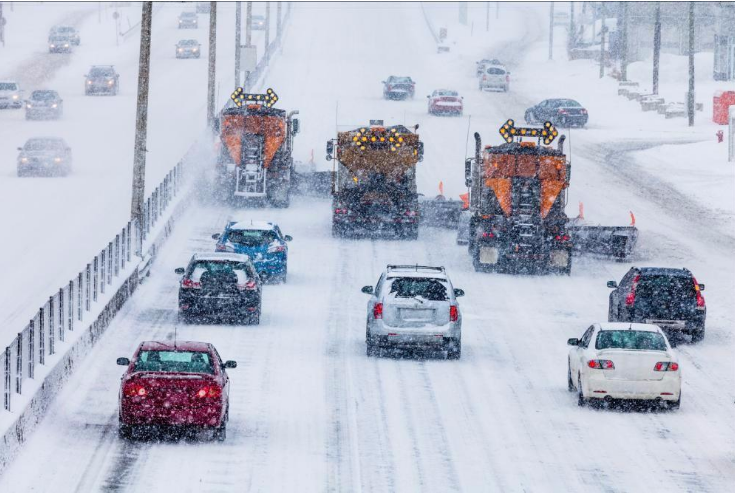
The winter months bring colder temperatures and the potential for incredible amounts of snow. Sometimes the winter conditions in our state create a scenario where roads are treacherous until they can be cleared and hazardous travel conditions dissipate. While every business strives to stay open and be available to provide services to a loyal customer base, circumstances inevitably arise where a certified food manager has to make the call to close up shop for the day.

Certified Food Managers and Snow Closures

If serious weather occurs, having a plan helps keep your staff and customers informed. If there is an active warning or alert, the certified food manager should monitor it closely. Employees on shift during a predicted storm should be notified ahead of time, and if you plan on opening but wish to adjust for lower business volume due to weather, cutting a staff member or two’s shift may help save on labor cost if guests stay home.

You need to communicate with potential guests if you plan on closing for the day or shutting down a few hours earlier than normal. In the past this used to be a major challenge, but we live in the age of the internet. Many consumers turn to social media outlets like Twitter and Facebook during winter storms to verify if a restaurant is open, so keeping your guests updated via these outlets will pass the message along to a majority of your potential customers.

Once you reopen, check to see if entryways are safe for guests to enter and leave. Clearing icy surfaces such as sidewalks and stairs can prevent slips and falls and create an inviting appeal to your restaurant. Oftentimes employee entrances can be overlooked in bad weather scenarios, so make sure that your staff has a clear and safe way to access your facility.

Finally, enjoy the weather. Food management is a stressful and time-consuming profession. Build a snowman or drink your favorite warm beverage and relax in front of the fire.

We want to know your extreme weather strategies. Do you feel obliged to open your doors no matter what conditions may be, do you play it safe or is your winter weather plan somewhere in the middle? Leave your thoughts for us in the comment section below.

Food Safe Training Guide to E. coli

Food Safe Training Guide to E. coli

Over the past few months, we’ve run a series of articles focusing on the most common causes of food-borne illnesses and product recalls. This month, we continue our series with a look at how E. coli and the related STEC bacteria strains are spread and how you can prevent your guests from consuming contaminated food.

Food Safe Training Guide to E. coli

Food Safe Training and E. coli

E. coli poisoning recently garnered national attention with a nationwide outbreak traced to Chipotle restaurants. Even with this high-profile case, E. coli is no longer ranked as a top-five cause of food-borne illness according to the CDC. It is, however, still very important to understand how to reduce the risk of spreading illness due to E. coli because according to this same study, this bacterium causes over 2,000 hospitalizations each year.

In order to control the spread of E. coli, we must first know where it comes from. The STEC strains may exist in:

  • Undercooked ground beef
  • Unpasteurized milk and cheese
  • Unpasteurized juices
  • Alfalfa sprouts
  • Unwashed vegetables

If you have worked in the food industry for a length of time, you know that you must cook ground beef thoroughly in order to kill E. coli, but some of the other causes might come as a surprise. We have discussed the dangers of serving raw milk products numerous times in the past, and we can now add the potential for E. coli poisoning to the list of risks involved with consuming unpasteurized dairy products.

Raw fruits and vegetables pose a threat that often goes undetected. While the STEC bacterium does not naturally occur in raw produce, exposure to cross contamination is a real risk. E. coli naturally occurs in the digestive tract of livestock, and it spreads through contact with the animal, its feces or raw milk. Produce can be contaminated simply by a farmer walking through a cow pasture and transferring it to the soil raw vegetables grow in by wearing the same shoes. The same can happen with farm equipment on a much larger scale.

To keep your vegetables safe, especially leafy greens and sprouts, we urge you to wash all produce that you receive before serving it to guests or incorporating it into other menu items.

Next month, our series will continue as we tackle the number-one culprit of food-borne illness, the easily spread norovirus.

MN Certified Food Manager Training and the Private Chef

MN Certified Food Manager Training and the Private Chef

When we offer MN certified food manager training, we teach students from every sector of the industry. In one of our recent sessions, we had a student whose goal was to become a private chef and offer catering services and culinary classes to individuals and small groups in their own homes. One question that was asked was if there were any special regulations that applied to private chefs that differ from the standard rules that apply to institutions, food producers and restaurants. We thought this was an interesting discussion, so we felt it beneficial to share some information that we have learned.

MN Certified Food Manager Training and the Private Chef

Image credit: Flickr

MN Certified Food Manager Training and the Personal Chef

While conducting our research, we found that there are a few different regulations that vary by county or metro area, but there are four licenses or certifications that most jurisdictions will require:

  • Minnesota Food Manager Certification
  • A License to Run a Food Establishment
  • A Catering License
  • A Federal Tax ID (EIN)

If you’re considering becoming a personal chef, we suggest that you contact your local government office to find out which licenses you need in your particular jurisdiction. If you need your MN certified food manager training, we would be happy to tailor a course designed specifically for your catering venture.

There are a few other aspects of being a personal chef that differ from regular catering services. While in many cases it is acceptable to prepare food for clients at their home or other location, you should be aware that most jurisdictions will require you to have a preparation and storage facility that can be inspected by the health department. This presents a unique challenge for many personal chefs whose clientele consists of a small number of people.

We have been asked if private chefs are allowed to use their own personal home kitchens to prepare food before transporting it to a client’s location. Unfortunately, this is not an acceptable solution according the health inspector we discussed this scenario with. Many private chefs solve this problem by leasing space from other caterers with industrial kitchens or local restaurants who are willing to allow them access to their kitchen before they begin their service for the day.

Personal chefs are not the only unique part of the food industry. If you’re considering any food based business that doesn’t quite conform to industry standards, please leave your ideas in the comments section and we’ll do our best to cover it in a future article.