Seasonal Staff and Food Safety Certification MN Requirement Training

Seasonal Staff and Food Safety Certification MN Requirements


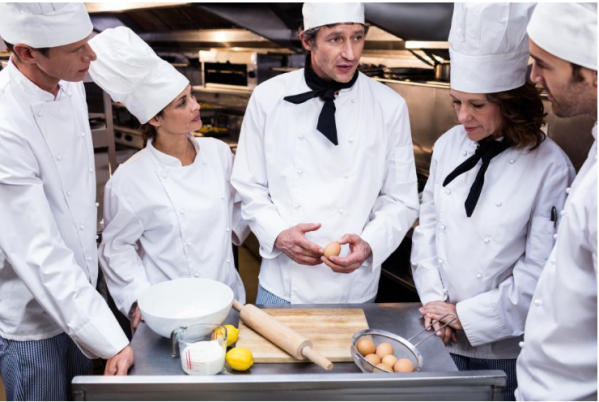
Many restaurants and food-production facilities will take on seasonal help to assist with higher volume during the busy summer season and to account for full-time employees’ vacation requests. With so many incoming part-time staff, there are difficulties when it comes time to take care of training, orientation and food safety certification MN requirements. At Safe Food Training, we have a few tips to help transition your seasonal staff into your regular staff efficiently so that you will lose as little time as possible bringing them up to speed.

Integrating Seasonal Staff into Your Operation

From what we have heard during our interactions with local food industry professionals, we have encountered three common problems that are inherent in hiring seasonal workers.


  • Making sure each new hire understands company policies
  • Training new employees efficiently
  • Getting each new employee the proper food safety certification MN requirements

Many companies forgo a formal orientation session for their seasonal workers. They feel that paying them to attend an orientation seminar is unnecessary since they may only be around for a small amount of time. We disagree. We think that it is important to have everyone on the same page as far as knowing what your facility’s operating procedures are. Taking care of this in one session where all of your seasonal help is in attendance will save valuable time rather than explaining each rule as workplace situations arise.


The opposite may be true when it comes to training your new hires. Many people are hands-on learners or hands-on teachers. The nature of the food industry requires some hands-on learning in order to understand how to get things done right. Breaking down your seasonal hires into smaller groups, or even setting up one-on-one training sessions will get them up to speed much faster than large on-the-job training groups.


Finally, you will have to make sure that all of your seasonal hires have the proper food handler permits and food safety certification MN requirements. When it comes to ensuring that all of your new employees have the necessary certifications, Safe Food Training is more than happy to help. We can set up group training sessions at your restaurant, hotel or any other type of food preparation facility. We can take into account the specific nature of your business and develop a food safety certification MN course that directly addresses the unique needs of your company’s operations.


Are you a food-production business that finds it necessary to take on several seasonal staff members during the summer months? If you have any tips for your fellow food-industry professionals to help smooth the process of integrating your temporary employees, please leave them in the comments below.
MN Certified Food Manager ScoopingFlour Scooping

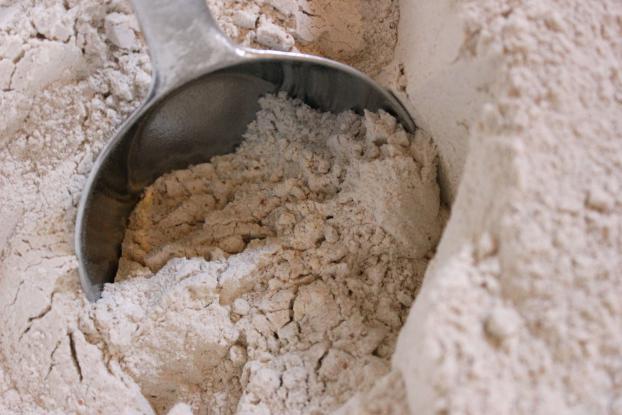
MN Certified Food Manager and Voluntary Flour Recalls

MN Certified Food Manager ScoopingFlour Scooping

Image credit: en.wikipedia.org

With yet another major recall of a food production staple in the past month, this time for flour, we thought we should revisit how the MN certified food manager can keep the food safe in an industry where there are times when the safety of the food supply is uncertain.


MN Certified Food Manager and Voluntary Product Recalls

One of the unique aspects of the recall of flour produced by General Mills is that the recall is being labeled as “voluntary.” Statistics from an E.coli outbreak with cases dating back to December 2015 indicate that many of those sickened had consumed products made with certain brands of flour distributed by General Mills. There is also evidence that many of those sickened had eaten some form of raw cookie dough or uncooked product containing flour. At last report, there have been no traces of E.coli found at the processing facilities where the flour is distributed, but we still think it is wise to err on the side of caution in this case.


According to Food Safety News, this recall may extend further than just grocery stores, restaurants and retailers. Some of the potentially contaminated product may have been shipped to bulk suppliers. In order to ensure that your flour is safe to use in baked goods, we suggest you take the following steps:

  • Contact your supplier to see if your flour is produced by General Mills
  • Never serve food product that contains uncooked flour
  • Return or throw away any product that has been affected by the recall

Most major ingredient suppliers should know where your product comes from. Many times, major manufacturers produce the same product for retail and bulk sales under different labels. This means that there is a chance that you have a recalled product in your inventory that is packaged under a different brand name. In this case, diligence is important to ensure that you do not serve contaminated product.


Due to the nature of the way grain is harvested and flour is produced, one can never assume that it is always safe to consume. All products that contain flour should be cooked to kill any bacteria that could possibly exist. Most bread products, baked goods and sauces thickened with flour should reach an internal temperature of 165 degrees or more to make sure any traces of E.coli have been destroyed.


Finally, if you do have a contaminated batch of flour that is listed in the recall notice issued by the FDA. Do not hesitate to throw it away immediately. It is better to be safe than to sicken one of your customers.

Minnesota Certified Food Managers Alert: For Restaurant Fire Hazards

Minnesota Certified Food Managers Alert: For Restaurant Fire Hazards

Minnesota Certified Food Managers Alert: For Restaurant Fire Hazards

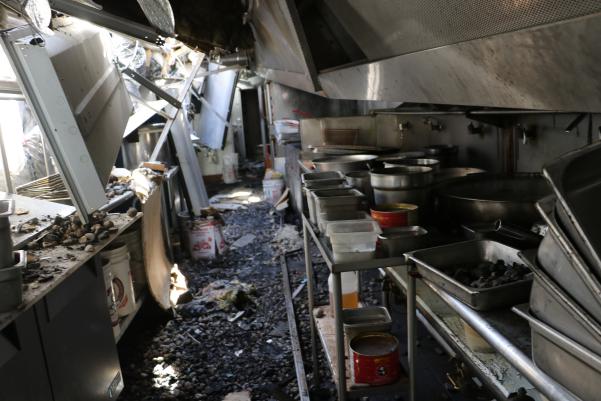
Image credit: Futrell Fire Consult & Design, Inc. – This fire in a Minnesota restaurant started during the cooking process in the cook line under the exhaust hood. The suppression system failed to suppress the fire, but the manual pull station was not used by the occupants. The fire burned through the roof and the roof collapsed.

As MN food safety managers we are trained to create a safe eating experience for our guests. In the strictest sense, that means delivering food safe for human consumption. But sometimes we become so focused on one issue that we don’t see the 246 ton fire breathing dragon in the room! As owners and managers of a public gathering place we have additional safety responsibilities to both guests and employees. That’s why Safe Food Training has asked, Scott Futrell, a local fire protection consultant to discuss some of the fire safety issues owners and managers should consider. This is the first in a series of blogs that will explore fire safety in the food preparation environment.


Don’t overlook fire safety in your kitchen and restaurant.


According to the National Fire Protection Association, between 2006 and 2010, fire departments in the United States responded to an average of 7640 structure fires per year in eating and drinking establishments.  That is almost twenty-one fires every day.  Annually these fires cause two civilian deaths, 115 civilian injuries and $246,000,000 in direct property damage.  That does not include business interruption losses.  Fifty-seven percent of these fires involve cooking equipment.  Seventy-one percent of the fires remain relatively small and the failure to properly clean was a factor in twenty-one percent of the fires.1


In Minnesota, in 2014, 166 structure fires in Public Assembly Properties were reported and 44% of those were in the kitchen/cooking area.2


What can you do to protect your investment or your facility?


In future blogs we’ll explore these general topics in more detail.

• Keep equipment free of grease build up. • Ensure creosote is completely removed from the exhaust system. • Never store combustible materials near cooking equipment. • Always operate your exhaust system whenever the appliances are pre-heating, heating, cooking, or cooling. • Never operate filter-equipped exhaust systems without the filters in place.


If you have any questions about fire safety in the food preparation environment that you would like Scott to discuss leave a comment.

ABOUT THE AUTHOR: Scott A. Futrell, PE, FSFPE, CFPS, SET, CFEI, is a fire protection consultant with Futrell Fire Consult & Design, Inc., in Osseo, Minnesota and has over 40 years’ experience designing, specifying, and investigating fire protection system related losses. He is a Fellow in the Society of Fire Protection Engineers, co-author of “Designers Guide to Automatic Sprinkler Systems”, and can be reached by e-mail at: scottf@ffcdi.com, or visit www.ffcdi.com.


[1] Ben Evarts, National Fire Protection Association, Structure Fires in Eating and Drinking Establishments, November 2012.

2 State Fire Marshal, Fire in Minnesota 2014


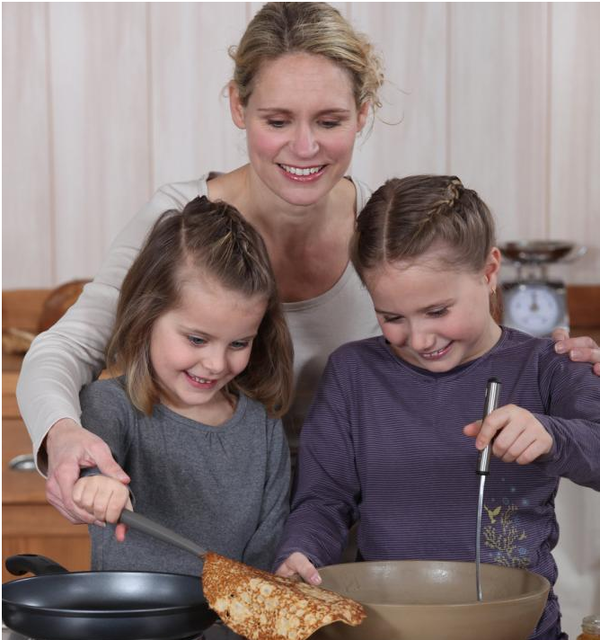
A servSafe MN Tribute to Moms

A ServSafe MN Tribute to Mom

Whenever we lead a ServSafe MN training session, we hear stories about local chef’s inspirations and culinary influences. More often than not, some of the most renowned chefs in the area trace their culinary roots back to the times of childhood watching their mother cook meals that they can only hope to duplicate. Mother’s Day occurs every May, and to honor our favorite culinary influence, we’d like to pay tribute to moms everywhere.


ServSafe MN tribute to Mom


Some of our fondest memories from early childhood to returning home from college for Christmas break involve many of the best meals that we have ever eaten. The countless hours of preparation that mothers have put into perfecting their signature recipes, shopping for the best ingredients and preparing delicious home cooked meals with care have given many famous chefs the fine examples that have driven their careers.


Mothers everywhere have also taught us to have respect for the traditional aspects of creating our cuisine. Numerous chefs that we have talked to often refer to “sticking close to their roots” and driving themselves to use traditional cuisine to bring people together, just like mom did with a meal cooked to perfection in a setting where arguments, grudges and the concerns of the day could vanish for at least a little while.


One of the greatest things that mothers have instilled in their children, in the culinary profession or otherwise, is the will to put their heart and soul into everything that they do. There was more than cumin, garlic, oregano and tomato paste in mom’s secret meatloaf recipe. There was dedication, love and a desire to see that her family received everything that they needed. This has rubbed off on countless servers that strive to see that their guests have a great dining experience, cafeteria workers in assisted living facilities who go the extra mile to see that their charges can enjoy a simple meal and ServSafe MN chefs that take care to prepare meals tailored to VIP guests’ tastes.


So, in short, we just want to say thanks to mothers everywhere who have taught us the love of food, cultivated our creative side and instilled in us the work ethic that has led us to where we are today.