Posts

ServSafe prep station

Setting Up a Prep Station to Proven ServSafe Standards

Keeping your workstation clean and organized can lead to more efficient production and help increase food safety. Properly setting up and utilizing your workspace to ServSafe standards can also help keep your food free from potential contaminants.

ServSafe MN Guide to a Safe Prep Station

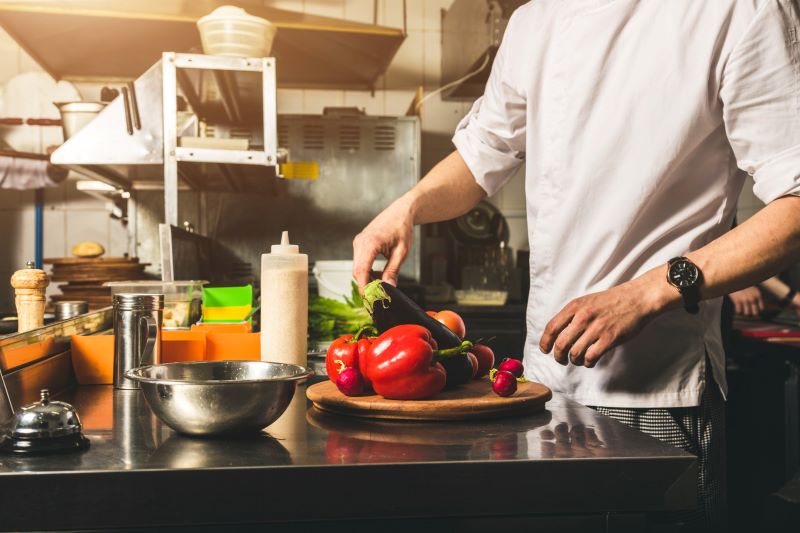
Before you begin setting up your workstation, it’s essential to ensure it’s clean and sanitized. This simple step can prevent leftover food particles from a previous project from contacting your clean utensils, cutting boards, and ingredients.

ServSafe Prep Station
Image credit: xartproduction via 123rf

Secondly, you should ensure that your ServSafe stocked prep station has the necessary supplies to keep your space clean. According to ServSafe MN, these supplies may vary by job, but here are a few essentials:

  • Clean, dry towels
  • Properly mixed sanitizer solution
  • Readily available garbage receptacle

Your dry towel should be easily accessible at your workstation and stored away from food product until you need it. Remember to store your sanitizer solution and garbage receptacle away from food and below your workstation when placing your sanitizer solution and garbage receptacle. Storing these at counter height or above your workspace dramatically increases the risk of garbage or sanitation chemicals coming into contact with food product.

Proper chemical sanitizer mixing is essential. We will examine the different approved sanitation methods in more detail in the future, but for now, you may wish to review the Minnesota Food Code sanitizer fact sheet quickly.

Now that you have your workstation set up, we have four suggestions for keeping it safe and sanitary throughout the day.

  • Exchange soiled towels frequently.
  • Wash utensils between tasks.
  • Sanitize your workspace between each task
  • Prepare raw meats and seafood last

Being diligent in these areas will greatly reduce the risk of foodborne illness. We must take care of our everyday habits to ensure that all products produced are safe, healthy, and free of contamination.
CFPM Installment On Under Cooked Proteins

It’s Here: The Final CFPM Installment On Under Cooked Proteins

In the final installment of our series on serving under cooked animal product, we will discuss the protein that is almost always ordered under cooked by CFPMs. Breakfast customers rarely order eggs well done. They are critical elements in many sauces and give custards rich textures. Looking at the Minnesota food code temperature rules, we can see that eggs cooked for hot holding must reach a temperature of 155 degrees for at least 15 seconds. How does this apply to over-easy eggs, Béarnaise sauce, and ice creams where the egg product never reaches 155 degrees?

CFPM Installment On Under Cooked Proteins
Image credit: J. Patrick Fischer via Wikipedia

CFPM and the Ubiquitous Under Cooked Protein- The Egg

If you work in a restaurant or institution that serves breakfast, you will receive numerous orders for eggs that are over-easy, sunny side up, or soft-boiled. These orders will leave the egg below the 145-degree temperature requirement stated in the food code for eggs prepared for immediate consumption. It is perfectly acceptable to cook and immediately serve an over-easy egg to a guest. The key is that they have to serve it immediately after cooking. Hence, you must include a warning if you serve undercooked eggs in your restaurant. “There may be a risk of foodborne illness when certain items are ordered undercooked.”

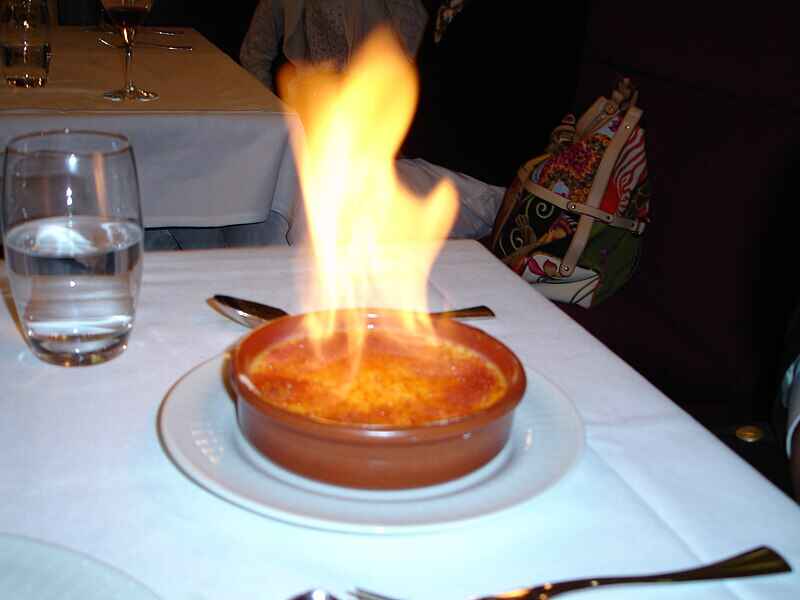
How do these rules apply to products like Hollandaise sauce, crème brulee, or ice cream? These items:

  • have eggs
  • have never reached 155 degrees
  • are not served immediately

The Minnesota food code insists that pasteurized eggs substitute raw eggs. Many chefs argue that liquid pasteurized eggs do not work for particular items. Thanks to modern advancements in sanitation and pasteurization, you can purchase whole, raw, pasteurized shell eggs. Although the liquid form of pasteurized eggs is the most common, your product supplier should have whole, raw pasteurized eggs available.
While discussing raw eggs, let’s take a brief moment to talk about homemade mayonnaise and aioli. These are two egg-based products that have never been cooked. If you serve house-made mayonnaise:

  • only use liquid pasteurized eggs
  • always store it below 41 degrees.

Remember, you should never hold undercooked eggs in a warmer or a steam tray for service.

Expert Certified Food Manager Warning About Serving Raw Seafood

Expert Certified Food Manager Warning About Serving Raw Seafood

Earlier this month, we discussed the dangers of serving undercooked ground beef, even at customer request. This week, we’d like to look at a few issues that a certified food manager must know when they serve undercooked or raw seafood products.

Expert Certified Food Manager Warning About Serving Raw Seafood
Image credit: ralph via pixexid

Certified Food Manager Tips for Properly Handling Raw and Undercooked Seafood

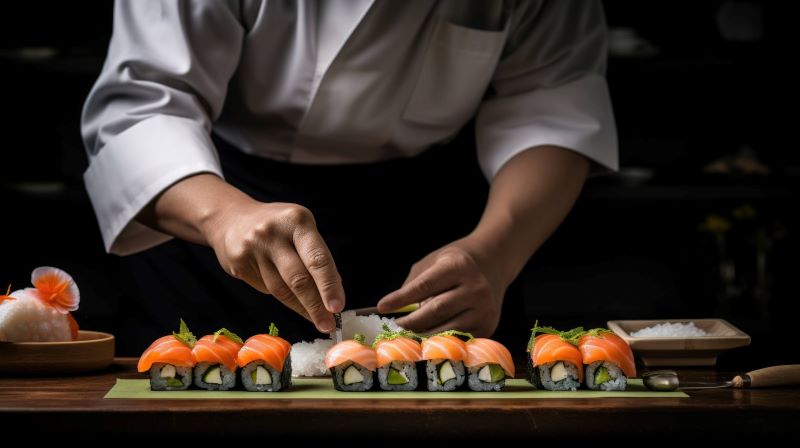
Raw seafood can be a susceptible product. A food manager must be vigilant to keep it safe whether you plan to serve sushi or fully-cooked fish and chips. If your facility prepares or serves any seafood product, you must serve the freshest fish and shellfish possible. Once you have received your product, keep it out of the danger zone and as cold as possible. We recommend storing your raw seafood product under ice, even under refrigeration.

Suppose you plan on serving raw or raw-marinated seafood products such as sushi, ceviche, lox, or seafood tartare. In that case, you must follow specific guidelines in the Minnesota food code. Except for certain types of fresh tuna, you must freeze any seafood you plan to serve uncooked first. This will help eliminate parasites. If your product is kept at a low enough temperature for an extended period, common parasites in most seafood will be killed. Make sure that you freeze your product before preparation at:

  • -4 degrees Fahrenheit for 7 days in your freezer
  • -31 degrees Fahrenheit for 15 hours in a blast chiller

There is an exemption to the rule if a certified food manager is serving raw or raw marinated tuna. Despite this, we strongly suggest serving the freshest and coldest product possible.

As we discussed last week concerning burgers, some guests will request their seafood served undercooked. The seafood should be cooked to a temperature of 145 degrees and should be held at that temperature for 15 seconds. While you may still serve undercooked seafood at your customer’s request, we strongly advise you to adhere to the Minnesota food code when serving cooked seafood.

Menu Warning regarding Seafood

Finally, if a certified food protection manager plans to serve raw seafood, you must identify and inform your customers that your menu items are raw or undercooked. As with steaks and burgers, this can be quickly done by placing an asterisk next to the menu item, referring to a warning at the bottom of each menu page.

MN Food Safety And The Medium Rare Cheeseburger

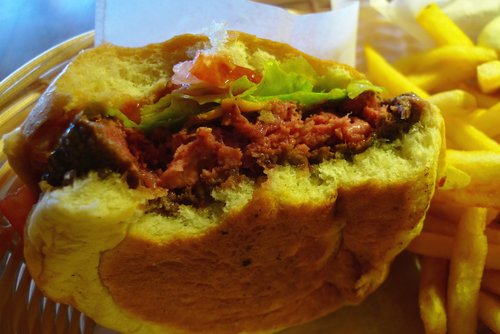
We stay connected to the local food industry. During our visits to several restaurants we’ve noticed an alarming trend. Many restaurants are serving raw and undercooked animal products, but may not be doing so safely. This week, we’ll begin a series of articles aimed at helping you deal with raw and undercooked animal proteins. For the first article in the series we’ll discuss how you balance MN food safety with the ubiquitous request for a medium rare cheeseburger.

food safety certification and medium rare Cheeseburger
Image credit: Flickr

The Medium-Rare Cheeseburger Food Safety Dilemma

On more than one occasion, the waiter has asked us if we would like our cheeseburger cooked with or without a little pink. The first issue we’d like to deal with is what temperature pink actually is. Pink is not a temperature. It is in fact just a color. There can be many factors that change the internal color of your beef patty. The only accurate way to find the internal temperature of a burger is to use a probe thermometer. If you have completed a food safety certification course, you will know that a beef patty does not meet the cooked criteria unless it reaches an internal temperature of:

  • 150 degrees for one minute
  • 145 degrees for thee minutes

We are often asked by Food Safety Managers if it is legal to serve n undercooked cheeseburger that is not cooked according to Minnesota Food Code requirements. According to the current regulations it is acceptable to serve raw or undercooked animal product if:

  • A customer requests it
  • The menu clearly states that the product is undercooked
  • An asterisk next to the menu items directs the consumer to a footnote. Which states the dangers of consuming undercooked animal product.

Some of the language in the regulations can be confusing. Since we are specifically discussing undercooked burgers, we’d like explain how to deal with ground beef patties. If you’re comfortable with honoring a consumers request to serve an undercooked cheeseburger, then you legally may do so. To make sure that you are in full compliance with the law, include the asterisk and warning of the dangers of consuming raw or undercooked beef next to every burger item on your menu.

Solving the Dilemma

We strongly suggest that you do not offer a medium rare or undercooked burger on your menu. In fact,  we’d suggest that your servers do not even ask if your guests how they want their burger cooked.

If you are uncomfortable with serving an undercooked burger, simply explain to the guest that you cannot honor their request. Because your establishment adheres to the Minnesota Food Code standards.