Timely ServSafe Food Manager Guide To Preventing A Halloween Nightmare

Jill Anderson

Vampires, goblins, zombies, the ghost under the bed, and peanuts: Halloween is coming, and these terrifying evils will be everywhere. We all love a good scare this time of year, but no costumed ghoul frightens parents more than hidden allergens in Halloween treats. Let’s do a ServSafe food manager review for lurking Halloween allergens.

 ServSafe Food Manager Guide to Preventing a Halloween Nightmare
Image credit: Jill Anderson via Flickr

ServSafe Food Manager Tips For Allergy-Safe Halloween Activities

Parents are picky when it comes to where their kids trick or treat—especially those parents with children with severe food allergies. Halloween is one of the biggest holidays for ServSafe food managers to attract children and families to their facilities. Halloween parties are frequently held in school cafeterias or banquet halls. Our challenge is ensuring we don’t inadvertently serve items that could cause a reaction. Here are a few ideas:

  • Identify potential allergens used in your facility
  • Provide an ingredient list for all treats
  • Serve only pre-packaged food from reliable sources

It helps to ease parent’s minds when they know what their kids are putting in their bodies. If you have food allergies, have kids with food allergies, or know someone who does, then you probably have felt that sense of panic when someone you know could have a severe allergic reaction. The feeling is incredibly intense when ingesting something with unknown ingredients is possible. Knowledge and full disclosure help ensure little goblins choose allergen-free Halloween snacks.

The first step for a ServSafe food manager considering a Halloween event should be to post if your facility processes or uses common allergens such as peanuts, shellfish, wheat, and dairy. Following this up with posted ingredients for each item served will allow parents to make good choices in finding allergen-free Halloween treats. You don’t necessarily have to give away all your recipes and baking secrets. Simply informing party attendees of the ingredients used prevents accidental ingestion of allergens during a ServSafe food manager Halloween event.

The Safest Option

Finally, serving prepackaged Halloween treats from reliable sources with clearly labeled ingredients can be the safest way to host a Halloween event and minimize the risk of guests coming into contact with allergens. We know that many restaurants and other outlets use Halloween to expose as many people as possible to their product or menu items, but sometimes playing it safe and providing prewrapped candy and allergen-safe Halloween treats will show parents that you’re looking out for their children’s health. They may return to sample your cuisine another time.

Do you host Halloween events, and if so, what steps do you, as a ServSafe food manager, take to serve items free from allergens?

Certified Food Manager Advice: How To Prevent Hazardous Slip Injuries

MN Certified Food Manager

How do managers keep staff from slipping?

To prevent slips and falls, a Certified Food Protection Manager (CFPM) ensures everyone wears non-slip shoes and uses rubber floor mats with holes to prevent water from pooling. They also make sure the floors are cleaned every day with the right soap and that any spills are wiped up right away.

Keeping your customers’ food safe is a big job, but keeping your workers safe is just as important. Slipping and falling is one of the main reasons kitchen staff miss work. Nationally, falls are a major workplace hazard, resulting in 844 deaths and nearly 480,000 injuries that require time off in 2024. In fact, falls account for 24% of all preventable deaths in the United States. Here is how a food manager can help prevent these injuries and keep the kitchen running smoothly.

The Certified Food Manager’s Role in Preventing Slip Injuries

As a manager, your main job is to show the team that staying safe is the top priority. Preventing accidents is something everyone has to do together. It starts with you giving your staff the right gear and clear instructions so they can work safely.

Most slips happen because of the wrong shoes. Make sure everyone follows these simple rules:

  • Wear the right shoes: Use only non-slip shoes designed for kitchen work.
  • Check the grip: Pick shoes that can handle wet and oily floors.

Even with the best shoes, you still need to set up the kitchen correctly. Use heavy-duty rubber floor mats with drainage holes. These allow water and grease to sink below the surface rather than pooling on top, keeping the walking area much safer for everyone.

The Certified Food Manager’s Role in Preventing Slip Injuries

As a manager, your main job is to show the team that staying safe is the top priority. Preventing accidents is something everyone has to do together. It starts with you giving your staff the right gear and clear instructions so they can work safely.

Most slips happen because of the wrong shoes. Make sure everyone follows these simple rules:

  • Wear the right shoes: Use only non-slip shoes designed for kitchen work.
  • Check the grip: Pick shoes that can handle wet and oily floors.

Even with the best shoes, you still need to set up the kitchen correctly. Use heavy-duty rubber floor mats with drainage holes. These allow water and grease to sink below the surface rather than pooling on top, keeping the walking area much safer for everyone.

Clean Mats For Safety

Prevent slip and falls
Learn how to keep your employees safe on the clock.

To keep everyone safe, managers must also clean mats and the floors underneath them every day. Grease and liquids build up on the mats over time, making them just as slippery as the floor itself.


Use a good floor cleaner to cut through grease and keep the mats from sliding around. It is best to let the floor dry completely before putting the mats back down. If you trap water and soap under the mats, they stay wet longer and can cause someone to slip during the shift.

Always wipe up spills right away. Don’t assume a floor mat will catch everything. Ignoring a small spill could result in a painful injury to one of your coworkers.

While these daily steps are important, the best way to stay safe is to get proper training.

Pick the Best Class for Your Schedule

Whether you work in a kitchen in St. Paul or a restaurant in Minneapolis, safe habits start with good training. To get your Minnesota food manager license, you can choose between in-person and online classes. Both teach you what you need to know, but they work in different ways:


Details

In-Person Class

Online Class

The Setting

A quiet classroom where you can talk with others.

Study at your own pace at home or work.

Passing the Test

More people pass because they can ask the teacher questions right away.

Good pass rates, but you have to be disciplined on your own.

Help with Your Kitchen

We can talk about the specific safety setup in your kitchen.

General safety rules that work for every kitchen.

Who is it for?

People who learn best by talking and doing hands-on work.

People with busy schedules or who live far away.

Ready to Get Certified?

Safety is a habit, and the best way to keep your kitchen compliant and your staff injury-free is through up-to-date certification. You can choose the class that works best for your schedule and get the personalized training you need right away. View the full schedule, or secure your spot for one of our next in-person classes today!

Common Food Safety Questions

Some of the most typical questions we get include:

Q: What is the primary service that Safe Food Training offers?

A: We offer 8-hour classes for food professionals across Minnesota to get their food manager license. We also provide the continuing education hours you need to keep your license current.

Q: Who should take these courses?

A: Anyone in Minnesota who needs a food manager license for their job or business. It is also for managers who need to finish their 4 hours of continuing education before their 3-year license expires.

Q: What does "personalized training" mean?

A: Our instructor, Jeff Webster, makes sure the class is useful for you. We talk about the specific safety issues you face in your workplace, whether you run a school kitchen, a restaurant, or a catering company.

Q: What happens if I do not pass the Certified Food Protection Manager exam on my first attempt?

A: We want you to succeed. If you don’t pass the test the first time, you can come back to a future class and retake the exam for free.

Latest ServSafe Guidelines For Disastrous Listeria

Serve Safe Certification Guide to Listeria

When we prepare for ServSafe certification classes, we monitor food product recalls and FDA warnings concerning food-borne illness outbreaks. In the last three months, nine people have died, and nearly 60 patients have been hospitalized with Listeria. The source of this outbreak was tracked to meats sliced at delis, including Boar’s Head brand liverwurst, which was contaminated with Listeria and sickened people. With Listeria impacting food safety and being prevalent in the news, ServSafe managers must understand this bacterium, how it spreads, and how to prevent it from sickening customers who consume your food products.

ServSafe Certification Guide to Listeria
Image Credit: by jpalinsad360 thru www.flickr.com

ServSafe Certification Guide to Listeria

Listeria is a unique case for food-borne illness suspects because, unlike many other bacteria, it grows and multiplies at much colder temperatures than other contaminants. This means that any product contaminated with Listeria can be dangerous, even if stored in the refrigerator. Listeria bacteria can remain active at temperatures that approach and dip below freezing.

The low breeding temperature of Listeria makes it vital that ServSafe managers handle food properly. Ensure you rinse raw produce thoroughly, cook all prepared foods to the proper temperatures, and always clean and sanitize prep surfaces after preparing raw foods. Some of the most common foods that are responsible for Listeria outbreaks include:

  • Raw dairy and soft cheeses
  • Raw sprouts
  • Hot dogs and deli meats
  • Smoked or cold-cured seafood

Even though these are the most common sources of Listeria, we have noticed an increase in recalls and outbreaks traced back to frozen vegetables and fruits. We urge you to monitor FDA recalls. You can easily do this by viewing the FDA widget on the right-hand side of our blog page.

While ServSafe managers cringe at discussing the effect of Listeria poisoning, it is vital to understand the symptoms to identify the cause of a foodborne illness. Listeria poisoning incubates between a few days to a few months, so symptoms can arise long after tainted food has been consumed. Symptoms can include:

  • Fever
  • Soreness in the neck
  • Disorientation
  • Reduced strength
  • Vomiting

A quick read of Listeria poisoning symptoms closely resembles a list of flu symptoms with a few exceptions. Listeria attacks the nervous system as well as the digestive system. When you hear about these symptoms, there is a chance that Listeria is the culprit.

What to Do If You Have A Listeria Outbreak

If you do have an unfortunate incident involving Listeria at your establishment, it is essential to cooperate with your local health department. The bacteria could have originated from one of your suppliers, so giving the health department all your information can help prevent further cases.

If you want to learn more about Listeria and other bacteria, we offer ServSafe certification classes online or led by a qualified instructor.

Latest Tips That Will Help With MN Food Safety Certification Exams

An exam with the word "pass" on it, multiple choice

To pass the Minnesota Certified Food Protection Manager (CFPM) exam, you must score at least 70% to 75% (depending on the provider) on a proctored, 85-question multiple-choice test. The most effective way to ensure a first-time pass is to attend an in-person, 8-hour training session that covers the current FDA Food Code and Minnesota-specific health regulations.

Preparing for your food safety certification exam shouldn’t feel like a trip to the dentist. While the Minnesota Department of Health (MDH) requirements are strict, the exam is manageable if you know exactly what the state is looking for. At Safe Food Training, we achieve a pass rate of over 90% for our in-person students by focusing on the “heavy hitters”—the topics that consistently appear on the test.

Understanding the Minnesota Exam Landscape

In Minnesota, getting your “food license” is a two-step dance. First, you pass a nationally accredited exam, Such as those offered by Safe Food Training. Second, you apply to the Minnesota Department of Health for your state ID card using your passing certificate.

The exam itself isn’t just about common sense; it’s about technical standards. You’ll need to memorize specific numbers and concepts that are non-negotiable in a St. Paul or Minneapolis kitchen.

The Technical "Heavy Hitters"

Most people who struggle with the exam do so because they rely on “how we’ve always done it” in their specific kitchen rather than the textbook FDA Food Code.

Employee Health Reporting: This is a big one. As a manager, you need to know when to “restrict” an employee (keep them away from food) and when to “exclude” them (send them home entirely) based on symptoms such as jaundice, a sore throat with fever, or vomiting.

The Storage Hierarchy

Cross-contamination is a major focus area. You’ll likely see a question about organizing a reach-in cooler. Always remember that the minimum internal cooking temperatures dictate the shelf order:

  1. Top: Ready-to-eat foods (produce, cooked items).
  2. Middle: Seafood and whole cuts of beef/pork (145°F).
  3. Middle-Low: Ground meats and ground fish (155°F).
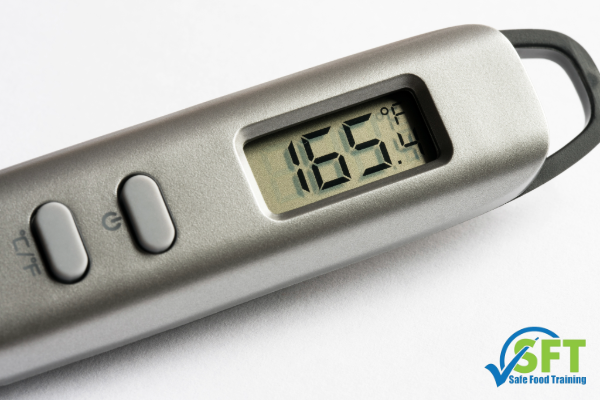
  4. Bottom: Whole and ground poultry (165°F).

Choosing Your Training Path: In-Person vs. Online

We offer both formats, but there’s a clear winner when it comes to passing the first time without the stress of technical glitches or home distractions.

Feature

In-Person Training

Online Self-Paced

Pass Rate

Over 90%

Varies

Focus

Distraction-free (No “busy kitchen” interruptions)

Prone to home/work distractions

Testing

Immediate testing while the information is fresh

Must schedule a separate proctor

Support

Instant Q&A with Jeff Webster

Email or chat-based support

Format

8-hour deep dive

Flexible, but takes self-discipline

3 Pro-Tips for Exam Day

  1. Read the Full Question: The exam loves to use words like “Except,” “Never,” or “Always.” Don’t jump to the first “right” answer you see. Read all four options before marking your choice.
  2. Think Like a Manager, Not a Chef: Sometimes, what we do during a Friday lunch rush isn’t the “textbook” answer the MDH wants. Always choose the answer that prioritizes public health and safety over speed or food cost.
  3.  Use the Process of Elimination: Usually, two of the four multiple-choice options are obviously wrong. Narrowing it down to two choices gives you a 50/50 shot, even on the toughest questions about specialized processes like HACCP.

Final Step: The State Application

Pass or fail?
Tips to pass your next CFPM exam!

Passing the test is a huge win, but you aren’t a “Certified Food Protection Manager” in the eyes of the state until you send in your formal application to the Minnesota Department of Health (MDH). At our in-person classes, we walk you through this paperwork so you don’t hit a snag at the finish line.

Ready to Get Your Minnesota Food Manager Certification?

Don’t leave your career to chance. Join Jeff Webster for a personalized, friendly, and highly experienced 8-hour training session. We provide all the materials, the instruction, and the proctored exam in one convenient day. We hold classes regularly in the Twin Cities, Rochester, Duluth, and beyond.

Contact Us Today:

Common Questions About MN Food Safety Exams

 We get a lot of questions. Here are some that we get the most about passing exams:

Q: What is the primary service that Safe Food Training offers?

A: We specialize in providing personalized, 8-hour certified food protection manager licensing courses tailored for food professionals across Minnesota. We also offer dedicated continuing education training alongside our full certification course.

Q: Do you guarantee that I will pass the certification exam?

A: We’re committed to providing expert training that thoroughly prepares you for the exam. However, we don’t guarantee a passing result, as we believe in maintaining transparency and avoiding such claims.

Q: What happens if I don't pass the exam on my first attempt?

A: We’re dedicated to your success. If you don’t pass the exam on your first try, we offer a retake of the course and exam at a future regularly scheduled session. Our goal is to provide the support you need to become a Certified Food Protection Manager.