
Food Safety Advice For Hosting Down Home Wild Game Dinners

Food Safety Advice For Hosting Down Home Wild Game Dinners

Hunting season is upon us for water fowl and will soon open for deer. Fall hunting is a great Minnesota tradition, and many food safety managers love to celebrate the season with hosting wild game dinners. When hosting an event where wild game is served, there are a few special procedures food safety managers need to pay attention to, so it’s important to review the special regulations for wild game dinners.

Food Safety Advice For Hosting Down Home Wild Game Dinners
Image credit: foodandmore via 123rf

Wild Game Dinners and Food Safety Protocols

If you’re planning on hosting a wild game dinner, it’s important to note that these types of dinners can only be held for charity and not at for profit events. This means that if you’re a certified food manager wanting to serve locally hunted or trapped game in your restaurant, you’ll have to find a source that’s been approved for sale for food service purposes. Fundraising events, however, can host wild game events as long as the donated game meets the proper criteria. Game served a wild game dinners must meet the following food safety standards:

  • Has been legally hunted or trapped
  • Is pure, unground animal meat
  • Was properly cleaned at a Minnesota Department of Agriculture licensed facility
  • Was eviscerated less than two hours after harvest

To be legally hunted, the animal must have been taken in season and in an area where hunting is allowed by licensed hunters. Any wild game animal, be it bird, deer or other game, taken illegally cannot be offered at these events. They also must be cleaned in a facility licensed by the MDA to ensure procedures have been followed to prevent cross contamination and that other food safety protocols have been followed. Game that was processed at a private residence or unlicensed facility cannot be served. It’s also important to make sure the animal is processed as soon as possible after it was caught. Hunters have a two-hour window to make sure remove the bowels of any animal intended for a wild game dinner.

On a final note, it’s also required that a full receipt be obtained by the organization accepting the wild game donation. This receipt must contain the name, address and license number of the donating party as well as the date the meat was obtained.

Do you host charitable fundraisers that include serving wild game? Were you aware of the special food safety regulations wild game dinners?
New MN Food Code Guide to Serving Highly-Susceptible Groups

New MN Food Code Guide to Serving Highly-Susceptible Groups

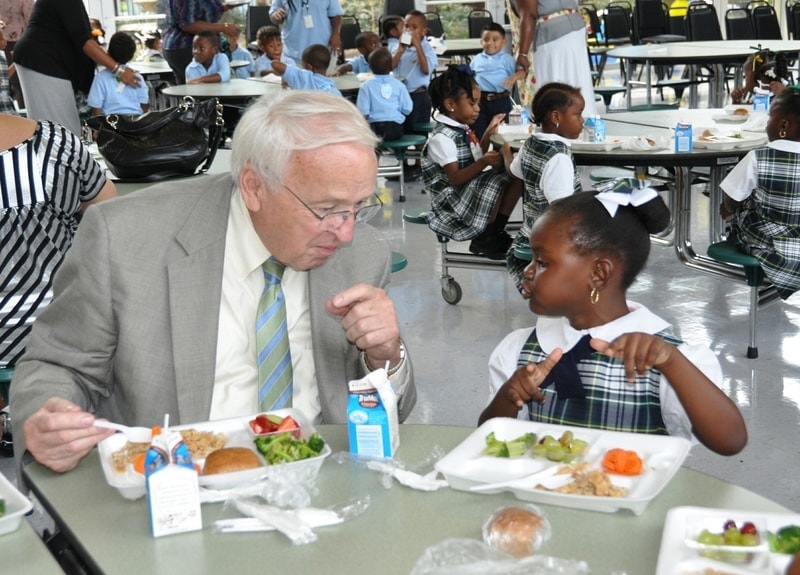
Certified food protection managers equip themselves with the knowledge and tools to safely prepare food for their guests, but certain groups require additional precautions. The Department of Health has taken notice and added a section in the new MN food code guide to serving highly-susceptible groups, outlining the precautions that must be taken when serving these groups.

New MN Food Code Guide to Serving Highly-Susceptible Groups
Image credit: U.S. Department of Agriculture via Wikimedia Commons

MN Food Code Guide to Serving Highly-Susceptible Groups

The language in the new code defines highly-susceptible groups as “…immunocompromised, pre-school aged children, or older adults.” If you’re a certified food manager at a hospital or other medical facility, care center for aging adults, pre-school or any facility that serves these groups, you should be aware of extra precautions you must take to prevent bacteria from reaching the people in your care.

The food code outlines a few precautions:

  • Undercooked eggs animal proteins may not be served or offered for sale
  • Raw eggs broken for preparation must be used immediately
  • Bare-hand contact with ready-to-eat foods is prohibited
  • Unpasteurized juices may not be served to children under the age of nine
  • Food and food packages served to medical patients in isolation cannot be re-served or reused

If you prepare meals for any of these populations, make sure to cook all products to the proper temperatures, and always check the internal temperature of animal proteins using the proper thermometer. It is also important to be aware of any food in the danger zone. Prevent raw meat and eggs from sitting at room temperature for any length of time, and always make sure your meals are served as soon as possible after preparation. This will prevent bacteria growth that could result in severe foodborne illness for compromised individuals.

Finally, if you serve contagious or isolated medical patients, never re-use food that may have been exposed. Use an abundance of caution with all utensils and food packages that have been used in serving patients. You may wish to look into disposable utensils and serving ware for these individuals.

Bacteria that may have little or no effect on the general populace has the potential to be fatal among sensitive groups. As a certified food manager, what precautions do you take to keep the food you serve safe for these groups?