ServSafe Allergen Labelling Icons

ServSafe Allergen Labeling

The FDA issues a large number of recalls each year for a multitude of reasons. Reasons for recall include product tainted with bacteria such as E.coli or salmonella or if foreign objects have made their way into the product before shipping. We pay close attention to recalls, and we’ve noticed a trend in recalled product for a third reason. Many manufacturers are failing to identify potential food allergens in their product and label packaging accordingly. This week, we’ll look at Minnesota and ServSafe allergen labeling procedures.

Allergens free icons vector set

ServSafe Guidelines for Allergen Label Warnings

Food allergies have become a growing concern among customers who purchase grab-and-go items from food producers. In order to prevent inadvertent consumption of common food allergens, the Minnesota Department of Health requires labels on pre-packaged foods produced for sale. These labels should contain the following information:

  • Identity or name of packaged item
  • Net quantity of product
  • Ingredient list, including major food allergens
  • Nutritional information

While there’s a lot to consider when labeling your product, we’d like to focus on the major food allergens. There are eight items outlined by the department of health as major food allergens. These eight food items are responsible for approximately 90 percent of all allergies. The labels on prepackaged foods must identify these ingredients:

  • Peanuts
  • Tree nuts
  • Crustacean shellfish
  • Fish
  • Milk and dairy products
  • Eggs
  • Soy

If your product contains any of these items, you must indicate that on the product’s label. We’d like to see food producers take it a step further and indicate on your label if you handle any of these items in your facility. Third-party contact can sicken those with extreme food allergen sensitivity.

We’d like to note that these rules apply more to producers of food for retail and restaurants that have prepacked foods available rather than customers who order takeout. However, you should use your best judgment and rely on this ServSafe allergen labeling training to identify the eight major food allergens on your menu if you don’t serve prepackaged foods. Marking common allergens on your menu can help those afflicted by allergies steer clear of items that may initiate an attack.

Do you identify and inform your customers of allergens in prepackaged food at your establishment?

Certified Food Protection Managers and Meatless Burgers

Certified Food Protection Managers and Meatless Burgers

At Safe Food Training, we like to visit local restaurants and observe current menu trends, and we’ve noticed that more and more establishments are serving meat alternative burgers that are crafted to have a similar taste and texture to that of real beef. Seeing these products trend on menus and in the news got us to thinking, are there any food safety concerns for the certified food protection manager serving meatless burgers?

Certified Food Protection Managers and Meatless Burgers
Image credit: Max Pixel

Meatless Burgers and Certified Food Protection Managers

Vegetarian burger substitutes have existed for ages, but none have come close to simulating beef until now. Two brands in particular, Beyond Meat and Impossible Foods are easy to find in local restaurants and major chains. Are there any concerns from a food safety standpoint regarding these products?

Never assume that a product is safe just as it is. Even vegetarian products that are served hot must reach the proper temperature of 135 degrees. However, we’re not talking about raw fruit and vegetables that have been pulled from the produce shelf in your walk-in refrigerator, we’re talking about a mixed ingredient product not put together in your facility.

Beyond Meat recommends an internal cooking temperature of 165 degrees for their products, while Impossible Foods labels their product as “well-done” at 160 degrees. In the sales literature for their products, these manufacturers state that their product can be treated as if it were beef, so customers can choose to order their meatless burger undercooked to their liking. If you serve these products, we recommend cooking these product to well done unless a customer requests otherwise. If you choose to serve these burger alternatives at any temperature lower than 160 degrees, we suggest you include the same consumer advisory on your menu as if it were an actual beef burger.

Over time, as food innovations continue to change the landscape of menu options, training for certified food managers in Minnesota will have to be adjusted to incorporate new products. Do you know of any new and exciting food trends we should explore in upcoming articles?

CFPM Exam Study Guide 2

Online Certified Food Protection Manager Exam Study Guide

Whether you’re taking the certified food protection manager- CFPM exam for the first time, or you’re taking the test after your certification has lapsed, it’s always a good idea to review material and subjects that are sure to be on the test. We’ve compiled this CFPM exam study guide to identify the most important material to review before taking the certified food protection manager exam.

Just to be clear none of the MN Department of Health approved test providers allow instructors to provide actual questions for obvious reasons. It’s also impossible to identify the actual questions because the tests have multiple variations of all the questions. It’s likely the person taking the test right next to you will have a different version than yours.

CFPM Exam Study Guide Topics

CFPM Exam Study Guide 2
Image credit: maridav via 123rf

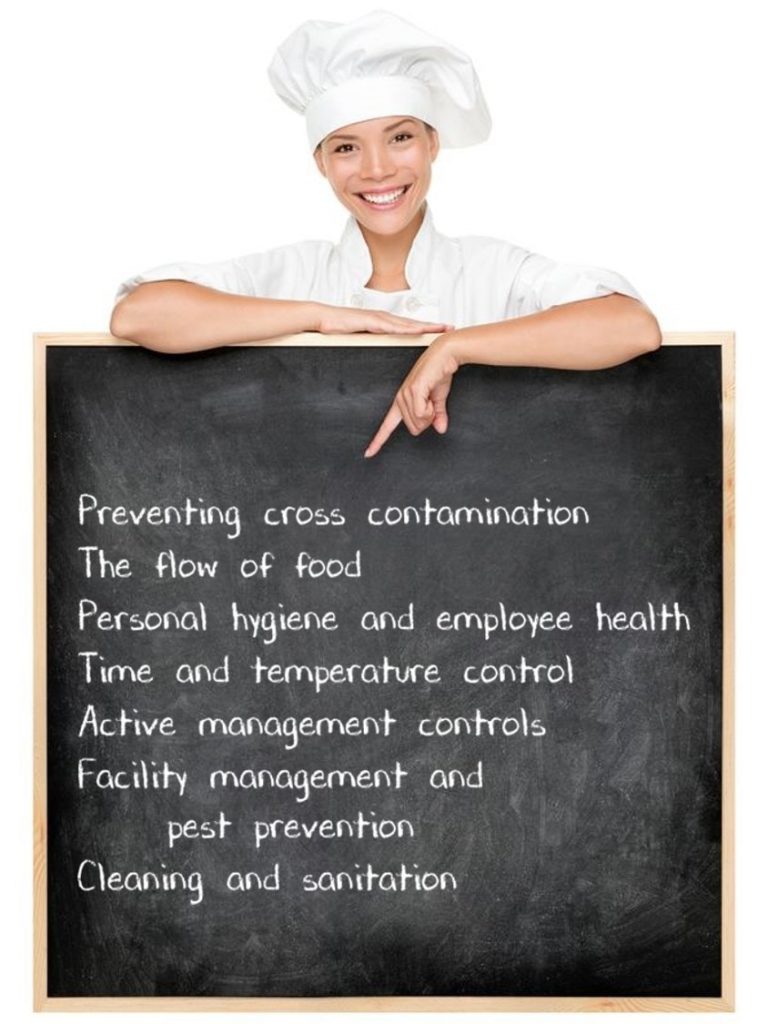
The certified food protection manager tests are designed to make sure that food service supervisors have the knowledge to keep the food they serve safe and train their staff on how to prevent foodborne illnesses. We can break down study topics to a few categories that should be reviewed before test time:

  • Preventing cross contamination
  • The flow of food
  • Personal hygiene and employee health
  • Time and temperature control
  • Active management controls
  • Facility management and pest prevention
  • Cleaning and sanitation

This list might look a little daunting, but we’ll simply break it down for you so that you can have a clear plan of action while preparing for your exam.

Cross-contamination occurs when bacteria spreads from one food item to another. This generally occurs when raw food touches ready to eat food, fresh product is prepared on surfaces previously used for raw product and raw food is improperly stored over ready-to-eat foods and food cooked at lower temperatures.

The flow of food deals with what happens with products from the second inventory arrives at your facility up until the moment it is served to guests. In order to get a firm grasp on the flow of food, review how to receive, store, prepare, cook, serve and display food products properly.

Personal hygiene consists of hand washing and the rules for working when sick. Always wash your hands after eating, smoking, using the bathroom and handling raw foods. Also, it’s important to note that sick employees should not handle food.

Time and temperature control will be tested extensively. Review proper cooking and holding times and temperatures.

Active management controls refer to your outlined procedures for ensuring food safety. These can be training, education, action plans or any other food safety management tactics employed to keep your establishment in compliance with the Minnesota food code and prevent food borne illness.

Facility management refers to the cleanliness and maintenance of the physical aspects of the building your business operates out of. Food-borne illness comes from other sources than improperly prepared food. Pests, plumbing problems, deteriorating equipment and other issues with your building’s mechanical elements can pose a food safety risk.

Knowing proper cleaning and sanitation methods is also key to passing the food safety certification exams. Make sure you understand which sanitizing solutions and cleaning methods are approved for food service.

Safe Food Training instructors spend the last portion of every class reviewing each one of these points in detail. Students often comment that, “the review at the end was the best part of the class!” Well over 90% of our students pass the exam the first time they take it.

Click proper here to find a class scheduled at a place and time near you.

Certified Food Managers Foodborne Illness Statistics

Certified Food Managers Guide to Foodborne Illness Statistics

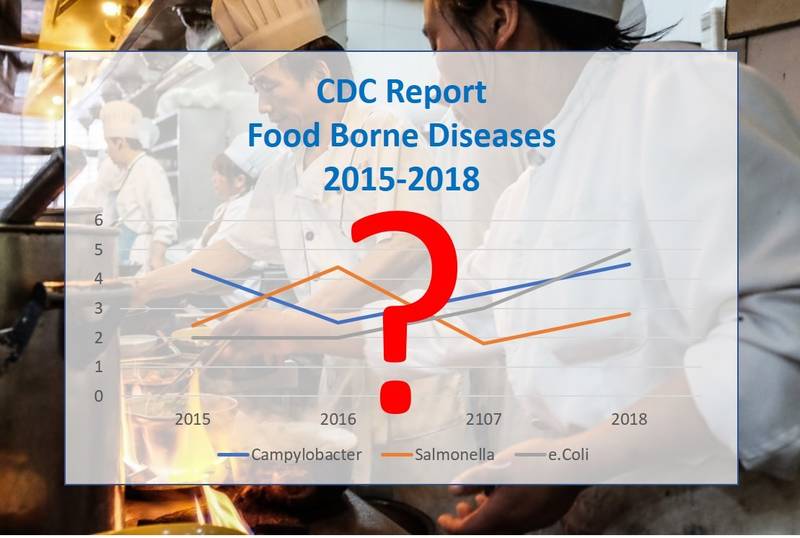
Gathering information on foodborne illness outbreaks gives us a greater insight into how these events start and what measures can be taken to prevent them in the future. The Center for Disease Control recently released a report outlining foodborne illness statistics and discussing testing and observation steps taken during outbreaks in 2018.

Certified Food Managers Foodborne Illness Statistics

CDC Report on Common Pathogens Causing Foodborne Illness

If you’ve taken a quick glance at this report, you may notice some very scientific language and a lot of statistics, so we’ll briefly break down some of the interesting facts in the report in simpler terms.

The bulk of this report discusses enteric infections, or food poisoning cases that affect the intestines. The two largest culprits discussed are campylobacter and salmonella infections. The CDC has confirmed nearly 10,000 infections of each in 2018. Following these two, e.Coli clocks in with nearly 3,000 cases, many of these coming from multiple outbreaks involving tainted romaine lettuce. This registers a 26-percent increase when compared to cases in 2015 to 2017.

Reading some of the discussions in this report indicate that the confirmed numbers are up partly due to improved testing methods. The CDC has increased the use culture-independent diagnostic tests, or CDITs, to diagnose suspected cases of enteric infections. This test is capable of identifying certain pathogens not routinely picked up by previously used testing methods.

While this report does have food-safety implications on a grand scale, what exactly does it mean to certified food managers?

We’ve drawn two conclusions from this report. First, improvements in testing technology show that illness from contaminated food is a larger issue than previous statistics have shown. This means that we should be more diligent then ever in promoting food safety in our establishments.

Finally, these advanced testing techniques have given us the most common pathogens and the food items that most commonly spread the infection. Seeing that there are targets the CDC has identified for improved food safety techniques gives us an insight into what types of ingredients require extra care. Certified food managers can be equipped with the knowledge that certain products are historically more susceptible than others and be diligent in inspecting shipments and following up on recalls and alerts concerning contaminated product.

Do statistics released by the CDC, USDA and other organizations have any effect on you handle food safety for susceptible products?