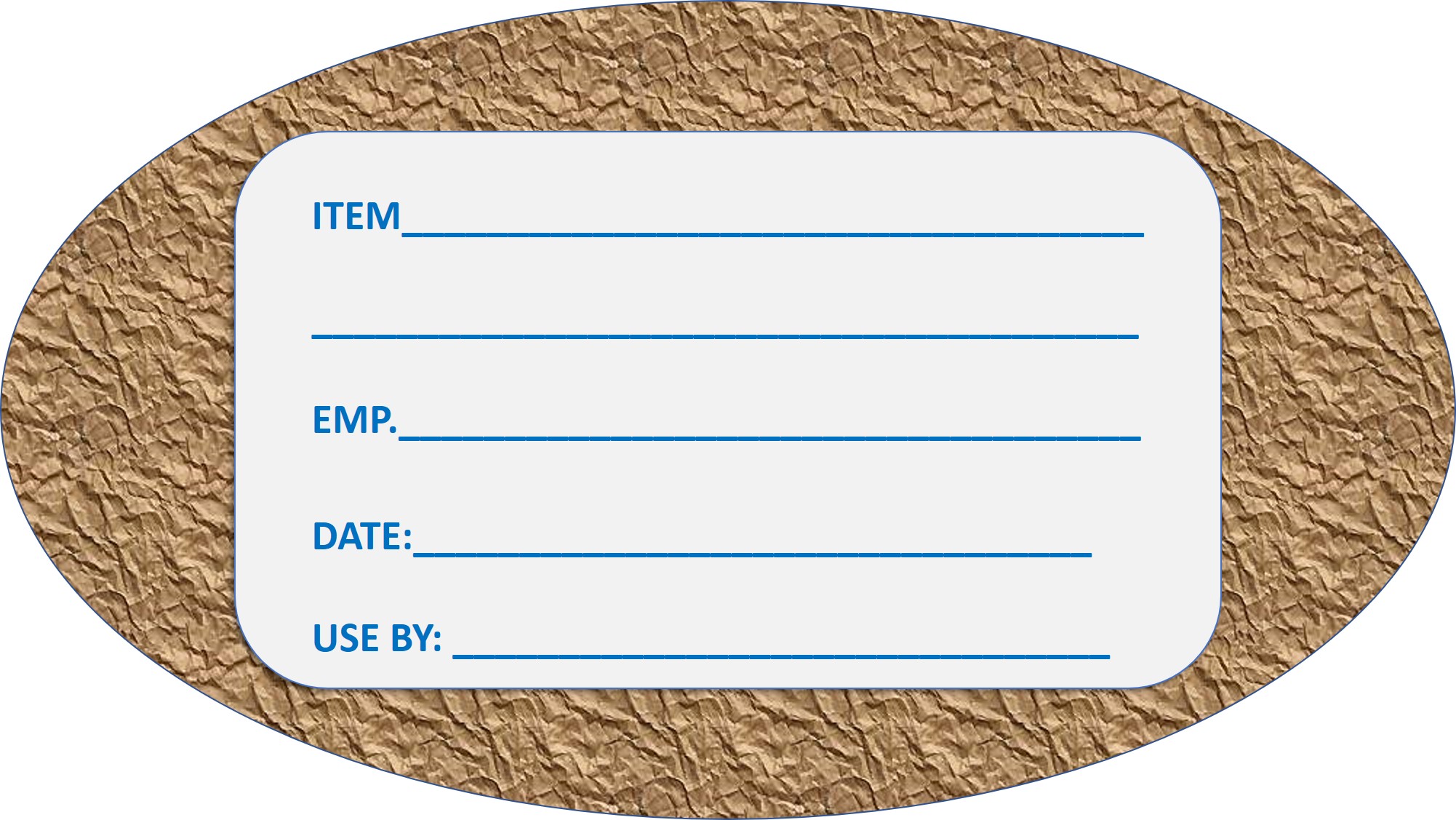
Food Safety Date Labeling Example

Food Safety Guide to Proper Date Labeling

The Minnesota food code states that all ready-to-eat foods must be labeled and dated. When the topic is brought up in our food safety training sessions, many students often share their strategies and how they make sure their products are properly labeled. This week, we’d like to outline the rules for date labeling product and provide a quick online food safety resource on the topic.
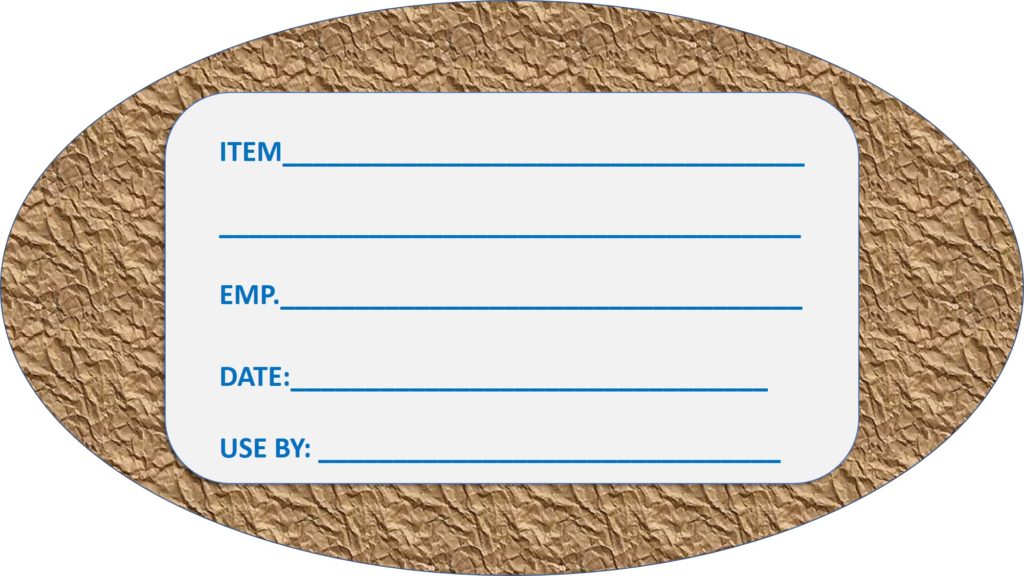
Food Safety Date Labeling Example

Tips for Food Safety Date Labels

The first thing we need to discuss is what types of foods need to be labeled. According to the Minnesota food code guidelines, food products meeting all of the following criteria must be labeled and dated:

  • Ready-to-Eat Foods
  • Refrigerated Product
  • Prepared Food Stored for 24 Hours or More

If your product meets all three of these criteria, then they must be properly labeled with the date they were produced. When labeling your food, it’s important to note that there is a seven-day limit on refrigerated ready-to-eat foods, but that doesn’t mean that every ready-to-eat food will be safe to serve for a full seven days, so rely on your food safety training for signs your product may be unfit for consumption.

It’s important to note that the date your product gets labeled should be the date the first cooked ingredient was prepared. For example, if you have a chicken salad sandwich on your menu and you cook your chicken on a Tuesday but don’t mix it with the rest of the ingredients until Wednesday, then Tuesday’s date should be the date on your label.

The food code does a great job of specifically outlining the what and how long of labeling, but they give food managers flexibility when it comes to the how. This is where you need to take steps that will best fit the food safety training that you’ve provided your staff to define a date labeling system. Make sure that your date labeling system is consistent and easy to recognize. Here are a few examples of effective systems:

  • Colored day dots
  • Date and time tags
  • Day of the Week Stickers

All of these systems are acceptable within the rules of the food code, but remember all employees must be able to explain the system during any routine health inspection. Our advice would be to incorporate a system that displays the exact date food was prepared rather than a simple label with the day of the week. This gives you an exact reference to know if your product is within the seven day limit rather than just using a day-of-the-week marker. Who knows? That chicken salad may have been mixed two Tuesdays ago and forgotten.

Do you have a well-defined date labeling system to protect food safety in your establishment?

Food Safety Training Hand Sanitizes

Food Safety Training and the use of Hand Sanitizers

The FDA recently issued a warning letter to the makers of Purell sanitizer asking them to stop claiming their sanitizer kills norovirus, Ebola, influenza and other viruses. If you read the report closely, you’ll find that the FDA never said that sanitizers don’t kill these viruses, there just isn’t the scientific study to back up Purell’s claims. In light of this warning, how should we adjust our food safety training to teach food service employees the proper use of hand sanitizers?

Food Safety Training Hand Sanitizes
Image credit: Anna Earl on Unsplash

Hand Sanitizers and Food Safety Training

When delving into this topic, it’s important to start off with one vital truth:

Hand sanitizers are not a substitute for handwashing.

When discussing food safety protocols with your staff, it’s important that they understand proper handwashing is the most effective way to kill germs and prevent the spread of foodborne, viral and bacterial illness. While hand sanitizers may advertise that they kill viruses and bacteria, they can never take the place of handwashing. So is there any instance where hand sanitizers or antiseptics are allowed in the kitchen?

While the Minnesota food code is adamant that sanitizers are not an effective replacement for handwashing, they do allow for the use of sanitizers in the kitchen.

Foodservice workers can use antiseptic gels or liquids after they have washed their hands properly. This can add an extra layer of protection, but only when used properly after a good handwashing. They should never be used before handwashing, or when timing makes the washing of hands inconvenient. Remember, handwashing should never be inconvenient, and paying close attention to handwashing habits will help prevent the spread of foodborne illness.

When it comes to the norovirus, the flu or Ebola, it’s always good practice to teach proper handwashing techniques that can be used at work or at home.

MN Certified Food Managers Minimum wage

How MN Certified Food Managers Deal with a Rising Minimum Wage

How MN Certified Food Managers Deal with a Rising Minimum Wage Later this year, the minimum wage in Minnesota is going up to 10 dollars an hour for high-grossing businesses and 8.15 for businesses that bring in less than $500,000 annually, and the minimum wage in Minneapolis is set to rise to 11.75 for small businesses and 12.25 an hour for businesses with over 100 employees. The majority of our local restaurants and food producers tend to be smaller, one-outlet operations, so they may have to adjust more than larger corporations. Just how will rising minimum wage affect the food industry, and is there anything MN certified food managers can do about it? How MN Certified Food Managers Deal with a Rising Minimum Wage

MN Certified Food Managers Minimum wage
Image credit: Sergey Nivens via 123rf

The New Minimum Wage and MN Certified Food Managers

If you’ve ever calculated food and labor cost, you know the profit margin in the food industry is already razor-thin, in some cases as low as pennies on the gross dollar. Under the circumstances, how is it possible for MN certified food managers to retain the same amount of staff yet still continue to make a profit?

Some theorize that with a rising minimum wage, the general populace will have more money to spend on luxuries such as eating out. If this theory holds true, then many restaurants could see extra revenue due to increased business or have the option of raising their prices. While it would take time to see if this theory holds out, it will be interesting to monitor if Minnesota restaurants will see an uptick in business due to the higher minimum wage rate.

Restaurateurs in areas with a higher than average minimum wage have suggested implementing a tip credit as an option for offsetting labor costs. A tip credit essentially involves a lower hourly wage than the minimum for workers who receive tips as a portion of their income. If their tips don’t raise their income per hour to equal or exceed Minnesota’s minimum wage, their employer would be required to compensate them to ensure they made the state-required wage per hour for their shift.

Finally, many larger restaurants see automation as a way to control labor costs. Using touchscreen kiosks or screens at individual tables allows them to reduce labor by cutting jobs. As technology becomes more advanced and cheaper to acquire, we may see some form of automation trickle down to lower-volume businesses. We don’t see this as an ideal solution, as we feel a thriving food industry should involve human staff wherever possible.

MN Certified Food Managers Minimum wage

How MN Certified Food Managers Deal with a Rising Minimum Wage

Later this year, the minimum wage in Minnesota is going up to 10 dollars an hour for high-grossing businesses and 8.15 for businesses that bring in less than $500,000 annually, and the minimum wage in Minneapolis is set to rise to 11.75 for small businesses and 12.25 an hour for businesses with over 100 employees. The majority of our local restaurants and food producers tend to be smaller, one-outlet operations, so they may have to adjust more than larger corporations. Just how will rising minimum wage affect the food industry, and is there anything MN certified food managers can do about it?

MN Certified Food Managers Minimum wage
Image credit: Sergey Nivens via 123rf

The New Minimum Wage and MN Certified Food Managers

If you’ve ever calculated food and labor cost, you know the profit margin in the food industry is already razor-thin, in some cases as low as pennies on the gross dollar. Under the circumstances, how is it possible for MN certified food managers to retain the same amount of staff yet still continue to make a profit?

Some theorize that with a rising minimum wage, the general populace will have more money to spend on luxuries such as eating out. If this theory holds true, then many restaurants could see extra revenue due to increased business or have the option of raising their prices. While it would take time to see if this theory holds out, it will be interesting to monitor if Minnesota restaurants will see an uptick in business due to the higher minimum wage rate.

Restaurateurs in areas with a higher than average minimum wage have suggested implementing a tip credit as an option for offsetting labor costs. A tip credit essentially involves a lower hourly wage than the minimum for workers who receive tips as a portion of their income. If their tips don’t raise their income per hour to equal or exceed Minnesota’s minimum wage, their employer would be required to compensate them to ensure they made the state-required wage per hour for their shift.

Finally, many larger restaurants see automation as a way to control labor costs. Using touchscreen kiosks or screens at individual tables allows them to reduce labor by cutting jobs. As technology becomes more advanced and cheaper to acquire, we may see some form of automation trickle down to lower-volume businesses. We don’t see this as an ideal solution, as we feel a thriving food industry should involve human staff wherever possible.

Does your MN certified food managers have a strategy for dealing with rising minimum wage?