Archive for year: 2023
A Confidential Certified Food Manager Perspective On Product Recalls
/0 Comments/in Certified Food Manager MN, Certified Food Protection Manager/by Christine DantzIf you’ve gained your food manager certification, you know that there are many ways that food-borne illness can spread. Even if you’re diligent with your safety procedures, there may be times when tainted product is delivered to your establishment and can cause a safety issue that you are unaware of. This week, we’ll discuss how a certified food manager can keep up to date on product recalls. Equally important, we will advise on handling potentially compromised product.


How Certified Food Managers Keep Informed About Recalled Food Products
One of the easiest ways to stay informed is to talk with your suppliers. Nowadays, most managers order their supplies online and may only see your supplier’s representatives on rare occasions. Taking the time to have to a regular conversation with your supplier is important for several reasons. And it’s especially helpful to keep you updated on recalls and safety issues with product that you regularly use.
With information readily available on the internet, online sources can be a great resource when researching product recalls. There are, however, numerous sources that may be unreliable. So we’d like to share a few on-line sites that can help keep you up to date:
First, the Minnesota Department of Health is a great resource a certified food manager can use for local product recalls and food safety alerts. This page offers links to local information and external sources for recall alerts. Second, the FDA’s recall site provides an easy to use chart. It defines:
- The company involved with the recall
- The recall reason
- Detailed information concerning the FDA’s action concerning the issue
Finally, Food Safety News is not a government or officially moderated site. But they provide a wealth of information concerning food safety hazards and recalls. Consequently, they cover news that may not be reported by mainstream news outlets.
Handling Potentially Compromised Product
When a certified food manager suspects they have received tainted or recalled product, the first they should notify your supplier. If you received it from a food service supplier, then their representatives will be able to retrieve the product and make sure that you’re reimbursed or a safe product is substituted. If you picked up your potentially contaminated food product directly from the source, it’s generally a good idea to return it to the outlet where you purchased it. In either case, if there are any complications or you’re concerned that this may be a serious issue, you may wish to contact your local health department.
We’d like to know how you keep up to date on food safety issues. Is there a resource or web-site that we may have missed?
The Truth About Custom Food Safety Certification Training
/0 Comments/in Food Safety Certification MN, food safety certification MN training sessions/by Christine DantzIf you’re a restaurateur who owns or manages multiple locations, then you know what a hassle it can be to manage all of the required food safety certifications. In contrast,our trainers make it easy to get all of your team’s certifications/re-certifications up to date. We come to you and deliver a custom group food safety certification training session for all of your employees, and we can administer the testing for new food safety managers who require it.


The Benefits of Custom Group Food Safety Certification Training
By having our trainers come to your facility to provide customized food safety certification training, you can enjoy three significant benefits:
- Convenience
- Cost
- Customizable training
Basically, our on-site options eliminate the need to worry about coordinating the schedules of all staff members who require certification. We are able to work around your unique schedule, ensuring that every staff member that needs certification is able to attend. Additionally, scheduling group training at your restaurant may be more cost-effective. Rather than paying individual fees for each staff member, we are able to offer a group rate that keeps the expense of training all of your staff to a minimum.
Built to Address Your Unique Business Needs
At Safe Food Training MN, we offer customized food safety certification training sessions that are tailored to your unique business needs. Unlike online food safety courses or regularly scheduled classes, our trainers come to your facility and work with you to identify and address any issues specific to your operation. During the training session, we cover unique aspects of your business that are not normally addressed in basic training courses.
Additionally, we can design either a ServSafe or NRFSP training course according to your needs. Then we include any information in your sessions that you feel you or your employees could use more training on. Our knowledgeable trainers will make sure that you’re aware of the most current rules and procedures for any situation.
Our custom food safety certification training sessions are not just for restaurants. We can design a course aimed at:
- school lunch programs
- retirement facilities
- food production outlets
- or any other type of business that requires unique food safety training in MN
Our training sessions cover unique aspects of your business that are not normally addressed in basic training courses.
Our custom food safety certification training sessions are not just for restaurants. We can design a course aimed at:
- school lunch programs
- retirement facilities
- food production outlets
- or any other type of business that requires unique food safety training in MN
Our training sessions cover unique aspects of your business that are not normally addressed in basic training courses.
Do Group Training Sessions Work?
Colleen Fairbanks, Lead Food Services Specialist at Osseo Area Schools, had this to say about our group training services: “We had Safe Food Training come in and do our training because they were able to come to us and tailor the training to what our managers needed in order to get their MN food managers license. I would recommend anyone use Safe Food Training because they will tailor the training to what you specifically need in your department.”
Important New Research On Why Food Managers Need Efficient Gas Burners
/0 Comments/in Certified Food Manager MN, Certified Food Protection Manager/by Christine DantzIn early January, several news organizations published articles about the hazards of household gas-burning stoves. Numerous studies indicate that gas stoves in our homes may be emitting several harmful pollutants that could affect the health of our families. Both state and federal agencies are now considering action to limit or ban gas stoves in new building projects. This news generated some lively discussion about gas burners during a break at one of our food protection manager certification classes.
The current news attention has focused on household stoves. But, should we be concerned about standing next to the huge gas-burning stoves in our commercial kitchens? The obvious answer is yes. Certified food protection managers should be concerned about all kitchen employee safety issues and should monitor gas burner studies to gather more information.
But a couple of information points should be highlighted before we start worrying about completely changing our kitchen operations:
- The study results have not even mentioned commercial kitchens
- Ventilation in our kitchens is much different than what is found in a household kitchen
- As professionals we have the knowledge to properly clean and maintain our stoves to make them more efficient and reduce harmful pollutants
This week we’d like to share how a food protection manager can solve the problem of inefficient gas burners.


A Food Protection Managers Guide To Keeping Your Gas Burners Clean and Efficient
If you’re noticing that the burners that you use most frequently aren’t as efficient as they once were, the problem may be easily resolved with a thorough cleaning. Three sure signs food protection managers can use to determine if gas burners may be in need of a little care include:
- Uneven heat distribution
- Flames at one or two burners aren’t as hot as they once were
- Yellow flames mixed with blue
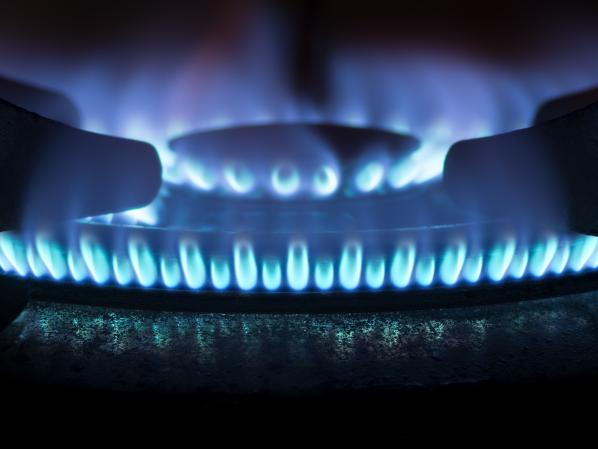
All three of these signs indicate that your gas distribution is being interrupted somewhere in the cap and head of your gas burner assembly. Your gas burner head is the round portion where the gas meets the flame from the pilot light and ignites. If you take a close look at this assembly, you will notice small, pin-point holes circling the head. These holes are where the flame comes from. If they become clogged, the gas cannot escape as quickly. This altered flow causes a lose of heat and release of additional pollutants from your gas burner. This will cause weak yellow flames as spilled debris chars into carbon.
How To Clean Gas Burners
These assemblies are generally easy to remove and clean. Check for clogged burner holes. Often a simple toothpick can break free the debris that was interrupting the gas flow and producing a weak, yellow flame. Keeping burners in top shape may take a little more than clearing clogs occasionally. Food protection managers should schedule regular gas burner cleaning. The process should remove and thoroughly clean the entire burner head. This will remove grease, spilled food product, and dirt from your burner.
If you’re experiencing poor performance in your entire range, the issue may take more than a simple cleaning to resolve. We strongly recommend that you consult a professional rather than attempt to fix the problem yourself.
At Safe Food Training, we endeavor to help our customers with much more than food manager certification in MN. We’d like to know if you have any kitchen equipment topics that you’d like to see us cover in the future. We appreciate all of your comments, and would love to see them below.
About Us
Recent Posts
- Farm-Fresh vs. Store-Bought Eggs: An Easter Food Safety Guide
- The Essential Guide to CFPM Requirements for Minnesota Food Trucks
- Keep it Under Wraps: The Truth About Hair Restraints in MN
- Is Your Kitchen in the Danger Zone? A Guide to Precision Temperature Control
- When Can a Sick Employee Return to Work? The MN Food Manager’s Guide to Illness Reporting