
ServSafe Food Manager Communications

Communication Between the ServSafe Food Manager and Staff

The ServSafe food manager’s duties cover many areas of their facility, and they need each member of their staff to understand their role and know what their daily tasks may be. Effective communication not only keeps your kitchen staff on the same page, it frees up your time by allowing you to go about your duties without constantly answering questions and covering the same material a multitude of times with different team members.

Effective Communication Tips for the ServSafe Food Manager

In our discussions with chefs, food preparation supervisors and other students who come to us for ServSafe food manager certification, we’ve found a few communication tools you may find helpful:

  • Daily log books
  • Printed task and daily goal sheets
  • Pre-shift staff meetings
  • Regular manager meetings
  • Periodic meetings with all staff members

We believe that having a written track record or goals and tasks it a great way to make sure that everyone knows what needs to be accomplished. The food industry moves at an incredibly fast pace, so relying on memory may not be the best solution. If just one of your staff members forgets an essential task, your well-oiled machine can quickly turn into a rusty locomotive careening towards disaster. This is where a log book documenting shortages, problems with the production line or areas that could use improvement comes in handy. Also, prep sheets, written par quotas and documented daily maintenance procedures will let your staff know what lies ahead with minimum interaction.

While written communication is fine for some situations, a recurring formal meeting of some kind can easily streamline your communication channels. This allows for all key employees to be in the same place at the same time, bring up issues, provide clarity between different aspects of your operation and make sure everyone is one the same page without confusion later.

These meetings can take different forms. An all-staff meeting may be necessary if new procedures are being introduced, if there are wide scale menu changes or if you feel the need for regular reinforcement of your company’s goals. Regular meetings with every employee in attendance may not work for larger businesses. In these cases, department heads, shift-supervisors or groups of managers can meet separately and then hold meetings with the employees under their direct supervision.

All too often, important information is disseminated in passing and can become forgotten or misunderstood. What communication techniques do you use to keep your team on the same page?


Food Safety Certified Managers & Hot Air Hand Dryers

Food Safety Certified Managers and Hot Air Hand Dryers

Once touted as a convenient and sanitary aid in handwashing, touchless hot air hand dryers are in a multitude of public restrooms. However, during a recent study performed at the University of Connecticut, scientists discovered that hot-air hand dryers do more than remove water from your skin, they blast bacteria onto your hands and circulate fecal matter throughout the restroom.

Food Safety Certified Managers & Hot Air Hand Dryers

Image Credit: CC0 Creative Commons

Food Safety Certified Managers and Bacteria from Hand Dryers

Minnesota Food Code rules do allow for your facility to employ the use of heated hand dryers as long as they are not “the only device provided at the sink,” but given this current study, we think discussing the use of these devices in your kitchen or public restrooms would be prudent.

Touchless hand dryers provide a convenience for guests and save money on supplies by not wasting disposable paper towels, but is equipping restrooms with devices that actually cover users with invisible particles of fecal matter in the best interest of food safety?

To be on the safe side, we suggest you consider automated paper towel dispensers as a replacement for forced-air hand dryers. These provide the opportunity to procure a paper towel with a wave of the hand and avoid contact with a potentially contaminated surface.

Now may also be a good time to make sure that all of your restrooms are equipped with a current handwashing fact sheet.

It will be interesting to see how health departments and the food-service industry will react to this information in the future. Considering the results of this study, will you still be utilizing hot-air hand dryers in your restrooms?

Food Safety Class Tips for Ice Bin Sanitation

Every restaurant has its sanitation challenges, but one of the most consistently overlooked areas is the front-of-house service station ice bin. For certified food safety managers in Minnesota, ensuring proper ice bin sanitation is a critical, yet often neglected, responsibility. While back-of-house procedures receive intense scrutiny, these smaller, customer-facing ice bins can become hotspots for contamination if not given the daily attention they require. This guide provides the essential tips you need to train your staff and maintain impeccable standards.

The Core Misconception: Why Ice Bins Are Ignored

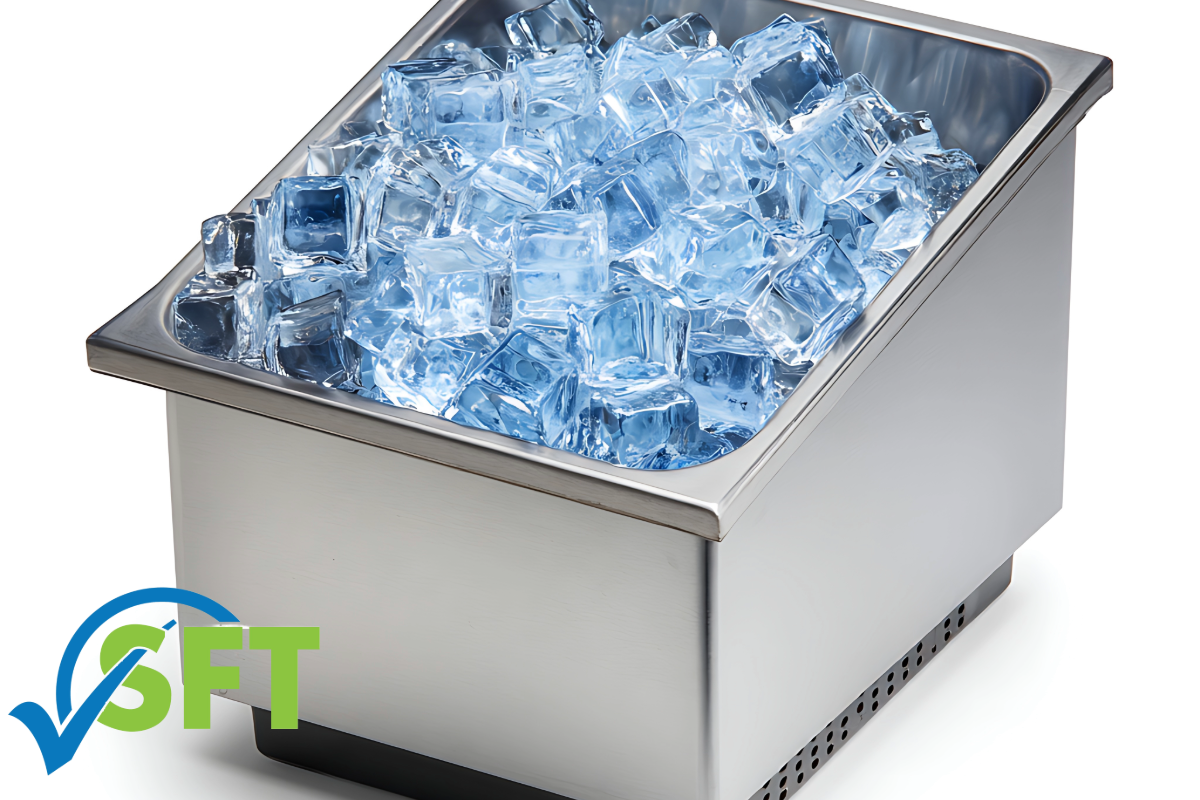
Ice bin sanitation

Ice bin sanitation: Keep it safe.

A fundamental misunderstanding leads to service station ice bins being overlooked: many staff members don’t view ice as a food item. The thought process is that since ice is just frozen water, it can’t harbor pathogens. This is a dangerous assumption. 

The FDA classifies ice as a food, meaning it is subject to the same strict handling and sanitation requirements as any other ready-to-eat product. When staff members fail to treat an ice bin as a food container, they are more likely to engage in unsafe practices that lead to contamination.

  • False Sense of Security: Because ice is frozen, employees may wrongly believe that bacteria cannot grow, leading to lax cleaning schedules and improper handling.


  • Out of Sight, Out of Mind: Unlike a steam table or a walk-in cooler, a service station ice bin is often a secondary piece of equipment, making it easy to forget during routine cleaning and closing duties.


  • High-Traffic Area Risks: These bins are typically located in busy service alleys or bar tops, exposing them to a much higher risk of accidental contamination from various sources throughout a shift.

Mastering Ice Bin Safety in a Busy Environment

True ice bin safety involves being vigilant about what goes on around the bin as much as what goes in it. During a busy service, it’s easy for foreign objects and liquids to enter the ice supply, compromising the entire container. A single contaminated piece of ice can contaminate the entire bin as it melts and circulates.

  • Preventing Foreign Objects Contamination: Garnishments like lemons or cherries, napkins, straws, and even serving utensils can accidentally fall into the ice. These items introduce bacteria from hands, counters, and other surfaces. Keeping the lid closed whenever possible is a simple but effective preventative measure.

  • Managing Spills and Drips: In a bar or beverage station, splashes from juice, soda, or alcohol are inevitable. If these liquids enter the ice bin, they introduce sugars and other substances that can accelerate bacterial growth.

  • The “When in Doubt, Throw it Out” Rule: If you notice a foreign object or a significant spill has occurred, simply removing the object is not enough. The only safe procedure is to burn the ice—meaning, empty the entire bin, properly clean and sanitize the container according to health codes, and refill it with fresh, clean ice.

Implementing a Strict Sanitation Protocol

Ice bin sanitation

Tips for ice bin sanitation.

To ensure consistent ice bin sanitation, you must establish a clear, non-negotiable cleaning protocol that your service staff understands and follows. Simply allowing the ice to melt and drain overnight is not a substitute for proper cleaning; this practice leaves behind a damp environment that allows bacteria and biofilm to flourish.

  • Use a Properly Mixed Sanitizer: Your sanitizer solution must be mixed to the correct concentration. A solution that is too weak will not be effective, while one that is too strong can leave behind chemical residues that could sicken a customer. Use test strips to verify the concentration at every time.


  • Sanitize Every Time You Empty: It is essential to make cleaning and sanitizing the ice bin a mandatory procedure each time. It’s emptied ‌before refilling. This should be a key part of your closing checklist for every service station.


  • Train, Reinforce, and Document: Ongoing training is key. Regularly review these procedures with your waitstaff and bartenders to ensure they are familiar with them. Document your cleaning schedule in a log to ensure accountability and create a record of compliance for health inspections.

Safe Food Training acknowledges the dedication of certified food safety managers in Minnesota to protecting public health. Our goal is to provide practical training that addresses the real-world, often-overlooked challenges you face daily.

Don’t let a contaminated service station ice bin tarnish your reputation. If you and your team are looking to enhance your understanding of Minnesota’s food safety standards, our expert-led, instructor-led options provide the convenient and comprehensive training you need. 

Click on the link and head to Safe Food Training today to schedule your next session!

Food Safe Training Classes for Summer Hires

Food Safe Training for Summer Hires

Summer is coming, and that usually means that local businesses become flooded with high-school and college student applicants looking for temporary employment to earn some extra spending money before Fall drags them back into the classroom. For the most part, the added staff helps food service and hospitality businesses that cater to a summer crowd survive the busy season and gives food service managers the opportunity to bring in temporary staff that do not have the expectation of continued full-time employment once business slows down in the off season. The issue of properly training and getting these part-time employees prepared to follow food safe training procedures brings up a dilemma.

Food Safe Training Temporary Employees

There are a few possible solutions to get all of your temporary hires properly trained:

  • Let your new employees complete their training on their own time
  • Allocate time for new staff to complete online food handling education at work
  • Schedule a group food safe training session led by your certified food manager of food safety industry professional

Leaving your new hires up to their own devices when it comes to obtaining food handlers education takes the responsibility away from your food supervisors but comes with risks. New employees may stall, procrastinate or simply forgo the training with the expectation that they will be allowed to work regardless. They may get the idea that completing food handling training is not worth their time for a part-time or temporary position. This could leave you shorthanded or forced to take time you do not have to hire a replacement for a hire who fails to complete any required training. It could also pose a health risk to your guests by being served by an employee who does not understand basic food handling procedures.

Giving new team members an opportunity to complete their training online at a computer in your facility is one way to guarantee they will be ready to fill the position. This could, however, lock up a manager’s computer that may be put to better use. If your facility requires many seasonal hires, it could also take significant time to fully train new staff one at a time.

A group course led by your certified food manager or private instructor is the most efficient way to fully train your summer staff to keep food safe.

If you’re a hospitality business that requires added summer help, how do you deal with food safe training?