Certified Food Protection Managers Cease Operations

When Should Certified Food Protection Managers Cease Operations for Sanitation

Sometimes health department inspections happen without issues and sometimes minor procedures need to be addressed, but what should be done after a failing a health inspection or the health inspector arrives at your facility after multiple reports of foodborne illness? What should trigger a certified food protection manager to consider a temporary shutdown?

Certified Food Protection Managers Cease Operations
Image credit: PXhere

Knowing When a Certified Food Protection Manager Should Consider Temporary Closure

It’s very important to know the difference between a failed health inspection report that can be addressed without shutting your doors and one that requires a complete shutdown.

Take a recent incident in Colorado involving a Red Robin restaurant for example. After multiple reports of E.coli poisoning and several critical health violations, the management of the restaurant determined that a voluntary closure was necessary to address sanitation issues and complete food safety training for all employees at this location. We don’t know if the local health inspectors would have mandated a shutdown eventually, but it should be noted to the company’s credit that they put the health of their customers over the potential loss of business when word of the shutdown spread.

We should also point out that their Colorado equivalent of our MN certified food protection manager decided to work with the local health department rather than address these issues on their own. In a situation like this, there is no greater expert in the field than your trained health inspector. They know the food codes and potential causes of foodborne illness better than anyone.

Certified food protection manager training in Minnesota does not specifically outline the point when you need to close your doors to address food safety issues, but it should give us a guide to recognize when we have a major problem. If you have an isolated sanitation issue or one or two employees that commit violations due to poor training, you can probably fix these situations without closing your facility. However, if you have several guests reporting sicknesses after eating at your establishment, have a health inspection review with several different of red flags or have known equipment issues that prevent you from protecting your guests, closing your doors temporarily to properly address these issues may be the right thing to do.

Working with your health inspector to address issues is the best way to reopen in a timely manner. If you need a knowledgeable professional to come to your facility to provide training, Safe Food Training can design a course to address specific issues pertinent to your establishment.
Certified Food Protection Managers and Farmers Market

Certified Food Protection Managers and Farmer’s Markets

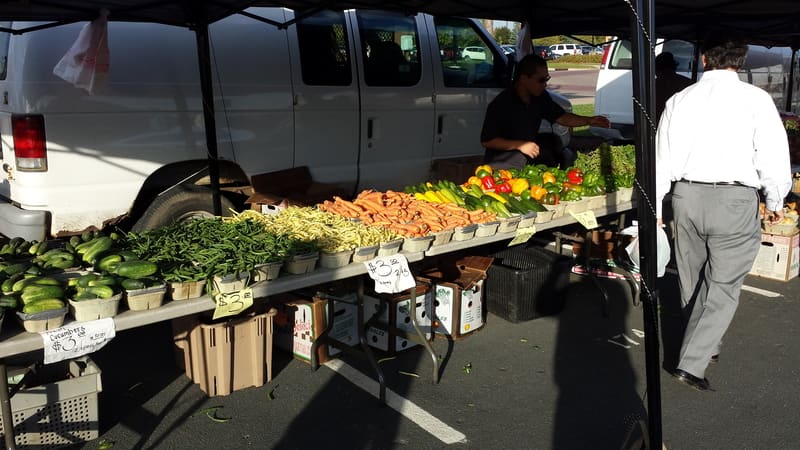
One of the great things about living in our state is the unbelievable bounty of fresh produce available in the summer and fall at local farmer’s markets. Local restauranteurs and certified food protection managers love to source ingredients locally and many feel that advertising fresh ingredients grown by members of the farming community draws customers in, but can food purchased at the farmer’s market be used in commercial kitchens?

Certified Food Protection Managers and Farmers Market

Certified Food Protection Managers Guide for Farmers Market Ingredients

Fresh product, especially produce, is the key to making any dish great, and it doesn’t get much fresher than buying from a local producer at a farmer’s market. There are no regulations prohibiting the use of ingredients purchased at the farmer’s market, but certified food protection manager training tells us that we should take precautions and be prudent to make sure they purchase their product from safe sources. Here’s a few tips to making sure you’re purchasing quality ingredients that won’t sicken your customers:

  • Inspect product for traces of quality and freshness
  • Be smart about your sources
  • Only purchase wild mushrooms from licensed vendors

Of course chefs and Minnesota certified food protection managers are going to take a close look at the product they purchase, but the same inspection process should happen even when only purchasing a few items at the market. Take a close look for excess dirt or other contaminants as well as signs that a pest has been nibbling on the product somewhere between the farm and market. Most pesticides will be invisible, but if you notice an overly waxy texture or odd sheen to produce, there’s a chance it has been treated with something to resist insects or make it look more attractive.

Secondly, purchase products from farms and vendors you trust. Depending on the circumstances, vendors may or may not be required to obtain a license to set up a booth, but a license does not necessarily mean that all proper food safety protocols have been followed. We suggest you buy from booths that represent farms you know and avoid unaffiliated produce vendors.

Finally, only purchase mushrooms from certified vendors. The Minnesota Food Code requires wild mushroom harvesters to be registered as a mushroom expert to prevent bad mushrooms from sickening or even possibly killing anyone who consumes them.

Do you take advantage of local Minnesota farmers markets to bring freshness to your menu?

Customized On-site Food Safety Training In MN

On-site Food Safety Training in MN

Not all restaurants, food production facilities and institutional kitchens produce the same product in the same way, so why should all food safety certification training take place in a location that doesn’t resemble your facility? We think there numerous advantages to scheduling an on-site food safety training class that takes place at your operation.

Customized On-site Food Safety Training In MN
Image credit: PIRO4D via Pixabay

The Advantages of On-site Food Safety Training

Right off the top of our head, we can think of several benefits to scheduling an instructor led food training session at your facility:

  • Convenience
  • Certifying and training multiple staff members
  • Ability to ask questions relevant to your business
  • Training tailored to your needs

What can be easier than having your instructor come to you? You don’t have to worry about your GPS sending you to North Dakota when you’re searching for a training location you’ve never visited or finding parking near the training facility. It also makes it possible to train and certify multiple employees without worrying about scheduling conflicts or whether or not your employees have access to reliable transportation to the testing location.

A highly knowledgeable food safety expert knows the Minnesota food code in and out, and during a training session at your food production facility you’ll not only have the ability to have your questions answered, but you’ll have the advantage of having your instructor being able to give you real world answers that pertain to your facility and the type of food you produce. A school cafeteria has different needs than a restaurant and there are many different types of kitchens that have different food safety risks. Your instructor can take a look at your facility and answer questions accordingly.

Finally, you can choose which food safety training certification standard you want your employees to achieve. You may want your employees to receive ServSafe training, HAACP certification or any other MN accepted testing, but times and location for your preferred classes just don’t work. Having an on-site training session with all members of your staff that require a certain type of training solves this dilemma

Would you be interested in an on-site food safety training and exam session at your establishment? Let us know, and we’d be happy to design a course that suits your needs.

ServSafe Certification

What is ServSafe Certification?

According to the Minnesota Food code, food preparation establishments must employ a Certified Food Protection Manager that has gained certification from an ANSI accredited program. The National Restaurant Association recognizes ServSafe Certification as its accredited program qualifying it to be used by food protection managers in Minnesota.

ServSafe Certification
Image credit 123RF

MN ServSafe Certification

ServSafe offers several food and alcohol safety certifications, and passing the ServSafe food manager exam meets the Minnesota Food Code’s requirements for certified food protection manager training. Minnesota also recognizes 3 other exams as meeting the requirement including the one from the National Registry of Food Safety Professionals which we regularly use.

As with many training courses, ServSafe is available via instructor led sessions and online training classes. There are positives with each type of training. Online classes can be convenient and taken at any time of day. Instructor led classes allow for interaction with your fellow food managers and give you a rare opportunity to ask questions and discuss food safety procedures with an experienced expert.

ServSafe and the other exams enable you to get certified in Minnesota for three years. Within three years, you must renew your certifications in order to comply with the food code. The health department no longer has a grace period for renewing, so it’s vitally important to stay up to date on your paperwork and take your recertification training without delay before the three year anniversary of initial certification.

While there are four exam options for food safety certification in MN, some national chains and organizations may require ServSafe as their standard for food managers in their employ. If this is the case, Safe Food Training will gladly custom design ServSafe training and examinations that meet Minnesota standards. If you’re looking for your initial certification, refresher courses or recertification instruction, get in touch with us and we’ll set up training that fits your establishment’s requirements.