
What Does 2021 Hold For Certified Food Protection Managers

What Does 2021 Hold For Certified Food Protection Managers

2020 is over, and we see hope on the horizon. The food industry will survive, rebound and thrive once again. Here’s some great news we see in 2021 for certified food protection managers and the food business community:

There’s no way of sugar-coating it. 2020 was a complete disaster. Analogies of dumpster fires, train wrecks, the Titanic and dumpster fires on train wrecks on the Titanic just don’t seem to cut it.

What Does 2021 Hold For Certified Food Protection Managers
Image credit: AllaSerebrina via depositphotos

While many industries took a severe hit, the food industry may have been hit the hardest by the COVID-19 pandemic and the restrictions put in place in order to try to stem the tide of the virus. We’d be lying if we said we didn’t know certified food protection managers who had been laid off, restaurants that have shuttered their doors temporarily or food sector businesses that have been forced to close for good. Many have persevered through government PPP loans, while some have just given up on the process.

4 Indicators Of Better Times for Certified Food Protection Managers in 2021

  • Vaccines should improve herd immunity
  • Dining rooms will reopen
  • In-person food safety training will return
  • Diners are anxious to return to their favorite local restaurants

With the gradual roll-out of the COVID-19 vaccine, we should see the eventual development of herd immunity. Once this state is reached, cases should begin to plummet.

The general public is anxious to return to normal, and there’s a huge urge for diners to go sit in the dining rooms of their favorite restaurants. Takeout is great, but nothing beats the experience of sitting down and enjoying local cuisine with friends and family. We predict restaurants will eventually open at full capacity and demand will be great. Dining rooms will fill up, shuttered restaurants will reopen and chefs will open exciting new eateries.

Low cases will also lead to the loosening of restrictions that have prevented CFPMs from completing their food safety management training. Classrooms will open for in-person sessions allowing students to interact with food safety trainers rather than rely on web-based classes. Testing sessions can hold more students allowing managers who have been waiting months for certification and recertification to take the exams in a timely manner.

While there is hope, the rollout of the vaccine and the defeat of coronavirus won’t happen overnight. Remain vigilant. Wear masks, follow social distancing guidelines and hang in there. Hope is around the corner for certified food protection managers in 2021!

Recall Effects Certified Food Protection Managers

Another Romaine Recall Affects Certified Food Protection Managers

Here we go again. Near the end of November, the CDC reported 40 people in 16 states have fallen ill due to E.coli found in romaine lettuce grown in the Salinas growing region in California. Due to the vast amount of lettuce grown in this region, the FDA strongly urged consumers to dispose of all romaine in any form if there was any uncertainty as to where the lettuce was grown. This means that grocery stores, foodservice suppliers and restaurants were unable to use whole heads of romaine, hearts of romaine, chopped romaine or salad mixes that contain romaine. This left a multitude of affected certified food protection managers scrambling to find alternatives, especially considering the recall occurred just before a very busy Thanksgiving week.

Recall Effects Certified Food Protection Managers
Image credit: BlackRiv, Bruno Glätsch, Pezibear from Pixabay and Anita Hart from Flickr

Romaine Alternatives for Affected Certified Food Protection Managers During Recall

Romaine is a staple in the food industry. Due to its crisp texture and traditional use in Caesar salads, it’s always heavily in demand, but what can CFPMs do when it’s suddenly unavailable?

First thing certified food protection managers must do is inform guests that romaine lettuce is unavailable. This can be as easy as including a notice in your menus or in a visible location before guests are seated or served. Many guests may not follow the news and may have a negative reaction to being served a different type of product than what is listed on your menu.

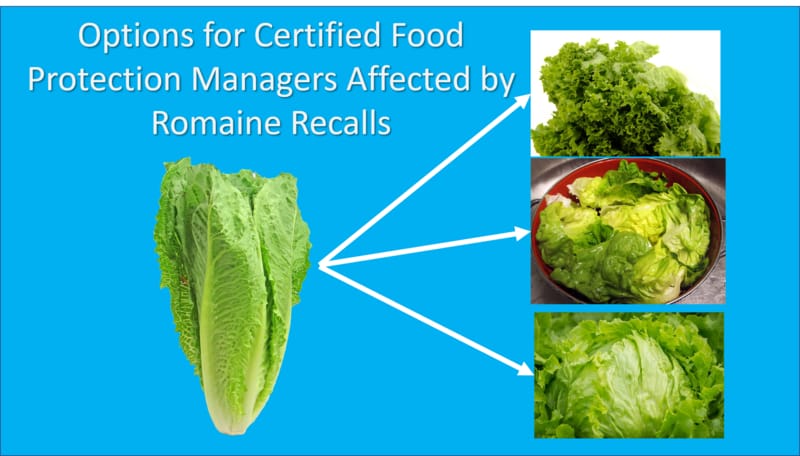
Secondly, you may want to find as close of an alternative as possible. With the latest recall happening just before Thanksgiving, we’ve heard stories from foodservice professionals that even other forms of lettuce had become scarce due to demand for a romaine replacement and an abundance of caution concerning all produce from the Salinas growing region. While nothing really has the crunch and flavor of romaine, there are a few potential alternatives:

  • Iceberg Lettuce
  • Butter Lettuce
  • Green Leaf Lettuce
  • Leafy Greens

Of the above alternatives, none will have the crunch factor of a crisp romaine heart, but iceberg, butter and green leaf varieties of lettuce will still have similar flavors and could provide an adequate substitute until romaine once again available. We’ve heard of some certified food managers thinking outside the box and replacing some menu items with different salads containing leafy greens such as kale, bok choy and spinach.

We’re interested in how certified food protection managers have been affected by recent romaine recalls. What alternatives did you use during the latest romaine recall?

Certified Food Protection Managers and Christmas

Certified Food Protection Manager and Christmas Service

We like to pay attention to growing trends in the foodservice community, and we’re noticing a lot more restaurants are advertising that they’ll be open on Christmas Day. While it’s not abnormal for large national chains to open on Christmas, we’re also hearing that certified food protection managers of many local restaurants may decide to open on Christmas Day as well.

Certified Food Protection Managers and Christmas
Image credit: Kirill Kedrinski

Certified Food Protection Manager Opening Your Restaurant on Christmas Day?

There seems to be growing demand among diners for Christmas service at local restaurants year after year, and we’re not just talking about breakfast and lunch. Many patrons have already hosted Christmas parties, entertained out of town guests and are looking for someone else to do the cooking and cleaning up on this festive holiday. But how should restauranteurs decide whether or not to open on the 25th of December?

The first thing you should consider is demand. Will there be a demand for your cuisine on Christmas Day? While there are many cultures that do not celebrate Christmas and certain types of restaurants already have a built-in clientele, you’re certified food protection manager will have to decide if your restaurant fits into that category. If not, then you may wish to promote a special Christmas menu should you feel the need to open on Christmas Day.

The second thing you should consider is your staff. Many families have Christmas traditions, and you may not have enough staff willing to work on Christmas Day itself. You could suddenly become a very unpopular certified food protection manager should you force your staff to work both Christmas Eve and Christmas Day.

A happy staff is a hard-working staff, so we suggest you poll your staff or maybe look for volunteers to work on the holidays, or allow staff to work either Christmas Eve or Christmas Day to fill out empty stations should you not have enough staff willing to work. It’s also a great idea to offer the incentive of holiday pay or some sort of bonus for spending their Christmas at work.

How do you feel about opening your restaurant on Christmas Day>

Food Safety Certification Exam

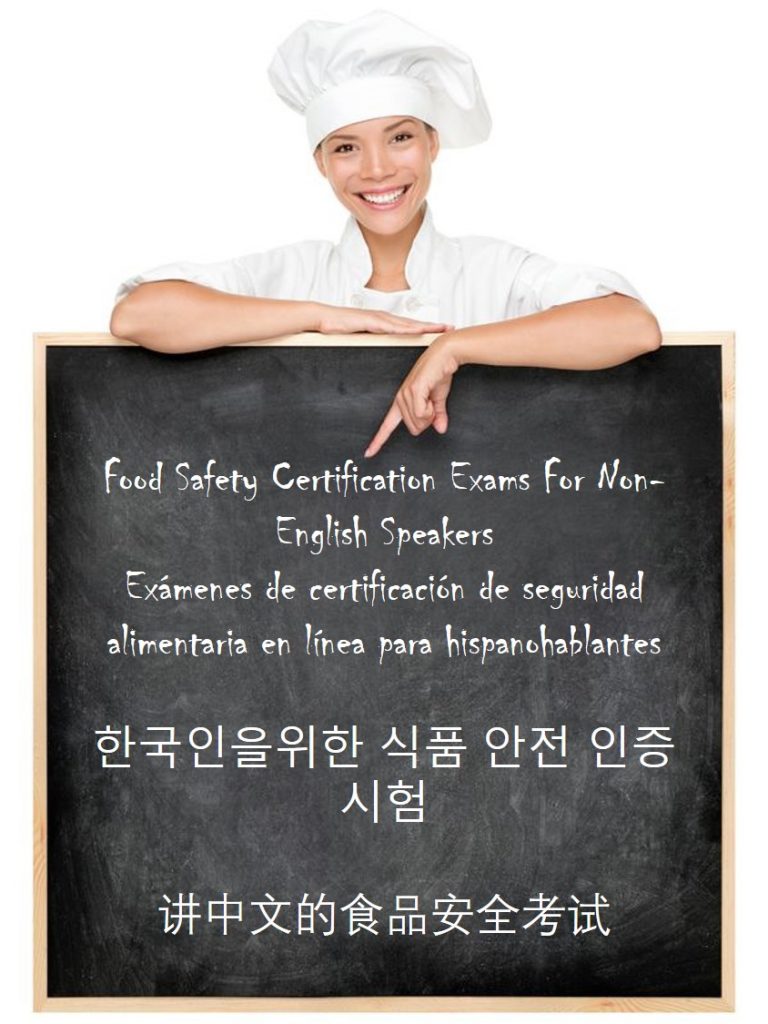
Food Safety Certification Exams For Non-English Speakers

Minnesota has a rather diverse food community, and many food service workers and certified food protection managers have learned English as their second language. If you’ve had the experience of taking a test or reviewing course materials in a language you’re not fluent in, you’ll know how frustrating it can be to fear misunderstanding test questions. The good news is, that at Safe Food Training, we can help you with food safety certification exams in a few different languages.

Food Safety Certification Exam
Image credit: maridav

Food Safety Certification Exam Language Options Beyond English

If English isn’t your first language, you might benefit from an online food safety course. The online course can be taken at a slower pace and give you a little more time to understand the material. We currently have online food safety courses available in English and Spanish. For the many fluent Spanish speakers in the Minnesota food community, this offers a the advantage of taking the course in their native language rather than one they may not be 100-percent fluent in.

What about other languages? While courses are currently limited to English and Spanish, we do have food safety certification exams available for those whose native tongue is something other than English or Spanish. We offer food safety certification testing in:

  • English
  • Spanish
  • Chinese
  • Korean

While the courses themselves may not be available in Chinese and Korean, you have the option to take the food safety certification tests in your native tongue should you speak one of these languages more fluently than English.

Could you or your staff benefit from testing or training in languages other than English? Let us know how we can help.