
The Top Food-Borne Illnesses and the ServSafe Food Manager

The Top Food-Borne Illnesses and the ServSafe Food Manager

There have been several outbreaks of food-borne illnesses that received national attention in the past year, but are the pathogens that receive the most media attention the biggest culprits that sicken consumers? This week, we take a look back at the top causes of food-borne illness.

Common Food-Borne Illnesses and the ServSafe Food Manager

Now that the data from 2016 has been compiled, we’ve learned some interesting things about food-borne illness trends. The top four causes of illnesses in 2016 included:

  • Campylobacter
  • Salmonella
  • Shigella
  • E. coli

While Salmonella and E. coli dominate the news cycle whenever there an outbreak happens, the number one cause of food-borne illness generally goes unreported. Campylobacter causes fever, nausea and abdominal pain and most commonly effect small children and young adults. We hear very little about this bacterium because serious cases rarely happen and only a few long-term complications can occur. Although rare, some of the more serious cases of infection have been linked to appendicitis and arthritic-like symptoms. Campylobacter contaminates food that has come into contact with animal or human fecal matter and commonly comes from chicken and poultry products. It also exists on unwashed fruits and vegetables that grow where a chicken manure based fertilizer is used or food product that is handled by unclean hands.

Shigella bacterium sometimes causes serious symptoms and is closely related to dysentery. Studies show that as little as 100 ingested bacteria can lead to symptoms, making Shigella the easiest contracted food-borne illness when present in food. ServSafe food managers must train their staff diligently to prevent the spread of Shigella since severe cases can cause seizures, intense abdominal pain and a risk of death in the elderly and those with compromised immune systems. Proper hand washing reduces the risk of the spread of Shigella, and those that contract it should be aware that it spreads for weeks after symptoms have dissipated.

Modern data collection and the reporting of illness statistics gives us a wider view of health concerns that result from improper food handling. Are there any rarely covered issues that you’d like us to address in a future article?

Blogs and the ServSafe Food Manager

Blogs and the ServSafe Food Manager

We cover all sorts of food safety topics in our ServSafe food manager training courses, but occasionally we come across a topic that strays from our standard instruction. We already know that businesses rely on social media for free marketing opportunities, and we recently discussed how using a regular blog can help keep your business on potential customers’ minds.

Blogs and the ServSafe Food Manager

Image credit: 123rf -32751463

How a Blog can Help the ServSafe Food Manager

Facebook and Twitter hold people’s attention numerous times a day, and as they scroll through their feeds posts from your business will appear. Getting them to click on your post and look further into what your food preparation outlet has to offer can be accomplished, but you need to have something to offer them.

When considering a blog, make sure that you don’t attempt to use it as a sales pitch. Yes, the purpose of a marketing blog is to help the ServSafe food manager attract customers, but consumers are bombarded with online ads and suggested posts that are nothing more than thinly veiled advertisements. While you benefit from informing potential customers about your restaurant, it is key to expand your blog beyond what is on your menu or what product you sell.

It’s also important to keep you material fresh. If your blog covers the same material time after time, potential customers will keep scrolling or even unlike your business’ page. Expand beyond your niche. purpose of a marketing blogon the fringe of your industry, or display your involvement in community events. Whatever direction you take, keep it interesting and engaging for your readers.

Finally, make sure that you regularly update your material. Readers may check in from time to time to see if you have any new articles available. There is no set rule, but keeping your site updated weekly, bi-weekly or monthly reminds readers that you’re still out there.

We feel that blogs work as a marketing tool. Do you have any special marketing tools to keep your social media fresh?

Discard or Salvage: A ServSafe Class Guide

ServSafe Class Guide to Decide When to Salvage or Discard

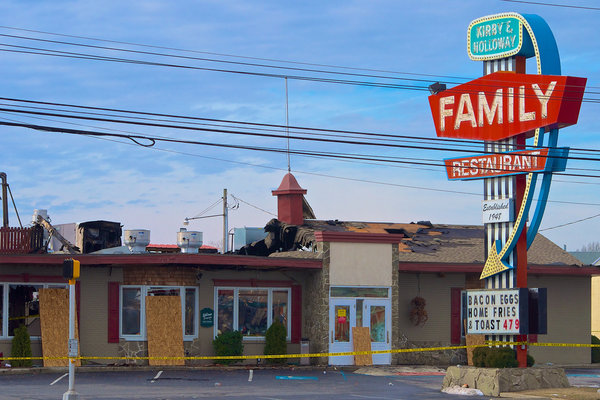
Although we always hope that disaster never strikes, occasions may happen over the course of a food manager’s career when they have to deal with a fire, a burst water pipe or another event that damages their facility. Occasionally, the topic comes up in a ServSafe class, and a student inevitably asks if there is any way to save product in these situations.

Discard or Salvage: A ServSafe Class Guide

Image credit: -Jeffrey- via Flickr

Discard or Salvage: A ServSafe Class Guide

There are a few different situations that can cause harm to food products. A fire can cause heat or smoke damage, water line leaks can create rust and sewage back-ups can infect food product, but does that mean that whenever there an incident occurs you must discard your entire inventory?

The following list clarifies unsalvageable items:

  • Fresh produce, proteins and dairy that comes in contact with water, smoke or sewage
  • Food in soft packaging such as cardboard
  • Dry goods such as flour and spices
  • Charred, rusted, swollen or leaking canned goods
  • Single service items such as plates and utensils

If the incident has occurred in your refrigerator, discard all items that have stayed at temperatures above 41 degrees for four hours. If any item has an unusual smell, texture or color, play it safe and throw it out. You also cannot salvage any previously frozen item that has thawed for two or more hours.

If you have any doubts whatsoever, don’t take any chances and discard items that may have come into contact with smoke or sewage.

The damage from a fire or sewage backup may not necessarily cause a total loss. A few items are salvageable under certain conditions. You can save sealed frozen foods that haven’t fallen below 41 degrees. Undamaged cans and bottles that have not suffered any damage due to heat require sanitation after the incident. In this instance, remove all paper labels and relabel the goods in permanent marker. If you have product in an area unaffected by the incident, inspect it for damage before deciding whether to save it or throw it away.

If a fire or sewage leak occurs in your facility, seek the advice of the local health department. They will easily clarify salvage rules, and they will provide on-site assistance to help you keep your existing product safe.

Fire, water and sewage catastrophes happen more often that we would like. Are there any unique disaster scenarios you’d like to see us cover in an upcoming article?

Norovirus and Online ServSafe Training

Norovirus and Online ServSafe Training

The Norovirus is covered thoroughly in online ServSafe training, it sickens more people each year than any other food-borne illness cause. Since this virus mainly spreads through contact with an infected food worker rather than a natural occurrence in food product, there are numerous challenges in preventing it from contaminating prepared food product.

Norovirus and Online ServSafe Training

Image credit: by Debs (ò?ó)? via Flickr

Online ServSafe Training Guide to the Norovirus

The most common source of the Norovirus comes from human contact or the failure to properly sanitize work stations after use. The usual ways that this pathogen comes into contact with food includes:

  • Contact with microscopic traces of infected blood, vomit, or other bodily excretion
  • Contact with contaminated surfaces
  • Contact with saliva or unwashed hands of an infected person

There are two lessons that are covered in our online training that should be apparent from looking at these regular causes of the Norovirus. First, do not work while sick. The chances of spreading the Norovirus increase when ill workers handle food product. The possibility also exists that your staff could still spread the virus after symptoms have dissipated. The Norovirus hangs around in the infected people’s blood and digestive systems for a few days after they have appeared to have recovered, so it may be necessary to take a few extra sick days after contracting this illness.

The second important lesson to learn is one that should be practiced even if there is little chance of spreading the Norovirus. Hand washing must be done diligently and properly after using the restroom, eating, smoking or participating in any activity that causes you to touch your mouth or other unsanitary areas of your body. Steps also should be taken to see that there is no barehanded contact with food product. Make sure that you have plenty of utensils and food-service gloves available so that potentially infected hands stay away from your product.

While the main causes of Norovirus poisoning come from human contamination, our online ServSafe guide would be incomplete if we did not mention potential hazards in food before it reaches your facility. There is a chance that an infected farmer or other worker could handle raw fruits and vegetables before they reach your business. In this case, you must make sure that all raw produce is properly washed and stored. Shellfish can also naturally absorb the Norovirus from the water that they are harvested from, especially in the warmer months of the year. Shellfish should be prepared properly and care should be taken to reduce the risk of cross-contamination with other food product.