Posts
Boar’s Head Cheese Recall: Why Traceability is Your Kitchen’s Best Defense
/0 Comments/in Food Borne Illness/by Jeff WebsterThe Boar’s Head cheese recall involves specific lots of Pecorino Romano cheese (both grated and in wedges) because of potential contamination with Listeria monocytogenes. Even though there have been no confirmed illnesses, the FDA classified this as a Class I recall because there is a reasonable probability that using the product could cause serious health consequences. If you’re managing a kitchen in Minnesota, you must immediately check your inventory for the affected lot codes and review your traceability procedures.
It’s Not Just the Deli Meat
If you’re like most food managers in Minnesota, you probably remember the massive deli meat recall earlier this year. But this latest alert proves a critical point: contamination can happen anywhere in the supply chain.
This time, it isn’t the liverwurst. It’s the Pecorino Romano.
Specifically, the recall affects:
- Boar’s Head Grated Pecorino Romano (6 oz jars and foodservice bags)
- Boar’s Head Pecorino Romano Wedges (7 oz)
- Note: This recall also affects other brands produced by the same supplier, including Locatelli and Ambriola.
If you’ve got these in your cooler, don’t serve them. Check the UPCs and sell-by dates against the official FDA notice immediately.
The "Peaches" Connection: Why It Could Be Anything
You’re probably thinking, “We don’t use Boar’s Head cheese, so we’re safe.” That’s a dangerous mindset.
Remember the peaches?
In late 2025, Moonlight Companies recalled yellow and white peaches because of Listeria. Back in 2020, a similar situation with Wawona peaches sickened 23 Minnesotans with Salmonella.
The lesson is simple: Whether it’s a processed dairy product like grated cheese or raw agricultural commodities like fresh peaches, the risk is always present. You can’t inspect Listeria out of a cheese wedge with the naked eye—it can survive and grow at temperatures as low as 31.3°F. You can only defend against it with traceability.
Traceability: Your Only Real Defense
When a recall hits, there are two types of kitchens:
- The Panic Kitchen: They scramble through the walk-in for 3 to 4 hours, tossing anything that “looks like” the recalled item, wasting hundreds of dollars and potentially missing the actual contaminated batch.
- The Proactive Kitchen: They pull up their invoices and receiving logs. Within 5 minutes, they know exactly when the product arrived, which lot it was, and whether it’s still in the building.
Reactive vs. Proactive Safety Procedures
Feature | The Panic Kitchen (Reactive) | The Proactive Kitchen (Safe Food Training) |
Response Time | 4+ Hours (searching physically) | < 10 Minutes (checking records) |
Waste | High (tossing safe product “just in case”) | Low (only tossing affected lots) |
Inventory Method | Visual checks only | First-In, First-Out (FIFO) & Lot Logging |
Confidence | “I think we got it all.” | “I know we’re safe.” |
3 Steps to Take Today
If you haven’t updated your receiving procedures lately, do it now.
- Log Your Lots: When high-risk items (deli meats, soft cheeses, leafy greens) arrive, write the Lot ID on your receiving log.
- Keep Invoices Accessible: Don’t just bury them in the office. If a recall alert drops during the dinner rush, your chef needs to see those dates immediately.
- Train Your Team: Does your prep cook know what a “Julian Date” is? If not, it’s time for a refresher.
Building Trust Beyond Compliance
We know how hard you work to put great food on the table. Recalls are frustrating because they feel out of your control, but how you handle them is 100% in your control. When you can look a health inspector—or a customer—in the eye and say, “We checked our lots, and we’re clear,” that isn’t just following the rules. That’s building trust. And in Minnesota, trust is everything.
Frequently Asked Questions
Q: Will this course fulfill Minnesota's food license requirements?
A: Absolutely. Our 8-hour food licensing course specifically aligns with and meets Minnesota’s official food safety standards, including handling recalls and traceability.
Q: How often must I complete continuing education to maintain my food safety certification in Minnesota?
A: In Minnesota, you must renew your certified food protection manager license by completing continuing education every 3 years. Staying current helps you stay on top of new risks like these.
Q: How does Safe Food Training support clients beyond the initial course?
A: We’re committed to building and maintaining relationships. We provide ongoing support through renewal reminders and as a reliable resource during confusing recalls like this.
Q: What's the primary service that Safe Food Training offers?
A: We specialize in providing personalized, 8-hour certified food protection manager licensing courses tailored for food professionals across Minnesota. We teach you the systems to handle recalls effectively.
Q: Why is staying current with food safety standards so important?
A: Upholding Minnesota’s food safety standards is critical for protecting public health. As these recalls show, ensuring your business remains compliant is the only way to protect your reputation.
Secure Your Kitchen Today
Don’t leave your kitchen’s safety to chance.
Register for an upcoming course at https://www.safefoodtraining.com, complete your food safety certification, and learn how to build a defense system that works.
Safe Food Handling in Minnesota: Beyond Expiration Dates, Critical Storage Mistakes That Put Your Business at Risk
/0 Comments/in Safe Food Training MN/by Jeff WebsterEffective storage goes way beyond checking dates on a carton. This guide explores structural storage errors, temperature management nuances, and specific date-marking protocols essential to protecting public health and maintaining your business’s reputation.
In a fast-paced commercial kitchen, glancing at a “use-by” date is second nature. But true compliance with Safe Food Handling in Minnesota regulations requires understanding how you store ingredients from the moment they arrive at the back door. While an expired product is a blatant violation, the most significant risks hide in how and where you store food before it spoils.
As a food safety professional, your oversight ensures convenience never compromises safety. Whether you manage a school cafeteria or a bustling restaurant, avoiding critical storage mistakes is key to preventing cross-contamination and bacterial growth. By mastering these protocols, you protect your customers and ensure your facility is always inspection-ready.
1. The "Vertical Hierarchy" and Cross-Contamination Risks
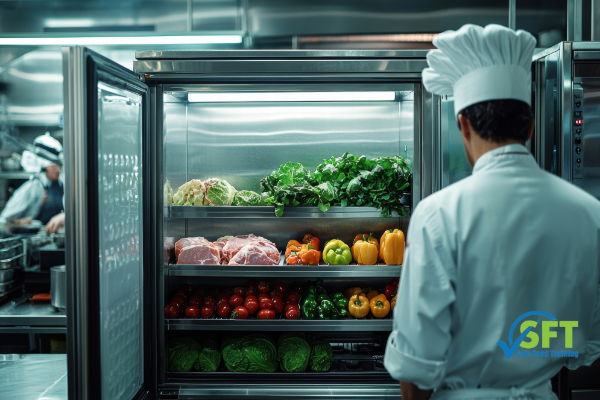
One of the most frequent violations in walk-in coolers isn’t temperature—it’s placement. “First In, First Out” (FIFO) is crucial for stock rotation, but it must never supersede the safety hierarchy based on cooking temperatures.
Safe Food Training notes that improper shelf organization compromises food safety. If you store raw animal products above ready-to-eat foods, a single drip can cause a catastrophic foodborne illness outbreak, regardless of expiration dates.
- Mind the Cooking Temps: Always store foods in descending order of required internal cooking temperature. Ready-to-eat foods go at the top, followed by seafood, whole cuts of beef/pork, ground meats, and, finally, poultry.
- Vertical Awareness: Never store food directly on the floor. Minnesota code requires you to keep food at least six inches off the floor to prevent contamination from cleaning chemicals, pests, and water.
- Leak-Proof Storage: Place all thawing meats in deep, leak-proof containers. Relying solely on the butcher paper or plastic wrap from the supplier is a recipe for cross-contamination.
2. Why Safe Food Handling Minnesota Standards Demand Rigorous Airflow
It’s a common misconception that if the cooler thermometer reads 40°F, everything inside is safe. However, the Minnesota food-handling protocols require more than a functional compressor; they also need proper air circulation.
Overstuffing a walk-in cooler or dry storage area is a critical error. When you stack boxes against walls or push them right up to the ceiling, cold air can’t circulate effectively. This creates “hot spots” where food can linger in the Danger Zone, allowing bacteria to multiply rapidly without tripping the main thermostat.
- Respect the Load Lines: In open refrigerated display cases or freezers, never stack products above the manufacturer’s load line. This disrupts the “air curtain” keeping food safe.
- Spacing for Safety: Leave space between boxes and shelving units to allow cold air to circulate freely around products. If air can’t reach the center of the pallet, the food in the middle may spoil.
Cooling Before Storing: Never place large pots of hot food directly into the cooler. This raises the unit’s ambient temperature, putting all other inventory at risk. Use ice wands or shallow pans to cool food rapidly first.
3. Decoding Expiration Dates and the 7-Day Rule
While the printed date on a package is important, the clock resets the moment you open it. Many storage mistakes happen because staff confuse the manufacturer’s “sell-by” date with the internal “use-by” date required for safety.
For ready-to-eat TCS (Time/Temperature Control for Safety) foods prepared on-site or opened from a commercial package, strict date marking is non-negotiable.
- The 7-Day Standard: Under the Minnesota food code, you may keep ready-to-eat TCS food for over 24 hours, for a maximum of 7 days, if it’s held at 41°F or lower. The day of preparation (or opening) counts as Day 1.
- Labeling Discipline: Clearly mark every container with the food’s name and the use-by date. Ambiguity leads to waste or, worse, serving unsafe food.
- Manufacturer vs. Opened Date: If a manufacturer’s expiration date is earlier than your calculated 7-day window, the manufacturer’s date takes precedence. Always use the earliest date to ensure safety.
Strengthening Your Operations in Minnesota
Eliminating these storage mistakes requires vigilance and a well-trained eye. It’s not enough to buy the right equipment; your team must understand the biology and physics behind safe food handling in Minnesota mandates.
Proper storage is the backbone of a safe kitchen. By looking beyond simple expiration dates and focusing on hierarchy, airflow, and accurate date marking, you build a defense system that keeps your community healthy.
Is your team up to date on the latest Minnesota food code requirements?
Don’t wait for an inspection to find gaps in your knowledge. Register for a personalized 8-hour licensing course or a continuing education refresher with Safe Food Training today. We offer convenient instructor-led options online and in person to help you lead with confidence.
Beyond the Heat Lamp: A Certified Food Protection Manager’s Guide to Safe Hot Holding Temperatures
/0 Comments/in Certified Food Protection Manager, Safe Food Training MN/by Jeff WebsterMaintaining safe hot holding temperatures is a critical responsibility for any Minnesota food professional. This guide outlines essential protocols for keeping food out of the “Temperature Danger Zone,” the importance of equipment monitoring, and the corrective actions required to protect public health. It emphasizes that a certified food protection manager must lead by example to ensure compliance and safety in every meal served.
In the bustle of a Minnesota kitchen, the steam table is often an afterthought. After cooking and placing the food in the warmer, people frequently assume it’s safe until it’s served. However, as any certified food protection manager knows, maintaining proper hot holding temperatures is not a passive activity—it’s an active defense against foodborne illness.
Upholding Minnesota’s food safety standards is critical for protecting public health and ensuring your business remains compliant with state law. While a heat lamp or steam table aids in this process, the equipment alone cannot guarantee safety. It requires vigilance, knowledge, and a commitment to “proper time and temperature controls” to ensure that the food you serve is as safe as it is delicious.
1. Mastering the Mechanics of Temperature Control
The primary goal of hot holding is to prevent the rapid growth of pathogens that thrive when food temperatures drop. Safe Food Training emphasizes that understanding these controls is essential to preventing foodborne illness.
When managing hot holding stations, you’re essentially fighting against the “Temperature Danger Zone” (41°F and 135°F). To win this battle, you must move beyond guesswork and rely on precision:
- Internal Temperature Checks: Never rely on the holding unit’s temperature gauge. These gauges typically measure air or water temperature, not food temperature. Use a calibrated thermometer to check the product’s internal temperature.
- Stirring is Safety: Heat does not always distribute evenly, especially in thick soups or casseroles. By stirring frequently, you ensure the heat distributes throughout the pan, preventing cool spots where bacteria could survive.
- Cover and Protect: Using lids and covers helps retain heat and protect food from external contaminants, reducing the risk of cross-contamination.
2. Why Every Certified Food Protection Manager Prioritizes Equipment Validation
The primary goal of hot holding is to prevent the rapid growth of pathogens that thrive when food temperatures drop. Safe Food Training emphasizes that understanding these controls is essential to preventing foodborne illness.
When managing hot holding stations, you’re essentially fighting against the “Temperature Danger Zone” (41°F and 135°F). To win this battle, you must move beyond guesswork and rely on precision:
- Internal Temperature Checks: Never rely on the holding unit’s temperature gauge. These gauges typically measure air or water temperature, not food temperature. Use a calibrated thermometer to check the product’s internal temperature.
- Stirring is Safety: Heat does not always distribute evenly, especially in thick soups or casseroles. By stirring frequently, you ensure the heat distributes throughout the pan, preventing cool spots where bacteria could survive.
- Cover and Protect: Using lids and covers helps retain heat and protect food from external contaminants, helping prevent cross-contamination.
2. Why Every Certified Food Protection Manager Prioritizes Equipment Validation
Even the most expensive holding equipment can fail or drift out of calibration. A critical part of your role involves verifying that your tools are working correctly. Our training courses help you and your business effectively meet Minnesota’s essential food safety standards, including equipment requirements.
If your equipment is not maintaining the necessary 135°F (or higher) threshold, you’re putting your customers and your reputation at risk.
- Preheating is Non-Negotiable: Never use hot holding equipment to reheat food. These units are designed to maintain temperature, not to raise it. Always reheat food to 165°F rapidly before placing it in the warmer.
- Routine Maintenance: Schedules should be in place to check heating elements and water levels in steam tables. A proactive approach helps prevent equipment failure during peak periods.
- Validation Logs: Keep a log of equipment checks. This documentation shows that you’re actively managing safety, which is vital to maintaining a trusted reputation with your customers.
Strengthening Your Credentials in Minnesota
Managing hot holding temperatures is just one aspect of a complex job. Whether you’re running a school cafeteria, a restaurant, or a catering business, staying current with your training is essential. At Safe Food Training, we specialize in personalized, 8-hour courses tailored for food professionals across Minnesota.
If your certification is nearing expiration, remember that in Minnesota, you must renew your Certified Food Protection Manager license every three years. We provide timely reminders for this renewal cycle to help you stay compliant.
Ready to refresh your knowledge or certify your team?
You can easily register for an upcoming course by visiting our website. We offer both in-person and online learning opportunities, as well as private training sessions for your entire staff. Let us help you keep your food safe and your business compliant.
About Us
Recent Posts
- Farm-Fresh vs. Store-Bought Eggs: An Easter Food Safety Guide
- The Essential Guide to CFPM Requirements for Minnesota Food Trucks
- Keep it Under Wraps: The Truth About Hair Restraints in MN
- Is Your Kitchen in the Danger Zone? A Guide to Precision Temperature Control
- When Can a Sick Employee Return to Work? The MN Food Manager’s Guide to Illness Reporting