The CFPM’s Catering Guide to Safe Transport: From the Kitchen to the Venue

Catering. CFPM

Safe food transport requires strict temperature control from the moment your dishes leave the kitchen until they hit the buffet line. You’ve got to use insulated carriers and regularly check the temperature to keep hot food above 135°F and cold food below 41°F. This prevents dangerous bacteria from multiplying while you’re out on the road.

Battling the Minnesota Elements

Catering in Minnesota presents unique weather challenges for your business. You might fight a winter blizzard in St. Cloud or sweat out a humid July afternoon in the Twin Cities. Either way, external factors are working hard against your food’s safety. Moving meals across town isn’t just about driving carefully. It’s about creating a perfectly controlled environment inside your delivery vehicle so your hard work pays off.

Let’s talk about your holding equipment. A standard tailgating cooler won’t cut it when you’re moving pans of hot lasagna or delicate seafood appetizers. You need commercial-grade insulated transport boxes for a professional gig. These specialized units keep heat or cold for several hours. They basically act as a temporary extension of your commercial kitchen. You’ve got to pre-chill or pre-heat these carriers before packing them. Placing hot pans into a freezing-cold box instantly lowers the temperature of your food.

Temperature control relies entirely on avoiding the danger zone. That’s the specific temperature range between 41°F and 135°F where bacteria multiply the fastest. If your food sits in that zone for too long, your guests will probably get sick. Always probe your food with a calibrated thermometer just before loading the van. I also recommend keeping a transport log on your clipboard. Writing down the exact departure temperature gives you a reliable baseline if you hit unexpected traffic on I-494. Take the temperature again, exactly when you arrive at the venue.

Stop Cross-Contamination in the Truck

 Catering company.
Is your catering business meeting all of Minnesota’s food safety requirements?

Temperature isn’t your only concern when hitting the highway. Spills and leaks are a major threat to your catering order. You must never stack raw ingredients above ready-to-eat foods in your delivery vehicle. A sudden stop can easily send raw meat juices spilling onto a tray of fresh salads.

Wrap your pans tightly with heavy-duty foil or commercial plastic wrap. You also need to make sure your vehicle is spotless before loading. Dust and dirt from your floorboards can easily circulate and contaminate your food containers. Securing your load with straps prevents a disastrous mess and keeps your food completely safe from physical contamination. It’s also smart to keep allergen-free meals in completely separate, clearly labeled coolers so they don’t get mixed up during the chaos of setting up the buffet.

Frequently Asked Questions About Catering Transport

Moving food off-site raises many specific concerns for Minnesota caterers. Here are the answers to some typical transport questions we get asked in our classes. For more details, you can always check our general FAQ page.

How long can food stay in an insulated carrier?

It really depends on the overall quality of your equipment. High-end hot boxes can hold temperatures safely for about four hours. You should always monitor the internal temp to verify it hasn’t dropped into the dangerous temperature range.

What if I lose temperature control on the way to the venue?

You’ve got a tough decision to make if this happens. If you know the food has been sitting outside safe temperature limits for over 4 hours, throw it away. It’s painful to toss out an entire wedding dinner, but making dozens of people sick is far worse.

Do I need a special refrigerated truck to transport catered food?

You don’t need a refrigerated truck for short, local trips. Standard passenger vehicles work perfectly fine if you use proper commercial carriers and secure them tightly. You just can’t let the containers slide around and spill inside your trunk.

Get Your MN Food Safety Certification

Keeping a busy off-site catering operation compliant takes actual skill, and we’re ready to help your team succeed. Give me a call at (952) 210-0195 or email info@safefoodtraining.com to find a training location near you. You can easily register for your initial certification or book your 3-year continuing education class at safefoodtraining.com.

Is Your Kitchen in the Danger Zone? A Guide to Precision Temperature Control

temperature control

In Minnesota, the “Danger Zone” is the temperature range between 41°F and 135°F where bacteria grow most rapidly. To stay compliant with the Minnesota Food Code, Time/Temperature Control for Safety (TCS) foods must be kept outside this range—either held hot above 135°F or maintained cold at 41°F or below.

If you are managing a busy kitchen during a rush, it is easy to trust the thermometer on the outside of the walk-in cooler or assume the steam table is “hot enough.” However, after years of training food professionals across Minnesota, I’ve seen that relying on guesswork is the fastest way to land a correction order from the health department—or worse, cause a foodborne illness outbreak.

temperature control
Do you know the rules?

Here is your guide to mastering precision temperature control and keeping your kitchen safe.

Why Minutes Matter in the Danger Zone

Bacteria need little time to become dangerous. In the Danger Zone (41°F – 135°F), bacteria can double in number every 20 minutes. This means a pan of soup left on a prep table for just a couple of hours can turn from safe to hazardous before you even notice.

In a professional kitchen, we aren’t just concerned with “spoiled” food; we are concerned with pathogens such as Salmonella and E. coli that don’t change the appearance, smell, or taste of the food. The only way to prevent this is to control how long food spends in this temperature range.

The 3 Critical Temperature Rules for MN Kitchens

kitchen fridge for precision temperature control
Are your temperature control regulations accurate?

To keep your food safe and your inspection report clean, your staff needs to memorize these three critical thresholds:

1. Cold Holding: 41°F or Below

  • The Rule: Cold foods (like cut melons, dairy, raw meats, and cut leafy greens) must be kept at an internal temperature of 41°F or lower.
  • Common Mistake: Overfilling the prep table. If you stack pans too high, the food on top isn’t getting the cold air it needs.
  • Jeff’s Pro Tip: Don’t rely on the built-in thermometer in your cooler. Place a separate thermometer in the warmest part of the unit (usually near the door) to get the real story.

2. Hot Holding: 135°F or Above

  • The Rule: Hot foods (such as soups, rice, and cooked meats) must be maintained at 135°F or higher.
  • Common Mistake: Reheating food in a steam table. Steam tables maintain temperature; they don’t bring food through the danger zone quickly enough.
  • Jeff’s Pro Tip: Always reheat food to 165°F (for 15 seconds) first, then transfer it to the hot-holding unit.
  • 3. Cooling: The Two-Stage Process


    cooling
    What procedures do you use for cooling?

    Cooling is where most kitchens get into trouble. You cannot just place a 5-gallon pot of hot chili in the walk-in; it will remain in the Danger Zone for hours and raise the temperature of everything else in the fridge. You must follow the Two-Stage Cooling Process:

    Stage

    Temperature Drop

    Time Limit

    Stage 1

    135°F down to 70°F

    Within 2 Hours

    Stage 2

    70°F down to 41°F

    Within the next 4 Hours

    Total

    135°F to 41°F

    6 Hours Max

    Why 70°F? Bacteria grows even faster between 125°F and 70°F. If you don’t reach 70°F within the first two hours, you must reheat it to 165°F and start over—or discard it.

How to Speed Up Cooling

To stay compliant, I recommend using one of these three methods:

  1. Ice Baths: Place the food container in a larger prep sink filled with ice and water.
  2. Shallow Pans: Transfer hot liquids into shallow metal pans (2 inches deep or less) to increase surface area.
  3. Ice Wands: Use frozen plastic paddles to stir liquids and cool them from the inside out.

The “Ice Water” Calibration Test

A thermometer is only useful if it’s accurate. If you drop your thermometer, it can easily lose its calibration. We recommend testing your thermometers at least once a week:

  1. Fill a glass with crushed ice and add water (more ice than water).
  2. Stir the mixture and let it sit for 3 minutes.
  3. Insert the probe into the center of the glass (don’t touch the sides or bottom).
  4. The reading should be 32°F (0°C).
  5. If it reads differently, adjust the nut under the dial until it hits 32°F.

Frequently Asked Questions

Common questions we get about temperature control.

What is the temperature danger zone in Minnesota?

The specific danger zone defined by the Minnesota Food Code is 41°F to 135°F.

How long can food sit out before I have to discard it?

Generally, TCS food should not remain in the Danger Zone for over 4 hours. If you aren’t using a specific “Time as a Public Health Control” (TPHC) plan, you must discard it once it reaches the 4-hour mark.

Can I use a laser (infrared) thermometer for everything?

No. Laser thermometers only measure surface temperature. To determine whether a chicken breast or a pot of soup is safe, use a probe thermometer to check the internal temperature.

Get Certified with Safe Food Training

Understanding these rules is just the beginning. To truly protect your business and your customers, you need a deep dive into the Minnesota Food Code. We offer two ways to get your Certified Food Protection Manager (CFPM) license:
Pass/fail
Learn right away if you pass or fail.

Feature

In-Person Training

Online Training

Best For

“Get it done in one shot.”

“Learn on your timeline.”

Pass Rate

Highest pass rates because of live Q&A.

High, but requires self-discipline.

Environment

Distraction-free with immediate feedback.

Flexible; learn from home or office.

Jeff Webster

Direct interaction with Jeff.

Self-paced modules.

Ready to secure your spot?

Register for an In-Person or Online Course Today at SafeFoodTraining.com
How to Food Safety Training for Pathogen Free Marinades

How to Food Safety Training for Pathogen Free Marinades

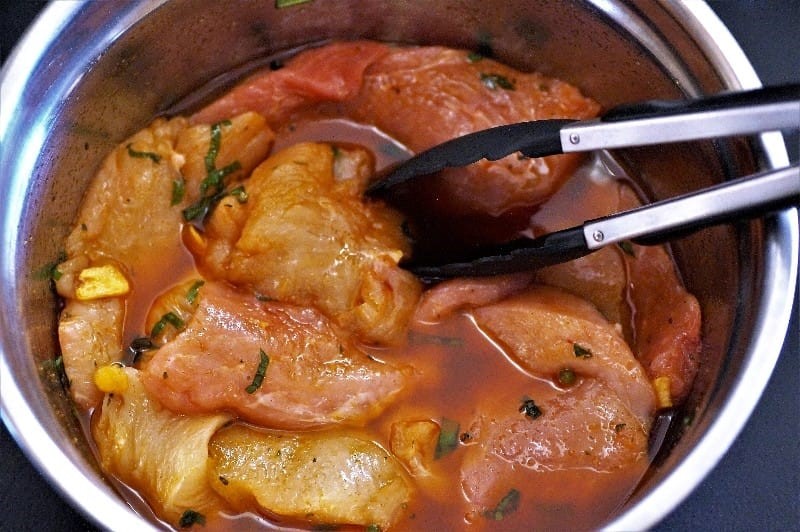
Marinades infuse meats, poultry and even vegetables with great flavors, but if you’re not careful they may also infuse your food with pathogens, bacteria and other contaminants that could sicken guests. As the saying goes, so it’s important to make sure that your extra flavor doesn’t come with a dose of illness. Let’s explore food safety training for pathogen-free marinades.

How to Food Safety Training for Pathogen Free Marinades
Image credit: pxfuel

Food Safety Training to Prevent Tainted Marinades from Causing Foodborne Illness

There are three major concerns when it comes to food safety training for bacteria-free marinades:

  • Cross-contamination
  • Spoiled Fresh Ingredients
  • Temperature Control

If you’re using the same marinade for multiple purposes, you run the risk of mixing two ingredients that may be required to be cooked to different temperatures. You’ll inevitably contaminate some ingredients if you mix multiple items in the same container. Meats and vegetables cook at different temperatures, and poultry requires a much higher final cooking temperature than most other raw foods. To avoid any type of cross-contamination, use a separate container to marinate different ingredients. It’s also a good food safety procedure to throw out marinades used for raw ingredients and start over each time you marinade new ingredients regardless of type.

If you make your own marinades in-house and make more than you need for any given day, make sure you take note of the shelf life of any fresh ingredients involved. Fresh ingredients spoil over time naturally and adding them to liquids can accelerate the process. Use proper labeling techniques to date all marinades and have a defined expiration date on all marinades and marinated product.

Temperature control can also sometimes be an issue with large batches of marinades. When soaking raw proteins, make sure that all ingredients are out of the danger zone, and don’t soak any protein at room temperature.

Finally, if you utilize dry rubs or marinades, you should still follow the same food safety procedures as wet marinades.

What’s the favorite marinade you use in your restaurant?

Food Safety Training Review of Proper Temperature Control

Temperature Control and Food Safe Training

It’s September, and we’re in the midst of National Food Safety Month. National Food Safety Month gives us the opportunity to look at some of the most important rules that keep our food safe. It also gives restaurateurs and food service supervisors the chance to pass on the knowledge they’ve learned during food safe training to their customers.

Temperature Control and Food Safety Training
Copyright: erwinova / 123RF Stock Photo

Temperature Control and Food Safety Training

Before we talk about ways to introduce food safe cooking practices to your guests, it’s important to quickly review proper temperature control procedures. All food must spend as little time in the danger zone as possible. This means all hot foods must remain over 140 degrees and all chilled foods must remain below 41 degrees. Raw proteins and reheated foods must be fully cooked before serving.

  • Reheated cooked product: 165 degrees
  • Raw poultry: 165 degrees
  • Ground meats and pork: 155 degrees
  • Eggs that will be held: 155 degrees
  • Eggs for immediate service: 145 degrees
  • Beef, fish and game: 145 degrees

When we talk to people who have never worked in the food industry, we find some interesting misconceptions about how temperature affects food safety. Many people know the common pathogens that cause food-borne illness due to media coverage of outbreaks, but they don’t consider how their cooking habits at home can have the same consequences on a smaller scale. While food business operators are not responsible for how their patrons handle food at home, Food Safety Month offers a way to share food safe training practices with their guests.

Including an insert in your menu that explains what Food Safety Month is about is an easy way to pass on food safe training practices. Educating your patrons on proper cooking temperatures for proteins can give them an at home guide to doing it themselves. The Minnesota Food Code provides fact sheets that can be easily adapted to produce a simple instruction guide to enlighten your guests on this key food safety issue.

We think it’s a great idea to pass on food safety tips to those not in the industry. Do you have any ways that you educate your guests?