Announcing A CFPMs Guide To Proper Handwashing Sink Locations

Announcing A CFPMs Guide To Proper Handwashing Sink Locations

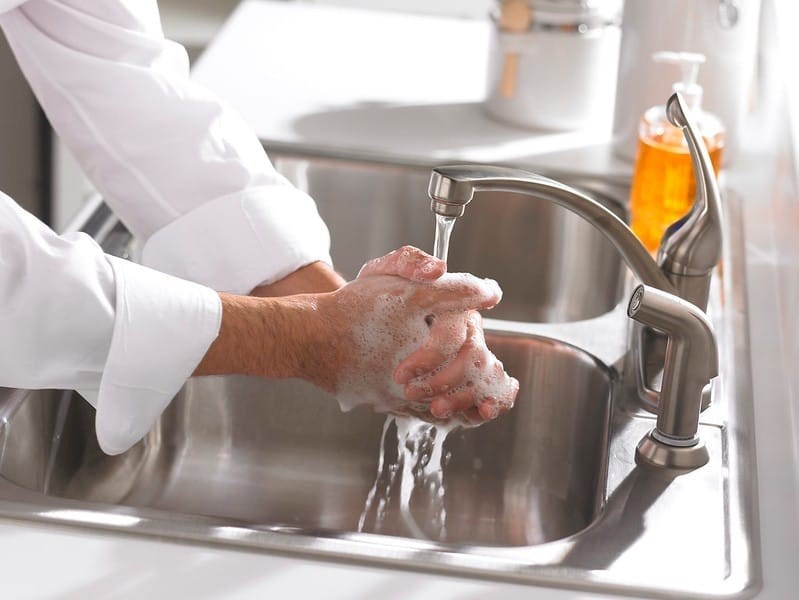
We talk a lot about proper handwashing procedures as the best foodborne illness prevention, but many times the areas surrounding handwashing sinks are overlooked by certified food protection managers. Let’s take a closer look at how CFPMs properly maintain the area around your handwashing sink locations.

Announcing A CFPMs Guide To Proper Handwashing Sink Locations
Image credit: USDA via Flickr

How To Set up a Proper Handwashing Sink Location For CFPMs

CFPMs already train their staff on how to properly use and stock a handwashing station, but, as a quick review, remember your handwashing station should be supplied with:

  • Hot Water
  • Soap
  • Paper Towels of Air Dryer
  • Fingernail Brush

This is usually one of the first things covered in any online or in-person CFPM training course. What may be misunderstood is what the area surrounding your handwashing station should look like. There can be foodborne illness risks involved if your sink location isn’t properly arranged or installed.

First CFPMs should make sure, your handwashing sinks should be easily and immediately accessible. They should be in the food preparation areas and not located behind closed doors. If you block your handwashing sink with storage racks or other equipment, it serves little use if your staff cannot wash their hands. A restroom sink should also not be considered a handwashing sink as door knobs and handles may be contaminated if touched after washing your hands.

Another thing to consider is the relative location to preparation surfaces or clean dish storage. If your handwashing sinks are in close proximity to clean spaces in your kitchen, make sure that there is no risk of water or soap splashing on sanitary items or surfaces. Ensuring there is a gap between these areas and your handwashing station will reduce the risk of contamination from dirty water and handwashing soap.

Finally, CFPMs should avoid storing any food product or clean utensils above and below handwashing station. Doing so may increase the risk of contamination from dirty hands or water used in the handwashing process.

Have you taken the time to evaluate your handwashing stations?
New Food Safe Managers Training for Color Coded Cutting Boards

New Food Safe Managers Training for Color Coded Cutting Boards

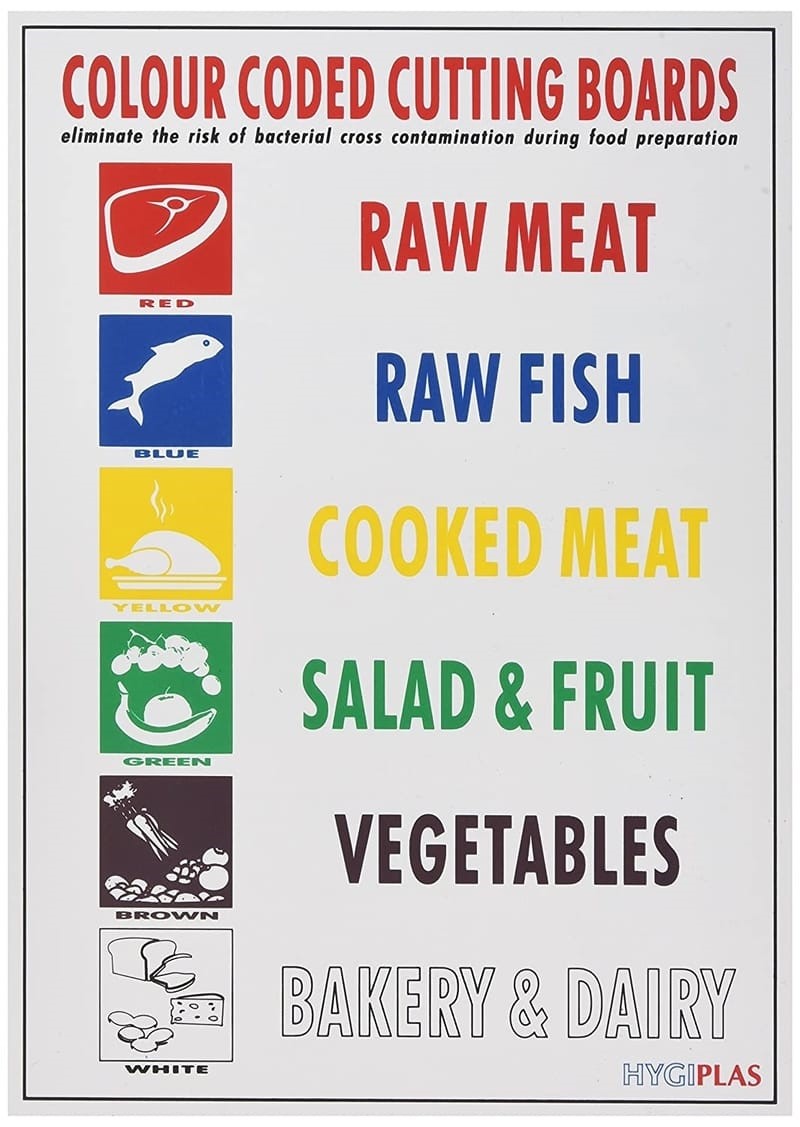
Cross contamination causes numerous foodborne illnesses every year, and food safe managers need to take steps to train their staff on the risks and provide the tools necessary to prevent sickening guests. Rather than using generic white cutting boards, food safe managers may want to look into different colored cutting boards with designated purposes to greatly reduce cross contamination risks.

New Food Safe Managers Training for Color Coded Cutting Boards
Image credit: Hygiplas viaBigomart

How Food Safe Managers Can Train staff To Use Colored Cutting Boards Reduce Foodborne Illness Risk

While you can properly wash, sanitize an utilize generic cutting boards for any purpose, there’s often a chance that a cutting board can be mistakenly used for raw product and then prepared food or a board may be contaminated with an allergen that only one member of the kitchen is aware of, increasing the risk of it being used again. Purchasing color coded boards will clearly identify what type of product can be used on each cutting board. There are a few different patterns, but the most common codes are:

  • Green: Raw Vegetables
  • White: Cheese and Dairy
  • Red: Raw Meat
  • Brown: Raw Seafood
  • Yellow: Raw Poultry
  • Blue: Finished Product
  • Purple: Allergen Free

As you can see, food safe managers and their staff can clearly identify what product has been prepared on each board if the system is followed. A blue board that has been left out had obviously been used for cooked product while red, brown and yellow are warning flags that there is increased risk of cross contamination with raw product should that board be used for any other purpose.

We’ve looked at several sets available on the market, and many neglect the risk of allergen contamination. We strongly advise food safe managers look into purchasing a purple or uniquely colored cutting board that is reserved only for use in the event a guest with known allergies requests food be prepared on an allergen free surface.

The color code isn’t always a catchall, however, if you’re in doubt as to if a board is contaminated or not, take the time to wash it before using.

Do you use color coded cutting boards to prevent cross contamination?

food safety Manager Training for Your Delivery service

Proven Food Safety Manager Training For Your Delivery Service

Over the past two years, many restaurant patrons have changed the way they order their meals giving food safety managers the challenge of adapting to foodservice beyond in-person dining. With COVID-19 numbers fluctuating and regional regulations impacting food service, many patrons have taken to delivery services to order from their favorite eating establishment. Delivery provides a whole new set of food safety hazards that don’t exist within the confines of a dining room, so it’s important for every food safety manager to look at how to keep your food safe during the delivery service process.

Proven Food Safety Manager Training For Your Delivery Service
Image credit: belchonock via 123rf

How Food Safety Managers Can Keep Food Safe During Delivery Service

There are very limited regulations in the MN food code regarding what happens to food after it leaves your restaurant for delivery, so food safety managers have to use common sense to create their own procedures to keep food safe during the delivery process.

If you don’t have your own delivery drivers, your restaurant may rely on Postmates, GrubHub and Uber Eats for delivery service. Unfortunately, since these drivers are not members of your staff you’ll have no control over what happens to your meal once the driver leaves your establishment. The good news is, the drivers of these outside services are professionals, and many will take precautions to keep food warm and reduce contamination risks, but you can still take precautions to help keep food safe. When preparing food for delivery, make sure you:

  • Keep food hot until pick up
  • Prepare food as close to pick up time as possible
  • Use appropriate to go containers to prevent spillage

Rather than leaving to-go and delivery orders at the bar or hostess stand, we recommend you keep it in a warmer or under a heat lamp until it’s ready to leave the building. This will reduce the amount of time your food is a risk of falling into danger zone temperatures. It’s also a good idea to have the food prepared as close to the pickup deadline as possible and stored in sealed containers that won’t spill during transport. We all love a warm bowl of soup as a side dish with sandwiches or burgers, but we’ve yet to see a creamy chicken noodle club sandwich at any of our favorite restaurants, so make sure containers are sealed before leaving the restaurant.

Establishments that do employ a delivery driver can have much more control over the safety of your product during delivery. Make sure to stock up on insulated delivery bags in order to ensure freshness upon delivery.

What steps does your food safety manager take to keep your food safe during deliveries?

A Valuable Certified Food Protection Manager Refresher On Cooling Procedures

A Valuable Certified Food Protection Manager Refresher On Cooling Procedures

Having product prepared ahead of time can make for smooth service during the dinner rush and gives certified food protection managers time to concentrate on menu items that need to be prepared at the moment. If you rely on cooking hot foods in advance to be ready to reheat, it may be a good time for your certified food protection manager to review proper cooling procedures with your staff.

A Valuable Certified Food Protection Manager Refresher On Cooling Procedures
Image credit: serezniy via123rf

Cooling Times and Temperature Review for Certified Food Protection Managers

The key to making sure that cooling foods are kept safe from foodborne illness is to chill it as fast as possible so that it doesn’t stay in the danger zone for an extended period of time. Food that sits between 41 degrees and 135 degrees has an elevated risk of growing bacteria, especially if left at that temperature for over longer than is reasonable. If your food was prepared at room temperature, you have four hours for your product to reach 41 degrees. If foods are prepared at temperatures over 135 degrees, they must reach 70 degrees within two hours and 41 or below within six total hours from the start of the process.

MN food code and certified food protection manager training reinforces that this chilling process should happen as quickly as possible, so make sure you utilize the following methods:

  • Ice water baths
  • Separating liquid product into shallow hotel pans
  • Slicing solid product to portions four inches thick or less
  • Sanitized cooling wands
  • Rapid cooling equipment such as blast chillers
  • Adding ice as a final ingredient

If you don’t have access to a blast chiller, the fastest way to cool hot product is by reducing portion size and cooling it in your walk-in in shallow pans. If you want to expedite the process for soups, sauces and other liquids, you can add ice as the last ingredient of your recipe. This is quite effective for menu items that have a water or stock base, to begin with.

Ice water baths are also incredibly effective, and when combined with a frozen cooling wand, can bring your chilling product below 41 degrees rapidly.

Has your certified food protection manager taken the time to evaluate cooling procedures in your facility?