
Spanish Online Food Safety Certification Courses

Spanish Online Food Safety Certification Courses

For a great number of innovative restaurateurs, food service managers and employees that work in food production, English is not their first spoken language. This often leads to challenges when it comes time to become food safety certified. Many courses are led by a talented instructor who may have a rudimentary knowledge of the Spanish language, but might not be fully able to converse with a native Spanish speaker. If you have a Spanish speaking employee in need of certification, a Spanish online food safety certification course can help them gain the knowledge they need and take the test in a familiar language.

Spanish Online Food Safety Certification Courses

Copyright: ximagination / 123RF Stock Photo

Benefits of Online Food Safety Certification Courses for Spanish Speakers

Even if a student has a good grip on the English language, they may be more comfortable studying in the language that comes naturally to them. There are certain nuances in both English and Spanish that could cause a teacher to have trouble explaining a concept to a Spanish speaker and have the student misunderstand the information. This can be especially true for food service workers who recently immigrated to the United States.

An online food safety certification course will also help by placing a non-English speaker in a comfortable environment. Online classes can be taken from the student’s home at their own pace. After the student has finished their online training, all that will be left for them is to register for a testing date. Many times this test must be taken at a specific location away from home where they have the advantage of taking it in their own language.

At Safe Food Training, we can set up online courses in both English and Spanish, as well as provide any specialized training you may require.


Customized Food Handling Training Courses

Customized Food Handling Training Courses

The food service industry is unique in the fact that many different types of businesses fall under the food service umbrella. The training needs of a restaurant defer from the certification requirements of school cafeteria and food processing outlets may have specialized protocols for food handling training. Since many different types of facilities exist, why should the same food handling training be given to the employees of different types of food service businesses?

Customized Food Handling Training Courses

Image credit: Pixabay-PIRO4D

There are many benefits to providing customized food safety training for your employees.

  • Training can be tailored to your type of business
  • Training can occur on-site at your facility
  • The appropriate certification test for your facility can be given
  • Training can occur on your time

One of the greatest advantages to arranging a customized training session is that the food handling requirements of your staff’s day-to-day routine can be addressed. It’s even more advantageous when the training occurs at your facility so that your instructor can see exactly how food safety procedures will be implemented.

With customized training, you don’t have to wait for the next ServSafe, HACCP or any other certification class and exam. You can request specifically the certification that you require, and you can work with the instructor to perform the training at a time that works for you and your staff.

At Safe Food Training, we can gladly work with you to design a course that will meet your certification requirements and help keep your food safe. We also offer online and regularly schedule training classes and certification examinations. Would a customizable food training course work for your business?

Food Safety Certification Smartphone Training Apps

Food Safety Certification Smartphone Training Apps

Every day, the modern smartphone becomes more and more ingrained into our daily routine. Nearly everyone has one, and it is one device that never seems to be too far out of reach day and night. That got us thinking about what a smartphone can do to improve food safety not only in the food service industry but wherever we go.

Food Safety Certification Smartphone Training Apps

Image credit: Pixabay/geralt

Food Safety Certification Training on Mobile Devices

A quick search for food safety apps on your device’s app store will reveal that there are a plethora of food handling apps that range from at food safety tips to food safety certification preparation, study guides and practice tests. Many of these apps are free to download, while some from more official sources require a small amount of money to acquire. With this information literally at your fingertips, you can quickly find the answers or resources whenever you have a food safety question or would like to take a quick refresher course.

Before you dive head first into any food safety app, it is important to note that these apps may not be endorsed by your local health department. While they can be a valuable resource, you should be double checking any questionable material with your official food certification training guides or the Minnesota Food Code.

We’ve been having fun checking out some of these mobile resources. We can only wonder what the future of technology and food service training holds. Hopefully VR and robotic food certification instruction is far off into the future and we hang on to our need of human interaction, at least for a little while.

Do you have any apps that have helped you keep on top of food safety or make any aspect of your business easier?

Food Safety Training Advances for Specialty Crop Farmers

Food Safety Training Advances for Specialty Crop Farmers

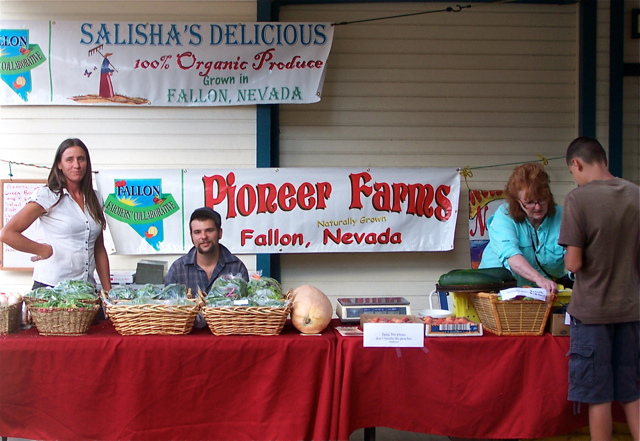
At Safe Food Training, we focus on keeping food preparers and certified food managers informed and up to date on food handling procedures. We also spend a significant amount of time keeping an eye on where our food comes from. Recently, the USDA has funded grants for specialty crop farmers in an effort to help modernize food safety training on farms and keep our food supply safe.

Food Safety Training Advances for Specialty Crop Farmers

Photo credit: Flickr/U.S. Department of Agriculture

Innovations in Food Safety Training on Farms

Farmers of major crops such as corn, soybeans and rice receive their share of approximately 25 billion dollars in subsidies from the US government, but, up until recently, specialty crop farmers received very little. A specialty crop farm ranges from large producers of unique produce to small family farms. Many of these growers don’t have the resources necessary to use more modern and technologically advanced techniques to battle food-borne illness carriers such as insects, amphibians and other influences.

Much of the money from these new grants will be spent on education to help underfunded farms receive training on how to comply with the Food Safety Modernization Act. These workshops teach farmers how to update their sanitation procedures to prevent potential contaminates such as E.coli, listeria or chemical products from spreading from sources such as manure or farming equipment to product that is ready to be shipped.

One of the largest issues these grants are looking to tackle is the issue of water quality control. Microorganisms and pathogens are easily spread through water, whether it’s the water in irrigation systems, drinking water for animals or water used to clean equipment. With better water-quality standards and practices, the chances of contaminated produce reaching restaurants and other food preparers will greatly decrease.

Beyond training and water-quality modernization, there are many other food safety training goals for specialty farmers that come along with this funding, including:

  • Advanced washing and storing solutions for leafy greens to extend shelf life
  • Water temperature control during the washing of fruits and vegetables
  • The establishment of clear guidelines on how to follow the FSMA

We think that funding food safety training at all levels will go a long way to reduce product recalls due to contamination and keep the food supply safe for food preparers and consumers in general. Are there any other aspects of the food supply chain before it reaches your facility you’d like us to explore?