
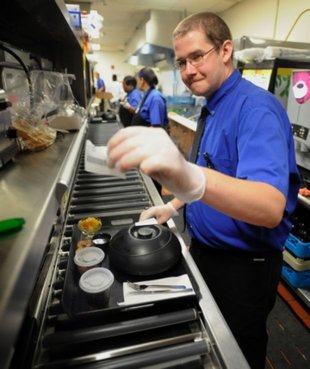
Food safety manager in medical institution

Instructive Tips For Food Safety Managers At Medical Institutions

When it comes to food safety, it’s always important to be vigilant. Still, when you’re a food safety certified manager in a Minnesota institution that provides meal service for elderly residents, patients recovering from surgery, or those with special needs, it’s vitally important to be diligent in keeping your food safe. This week, we’d like to discuss a few extra precautions that food safety managers in medical institutions may wish to remember during their daily routine.
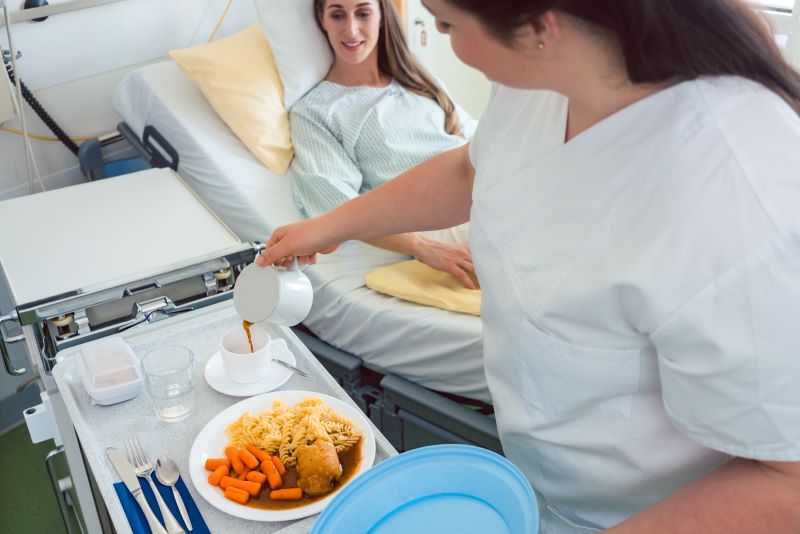
Tips For Food Safety Managers At Medical Institutions
Image credit: kzenon via 123rf

Food Safety Managers Tips for Medical Institutions


CFPMs in hospitals or elderly care facilities should focus on these critical issues:

  • Properly sanitize utensils and prep surfaces
  • Thoroughly wash all fruits and vegetables
  • Be vigilant about tracking guest’s allergies

Our first tip is to ensure all utensils, preparation surfaces, and serving wares are adequately sanitized. This idea may seem deeply ingrained in your daily habits since you completed your first food safety class, but it’s crucial to recognize the risks associated with careless sanitation. One such danger is over or under-mixing your sanitizer solution. The under-mixed solution can leave bacteria on surfaces that will come into contact with prepared foods. In contrast, overmixing the solution can result in patients ingesting dangerous chemicals, putting them at risk of experiencing harmful effects from bleach, ammonia solutions, or iodine. Make sure to keep sanitizer test strips readily available to test your solution regularly.

Secondly, food safety managers in medical care centers must ensure that all raw fruits and vegetables are washed thoroughly, even those claiming to be ready to serve. Fruits and vegetables can come into contact with dirt, fertilizer, and other hazards before reaching your facility. They are often stored unsealed in warehouses before transport and loosely stored when shipped. Many bagged greens such as lettuce and spinach claim to be ready to eat, but some potential for contamination does exist, and since you’re serving meals to those who have a high risk of foodborne illness, it may be wise to take the extra precaution of washing all greens.

Always Track Guests’ Allergies

Our third suggestion for food managers in medical facilities is to be extremely diligent about keeping records of their guests’ allergies. Many institutions face a high turnover rate as one patient departs and another arrives. All too often, allergy information is overlooked during these transitions. Detailed records of each guest’s personal needs will help avoid accidents. It may even be a good idea to eliminate high-risk items such as nuts and shellfish from your facility altogether.

With most safe food training focusing on the hospitality and food production industries, we’d like to know what food-safety issues arise for certified food safety managers of food service in institutions such as assisted living facilities and medical care centers. Are there any aspects that current safe food training overlooks regarding your situation?


Group discussions stimulate student participation

3 Advantages Of Powerful Instructor-Led Food Safety Certification Course

The internet and mobile technology have given us instant access to nearly any kind of training and education that we could ever need. It’s possible to complete nearly any certification course online, including food safety certification in MN. Despite its convenience and accessibility, online training may not be an ideal substitute for a structured classroom setting. This week, we’ll discuss the advantages of taking an instructor-led food safety certification course from Minnesota’s highest-rated provider.

Advantages of an instructor led food safety certification course

Advantages Of Instructor-Led Food Safety Certification Course

While both options have pros and cons, some key differences make the classroom experience more complete compared to an online course.

  • Instructors are available to answer questions
  • We have scheduled discussions to encourage student participation.
  • Certification exams can be scheduled on the same day as the instruction

In online learning, students must independently seek answers to their questions. This added research can take time and lengthen the training process. In a classroom setting, a qualified instructor can quickly answer your questions. You can be confident that your instructor’s answers will be relevant and applicable in your jurisdiction. The internet contains a wealth of information, but researching questions outside of the required material can turn up inaccuracies and answers that may not apply to the current food code.

When you take an instructor-led course, you can immediately take your certification test after the instruction and review session. Even if you choose to take your certification classes online. You will still need to make an appointment to take your actual exam at a certified testing center at a later date. Taking the exam right after finishing the food safety course improves your chances of passing as the information is still fresh.

Minnesota’s Top-Rated Instructor-Led Courses

Nothing beats human interaction. We understand that sometimes training can be dry and tedious. An instructor can bring personality to training, making it more refreshing than doing it alone in front of a computer. You’ll also be able to associate with other members of the food community who may have questions or ideas you have not considered. Completing a food safety course with peers can be a motivating experience you can’t get alone.

Safe Food Training offers both instructor-led and online food safety certification courses. Our top-rated instructors lead courses regularly scheduled at multiple central Minnesota locations. Don’t miss out on the opportunity to enroll in our five-star courses! We would be happy to serve your needs with either option.

seasonal menus

Why a Smart Certified Food Protection Manager Prioritizes Seasonal Menus

As a certified food protection manager in Minnesota, you understand the constant challenge of keeping your menu fresh and engaging. With the turning of the seasons, an opportunity arises not just to update your offerings but to energize diners and improve your operation. This isn’t just a feeling; Technomic research shows that 59% of consumers are more likely to purchase a menu item if it’s described as ‘seasonal’. However, launching a seasonal menu isn’t as simple as just printing a new page. It requires careful planning and a deep understanding of food safety. This is your chance to meet diner expectations while managing costs and ensuring compliance.

A seasonal menu transition, whether in a school cafeteria, a restaurant, or a catering business, affects every part of your operation. It’s a project that requires a manager’s oversight to ensure it’s rolled out safely and profitably.

1. Master Food Code Compliance for New Ingredients

seasonal menu

What’s on your seasonal menu?

Before a single new ingredient enters your kitchen, your first responsibility is compliance. It’s easy to assume that your existing ServSafe or other training covers everything, but new products—especially specialty seasonal items—can introduce new risks. Taking the time to review the Minnesota Food Code is not just recommended; it’s essential for protecting your customers and your establishment.

Understand Specific Handling Requirements

  • Why: Different foods have different critical control points. You can’t handle fresh, unpasteurized cider the same way you handle pasteurized juice, nor do wild-foraged mushrooms have the same receiving protocols as commercially grown ones.

  • Example: Your team must receive training on proper receiving temperatures, shucking procedures, and how to maintain and log shellfish tags to prevent risks such as vibriosis when adding fresh oysters or mussels to a spring menu.

  • Example: Introducing game meats like venison or bison? These may have different sourcing, preparation, and cooking temperature guidelines than standard beef or pork, You must train your staff to handle them.

2. Strategically Adjust Your Inventory and Par Levels

A seasonal menu change directly affects your bottom line by influencing inventory management. Introducing new items and phasing out old ones can lead to significant food waste and shortages if not planned correctly. Waste is a critical cost center, and seasonal changes are a high-risk time for it. Careful adjustment of your product inventory is crucial for profitability.

Prevent Costly Waste

  • Why: Failing to adjust your ordering pars means you’ll be left with cases of ingredients for dishes you no longer serve. This is a direct hit to your food cost percentage. Conversely, under-ordering a popular new item leads to sold-out dishes and disappointed customers.

  • Example: As you plan your new menu, identify ingredients that can be cross-utilized. A seasonal item like asparagus could be a blanched side, a soup base, and a shaved salad ingredient, ensuring you use your full order.

  • Example: If a hearty winter stew is being replaced by a light spring soup, you must create a plan to use up the remaining root vegetables and heavy stocks before the new menu launches. Run them as a special or feature them in a staff meal.

3. The Certified Food Protection Manager’s Secret: The Test Run

seasonal menu

Do you rotate your seasonal menu?

Finally, never launch a new menu blind. A gradual rollout is the safest way to ensure both your kitchen staff and your diners are ready for the change. A “test run” provides invaluable data and reduces the stress of a hard launch, allowing your team to execute new dishes flawlessly and safely.

Gauge Diner Interest

  • Why: What you think will be a best-seller might not resonate with your customers. Testing a dish as a weekend special gives you real-world sales data before you commit to printing it on the menu and ordering ingredient cases.

  • Example: Run your new ‘Spring Pea Risotto’ as a Friday/Saturday special. If it sells out both nights and you get great feedback, it’s a winner. If it barely moves, you’ve saved yourself the cost and hassle of a failed menu item.

Assess Kitchen Workflow

  • Why: A new dish might look great on paper but be a nightmare for your line cooks during a busy service. Does it require a complex new procedure? Does it slow down ticket times? You must find this out before you’re in the weeds on a Friday night.

Rotating your menu seasonally is a powerful strategy to stay relevant and exciting. But for the professional Certified Food Protection Manager, it is also a complex project that balances creativity with rigorous safety and cost-control standards. By prioritizing food code, managing inventory, and testing your new items, you set your team up for a successful and safe transition.

Get Your Food Manager Certification in Minnesota

Ensuring you and your team are prepared for any menu change starts with the right training. Whether you need your initial Certified Food Protection Manager certification or are due for your 3-year recertification, we have the course for you. 

Sign up for a Safe Food Training class today to help your team meet Minnesota food safety standards.

Urgent Christmas News For Frantic MN CFPMs

Typically, we don’t feel it necessary to cover food safety issues emerging out of Europe. Still, this Christmas story from the Netherlands that broke on December 6th may be too crucial of a warning for MN CFPMs to ignore!

For those who do not know, December 6th is Saint Nicholas Day, and on this day, the Netherlands receives their visit from jolly old Saint Nick. There is some speculation, but we are unclear if the Netherlands receives their visit early as some sort of practice run, or if Santa Claus has a special place in his heart for the children of the Netherlands and has decided to visit them on his way north from his rumored Madrid vacation home.

Urgent Christmas News For Frantic MN CFPMs
Image credit: stnicholascenter.org

Only Norwegian CFPMs From MN Know What Speculaas Is

As it turns out, this December 6th, one innocent young child left a nice warm glass of raw milk and a few unwrapped Speculaas on the mantle for Santa. While the youngster meant well, he didn’t know that years of poor diet had left good old Saint Nick susceptible to the existing bacteria and multiplied in raw milk left at room temperature. Unfortunately, he gave Santa a nasty head cold by handling those tasty spice cookies with bare, unwashed hands.

Thankfully, Mrs. Claus has recently forced Santa to take a fully trained and licensed doctor elf with him on his journey in case of emergency, along with a backup pilot elf in case Santa cannot operate the sleigh. Santa was able to leave presents in the shoes of the sleeping Dutch children, thanks to some help from his elves, and return home to recuperate from his symptoms. The good news is that it appears that jolly old Saint Nick will be up and ready for his annual Christmas Eve flight next week.

Safe Food Training is always trying to find ways to make MN CFPMs aware of food safety and other hospitality industry issues, even when we risk alarming all of our 3 to 7-year-old readers about Santa’s frailties.

We want to take a moment to thank the MN CFPMs for their hard work this busy season and for their diligence in keeping food safe for Santa and all others they have served this holiday season and throughout the year! We sincerely hope you get a chance to relax and enjoy time with your family and friends during this holiday season, and we hope 2024 is a highlight of your life and career!

HAPPY HOLIDAYS FROM US TO YOU!