Posts
Keep it Under Wraps: The Truth About Hair Restraints in MN
/0 Comments/in Certified Food Manager MN/by Jeff WebsterIf you’re managing a busy kitchen in Minneapolis or anywhere across MN, you’ve likely heard the term “properly restrained” hair, but do you know what the state actually requires? It’s not just about looking tidy. In Minnesota, “properly restrained” effectively means fully covered. It isn’t enough to just pull it back in a ponytail; if there are loose strands peeking out from under a ball cap or visor, or if a long braid is swinging free, you aren’t following the state’s safety rules.
The Long and Short of It: The "Tie & Tuck" Method
We know you don’t have time for fluff when you’re on a shift, and neither do your line cooks. But when the health inspector walks in, or worse, a customer finds a hair in their hot dish, it becomes a major problem.
For anyone with long hair, simply throwing on a hat will not cut it. You’ve got to follow two simple steps to stay compliant:
- Tie it back securely: Use a hair tie to keep it in place while you’re working. This is the foundation.
- Tuck it in: This is the step most people miss. Make sure you completely tuck the ponytail, bun, or braid into your hair covering.
Pro Tip: If you’re using a visor, you’re likely not compliant unless you’re wearing a hairnet underneath it. Visors leave the crown of the head exposed, and they rarely keep long hair in place.
Why Does This Actually Matter? (Beyond the "Yuck" Factor)
Sure, finding a hair in your food is gross, and it’s the fastest way to kill a customer’s appetite and your restaurant’s reputation on Yelp. But as Certified Food Protection Managers, we know the risk goes deeper than optics.
Physical Contamination: Hair is a physical contaminant. It can choke an infant or cause a gag reflex in adults.
Biological Contamination: This is the big one. Human hair and scalps are prime real estate for Staphylococcus aureus (Staph). When staff members touch their hair to fix a loose strand and then touch food without washing their hands, they’re transferring bacteria directly to the plate.
By insisting on “fully covered,” you aren’t just being a stickler for the dress code; you’re breaking the chain of infection.
How to Enforce It Without Being a Nag
At Safe Food Training, Jeff Webster emphasizes that knowledge is useless if your team can’t use it. Enforcing hair restraints can feel awkward, but it doesn’t have to be.
- Stock the Supply: Don’t make staff hunt for gear. Keep a box of high-quality hair ties and hairnets right by the time clock.
- Lead by Example: If the manager walks into the kitchen with loose hair “just for a second,” the standard is gone.
- Make it “Non-Negotiable”: Treat hair restraints like non-slip shoes. You wouldn’t let a cook work in flip-flops; don’t let them work with loose hair.
Comparison: Training Options for Your Team
We’re here to help you get certified in the way that fits your life. Whether you want to knock it out in one day or chip away at it online, we’ve got you covered.
Feature | In-Person Training | Online Training |
Best For | Getting it done in one shot | Busy, unpredictable schedules |
Pass Rates | Higher because of direct interaction | Self-paced, requires discipline |
Feedback | Immediate from Jeff Webster | Automated through the platform |
Focus | Distraction-free learning environment | Learn from your couch or office |
Location | Local MN classrooms | Anywhere with an internet connection |
Frequently Asked Questions
What's the Main Goal of Your Training?
Our core mission is to help you and your business effectively meet Minnesota’s essential food safety standards through high-quality, convenient training. We don’t just read the codebook to you; we explain how to apply it.
Do You Offer Both Online and In-Person Training?
Yes. Safe Food Training provides both in-person and online learning opportunities. We offer personalized, private, on-site staff training, ideal for aligning your team on topics such as hair restraints.
What Happens if I Don't Pass the Exam on My First Attempt?
Don’t panic. We’re dedicated to your success. If you don’t pass the Certified Food Protection Manager exam on your first try, we offer a retake of the course and exam at one of our future regularly scheduled sessions. Our goal is to provide the support you need to pass.
How Often Must I Complete Continuing Education in Minnesota?
In Minnesota, you’ve got to renew your certified food protection manager license by completing continuing education every three years. We send out reminders so you never accidentally let it lapse.
Ready to Get Certified?
Register for an upcoming course at SafeFoodTraining.com
Two Weeks to Thanksgiving: A Certified Food Protection Manager’s Guide to Holiday Food Safety Blunders
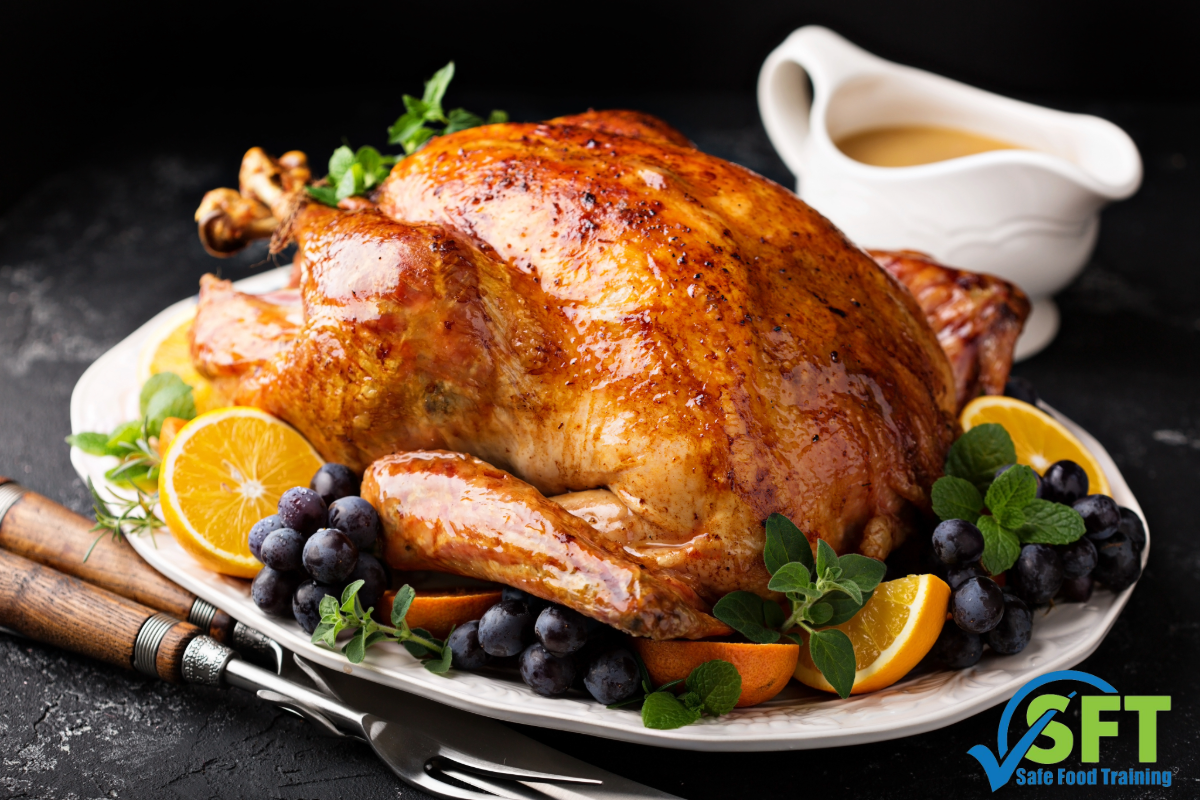
/0 Comments/in Certified Food Protection Manager/by Jeff WebsterWith Thanksgiving just two weeks away, kitchens across Minnesota are gearing up for the busiest day of food service of the year. For a certified food protection manager, the holiday rush presents the single greatest challenge to maintaining food safety standards. The combination of complex menus, high-volume orders, temporary staff, and the sheer chaos of the day creates a perfect storm for critical errors.
According to the CDC, about 48 million Americans get sick from foodborne illnesses each year. The Thanksgiving holiday, centered on a high-risk food like turkey, is a notorious contributor to these statistics.
As food professionals, it’s our job to protect public health. Let’s review the three most common—and most dangerous—food safety blunders that happen during the holiday rush.
Blunder #1: The Great Turkey Thaw Catastrophe
This is a very frequent mistake, and it starts days before the holiday. A frozen turkey is essentially a block of ice, and thawing it improperly is a direct invitation for bacterial growth.
The primary culprit is thawing the bird on the kitchen counter. While convenient, this method is incredibly dangerous. As the turkey’s outer layers thaw, they quickly enter the temperature danger zone (41°F to 135°F). Meanwhile, the center remains frozen solid. In this danger zone, bacteria like Salmonella can double in as little as 20 minutes. The USDA is unequivocal: never thaw a turkey at room temperature.
Here are the only safe methods your team should use:
- Refrigerator Thawing (Recommended): This is the safest, most controlled method. Place the turkey in a pan or on a tray (to catch drips) on the bottom shelf of the refrigerator. You must budget adequate time: allow one full day (24 hours) for every 4-5 pounds of turkey. A 20-pound bird will take 4 to 5 days to thaw completely.
- Cold Water Thawing (Active): This method is faster but requires constant attention. Submerge the leak-proof packaged turkey in cold tap water. You must change the water every 30 minutes to ensure it stays cold. This method takes approximately 30 minutes per pound. This process requires your active participation.
Blunder #2: A Certified Food Protection Manager’s Blind Spot—Cross-Contamination
When the kitchen is in overdrive, basic protocols are the first to fall by the wayside. Cross-contamination from raw poultry is a massive risk that managers must expect. Raw turkey juice contains pathogens, and even a tiny amount can contaminate ready-to-eat (RTE) foods like salads or desserts.
This goes far beyond just cutting boards. Holiday prep involves dozens of high-touch surfaces and multitasking staff.
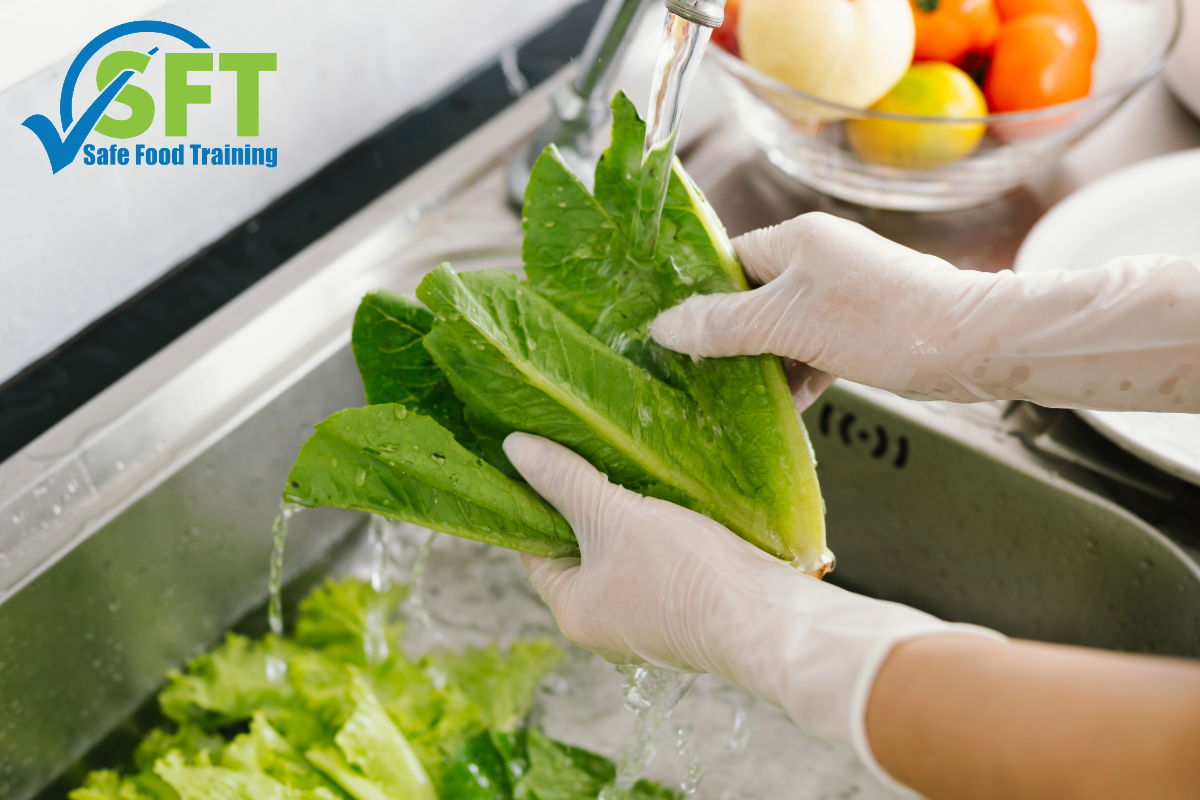
- Improper Handwashing: This is the #1 vector. A cook handles the raw turkey, rinses their hands quickly (or just wipes them on an apron), and then grabs a refrigerator handle, a spice container, or a spatula. That surface is now contaminated. Solution: Emphasize thorough 20-second handwashing after touching raw poultry and schedule frequent sanitizing of all high-touch surfaces.
- Cutting Board Control: Staff must use separate, color-coded cutting boards for raw poultry and RTE foods (such as vegetables for a relish tray). If you see a cook slice raw turkey and then just “wipe” the board before chopping celery, that is a critical violation.
- Storage and Prep: In packed walk-in coolers, it’s tempting to shuffle things around. Always store raw turkey on the bottom shelf, below all other foods, especially RTE items. This prevents any potential drips from contaminating food below.
Blunder #3: Failing the Holding and Reheating Test
Getting the food cooked is only half the battle. Thanksgiving meals are often buffet-style or served for extended periods. This final stage is where many operations fail.
- Improper Hot-Holding: Food on a buffet line or steam table must be held at 135°F or higher. As a manager, you must ensure staff check temperatures with a calibrated thermometer at least every 2 hours (or more frequently, depending on your HACCP plan). Discard any food that falls into the temperature danger zone.
- The Cooling Catastrophe: You can’t just put a 5-gallon pot of hot gravy or a deep pan of stuffing directly into the walk-in cooler. This raises the ambient temperature of the cooler, putting other foods at risk, and the food itself will not cool fast enough. Solution: Use the two-stage cooling method (135°F to 70°F within 2 hours, then 70°F to 41°F within the next 4 hours). This requires active cooling with ice paddles or ice baths, or by dividing food into shallow pans.
- Reheating Right: You must reheat leftovers correctly. You cannot simply “warm up” gravy on a steam table. You must rapidly reheat all leftovers to 165°F for 15 seconds before serving or placing them in hot-holding equipment.
The Thanksgiving rush is the ultimate test of your systems and your team’s training. As a Certified Food Protection Manager, your leadership in these critical moments protects your customers and your business’s reputation.
Stay Compliant and Confident This Holiday Season
Don’t let the holiday rush expose a gap in your team’s knowledge. Whether you need your initial certification or it’s time for your three-year renewal, Safe Food Training is here to help.
Jeff Webster provides personalized, expert-led training designed specifically for Minnesota food professionals. We offer our comprehensive 8-hour Certified Food Protection Manager course and dedicated continuing education sessions.
Visit our website to register yourself or your team for an upcoming course today.
Don’t Get Caught Off Guard: Check Your Minnesota Food Manager Certification Today
/0 Comments/in Certified Food Protection Manager/by Jeff Webster
In the fast-paced world of food service, it’s easy to let administrative deadlines slip. However, there’s one that every Minnesota food professional must keep top of mind: their three-year food manager certification renewal. This isn’t just a suggestion—it’s a state-mandated requirement critical to both legal compliance and public safety. Failing to renew your Minnesota food manager certification can have serious consequences for your career and your establishment.
Understanding Minnesota's Three-Year Renewal Rule
The state of Minnesota requires Certified Food Protection Managers (CFPMs) to renew their credentials every three years by completing approved continuing education. This regulation is in place for a crucial reason: the world of food safety is constantly evolving. New research on pathogens, updated best practices for handling allergens, and changes to the FDA Food Code mean that knowledge acquired three years ago may no longer be complete. The renewal process ensures that the person responsible for an establishment’s food safety is continually operating with the most current information.
- Your Legal Responsibility: As a CFPM, you are legally accountable for the safety of the food served. The CFPM training establishes this responsibility as a core principle. Allowing your certification to expire is a direct failure of this duty and can leave you and your business vulnerable during a health inspection. It’s a foundational part of your role as a kitchen leader.
- Protecting Public Health: The three-year cycle ensures a consistent, high standard of safety knowledge across the state. It acts as a critical safeguard, reducing the risk of foodborne illness outbreaks by keeping managers informed about emerging threats, such as new strains of bacteria or newly identified allergens, and providing updated prevention strategies.
Maintaining Your Professional Standing: A valid certification is a mark of professionalism. It signals to employers, staff, and customers that you are a dedicated and knowledgeable leader in the industry, committed to upholding the highest standards of excellence. It is often a prerequisite for promotion and can be a key differentiator when applying for new leadership positions.
The High Cost of a Lapsed Certification
Failing to renew your certification on time is more than a simple oversight; it can lead to significant, costly consequences that affect your entire operation. Health departments consider a lapse in the required certification for the person in charge to be a critical violation. The potential fallout extends far beyond a simple warning, creating a ripple effect of adverse outcomes.
- Fines and Penalties: A lapsed certification discovered during an inspection can cause substantial fines and penalties. Companies can easily avoid these financial penalties, which are an unnecessary operational cost, by planning proactively and renewing on time. You could use this money more effectively to invest in your staff, equipment, or ingredients.
- Operational Disruption: In some cases, a health inspector may require immediate correction of the issue, potentially disrupting service or leading to a temporary suspension of your license to operate until a certified manager arrives. Every hour of downtime costs you valuable revenue and inconveniences loyal customers.
- Reputational Damage: A failed inspection or public notice of a violation can cause lasting damage to your establishment’s reputation. In an era of online reviews and social media, news of a food safety compliance issue can spread rapidly, deterring customers long after the problem has been resolved. Rebuilding public trust can be a lengthy and challenging process.
Know someone who needs their initial certification? Send them the link to sign up today!
More Than a Requirement: The Value of Continuing Education
Viewing your CFPM renewal MN as just another box to check is a missed opportunity. Continuing education is a powerful tool for professional growth and operational excellence. It’s your chance to step away from the daily grind, refocus on the foundational principles that protect your customers, and learn about the latest advancements in the field. This commitment to lifelong learning is what separates good managers from great ones.
- Stay Current with the FDA Food Code: The Food Code is not a static document. Updates can include changes to cooking temperatures, new guidelines for managing major food allergens, or revised cleaning and sanitization procedures. Your continuing education ensures you are aware of and implementing these crucial changes, protecting your operation from unknowingly falling out of compliance.
- Reinforce Best Practices: The fast pace of a kitchen can sometimes lead to shortcuts. The renewal course serves as a vital refresher on complex topics like HACCP principles, active managerial control, and the specific science of foodborne pathogens. It reinforces the high standards learned in your initial certification, ensuring that best practices don’t erode over time under the pressure of a busy service.
- Boost Your Confidence: Renewing your Minnesota Food Manager Certification reaffirms your expertise and strengthens your leadership. You return to your team equipped with the most current knowledge, ready to train staff effectively and answer their questions with authority. This confidence is contagious and is essential for fostering a stronger food safety culture where every team member feels empowered and responsible.
Protect Your Customers and Your Business

Sign up for the next available Certified Food Protection Manager course near you.
About Us
Recent Posts
- Farm-Fresh vs. Store-Bought Eggs: An Easter Food Safety Guide
- The Essential Guide to CFPM Requirements for Minnesota Food Trucks
- Keep it Under Wraps: The Truth About Hair Restraints in MN
- Is Your Kitchen in the Danger Zone? A Guide to Precision Temperature Control
- When Can a Sick Employee Return to Work? The MN Food Manager’s Guide to Illness Reporting