Cancellation Of In-Person Training For Food Protection Manager Certification

In-Person Training For Food Protection Manager Certification

2020 has certainly presented challenges for all of us trying to run a business. It has been the same here at Safe Food Training. We have done our best to navigate through all of the changing regulations and shut downs. I truly appreciate everyone’s flexibility as we have had to continually rearrange things. We have decided to suspend classroom trainings for food protection manager certification and re-certification in December and January with COVID-19 infections at such high levels.

In-Person Training For Food Protection Manager Certification

Background On The Decision To Cancel Of Our In-Class Training For Food Protection Manager Certification

As the highest rated in-person Certified Food Protection Manager training organization in Minnesota, this decision has a dramatic impact our hospitality industry customers who are required to have this certification and are more comfortable with classroom training. It also has a serious impact on our business.

We know you have had to make similarly tough decisions as the pandemic has evolved. We all have been forced to weigh the health risks to staff and customers, legal exposure, the viability of our businesses, the livelihood of staff, and/or contributing to the further spread of this deadly virus . There are no correct answers!

After careful consideration of the current data and projections of infection rates, hospitalizations and deaths caused by COVID-19 here in Minnesota, we have decided not to hold any Food Protection Manager Certification classroom trainings in December and January.

We do have our online recertification course for those of you who need that training. Sign up for that by clicking here:

For those who are seeking initial certification, we are holding exam-only sessions at several convenient locations around the Twin Cities and central MN. You can sign up for the online certification course and exam by clicking here:

We are hoping to resume our in-person training for food protection manager certification starting February 1st and beyond. You may register for any of those options currently on safefoodtraining.com.

Thank you all for your continued business and I hope you all are finding ways to get by this year.

Stay safe and have a wonderful holiday season.

Food Safety Manager Secrets Using Task Scheduling When Understaffed

Food safety manager using task scheduling to maintain food safety

Due to lower seating capacity, reduced business other COVID-19 restaurant restrictions in Minnesota, food safety managers have at times been forced to run their businesses with fewer staff members than usual. While keeping an eye on labor costs will help keep Minnesota restaurants in business during trying times, we shouldn’t sacrifice routine food safety tasks in the process. By incorporating task scheduling into administrative duties, the food safety manager can provide an efficient means of keeping up with food safety concerns while protecting the business’s labor bottom line.

Food safety manager using task scheduling to maintain food safety
Image credit: Wavebreak Media Ltd via 123rf

Task Scheduling Tips for Short Staffed Food Safety Managers

In our interactions with food safety managers, we’ve heard a few common themes as to struggles finding time for some major aspects of their food safety duties. Some of the most common concerns deal with:

  • Inventory Control
  • Receiving and Evaluating Incoming Shipments
  • Employee Training

Food managers are taking more time on the line or in the dining room to compensate for a reduced payroll, and this might cut into the amount of time they have for inventory control and receiving shipments. Creating a detailed schedule involving tasks rather than simply shifts could help alleviate the pressure on food safety managers to complete certain tasks. A clearly defined task schedule will allow you to gain a full view of what needs to be done and give you the opportunity to adjust your schedules accordingly.

A defined task schedule can be as easy as scheduling a staff member 15 to 20 minutes a day to complete food safety maintenance tasks. For example, scheduling a food safety manager to inspect date markings on prepared product to ensure they are still safe to serve will ensure the task is accomplished much easier than if you simply leave it up to chance or hope for a slow moment in service. The same goes for receiving shipments and evaluating inventory. You almost always know what days your food suppliers drop off a delivery to your establishment. Keeping that in mind, make sure that your task schedule includes an extra employee on shipment days to ensure the order can be inspected and properly stored in a timely manner.

Employee training has also become an issue with limited time and sometimes limited restaurant capacity for staff. Training tasks can be scheduled outside of normal business hours in order to be in compliance with COVID-19 occupancy and social distancing rules. A better solution would be to use online tools and apps to handle training remotely when possible.

Do you use task scheduling to improve efficiency when understaffed?

Should Certified Food Protection Managers Worry About COVID-19 In Food?

Certified Food Protection Managers COVID-19 in Food

The science behind understanding how COVID-19 spreads is ever-evolving and even though we don’t know everything about this virus, we have a general picture of how to prevent its spread. We’ve been told that masks, social distancing and avoiding large gatherings can slow the spread, but should Certified Food Protection Managers be doing anything to prevent the spread of the COVID-19 through the food we produce in restaurants and other food production businesses?

Certified Food Protection Managers Worry About COVID-19 In Food
Image credit: pickpik.com

Certified Food Protection Managers and COVID-19 Spread Via Food

In the early days of the pandemic, researchers had suggested that the risk of transmission through food was small, and a more recent study completed by the International Commission for Microbiological Specification for Foods seems to finally give us some good news on the COVID-19 front by claiming that there may not be a food safety hazard when it comes to the Coronavirus.

These findings are great news for certified food protection managers. As restaurants reopen, they now have the added responsibility of enforcing local health guidelines on top of their other duties, so it takes some pressure off knowing there’s very little chance of the spread of COVID through their food product.

The ICMSF’s study shows that since food enters the human body through the gastrointestinal tract, COVID-19 shouldn’t be considered a food safety hazard since the coronavirus’ method of infection involves contaminated air entering the lungs. According to the study, there has been no substantial evidence of cases of COVID-19 that can be traced back to food. The current theory is that traces of COVID-19 on food and food packaging will lose viability over time and even if the virus were to be consumed with food, it would be destroyed in the digestive process before reaching the bloodstream.

These findings don’t mean CFPMs can relax when it comes to food safety in the kitchen or coronavirus prevention measures. We should still be vigilant in keeping our food safe from all pathogens and providing a healthy dining environment for our guests.

Are you concerned that food may contain a hidden COVID-19 risk?

Important Food Safety Training And Managing Expiration Dates During COVID-19

Food safety Training and Managing Expiration dates

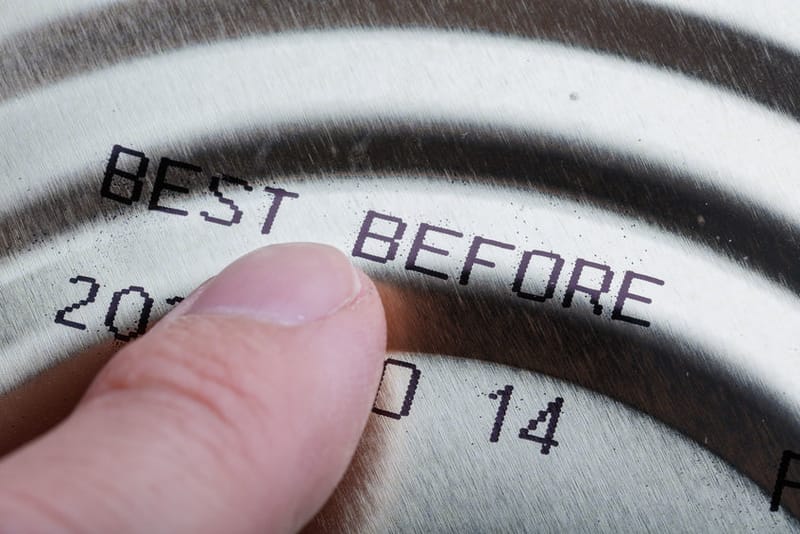
With current regulations regarding COVID-19 and many people choosing to eat at home rather than frequent potentially crowded areas, restaurants have seen a steep decline in the volume of guests they serve. With this decreased volume comes the risk of product, raw and prepared, sitting in a refrigerator too long. This may cause the potential for spoilage and the spread of foodborne illness via bacteria growing in outdated foods. It’s especially important to provide your staff with appropriate food safety training regarding managing expiration dates and proper labeling of prepared product.

Food Safety Training and Managing Expiration Dates
Image credit: Feng Yu  via

Managing Expiration Dates, Labeling and Proper Food Safety Training

Fresh product doesn’t last forever, so it’s important to note expiration dates on raw ingredients. Some ingredients to pay extra close attention to include:

  • Produce
  • Dairy
  • Proteins
  • Seafood
  • Ready-to-eat Foods

Produce is one of the most susceptible products to mold, mildew and risk or bacteria from rotting. Keep a close eye on produce even if it hasn’t reached its expiration date. Any fruits or vegetables that show signs that they may be questionable should be disposed of.

Dairy is another product which causes a foodborne illness risk when expired. Just like produce, make sure you adhere to the expiration dates and dispose of dairy products of questionable quality.

Meats and seafood pose a substantial food safety risk when expired. During low volume, we’d recommend bringing in frozen proteins, especially fish and poultry, in order to more closely control the amount of product in your walk-in refrigerators. Pulling and thawing just enough product for a couple of days at a time will lower risk of spoilage, reduce waste and keep your inventory under control. Just remember your food safety training and thaw product according to Minnesota health regulations.

Finally, label and date all ready-to-eat foods. If you’ve brought in ready-to-eat foods from an outside source, take note of the expiration date on the package and do not use once expired. With ready-to-eat foods made in house, the food code allows for proper storage for up to seven days. This is why a well-planned date marking system should be utilized in your establishment. Just remember, some sensitive foods may not have a seven-day shelf life, so plan accordingly. During times of low volume, it may be prudent to reduce pars on ready-to-eat foods to reduce the risk of spreading illness.

Are you doing regular food safety training to remind your food prep staff to manage expiration dates and date markers?