Strong CFPM Course Advice About Raw Milk Peril

Raw Milk in Minnesota.

In Minnesota, the MN Food Code strictly prohibits the sale or service of unpasteurized (raw) milk in any licensed food establishment. While you can buy raw milk directly from a farm for your own home, serving it in a restaurant or commercial kitchen creates a massive liability because of the high risk of Listeria contamination.

Navigating the Minnesota Food Code: The Raw Milk Debate

When we host a personalized 8-hour Certified Food Protection Manager (CFPM) course for local food service leaders, we often dive into the “gray area” topics that standard training might skip. What does the Minnesota Food Code actually say about serving raw milk?

There’s a lot of noise online about the supposed health benefits of unpasteurized dairy. Some claim that pasteurization “kills” milk’s nutritional value, while others think it’s just better for you. But as a professional food manager running a busy kitchen in St. Paul or a catering operation in Duluth, your priority isn’t the latest health trend—it’s regulatory compliance and customer safety.

What Your CFPM Course Teaches About Raw Milk

Our mission at Safe Food Training is to help your business meet Minnesota’s essential food safety standards without all the fluff. According to the Minnesota Department of Agriculture and the Minnesota Food Code (specifically Section 32D12), the law is very specific: milk and milk products must be pasteurized if they’re offered for human consumption in a retail food establishment.

If a customer wants raw milk, they’ve got to go directly to the source—the farmer. As a licensed food entity, you can’t act as a middleman.

The Risk Factor: Listeria Monocytogenes

The main reason food safety experts and the FDA advise against raw dairy is the high risk of Listeria monocytogenes, a bacterium that causes the foodborne illness listeriosis. In our Minnesota food safety certification courses, we talk about how Listeria is a “hardy” bacterium. Unlike many other pathogens, it doesn’t mind the cold; it can actually grow at refrigeration temperatures.

Why Listeria is a Top Concern for CFPMs:

  • Resilience: It survives in drains, on equipment, and in cold storage.
  • Severity: It has a much higher hospitalization rate than other common foodborne illnesses.
  • Symptoms: Persistent high fever, muscle aches, vomiting, and diarrhea.
  • Vulnerability: It poses life-threatening complications for those with compromised immune systems, the elderly, and pregnant women.

Scientific evidence from the FDA doesn’t support the claim that raw milk is a “superfood” that’s worth these risks. When you’re responsible for the health of hundreds of guests a day, a foodborne illness outbreak isn’t just a PR nightmare—it’s a danger to your community.

The "Choice" Narrative: How to Get Certified

Deciding how to get your team certified is just as important as the safety protocols you follow. Whether you like the energy of a distraction-free classroom or the convenience of your home office, we’ve got you covered.
Pass/fail.

In-Person vs. Online Training

Feature

In-Person CFPM Training

Online CFPM Training

Environment

Distraction-free, focused learning

Flexible, self-paced

Interaction

Real-time Q&A with Jeff Webster

Digital modules

Pass Rate

Very high due to hands-on prep

Depends on your study habits

Best For

New managers & those needing a refresh

Tech-savvy, busy schedules

Personal Choice vs. Professional Liability

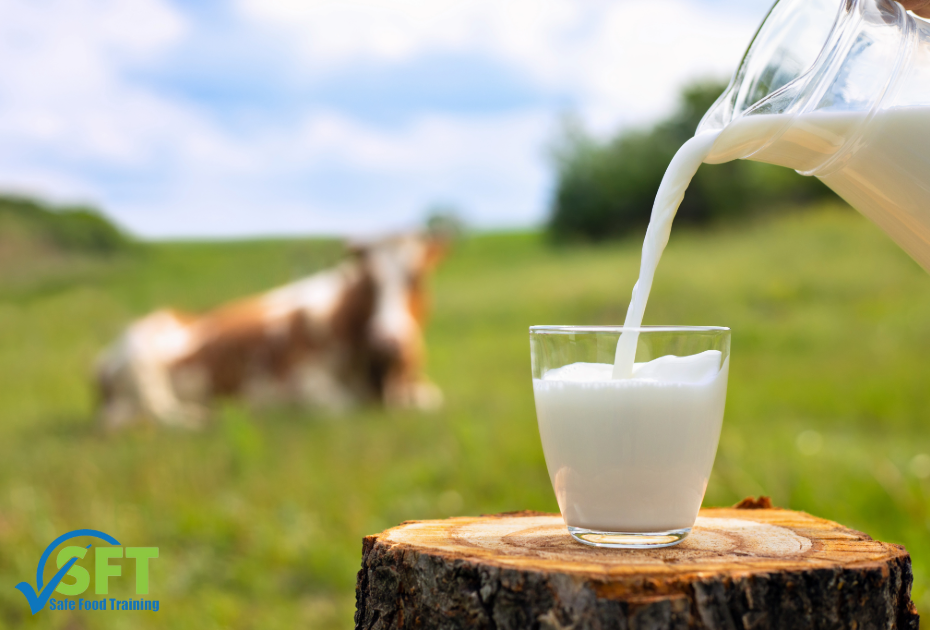
 Raw milk.
Do you know the rules about raw milk in restaurants?

As an individual, you’ve got the right to choose what you put into your body. But once you step behind the line of a commercial kitchen, you’re the Certified Food Protection Manager. You’re the gatekeeper. Both Minnesota law and the FDA agree: raw milk poses too great a threat to be served to the public.


Many other food safety risks fly under the radar, and a standard CFPM MN course can’t cover every niche topic. If you’ve got questions about specific ingredients or local ordinances, just ask—we’re here to help.

Frequently Asked Questions (MN Food Safety)

Common questions include:

Q: What is the primary service that Safe Food Training offers?

A: We specialize in providing personalized, 8-hour certified food protection manager licensing courses tailored for food professionals across Minnesota. We also offer dedicated continuing education training at the same time.

Q: How often must I complete continuing education to maintain my food safety certification in Minnesota?

A: In Minnesota, you’ve got to complete approved continuing education every three years to maintain your Certified Food Protection Manager (CFPM) status.

Q: Does the 8-hour course include the exam?

A: Yes. Our comprehensive 8-hour course includes the certification exam, so you leave the session with everything you need to stay compliant.

Q: Can I schedule a private session for my restaurant staff?

A: Definitely. We focus on creating a convenient learning experience that fits your needs. We can focus on the specific food safety challenges of your operation—whether you’re in a school cafeteria, a large restaurant, or a catering business.

Need to renew your credentials or train a new manager?

Register for an upcoming Minnesota Food Safety Course today!

ServSafe MN Spotlight On The Scary Residual Pesticides Dispute

Pesticides and ServSafe MN

In an FDA report published this month for data gathered in FY 2022, “findings show that the levels of pesticide chemical residues in the U.S. food supply are generally in compliance with EPA pesticide tolerances.” Conversely, the Environmental Working Group (EWG) has reported, “FDA tests find U.S. food supply awash in pesticide residues.” While pesticides on fruits and vegetables may not be covered by ServSafe MN rules, ServSafe managers should still address this issue.

Pesticides and ServSafe MN

ServSafe MN and Pesticides

This topic can raise many questions and often sparks a heated debate. While we may not have the space to cover every aspect of this issue, we’d like to touch on some of the highlights and give tips on preventing your customers from ingesting potentially dangerous pesticides.

Just because the average levels of pesticide in our produce may not pose a health threat, that does not mean that every grower uses a safe level of chemical pesticides. It’s crucial to ensure that you get your fruits and vegetables from reliable sources that prioritize food safety. A popular strategy for many restaurants and food production facilities is using only locally sourced, organic produce. If you have ever been in charge of your company’s budget, you may be aware that this can be an incredibly costly choice. It would help if you also considered that organic growers can use certain natural pesticides and still label their products as organic.

No matter where you decide to purchase your produce, you should ensure that your customers’ food remains untainted by pesticides or other contaminants. Upon delivery, it is crucial to promptly inspect your produce. You may not be able to see pesticides, but if any of your produce has any unusual residue, it may have been treated at some point.

Always Rinse!

After checking your produce, it’s important to know which items need refrigeration. Storing produce that requires refrigeration at room temperature can cause surface chemicals to seep into the produce. Finally, always rinse and allow your produce to dry fully before serving. The water’s force removes hidden dirt or pesticides, making it safer to eat than unwashed produce.

How do you keep your guests safe from man-made chemicals in your produce? Do you rely only on washing, or do you prefer to order from organic farms?

A New Look At Food Product Recalls for Certified Food Protection Managers

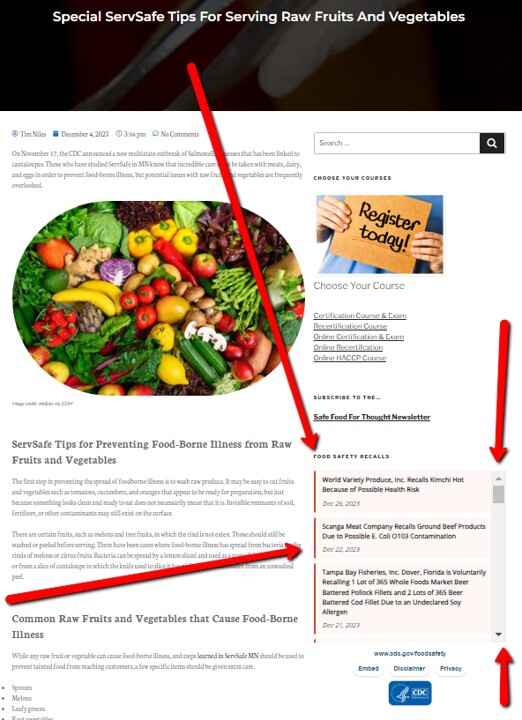
Food Product Recall Widget For Certified Food Protection Managers

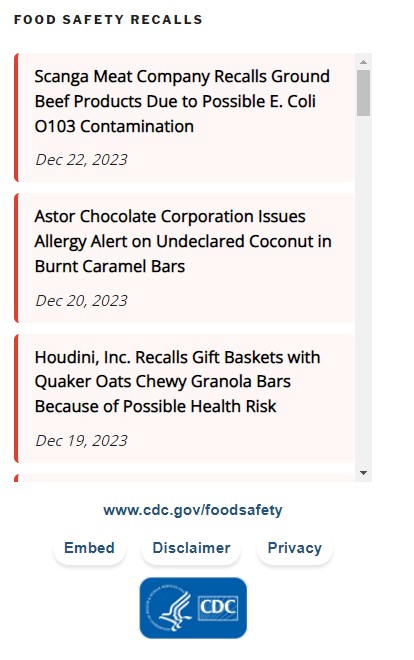
In the very first “Safe Food for Thought”, a blog for certified food protection managers, published on October 30, 2015, we discussed the importance of keeping up to date on food product recalls. As part of that new platform, we included a US foodsafety.gov fed streaming Food recall alert. This feature provides real-time notices of recalls and public health alerts from the U.S. Department of Agriculture (USDA) and the U.S. Food and Drug Administration (FDA), which are listed in the widget 24/7.

You no longer have to lose sleep worrying about serving contaminated food supplied by a manufacturer. Instead, quickly check the widget on our blog once daily to ensure your supplies are safe.

Food Product Recall Widget For Certified Food Protection Managers

On full screen, you will see the Food Safety Recall widget on the right side of our blog page. A slide bar on the right allows you to scroll down to see recalls past recalls. If you find a recall that concerns you, click on it, and you’ll get detailed information. (You must scroll past the most recent blogs on your mobile to find the widget.)

Indeed, paying attention to product recalls is crucial, but it’s equally important to know what constitutes a recalled item. Food product recalls are incredibly specific. Questionable products in your inventory must have all of these details:

  • Same brand
  • Product name
  • Use-by or freeze-by date
  • Establishment number
  • And more.

If you’re unsure, your certified food protection manager can always contact the manufacturer with your information and ask if they recalled the food product.

If the product details match, please follow these steps:

  • Do not open or consume the product!
  • Contact your supplier to return the product or dispose of it according to the instructions in the recall notice. This is vital as it ensures no one else could pick it up and consume it.

By all means, keep yourself and those around you safe by staying informed on recalls and taking proper actions when necessary.

How often do you actively check your inventory products for recalls?

Certified Food Protection Managers and Recall of Peaches

Certified Food Protection Managers and Recalled Peaches

In a recent recall announcement, the FDA has notified consumers that a large number of peaches may be contaminated with salmonella. These peaches have been shipped by a major fruit producer and could have found their way into the supply chain for restaurants and other food producers. According to the CDC, there have been at least 23 cases of the strain in Minnesota, the most of any state thus far. How should certified food managers react to this outbreak?

Certified Food Protection Managers and Recall of Peaches
Image credit: needpix.com

Recall of Tainted Fresh Peaches and Certified Food Protection Managers

First, if certified food protection managers have any peaches that can be traced back to the recalled Wawona brand peaches or Wegman Food Markets, dispose of them immediately. The highest-risk establishments for this outbreak are grocery stores, but many restaurants supplement their fresh fruit supply in small batched from local markets. This means there may be a chance food-producing businesses may have them in their inventory.

If you have already processed these peaches into baked goods or other prepared items, you must dispose of any potentially contaminated product. According to the FDA, these peaches could have been on the market as early as June 1, so make sure you check your dates on any frozen items you have produced that contain peaches.

As always with such a widespread recall, if you have any doubts as to the safety of your produce or items made from potentially contaminated fruit, you should err on the side of caution.

Have you checked the FDA’s recent recall alerts or the embedded CDC Recall widget on the sidebar of this Safe Food For Thought Blog site to make sure you’re not using contaminated ingredients?