

A CFPM Should NEVER Play The “Does This Smell Old?” Game”- Labeling Secrets

CFPMs keeping food safe through proper labeling

Unfortunately, employees ask their certified food protection manager this question all too often: “Does this smell OK to you?” Before you have to deal with the problem of trying to figure out how old a side of fish, a pre-made soup, or another refrigerated item is by playing the “Does this smell good?” game, CFPMs should take a moment to review proper labeling procedures.

CFPMs Keeping Food Safe Through Proper Labeling
Image credit: bowie15 via 123rf

CFPMs Keeping Food Safe Through Proper Labeling

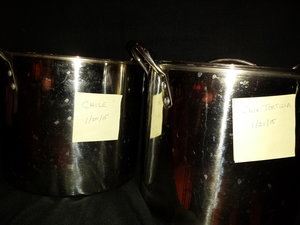
Three important things should be included on every item in your storage areas.

  • What the product is
  • The date product was received or made
  • Potential expiration dates

The first two items on our list are easy to determine and label, but there is no absolute expiration date. Many prepared foods containing dairy and proteins have a shorter shelf life than others. Knowing that some proteins do not necessarily begin to smell as they age is essential. We suggest determining how long you can store these items before discarding them.

Labeling is just the first step to ensure food safety. We have two other suggestions to help CFPMs prevent spoiled food from being served to your guests. First, never mix two batches of sauces, soups, or other liquids made on different dates. An older batch can contaminate a newer batch and create a hazard even though the label shows a recent creation date.

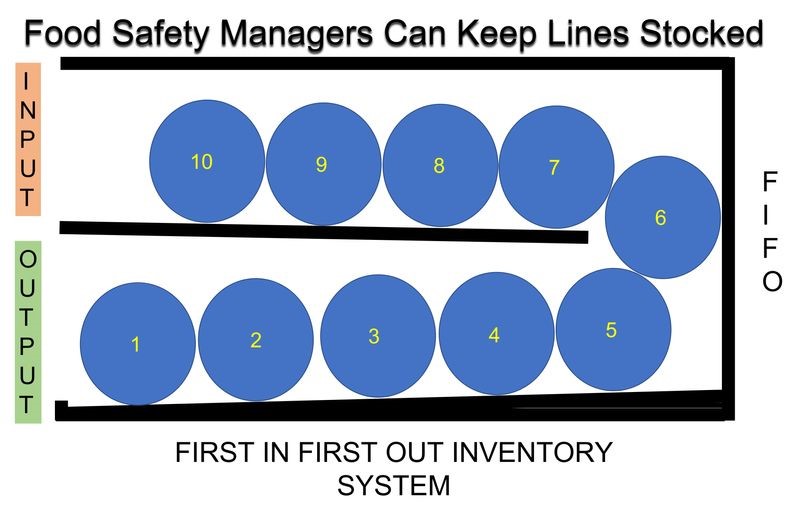
Secondly, rotation is essential. It has become an industry cliché, but FIFO, first in, first out, should be enforced in every kitchen and preparation facility. Using the oldest-dated product first will ensure that it doesn’t begin to spoil and grow dangerous bacteria.

By following these easy labeling steps, CFPMs can help keep your guests safe from food-borne illness and save your nose from having to smell another potentially rancid side of salmon or pungent sauce.
A Practical Way Food Safety Managers Can Keep Lines Stocked

A Practical Way Food Safety Managers Can Keep Lines Stocked

Food safety managers like to keep their production lines fully stocked so that all ingredients for every dish are readily available and in abundant supply, but there are foodborne illness hazards that can occur if you stock your lines improperly. Whether you call it rotating product, flipping your lines or simply stocking a quick access station, you should make sure that you’re doing it properly to reduce the risk of spreading illness.

A Practical Way Food Safety Managers Can Keep Lines Stocked

How Food Safety Managers Reducing Foodborne Illness while Stocking Production Lines

The most important thing to consider when stocking your production lines is that the oldest ingredients should be used first. Whatever method you use to stock your lines must take this into consideration. If you simply refill or top off storage containers, the oldest product will remain on the bottom and eventually begin to go bad contaminating all other product in the same container. When keeping your lines stocked, a first-in-first-out (FIFO) philosophy must be employed.

During food safety manager training classes, we’ve had a few discussions on stocking production lines, and it’s been asked if topping off containers and rotating product into clean containers is an acceptable method. While it sounds like a good idea to have a clean storage container every shift, you’re still running the risk of old product contaminating fresh ingredients. Imagine a pan filled with cheese that is one-third empty when you rotate it, and then you use one-third before the next time you rotate it, how fresh is the middle third? If you simply top off product and rotate it into a clean container, you may need an archeologist to date the product that has been trapped in the middle of your storage container every time you flip your lines.

Our suggestion is to have backup containers readily available rather than fill old containers with new product or rotate mixed-date products into new storage vessels. This will guarantee that fresh product doesn’t mix with older product that could be in danger of spoilage.

Do you have an effective strategy for keeping your ingredients stocked without mixing old and new product?