



It’s been a tough couple of years for the food industry. Many have lost their jobs due to the pandemic and some have moved to other sectors leaving a strain on food business to find adequate staffing. With food service workers taking on longer hours or working in short staffed kitchens, it may be hard to keep a high level of morale in your establishment. Let’s look at a few ways certified food protection managers can improve morale and keep your employees happy under stressful circumstances.
Most of our nation’s food businesses are struggling to hire and maintain employees due to a number of issues as a result of the recent pandemic, and Minnesota is no exception. Food cost is on the rise, many customers are still avoiding public settings and profit margins are falling for the average food business, so many eating establishments are struggling with morale issue at every level. Just what can certified food protection managers do to improve the morale in the work environment?
There’s a few very simple thing managers can do to boost the morale of overworked employees or those that simply cannot find enough hours:
Hungry employees are generally unhappy employees, especially when under the duress of a long or short-staffed shift. Providing a staff meal can go a long way to keeping your staffs stomachs full and morale high. Shift meals can also often help with reducing waste. Serving outgoing specials or menu items to the staff will keep product from rotting in the walk-in or ending up in the dumpster. There are also many cost effective meals you can exclusively provide to your staff that won’t take a toll on food costs using common ingredients already in your inventory. We’ve also seen many restaurants extend in-person dining coupons or family discounts to their employees to give them an opportunity to visit when they’re off the clock and support their place of business.
It may also be a good idea to schedule optional group activities with your staff before or after work shifts. Not only will these activities help with team building, but they’ll also boost morale as a whole among your staff. Try visiting another restaurant or lounge for games, darts, pool or simply hanging out as a team.
Certified food protection managers at understaffed kitchens may want to consider improving morale by extending break times by a few minutes or scheduling an extra 10 minutes for stressed and exhausted workers to step away from the line for a few moments. It doesn’t have to be much, but a few extra minutes can work wonders.
Do you have other suggestions for ways certified food protection managers can improve morale in your kitchen during trying times?
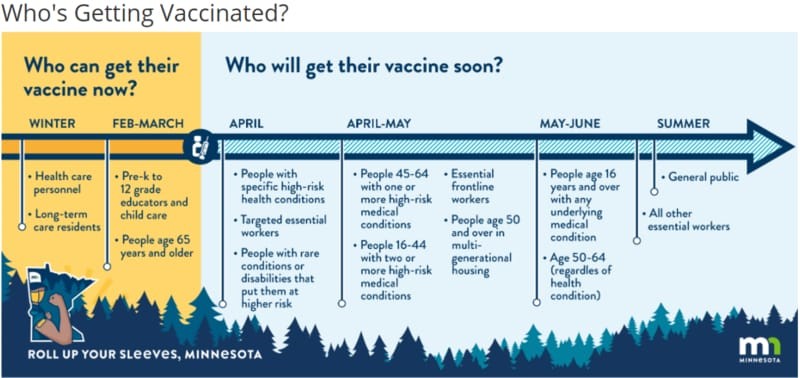
We’ve all seen the news reports showing the steady rollout of the COVID-19 vaccine among Minnesotan healthcare workers, seniors, susceptible groups and educators, but until recently, there’s been nothing more than speculation as to when certified food managers and other food industry employees will be eligible. In a recent announcement by Governor Tim Walz, a more detailed tiered approach to coronavirus vaccine distribution was explained and it provides specific vaccination news for certified food managers.
Previous information stated that essential workers would be somewhere on the schedule before the general population, but certified food managers would have to make assumptions on when they and their staff would be eligible. On the current schedule, food service workers have been specifically placed into two targeted groups:
While these targeted vaccination windows are speculative based on vaccine availability, a clearer picture exists as to when restaurant employees, food processors and others in the food and beverage industry will have an opportunity to receive the vaccine.
It’s also encouraging to see that Minnesota is targeting summer for open eligibility. Once we’ve reached a state of herd immunity our restaurants can return to one-hundred percent capacity, diners will be able to enjoy special occasions with large groups of friends and family and we can continue to grow our Minnesota food industry.
How do you feel about food service workers and certified food managers being allocated essential worker status when it comes to the COVID vaccine?