Food Manager in Walkin Freezer

Why do ServSafe Food Managers Set Freezers to Zero Degrees?

According to the Minnesota Food Code, all frozen food must remain frozen until ready to use and the USDA recommends setting freezers to zero degrees Fahrenheit. This got us wondering; why zero? Is zero a scientifically determined number, or is it in the correct temperature range and just happens to be a good round number? Will two degrees work just as well? Or maybe -12.5? This week we’ll take a good look at freezer temperatures and how zero degrees became the standard for ServSafe Food Managers.

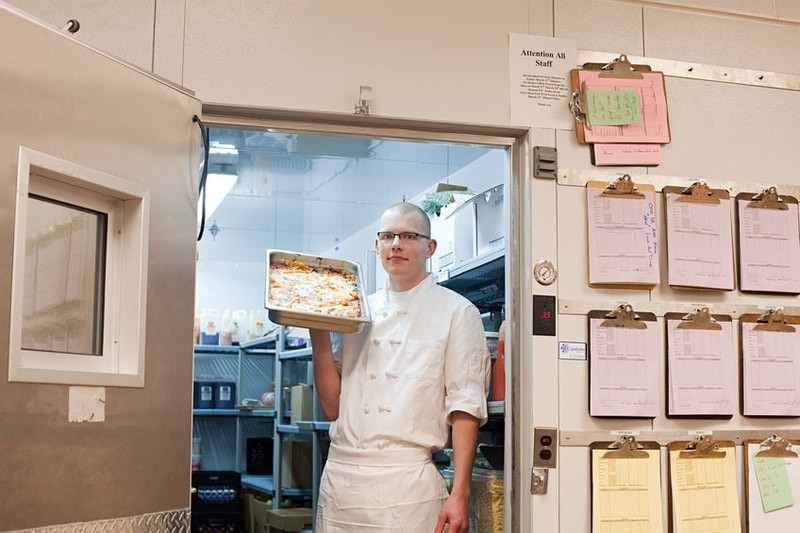
Food manager in walk-in freezer
Image credit: 123rf

ServSafe Food Managers and Freezer Temperatures

The history of the standard of zero degrees goes back to the 1930s when the American Fruit and Vegetable Coalition advocated zero degree temperatures because it was, in fact, a round number. Prior to this, freezing recommendations had been set at 14 degrees Fahrenheit. Science didn’t even come into the conversation until much later.

According to the laws of thermodynamics and the use of a mathematical logarithm known as the Van’t-Hoff equation, scientists much smarter than us were able to show that there is a uniform lowering of the velocity of chemical reactions in any substance as temperatures decrease. To break it down in terms those of us without PhDs in chemistry and physics can understand, once the temperature reaches zero degrees, the molecules and atoms in frozen product slow to the point where there is little perceptible movement. This means that bacteria cease to grow and there is very little loss of nutrition in foods frozen below zero degrees. Using this method, it has been determined that the ideal range of freezer temperatures is between zero and -22 degrees Fahrenheit.

So now that we know why ServSafe food manager training tells us to keep freezers at zero degrees, why don’t we go further and freeze product closer to the low end of the range?

First, while bacteria are held at bay indefinitely, that doesn’t mean that there isn’t a risk of freezer burn. Freezer burnt product may still be safe to eat from a food safety standpoint, but it sure isn’t pleasant from a taste and texture standpoint. Long exposure to extremely low temperatures will keep your food safe to eat but will tarnish its quality.

Finally, it’s unwise from an efficiency and energy use standpoint. Keeping your freezer at the upper end of the freezing range and closer to zero degrees will use a lot less electricity and keep utility costs down.

As a ServSafe food manager, what temperature do you set your freezer?
ServSafe and Food Production

ServSafe and Points of Contamination in the Food Production Chain

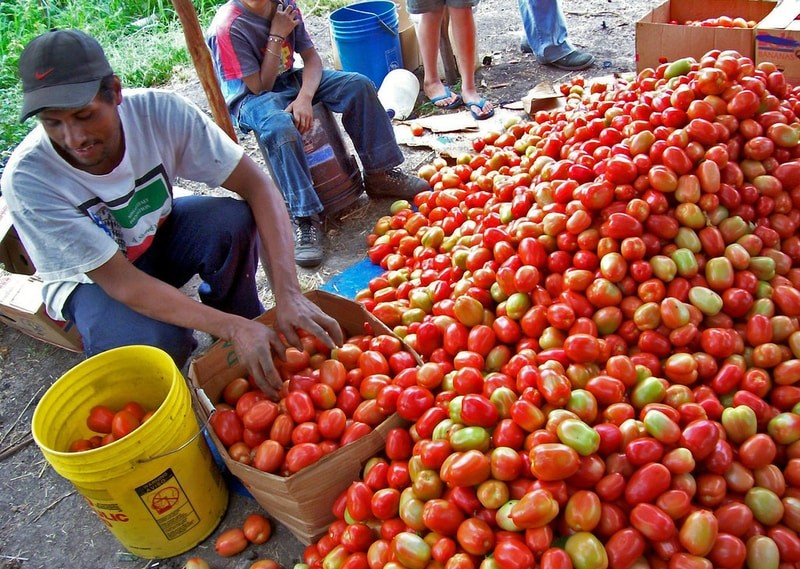
Good food safety training must happen at every step of food production, and sometimes that means knowing where food comes from and where potential points of contamination exist. ServSafe procedures need to be adhered to at nearly every point in production, and that includes points before ingredients are prepared for service.

ServSafe and Food Production
Image credit: USAID via FLICKR

ServSafe and Food Production

While most MN certified ServSafe managers concern themselves with the food safety procedures at their own facility, we feel that it’s important to understand where the risks of contamination exist every step of the food production process. Knowing where your potential food contamination can occur helps you be more vigilant in keeping the food you serve safe. We’ve identified the key places where food can come into contact with bacteria:

  • Initial Production
  • Distribution
  • Preparation
  • Point of Sale

Most major foodborne illness outbreaks occur due to contamination during the initial production, raising or growing of food ingredients. These locations include ranches, farms, fisheries, greenhouses and other specialized facilities where base ingredients are produced. Since this step has one of the highest risks of contamination, ServSafe food managers need to pay attention to food production news concerning produce and meat FDA recalls. Production facilities can also include operations where raw ingredients are canned, frozen or packaged before distribution.

Distribution points are the locations where your food is stored and transported between production and your facility. Points of potential contamination include shipping vehicles, warehouses and other means of transporting ingredients from one location to another. ServSafe managers should inspect items before receipt to check for any signs of damage or contamination.

Preparation is one step that local ServSafe food managers do have control over. This happens in your facility. Make sure that your staff has been fully trained on proper preparation techniques and how to prevent foodborne illnesses.

The point of sale is the final point of potential contamination in the ServSafe food production chain before your product ends up in your customers’ hands or on their table. Sick front-of-the-house staff can pass germs on to guests and undated, improperly packaged and poorly refrigerated grab-and-go items can cause illness due to spoilage or cross-contamination. Make sure that staff members who handle or serve food after preparation are well versed in good food safety habits.

Do you take into account everywhere your ingredients have been when considering food safety training?

ServSafe Certification

What is ServSafe Certification?

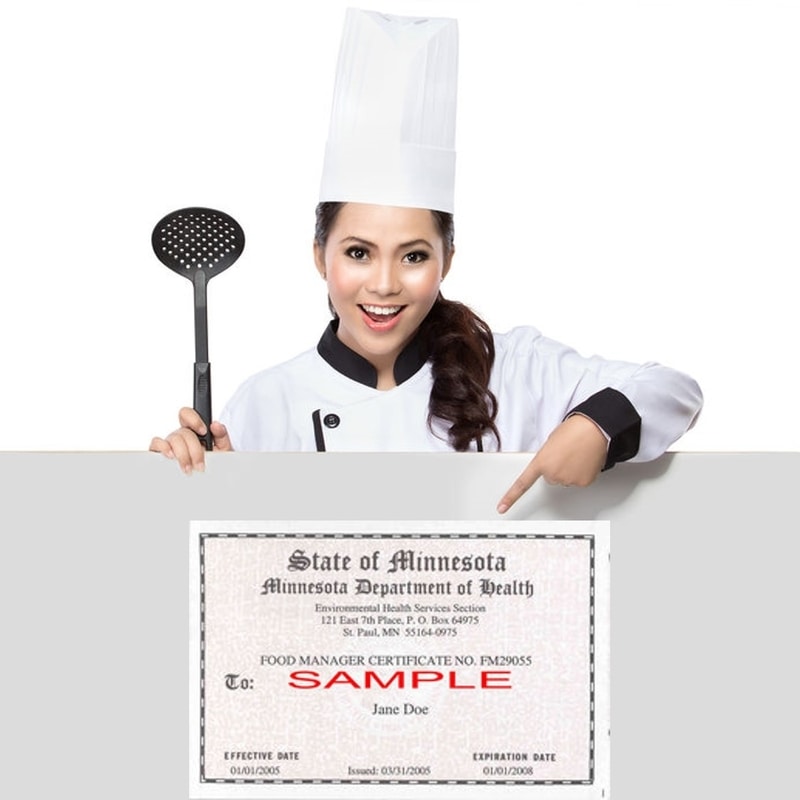
According to the Minnesota Food code, food preparation establishments must employ a Certified Food Protection Manager that has gained certification from an ANSI accredited program. The National Restaurant Association recognizes ServSafe Certification as its accredited program qualifying it to be used by food protection managers in Minnesota.

ServSafe Certification
Image credit 123RF

MN ServSafe Certification

ServSafe offers several food and alcohol safety certifications, and passing the ServSafe food manager exam meets the Minnesota Food Code’s requirements for certified food protection manager training. Minnesota also recognizes 3 other exams as meeting the requirement including the one from the National Registry of Food Safety Professionals which we regularly use.

As with many training courses, ServSafe is available via instructor led sessions and online training classes. There are positives with each type of training. Online classes can be convenient and taken at any time of day. Instructor led classes allow for interaction with your fellow food managers and give you a rare opportunity to ask questions and discuss food safety procedures with an experienced expert.

ServSafe and the other exams enable you to get certified in Minnesota for three years. Within three years, you must renew your certifications in order to comply with the food code. The health department no longer has a grace period for renewing, so it’s vitally important to stay up to date on your paperwork and take your recertification training without delay before the three year anniversary of initial certification.

While there are four exam options for food safety certification in MN, some national chains and organizations may require ServSafe as their standard for food managers in their employ. If this is the case, Safe Food Training will gladly custom design ServSafe training and examinations that meet Minnesota standards. If you’re looking for your initial certification, refresher courses or recertification instruction, get in touch with us and we’ll set up training that fits your establishment’s requirements.

CFPM Exam Study Guide 2

Online Certified Food Protection Manager Exam Study Guide

Whether you’re taking the certified food protection manager- CFPM exam for the first time, or you’re taking the test after your certification has lapsed, it’s always a good idea to review material and subjects that are sure to be on the test. We’ve compiled this CFPM exam study guide to identify the most important material to review before taking the certified food protection manager exam.

Just to be clear none of the MN Department of Health approved test providers allow instructors to provide actual questions for obvious reasons. It’s also impossible to identify the actual questions because the tests have multiple variations of all the questions. It’s likely the person taking the test right next to you will have a different version than yours.

CFPM Exam Study Guide Topics

CFPM Exam Study Guide 2
Image credit: maridav via 123rf

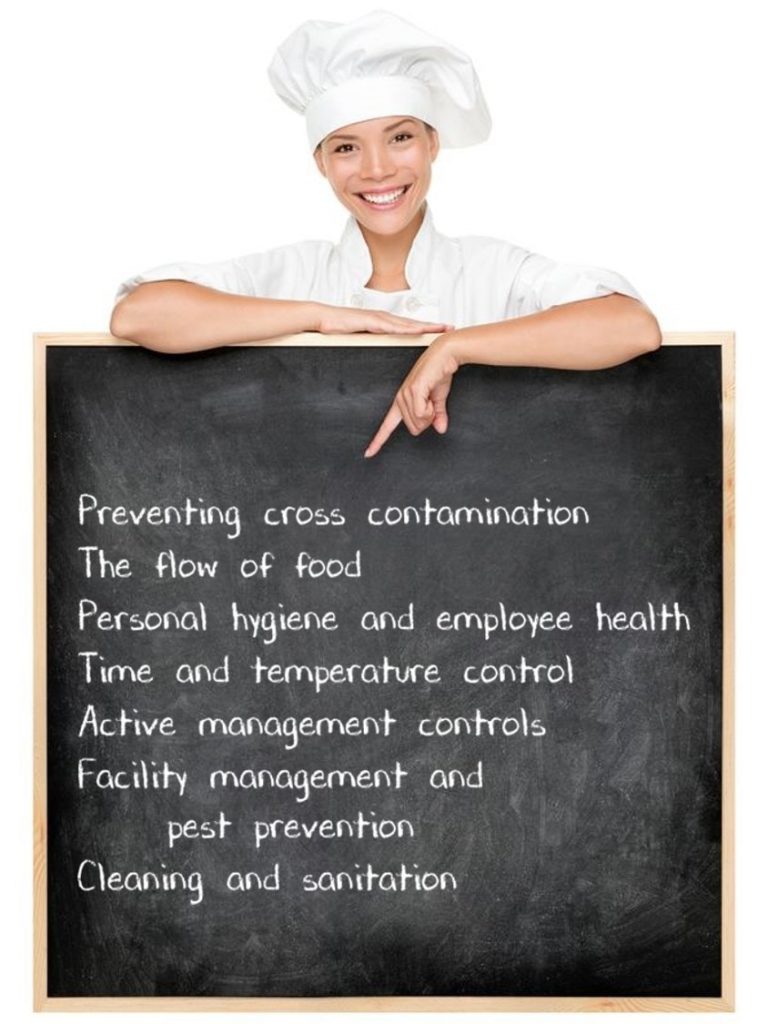
The certified food protection manager tests are designed to make sure that food service supervisors have the knowledge to keep the food they serve safe and train their staff on how to prevent foodborne illnesses. We can break down study topics to a few categories that should be reviewed before test time:

  • Preventing cross contamination
  • The flow of food
  • Personal hygiene and employee health
  • Time and temperature control
  • Active management controls
  • Facility management and pest prevention
  • Cleaning and sanitation

This list might look a little daunting, but we’ll simply break it down for you so that you can have a clear plan of action while preparing for your exam.

Cross-contamination occurs when bacteria spreads from one food item to another. This generally occurs when raw food touches ready to eat food, fresh product is prepared on surfaces previously used for raw product and raw food is improperly stored over ready-to-eat foods and food cooked at lower temperatures.

The flow of food deals with what happens with products from the second inventory arrives at your facility up until the moment it is served to guests. In order to get a firm grasp on the flow of food, review how to receive, store, prepare, cook, serve and display food products properly.

Personal hygiene consists of hand washing and the rules for working when sick. Always wash your hands after eating, smoking, using the bathroom and handling raw foods. Also, it’s important to note that sick employees should not handle food.

Time and temperature control will be tested extensively. Review proper cooking and holding times and temperatures.

Active management controls refer to your outlined procedures for ensuring food safety. These can be training, education, action plans or any other food safety management tactics employed to keep your establishment in compliance with the Minnesota food code and prevent food borne illness.

Facility management refers to the cleanliness and maintenance of the physical aspects of the building your business operates out of. Food-borne illness comes from other sources than improperly prepared food. Pests, plumbing problems, deteriorating equipment and other issues with your building’s mechanical elements can pose a food safety risk.

Knowing proper cleaning and sanitation methods is also key to passing the food safety certification exams. Make sure you understand which sanitizing solutions and cleaning methods are approved for food service.

Safe Food Training instructors spend the last portion of every class reviewing each one of these points in detail. Students often comment that, “the review at the end was the best part of the class!” Well over 90% of our students pass the exam the first time they take it.

Click proper here to find a class scheduled at a place and time near you.