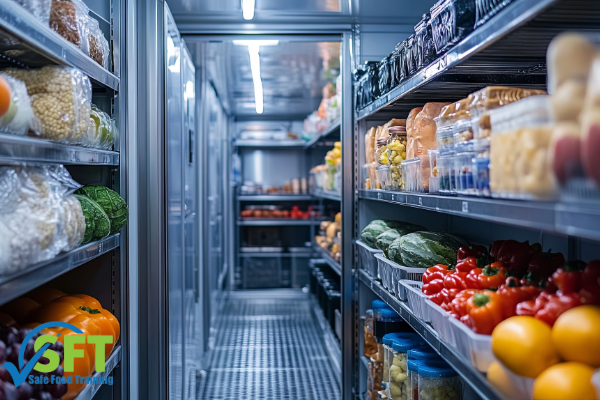
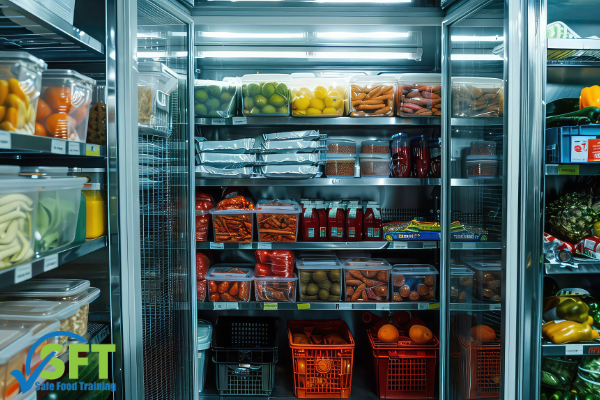
Whether you’re grabbing eggs from a local Minnesota farm or a St. Paul grocery store this Easter, safety comes down to one thing: keeping them at 41°F or below. Farm-fresh eggs have a natural coating called the “bloom” that protects them, but once they’re washed or refrigerated, they’ve got to stay cold. This isn’t just a good idea—it’s how you keep your Minnesota kitchen compliant and your guests safe from Salmonella.
Easter in Minnesota usually means a hectic kitchen and plenty of eggs for decorating and brunch. If you’re managing a restaurant in Minneapolis or a catering business in Duluth, you know that spring brings plenty of options for where those eggs come from. But the rules for a farm-fresh egg aren’t exactly the same as those in the carton you grab from the grocery store.
The Shell Game: Store-Bought vs. Farm-Fresh
Commercial eggs from the store are power-washed and sanitized before they ever hit the shelf. This process removes dirt but also strips away the “bloom” layer that keeps bacteria out. Because that layer is gone, store-bought eggs have to stay refrigeratedfrom the moment they’re processed until they hit your frying pan.
Farm-fresh eggs are different. Many local farmers leave the bloom intact. In a home kitchen, these can sometimes sit on the counter. But here’s the catch for pros: once a farm egg enters refrigeration, it must remain there. If a cold egg sits out and starts to “sweat,” that moisture can actually pull bacteria through the porous shell and right into the egg.
Feature
Store-Bought (Commercial)
Farm-Fresh (Local)
Processing
Sanitized and power-washed.
Often unwashed to keep the “bloom.”
Storage
Must be refrigerated immediately.
Can stay at room temp only if unwashed.
Safety Risk
Porous shells can absorb bacteria if sweating.
Higher risk of external dirt or fecal matter.
MN Regulation
Must come from approved sources for CFPM.
Requires specific labeling for retail sale.
Hard-Boiled Safety for Easter
Farm fresh versus store-bought eggs, how do you store them?
If you’re boiling eggs for the kids to dye or for a Sunday brunch salad, don’t forget that the cooking process also removes that protective bloom. Hard-boiled eggs actually spoil faster than raw ones. You shouldn’t ever leave them out of the fridge for more than two hours. If you’re hosting a big outdoor event and it happens to be a warm Minnesota spring day, that window drops to just one hour.
The shells of hard-boiled eggs are actually more porous after they’re cooked. This makes it a lot easier for smells and bacteria to get inside. It’s best to store them in a sealed container in the middle of the fridge. Avoid the door, where the temperature jumps every time someone opens it to grab the milk.
Your Training, Your Choice
Staying on top of these details is what keeps your doors open. Minnesota has specific food safety standards that go beyond knowing how to cook an egg. When it comes to getting your CFPM, you’ve got a choice to make.
Our in-person training in the Twin Cities is a great way to get out of the kitchen for a day. It’s distraction-free, and we see much higher pass rates because we can talk through these scenarios face-to-face. If you’re tied to the kitchen and can’t get away, our online courses offer the flexibility you need to study between shifts. Both options will get you exactly where you need to be.
What specific topics are covered in the 8-hour Certified Food Protection Manager course?
Our course covers the prevention of foodborne illness, proper time and temperature controls, preventing cross-contamination, personal hygiene, and cleaning procedures.
Is the CFPM exam included with the course?
Yes, the cost of our 8-hour licensing course includes the certification exam in one convenient session.
How often must I complete continuing education to maintain my certification in Minnesota?
In Minnesota, you’ve got to renew your CFPM license by completing continuing education every three years.
I just need continuing education credits. Do I have to take the full 8-hour course?
No, you don’t. We offer dedicated continuing education training specifically for professionals who just need to fulfill the renewal requirements.
https://minnesota.safefoodtraining.com/2026/wp-content/uploads/2026/03/Farm-Fresh-vs.-Store-Bought-Eggs-An-Easter-Food-Safety-Guide-1.png630930Christine Dantzhttps://minnesota.safefoodtraining.com/2026/wp-content/uploads/2025/06/Remove-background-project-1024x614.pngChristine Dantz2026-03-29 17:07:382026-03-29 17:07:42Farm-Fresh vs. Store-Bought Eggs: An Easter Food Safety Guide
In Minnesota, the “Danger Zone” is the temperature range between 41°F and 135°F where bacteria grow most rapidly. To stay compliant with the Minnesota Food Code, Time/Temperature Control for Safety (TCS) foods must be kept outside this range—either held hot above 135°F or maintained cold at 41°F or below.
If you are managing a busy kitchen during a rush, it is easy to trust the thermometer on the outside of the walk-in cooler or assume the steam table is “hot enough.” However, after years of training food professionals across Minnesota, I’ve seen that relying on guesswork is the fastest way to land a correction order from the health department—or worse, cause a foodborne illness outbreak.
Do you know the rules?
Here is your guide to mastering precision temperature control and keeping your kitchen safe.
Why Minutes Matter in the Danger Zone
Bacteria need little time to become dangerous. In the Danger Zone (41°F – 135°F), bacteria can double in number every 20 minutes. This means a pan of soup left on a prep table for just a couple of hours can turn from safe to hazardous before you even notice.
In a professional kitchen, we aren’t just concerned with “spoiled” food; we are concerned with pathogens such as Salmonella and E. coli that don’t change the appearance, smell, or taste of the food. The only way to prevent this is to control how long food spends in this temperature range.
The 3 Critical Temperature Rules for MN Kitchens
Are your temperature control regulations accurate?
To keep your food safe and your inspection report clean, your staff needs to memorize these three critical thresholds:
1. Cold Holding: 41°F or Below
The Rule: Cold foods (like cut melons, dairy, raw meats, and cut leafy greens) must be kept at an internal temperature of 41°F or lower.
Common Mistake: Overfilling the prep table. If you stack pans too high, the food on top isn’t getting the cold air it needs.
Jeff’s Pro Tip: Don’t rely on the built-in thermometer in your cooler. Place a separate thermometer in the warmest part of the unit (usually near the door) to get the real story.
2. Hot Holding: 135°F or Above
The Rule: Hot foods (such as soups, rice, and cooked meats) must be maintained at 135°F or higher.
Common Mistake: Reheating food in a steam table. Steam tables maintain temperature; they don’t bring food through the danger zone quickly enough.
Jeff’s Pro Tip: Always reheat food to 165°F (for 15 seconds) first, then transfer it to the hot-holding unit.
3. Cooling: The Two-Stage Process
What procedures do you use for cooling?
Cooling is where most kitchens get into trouble. You cannot just place a 5-gallon pot of hot chili in the walk-in; it will remain in the Danger Zone for hours and raise the temperature of everything else in the fridge. You must follow the Two-Stage Cooling Process:
Stage
Temperature Drop
Time Limit
Stage 1
135°F down to 70°F
Within 2 Hours
Stage 2
70°F down to 41°F
Within the next 4 Hours
Total
135°F to 41°F
6 Hours Max
Why 70°F? Bacteria grows even faster between 125°F and 70°F. If you don’t reach 70°F within the first two hours, you must reheat it to 165°F and start over—or discard it.
How to Speed Up Cooling
To stay compliant, I recommend using one of these three methods:
Ice Baths: Place the food container in a larger prep sink filled with ice and water.
Shallow Pans: Transfer hot liquids into shallow metal pans (2 inches deep or less) to increase surface area.
Ice Wands: Use frozen plastic paddles to stir liquids and cool them from the inside out.
The “Ice Water” Calibration Test
A thermometer is only useful if it’s accurate. If you drop your thermometer, it can easily lose its calibration. We recommend testing your thermometers at least once a week:
Fill a glass with crushed ice and add water (more ice than water).
Stir the mixture and let it sit for 3 minutes.
Insert the probe into the center of the glass (don’t touch the sides or bottom).
The reading should be 32°F (0°C).
If it reads differently, adjust the nut under the dial until it hits 32°F.
Frequently Asked Questions
Common questions we get about temperature control.
What is the temperature danger zone in Minnesota?
The specific danger zone defined by the Minnesota Food Code is 41°F to 135°F.
How long can food sit out before I have to discard it?
Generally, TCS food should not remain in the Danger Zone for over 4 hours. If you aren’t using a specific “Time as a Public Health Control” (TPHC) plan, you must discard it once it reaches the 4-hour mark.
Can I use a laser (infrared) thermometer for everything?
No. Laser thermometers only measure surface temperature. To determine whether a chicken breast or a pot of soup is safe, use a probe thermometer to check the internal temperature.
Get Certified with Safe Food Training
Understanding these rules is just the beginning. To truly protect your business and your customers, you need a deep dive into the Minnesota Food Code. We offer two ways to get your Certified Food Protection Manager (CFPM) license:
https://minnesota.safefoodtraining.com/2026/wp-content/uploads/2026/02/Is-Your-Kitchen-in-the-Danger-Zone-A-Guide-to-Precision-Temperature-Control-1-1.png630930Jeff Websterhttps://minnesota.safefoodtraining.com/2026/wp-content/uploads/2025/06/Remove-background-project-1024x614.pngJeff Webster2026-02-27 13:45:102026-03-19 08:55:48Is Your Kitchen in the Danger Zone? A Guide to Precision Temperature Control
Don’t let these hidden threats put your business in jeopardy.
Physical hazards are often the most overlooked threat to food safety. This guide outlines five actionable strategies—from strict uniform policies to equipment maintenance—to help every food manager prevent physical contamination in the kitchen.
In the high-pressure environment of a commercial kitchen, the focus is often on invisible threats such as Salmonella or E. coli. However, a CFPM (Certified Food Protection Manager) knows that physical hazards—shards of glass, metal shavings, or even a lost bandage—pose an immediate and terrifying risk to customers. Unlike bacteria, which are destroyed by heat, physical contaminants survive the cooking process, making prevention your only line of defense.
Safe Food Training emphasizes that physical contamination often stems from negligence or wear and tear. By implementing these five targeted strategies, you protect your diners from injury and shield your business from liability and reputational damage arising from a “foreign object” complaint.
1. Fortifying the Front Line: Employee Hygiene and Habits
Do you have a bandage color in place in your kitchen?
Your staff is your first line of defense, but contamination can also occur if they do not follow strict protocols. A proactive CFPM must enforce rigid standards regarding what employees wear and bring into the prep area.
Strategy #1: The “No Jewelry” Mandate: It’s not just about aesthetics; it’s about safety. Rings (other than a plain band), earrings, and bracelets can easily fall into food or catch on equipment. Enforce a zero-tolerance policy on jewelry in food-prep areas to eliminate the risk of stones or metal clasps entering a customer’s meal.
Strategy #2: High-Visibility Bandage Protocols: Cuts happen, but a lost bandage in a salad is a nightmare. Implement a policy requiring brightly colored (typically blue) bandages that are easily spotted if they fall off. Furthermore, protect the bandage with a finger cot or a single-use glove to provide a second layer of protection against contamination in your kitchen.
2. Engineering Out the Risk: Equipment and Facility Maintenance
Is your kitchen safe for your staff and food prep?
Equipment degradation is a silent threat. As machines age, they can shed materials that are nearly impossible to detect in a finished dish. Routine maintenance is not just for longevity; it is a critical safety control.
Strategy #3: The Can Opener Crusade: Industrial can openers are a common source of metal shavings in food. Over time, the blade dulls and chips, depositing tiny metal slivers into cans of tomato sauce or fruit. A CFPM should schedule weekly inspections of the blade and replace it immediately at the first sign of wear.
Strategy #4: Shatter-Proofing the Environment: Glass has no place near open food, yet light bulbs and fixtures are everywhere. Make sure to shield all lighting fixtures or use shatter-resistant bulbs in walk-ins and prep areas. If a glass item breaks, establish a strict “discard everything” perimeter policy to ensure no microscopic shards remain.
3. The Gatekeeper Protocol: Ingredient Inspection
Sometimes the threat comes from outside your walls. Suppliers process food on an industrial scale, and bones, pits, or staples can slip through their quality control.
Strategy #5: Rigorous Receiving and Prep Inspections: Do not assume “boneless” means bone-free. Train your prep staff to inspect fish fillets and chicken breasts for bone fragments by touch. Additionally, opening boxes requires care; instruct staff to remove staples entirely rather than ripping the box open, which can send staples flying into nearby ingredients.
Strengthening Your Defense with Expert Training
Preventing contamination in your kitchen requires a culture of awareness that starts at the top. As a CFPM, your ability to spot these hazards before they reach the table separates a safe kitchen from a risky one.
The Boar’s Head cheese recall involves specific lots of Pecorino Romano cheese (both grated and in wedges) because of potential contamination with Listeria monocytogenes. Even though there have been no confirmed illnesses, the FDA classified this as a Class I recall because there is a reasonable probability that using the product could cause serious health consequences. If you’re managing a kitchen in Minnesota, you must immediately check your inventory for the affected lot codes and review your traceability procedures.
It’s Not Just the Deli Meat
If you’re like most food managers in Minnesota, you probably remember the massive deli meat recall earlier this year. But this latest alert proves a critical point: contamination can happen anywhere in the supply chain.
This time, it isn’t the liverwurst. It’s the Pecorino Romano.
Boar’s Head is in the news again!
Specifically, the recall affects:
Boar’s Head Grated Pecorino Romano (6 oz jars and foodservice bags)
Boar’s Head Pecorino Romano Wedges (7 oz)
Note: This recall also affects other brands produced by the same supplier, including Locatelli and Ambriola.
If you’ve got these in your cooler, don’t serve them. Check the UPCs and sell-by dates against the official FDA notice immediately.
The "Peaches" Connection: Why It Could Be Anything
Checking recalls is a vital part of keeping your kitchen and patrons safe!
You’re probably thinking, “We don’t use Boar’s Head cheese, so we’re safe.” That’s a dangerous mindset.
The lesson is simple: Whether it’s a processed dairy product like grated cheese or raw agricultural commodities like fresh peaches, the risk is always present. You can’t inspect Listeria out of a cheese wedge with the naked eye—it can survive and grow at temperatures as low as 31.3°F. You can only defend against it with traceability.
Traceability: Your Only Real Defense
When a recall hits, there are two types of kitchens:
The Panic Kitchen: They scramble through the walk-in for 3 to 4 hours, tossing anything that “looks like” the recalled item, wasting hundreds of dollars and potentially missing the actual contaminated batch.
The Proactive Kitchen: They pull up their invoices and receiving logs. Within 5 minutes, they know exactly when the product arrived, which lot it was, and whether it’s still in the building.
Reactive vs. Proactive Safety Procedures
Feature
The Panic Kitchen (Reactive)
The Proactive Kitchen (Safe Food Training)
Response Time
4+ Hours (searching physically)
< 10 Minutes (checking records)
Waste
High (tossing safe product “just in case”)
Low (only tossing affected lots)
Inventory Method
Visual checks only
First-In, First-Out (FIFO) & Lot Logging
Confidence
“I think we got it all.”
“I know we’re safe.”
3 Steps to Take Today
If you haven’t updated your receiving procedures lately, do it now.
Log Your Lots: When high-risk items (deli meats, soft cheeses, leafy greens) arrive, write the Lot ID on your receiving log.
Keep Invoices Accessible: Don’t just bury them in the office. If a recall alert drops during the dinner rush, your chef needs to see those dates immediately.
Train Your Team: Does your prep cook know what a “Julian Date” is? If not, it’s time for a refresher.
Building Trust Beyond Compliance
We know how hard you work to put great food on the table. Recalls are frustrating because they feel out of your control, but how you handle them is 100% in your control. When you can look a health inspector—or a customer—in the eye and say, “We checked our lots, and we’re clear,” that isn’t just following the rules. That’s building trust. And in Minnesota, trust is everything.
Frequently Asked Questions
Recalls can be confusing, and it is natural to have questions about how they impact your certification and daily operations. Here are answers to some of the most common questions we hear from Minnesota food professionals.
Traceability is vital in any recall.
Q: Will this course fulfill Minnesota's food license requirements?
A: Absolutely. Our 8-hour food licensing course specifically aligns with and meets Minnesota’s official food safety standards, including handling recalls and traceability.
Q: How often must I complete continuing education to maintain my food safety certification in Minnesota?
A: In Minnesota, you must renew your certified food protection manager license by completing continuing education every 3 years. Staying current helps you stay on top of new risks like these.
Q: How does Safe Food Training support clients beyond the initial course?
A: We’re committed to building and maintaining relationships. We provide ongoing support through renewal reminders and as a reliable resource during confusing recalls like this.
Q: What's the primary service that Safe Food Training offers?
A: We specialize in providing personalized, 8-hour certified food protection manager licensing courses tailored for food professionals across Minnesota. We teach you the systems to handle recalls effectively.
Q: Why is staying current with food safety standards so important?
A: Upholding Minnesota’s food safety standards is critical for protecting public health. As these recalls show, ensuring your business remains compliant is the only way to protect your reputation.
Secure Your Kitchen Today
Don’t leave your kitchen’s safety to chance.
Register for an upcoming course at https://www.safefoodtraining.com, complete your food safety certification, and learn how to build a defense system that works.
https://minnesota.safefoodtraining.com/2026/wp-content/uploads/2026/01/Boars-Head-Cheese-Recall-Why-Traceability-is-Your-Kitchens-Best-Defense-1.png630930Jeff Websterhttps://minnesota.safefoodtraining.com/2026/wp-content/uploads/2025/06/Remove-background-project-1024x614.pngJeff Webster2026-01-25 19:42:022026-01-25 19:51:51Boar’s Head Cheese Recall: Why Traceability is Your Kitchen’s Best Defense