
When Can ServSafe Managers Expect the Surprise Health Inspector

When Can ServSafe Managers Expect the Surprise Health Inspector

Every so often, we get asked by prospective ServSafe food managers if they’ll receive a warning before the health inspector shows up at their food business. Well, if you’re doing everything right, reinforce a proper food safety culture in your establishment; does it really matter when the health inspector walks into your door? While there are no flashing lights, alarms or signs from above for Servsafe managers, there is an expected frequency for when your establishment requires a visit from a health department inspector.

When Can ServSafe Managers Expect the Surprise Health Inspector

How Often Can ServSafe Food Managers Expect a Health Department Inspection?

Your local health department commissioner schedules inspections during specific intervals depending on the risk category of your food establishment. The food code breaks down the food establishment inspection frequency into three categories:

  • High-Risk: Once at Least Every 12 Months
  • Medium-Risk: Once at Least Every 18 Months
  • Low-Risk: Once at Least Every 24 Months

While you won’t know exactly when they’ll show up, you can expect a visit within a regular time frame, but how do you know which type of food business you operate? Most restaurants, resorts, hotels with pools, catering companies and other establishments that prepare products in advance and cool and reheat products will be considered high-risk. A majority of food establishments fall into this category.

Medium-risk food establishments serve some potentially hazardous foods but with little time between preparation and service. These businesses usually only serve items such as pizza, fryer foods and sandwiches that are prepared and served immediately with minimal holding and limited time between preparation and service.

A low-risk food establishment offers food with very limited preparation. These can be coffee stands with prepackaged pastries, hotels with minimal food offerings or certain grab-and-go food services. These businesses will only see the inspector every two years and most may not require a ServSafe food manager for operation.

Regardless of what type of business you operate, your ServSafe food manager or designated person in charge in their absence should make themselves available when the inspector shows up. You don’t necessarily need to guide them throughout the facility, but it’s a good idea to be around them. Never make an attempt to stall the process, misdirect inspectors from certain areas of your facility or hinder the inspection in any way. This will help speed the process and allow them to ensure your food is being served in a safe manner. Remember, these inspectors aren’t there to find fault with your establishment or punish food business owners, they are there to ensure the safety of your product. Don’t be offended if issues arise, rather ask questions and find solutions to any violation before the inspector leaves your business.
New Food Safety Training For The Dish Pit

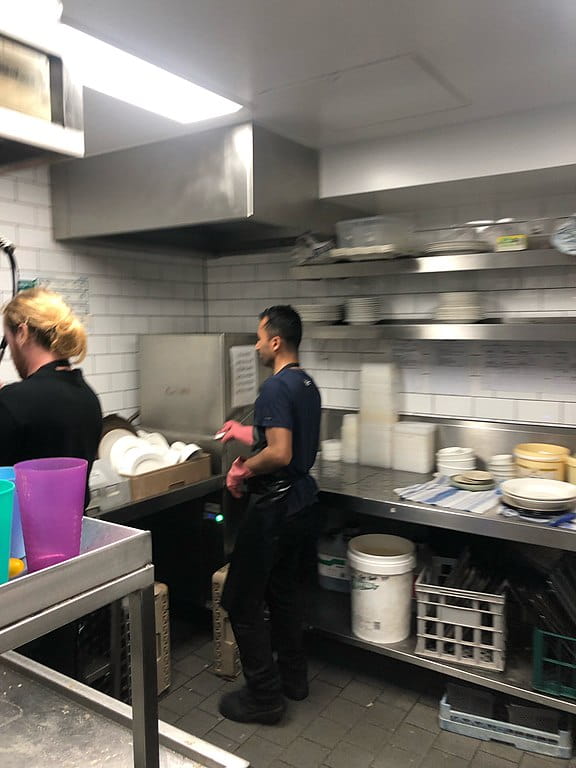
We all know that dishwashing machines are an important piece of equipment in keeping serving ware and the utensils we use to prepare food clean, but do we take the time to ensure that our dishwasher is kept in sanitary condition? Beyond sanitizing the clean side of the dishwasher and making sure drying areas are kept in proper condition, how can we promote food safety training to keep the “dirty” side of our mechanical dishwashers from creating foodborne illness hazards?

Food Safety Training for the Dish Pit
Image credit: Simcitywok via wikimedia commons

Food Safety Training tips for Dish Pit Cleanliness

It’s easy to understand why the clean side of the dish pit needs to remain clean. All of the dishes that end up over there are sanitized and ready for service, but ignoring the dirty side of the dish area creates scenarios that can be a food safety risk. When providing food safety training to dish machine operators, make sure you cover:

  • Garbage Disposal
  • Machine Filters
  • Doors and Seals
  • Dirty Washing Surfaces

We tend to assume that the garbage disposal churns up waste and sends it into the sewage system, but a lot of the residue remains in the drain, on the blades and in your pipes. This food residue attracts pests such as fruit flies. While it’s not necessary or even prudent to take apart your garbage disposal, there are liquid solutions available that can clean and sanitize garbage disposals and pipes. If you have the need to reach into the garbage disposal for any reason, make sure that it has been unplugged to prevent catastrophic injury.

Most mechanical dish washers have filters to prevent waste from ending up in the drainage system. Make locating and cleaning these filters a part of your basic food safety training. Don’t forget that grease and grime can build up on the inside of the doors and transfer to clean items during the rinse cycle.

Finally, the areas where plate ware and production tools wait to be washed can also attract pests and transfer contaminated materials to employees who touch them and work near these areas. The food safety training best practice is take the time to often clean washing surfaces and dirty dish storage areas.

Does your food safety training cover the whole dish pit area?

Tested Approach to food service utensils for ServSafe managers

Tested Approach To Food Service Utensils For ServSafe Managers

Keeping food out of the danger zone and utilizing proper temperature and time control keeps bacteria from growing in food and greatly reduces foodborne illness. When we take about the danger zone, we usually focus on food product, but can serving utensils left in the danger zone after touching product pose a food safety risk? ServSafe managers should take steps to ensure that food poisoning hazards don’t develop with mishandled food service utensils.

Tested Approach To Food Service Utensils For ServSafe Managers
Image credit: Helder Ribeiro via Wikimedia

ServSafe Managers Guide to Temperature Control of Food Service Utensils

You may never think about it, but some service items should be treated like food to prevent foodborne illness. We’re not suggesting storing your utensils outside the danger zone, but once you begin using them for service you should make sure they follow nearly the same protocols as the food they touch. Some items to be wary of include:

  • Salad Bowls and Tongs
  • Ladles
  • Spatulas
  • Cold Preparation Utensils

ServSafe managers wouldn’t leave a Caesar salad on a counter top for hours and then serve it to a guest, so why leave a used bowl and set of tongs at the same temperature. Salad remnants will decay in a danger zone environment over time increasing risk. Washing every mixing bowl after every use just simply isn’t an option, but there are solutions. Keep mixing bowls for cold items in a reach-in refrigerator or rotate out of service regularly. Time as public health control rules allow for up to four hours, but quality of product will greatly suffer even over a short period of time, so we suggest more frequent rotation of these cold service items. The same should go for any other item used to prepare cold items for service. Tongs, spatulas and ladles could be the most overlooked offenders.

Hot items may be easier to maintain than cold items due to the nature of food served. Soup and sauce ladles can potentially remain in heated sauces and metal tongs and other serving utensils can remain with hot foods if stored properly. Some items such as grill tools, should follow time control procedures as they may not always be out of danger zone temperatures.

Have you thought about risks coming from the temperatures of your regular use utensils?

Sure Fire Tips for Taking the Certified Food Manager Exam after Taking the Online Course

We’ve seen an uptick in certified food protection manager ( CFPM ) candidates taking the online food safety course due to its convenience. Every so often, we receive a call or an email asking how to access the online certified food manager exam so that it can be taken from home. As per Minnesota CFPM rules, the certification exam must be taken in a supervised environment to ensure that the test is monitored properly. While most certified food managers would never cheat, this also allows for an appropriate supervisor to be present should there be an issue with the test. Since the certified food manager exam setting is different than the online class, it’s important to prepare for the examination a little differently to ensure the best results.

Sure Fire Tips for Taking the Certified Food Manager Exam after Taking the Online Course
Image credit: Andy Barbour via Pexels

Preparing for the Certified Food Manager Exam After Taking the Online Class

We have a few simple tips for taking the certified food manager exam:

  • Schedule the exam as soon as possible
  • Take notes during the online food management course
  • Be punctual on exam day

If you’re taking the instructor-led version of the food manager course, the exam generally follows that same day. This is not true with online food safety courses; you must schedule an in-person examination. Keeping that in mind, try to take the exam at the closest possible date shortly after finishing the course. This will keep the information fresh and keep your confidence high.

While taking the course, be sure to take detailed notes that you can review later. This will help refresh your memory after some time has elapsed since the training.

Finally, be on time for the certified food manager exam. Plan your route ahead of time and leave enough leeway in the event of travel difficulties. If you run late, you may miss valuable test-taking time. It’s also been suggested that lateness may increase anxiety as you’re worried about showing up before the test starts. This worry may bleed over into your efforts to do well on the test.

Do you prefer taking the certified food manager exam immediately after an instructor-led course or scheduling it as soon as possible after the online course?