MN Food Safety And The Medium Rare Cheeseburger

We stay connected to the local food industry. During our visits to several restaurants we’ve noticed an alarming trend. Many restaurants are serving raw and undercooked animal products, but may not be doing so safely. This week, we’ll begin a series of articles aimed at helping you deal with raw and undercooked animal proteins. For the first article in the series we’ll discuss how you balance MN food safety with the ubiquitous request for a medium rare cheeseburger.

food safety certification and medium rare Cheeseburger
Image credit: Flickr

The Medium-Rare Cheeseburger Food Safety Dilemma

On more than one occasion, the waiter has asked us if we would like our cheeseburger cooked with or without a little pink. The first issue we’d like to deal with is what temperature pink actually is. Pink is not a temperature. It is in fact just a color. There can be many factors that change the internal color of your beef patty. The only accurate way to find the internal temperature of a burger is to use a probe thermometer. If you have completed a food safety certification course, you will know that a beef patty does not meet the cooked criteria unless it reaches an internal temperature of:

  • 150 degrees for one minute
  • 145 degrees for thee minutes

We are often asked by Food Safety Managers if it is legal to serve n undercooked cheeseburger that is not cooked according to Minnesota Food Code requirements. According to the current regulations it is acceptable to serve raw or undercooked animal product if:

  • A customer requests it
  • The menu clearly states that the product is undercooked
  • An asterisk next to the menu items directs the consumer to a footnote. Which states the dangers of consuming undercooked animal product.

Some of the language in the regulations can be confusing. Since we are specifically discussing undercooked burgers, we’d like explain how to deal with ground beef patties. If you’re comfortable with honoring a consumers request to serve an undercooked cheeseburger, then you legally may do so. To make sure that you are in full compliance with the law, include the asterisk and warning of the dangers of consuming raw or undercooked beef next to every burger item on your menu.

Solving the Dilemma

We strongly suggest that you do not offer a medium rare or undercooked burger on your menu. In fact,  we’d suggest that your servers do not even ask if your guests how they want their burger cooked.

If you are uncomfortable with serving an undercooked burger, simply explain to the guest that you cannot honor their request. Because your establishment adheres to the Minnesota Food Code standards.


Helpful Tips For Food Managers On Sanitation Of The Overlooked Ice Machine

ice machine sanitation

As one of the many dedicated certified food managers in Minnesota, you devote countless hours to training your staff on the critical points of food safety. You drill them on handling raw proteins, maintaining the cold chain, and cooking foods to precise temperatures. Yet, a universal ingredient, one that cools drinks and preserves buffet displays, often gets overlooked: ice. Proper ice machine sanitation is not a minor detail—it’s a fundamental component of a safe kitchen that every food manager should regularly review with their team.

The Hidden Risks: Why Ice Is a Food

ice machine sanitation
Ice is food. Learn about Ice Machine Maintenance.

It’s easy to forget, but the Food and Drug Administration (FDA) officially classifies ice as food. This means it is subject to the same strict handling and sanitation requirements as any other ready-to-eat product. When standards slip, the dark, damp interior of an ice machine becomes a perfect breeding ground for bacteria, biofilm, and mold. The problem isn’t just theoretical.

  • Health Hazards: Contaminated ice can introduce harmful pathogens, such as norovirus and E. coli, to your customers, leading to serious foodborne illness outbreaks.

  • Allergen Concerns: Mold spores that proliferate in a poorly maintained machine can trigger allergic reactions or asthma attacks in sensitive individuals.

Compliance Violations: A dirty ice machine is a clear red flag for health inspectors and can cause costly violations that damage your establishment’s reputation.

Lorem ipsum dolor sit amet, consectetur adipiscing elit. Ut elit tellus, luctus nec ullamcorper mattis, pulvinar dapibus leo.

Mastering Proper Handling and Ice Machine Sanitation

Simply having an ice machine doesn’t guarantee the production of safe ice. The daily procedures your kitchen and bar staff follow are critical for preventing cross-contamination. Reinforcing these two key handling protocols is essential for everyday safety.

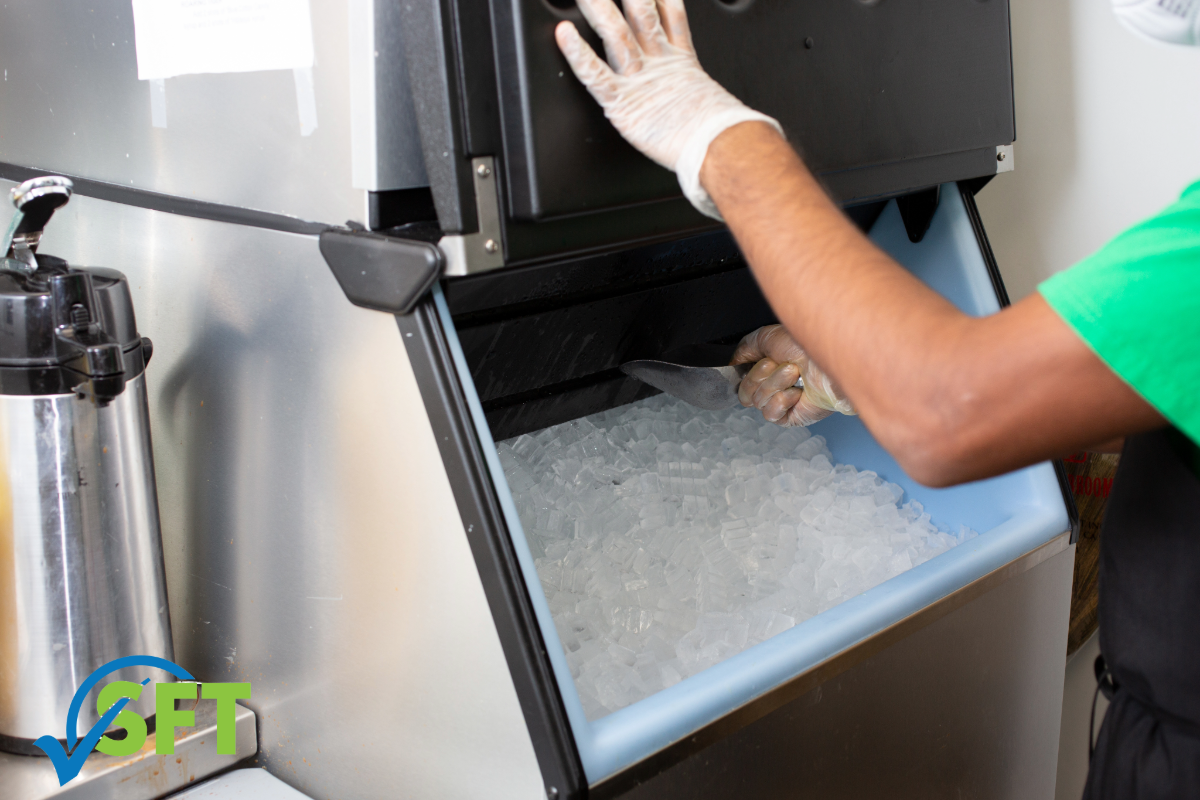
  • Eliminate Bare-Hand Contact: The Minnesota food code clearly states that ready-to-eat foods must not be handled with bare hands. Staff should always use a dedicated, sanitized scoop to retrieve ice. For best practice, wearing single-use gloves adds another layer of protection, preventing hands from inadvertently touching the ice supply, even when using a scoop.

  • Sanitary Scoop Storage: Do not leave an ice scoop on top of the machine, where it can collect dust, or store it inside the ice bin, where the handle can become contaminated. The only acceptable method is to store the scoop in a dedicated, clean, and sanitized container, or on a sanitized tray, ensuring it is not exposed to environmental contaminants between uses.

Maintaining a Clean Zone: Inside and Out

Ice in a drink-Ice machine sanitation
Are you serving safe drinks? Learn about Ice machine sanitation!

The safety of your ice depends on the cleanliness of both the machine’s interior and its surrounding environment. You must treat the ice machine as food-contact equipment and maintain the surrounding area to prevent pests and external contaminants from compromising your ice supply.

  • The machine is for ice only: It may seem convenient, but you should never use the ice bin as a refrigerator to chill canned beverages, bottles of wine, or other food products. The exterior of these containers is not sanitary and will introduce bacteria and dirt directly into your ice.

  • Keep the surrounding area clean: The warmth and moisture from an ice machine’s condenser can create an attractive environment for pests. Clean and remove all debris from the floor and drains under and around the machine. Keep the top of the machine clear and never use it as a storage shelf for boxes, dirty dishes, or other items.

Protecting your customers requires a comprehensive approach to food safety that accounts for every ingredient, including the ice. At Safe Food Training, we focus on the real-world challenges that certified food managers in Minnesota face on a daily basis. Our training goes beyond the basics to cover these often-overlooked hazards that can impact your operation.

Don’t let poor ice machine sanitation undermine your hard work. If you and your team are ready to deepen your understanding of Minnesota’s food safety standards, our expert-led, instructor-led options provide the convenient and comprehensive training you need. 

Visit Safe Food Training today to schedule your next session and ensure your establishment is a model of safety, from the first ingredient to the last ice cube.
Simple But Powerful Dishwashing Essentials Training For CFPMs

Simple But Powerful Dishwashing Essentials Training for Certified Food Protection Managers

Your dishwashers are an important member of your team. Providing them with adequate food safe training can help prevent unintentional food safety hazards from arising. This week, we’ll take a look at three items that we feel all certified food protection managers (CFPMs) should include in any dishwashing training program.

Simple But Powerful Dishwashing Essentials Training for Certified Food Protection Managers
Image credit: Dollarphotoclub_12947910

CFPM Training Essentials for Dishwashing

While your dishwashers may have already passed their food safety course online. That may not fully prepare them to be sure that they are using your specific machine properly. We have three things that you should focus on whenever training a new dishwasher.

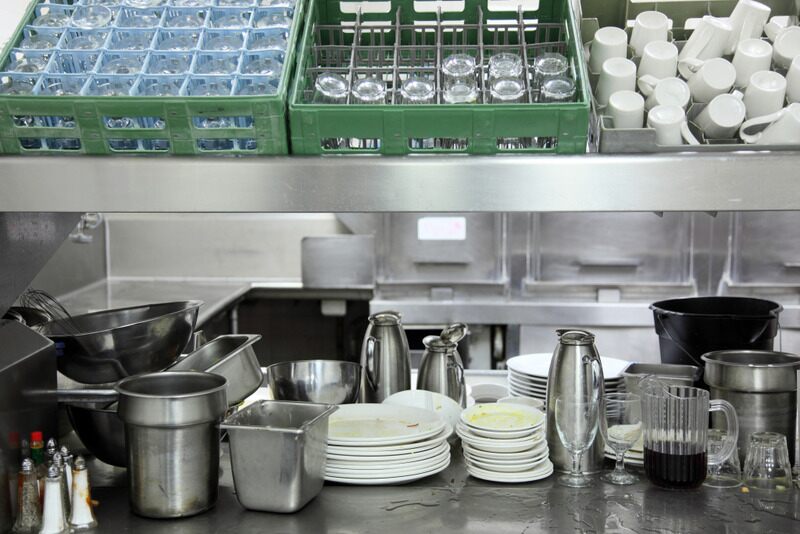
  • Keep clean dishes separate from dirty ones.
  • Dishes must air dry
  • Chemicals in the machine must be checked often

The first item may seem like common sense. However, the line between staging areas for clean dishes and where dirty are dropped off often blurs in a busy facility. As a certified food protection manager, you can train your staff to appropriately sort and stack dirty dishes when leaving them for your dishwasher. It can help eliminate this issue and make life easier on one of the hardest working members of your team. Also, having a completely separate table or cart for your clean dishes can prevent any confusion.

Towel drying your dishes after they have come out of the machine is a thing of the past. Dishes should air dry, as to prevent any possible transfer of contaminants from towels to clean utensils.

Our third item is very important. Make sure that your dishwashers know how to check the chemical levels of your machine and replace them when necessary. It is a good idea to have sanitizing test strips available. You can use them to make sure that your machine has the appropriate amount of sanitizer running through the system.If there is a problem with your machine using too much or too little solution, contact your maintenance provider to adjust it as soon as possible.

In a Pinch Use the Triple-Sink Dishwashing Method

If your machine becomes inoperable, you can still use the triple-sink dishwashing method. It is acceptable. For a quick review on what that entails, it may be beneficial to review the Minnesota Food Code’s official triple-sink dishwashing protocol.

The dishwasher in their favorite restaurant has been the starting point for many certified food protection managers. Do you remember those intense moments of a Friday night fondly, or have you moved on without looking back?

Simplified Reasons For MN Certified Food Protection Manager Training

MN certified food protection manager CFPM

Minnesota law requires most food establishments to employ a Certified Food Protection Manager (CFPM) to prevent foodborne illness and ensure public safety. Safe Food Training offers both personalized 8-hour initial certification courses and 4-hour continuing education renewals to help you meet these state standards. Whether you choose our 

distraction-free in-person classes or flexible online options, we ensure your MN food license remains compliant.

What are the worst messages you could get when opening your kitchen for the Thursday lunch shift? You could be dealing with a broken walk-in cooler or a supplier who shorted your produce order. But the absolute worst message is multiple customers calling to report they’re doing the “Pepto Bismol dance” after eating your Wednesday daily special.

Beyond the immediate panic and guilt, a single foodborne illness incident can devastate your business’s reputation. To prevent these embarrassing and costly situations, the Minnesota Department of Health (MDH) and the Minnesota Department of Agriculture (MDA) mandate that most food establishments employ a Certified Food Protection Manager (CFPM).

The Real Cost of Food Safety Lapses

illness reporting in MN
Do you know the rules for illness reporting?

Food safety isn’t just about passing your routine health inspection; it’s about protecting your community and your financial investment. In a recent study by the USDA Economic Research Service, the total cost of the leading U.S. foodborne illnesses was estimated at over $17.6 billion annually.


For a local Minnesota business—whether you’re running a busy diner in St. Paul or a school cafeteria in Duluth—the costs of an outbreak include:

  • Severe Revenue Loss: A “closed by health department” sign stops traffic instantly, and bad online reviews linger for years.
  • Legal and Insurance Costs: Potential lawsuits from affected customers will immediately spike your liability insurance premiums.
  • Licensing Risks: Failure to have a CFPM on staff can result in state-issued citations, fines, or a complete license suspension.

Minnesota CFPM Requirements at a Glance

certification
Choose how you learn best.

Navigating state regulations doesn’t have to be a headache. Here’s exactly what Minnesota requires for your certification:


Requirement

Details

Initial Certification

Must complete an approved 8-hour course and pass an accredited exam.

Renewal Cycle

Your Minnesota CFPM certificate expires every three years.

Continuing Education

4 hours of approved continuing education (CE) training is required for renewal prior to expiration.

State Registry Application

After passing your exam or completing CE, you must submit an application and fee to the MN Department of Health to get your official state certificate.

The "Choice" Narrative: In-Person vs. Online Training

At Safe Food Training, we know that food safety shouldn’t be a generic, one-size-fits-all experience. Restaurant managers have different learning styles and schedules, which is why we emphasize your choice in how you train.

The In-Person Advantage: We highly recommend our in-person training. Stepping out of your restaurant into a distraction-free environment drastically increases your focus and your exam pass rate. It allows for direct interaction, letting you ask specific questions about cooling a 5-gallon batch of chili or calibrating bimetallic stemmed thermometers.

The Online Flexibility: If you’re managing multiple locations or simply can’t leave the kitchen for a full day, our online training options provide the critical flexibility you need to learn on your own schedule while still meeting state requirements.

The Backend is Serious Business

Designers set the mood in the front of the house with lighting, furniture, and music. But the back of the house is serious business. Led by Jeff Webster, Safe Food Training brings years of real-world industry experience to the classroom. We cover vital, tangible best practices, including:

Training for you and your team-salad prep
Training for you and your team.
  • Temperature Control: Mastering the “Danger Zone” and Safe Cooling Parameters.
  • Cross-Contamination: Strict protocols for separating raw poultry from ready-to-eat foods during prep.
  • Employee Hygiene: Enforcing strict handwashing and health reporting policies for sick employees.

Requiring your kitchen managers to get and maintain their food safety certification is one of the best investments an owner can make.

Frequently Asked Questions (Q&A)

Navigating state regulations can sometimes feel overwhelming, so I’ve put together answers to some of the most common questions we get from Minnesota kitchen managers.

Q: How often must I complete continuing education to maintain my food safety certification in Minnesota?

A: In Minnesota, you must renew your certified food protection manager license by completing 4 hours of continuing education every three years.

Q: How will I know when it's time to renew my certification?

A: As a valued client of Safe Food Training, you don’t have to worry about tracking your renewal date. We provide timely reminders for the three-year renewal cycle to ensure you complete your required continuing education before your certification expires.

Q: I just need continuing education credits. Do I have to take the full 8-hour course?

A: No, you don’t. We offer dedicated continuing education training specifically for professionals who need to fulfill Minnesota’s renewal requirements.

Q: What happens if I don't pass the Certified Food Protection Manager exam on my first attempt?

A: We’re dedicated to your success. If you don’t pass the exam on your first try, we offer a retake of the course and exam at one of our regularly scheduled sessions.

Q: What does "personalized training" actually mean?

A: We focus on creating a convenient and effective learning experience that fits your specific needs. Led by Jeff Webster, we discuss the food safety challenges relevant to your unique operation—whether you’re in a school cafeteria, a large restaurant, or a catering business.

Protect Your Kitchen, Protect Your Business

commercial kitchen
Sign up for the next available class today!

Don’t leave your restaurant’s reputation to chance or wait until a health inspector knocks on your door to check your credentials. Whether you need your initial certification or it’s simply time for your three-year renewal, we’re here to make the process straightforward and stress-free.

Ready to secure your Minnesota food license? Register for an upcoming course today!